Kirjojen hintavertailu. Mukana 11 699 587 kirjaa ja 12 kauppaa.

Kirjahaku

Etsi kirjoja tekijän nimen, kirjan nimen tai ISBN:n perusteella.

484 tulosta hakusanalla Supriya Thombre

Upscaling di immagini in tempo reale utilizzando un ambiente distribuito
Per l'upscaling, l'immagine deve essere sottoposta a downsampling per generare un'immagine a bassa risoluzione, che verr poi upscalata. Il sistema genera anche immagini a bassa risoluzione in un ambiente distribuito. Questo ambiente riduce al minimo il tempo necessario per la generazione di immagini LR. Il rapporto segnale/rumore di picco (PSNR) viene utilizzato per l'analisi delle prestazioni di un'immagine upscalata. Pi alto il valore PSNR, maggiore sar la qualit dell'immagine.
Skalowanie obrazów w czasie rzeczywistym przy użyciu środowiska rozproszonego
W celu skalowania obrazu należy go najpierw poddac downsamplingowi, aby uzyskac obraz o niskiej rozdzielczości, a następnie skalowac go w g rę. System generuje r wnież obrazy o niskiej rozdzielczości w środowisku rozproszonym. Środowisko to minimalizuje czas potrzebny do wygenerowania obrazu o niskiej rozdzielczości. Do analizy wydajności skalowanego obrazu wykorzystuje się wsp lczynnik PSNR (Peak Signal to Noise Ratio). Im wyższa wartośc PSNR, tym wyższa jakośc obrazu.
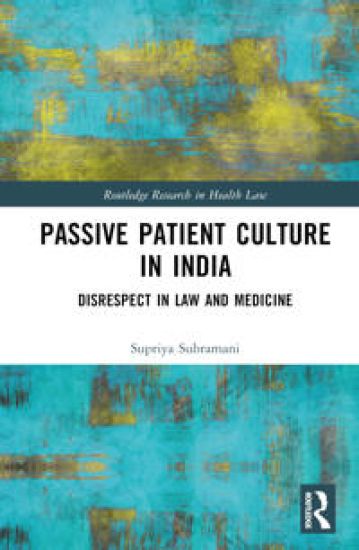
Passive Patient Culture in India

Passive Patient Culture in India

Supriya Subramani

TAYLOR FRANCIS LTD
2025
sidottu
In a society shaped by deep inequalities, where healthcare and legal systems often reinforce class, caste, religion, and gender hierarchies, this book offers a powerful examination of patienthood in India. Through its critical approach, it seeks to disrupt binaries—such as universalistic and particularistic values and data versus theory—while decentering normative discourses by foregrounding lived experiences within the context. It offers philosophical and conceptual insights that extend far beyond local variations and contexts, challenging dominant narratives in global discourses on medical decision-making and concepts such as informed consent, autonomy, and respect.This book critiques the archetype of the “passive patient” entrenched in both medicine and law in India — an image that undermines agency, diminishes self-respect, and sustains a culture of disrespect. Chapters of the book unpacks the intersections of power, social categories, and patienthood, exposing how marginalized communities face everyday indignities in healthcare and law. It explores law and medicine’s role in maintaining presumed 'passive patient' archetype, especially through legal judgements and healthcare encounters. This book advocates for reimagining patienthood as centered on self-respect, recognition, and agency, arguing that the “passive patient” is not an isolated phenomenon but an outcome of broader, oppressive structures.Contributing to robust debates in medical sociology, bioethics, and social justice, this book is essential reading for those interested in the intersections of these fields, along with applied ethics, health services research, and law.This book is freely available as downloadable Open Access PDFs at http://www.taylorfrancis.com under a Creative Commons Attribution-Non Commercial-No Derivatives (CC-BY-NC-ND) 4.0 license.
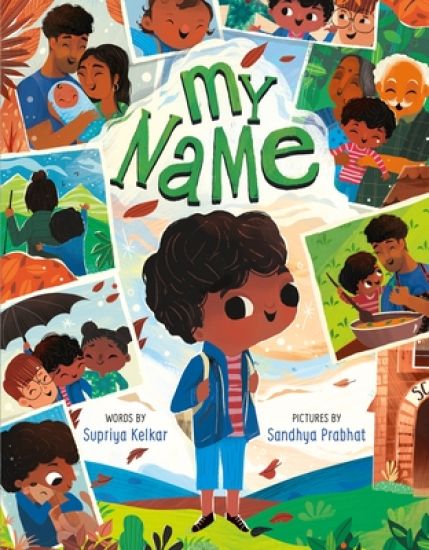
My Name

My Name

Supriya Kelkar

FARRAR, STRAUS GIROUX INC
2023
sidottu
Your name means you’re different Your name means you’re you When an Indian-American boy starts school in a new classroom, one child can't pronounce his name properly, which leads to giggles amongst his classmates. Later at home, his parents remind him of how special he is - and how his unique name reflects that. From the author of the upcoming Brown Is Beautiful, Supriya Kelkar writes a stunning tributary poem to the word that identifies each of us the very most - our name. And paired with lush illustrations by Sandhya Prabhat, this picture book reminds readers of the beauty in celebrating difference, taking pride in uniqueness, and helping others to do the same.
Brown Is Beautiful

Brown Is Beautiful

Supriya Kelkar

FARRAR, STRAUS GIROUX INC
2022
sidottu
Brown is beautiful. On a hike with her grandparents, a young Indian American girl makes note of all the things in the wilderness that are brown, too. From a nurturing mother bear, to the steadiness of deep twisting roots, to the beauty of a wild mustang, brown is everywhere! On her way, the girl collects the beautiful brown things she encounters as mementos for a scrap book to share with a very special new addition to her family - a baby brother. Brown is you. Brown is me. Here is an uplifting, tender exploration of beauty, joy, and self-love, with playful illustrations by rising star and South Asian illustrator Noor Sofi.
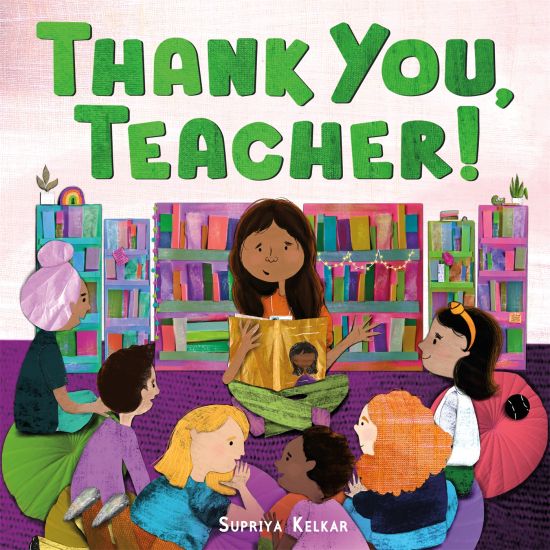
Thank You, Teacher!

Thank You, Teacher!

Supriya Kelkar

FARRAR, STRAUS GIROUX INC
2025
sidottu
In this sweet, rollicking poem about the ups and downs of a school year, Indian-American author and illustrator Supriya Kelkar crafts a delightful ode to the educators everywhere who shape our lives. Featuring a wide variety of teachers - from homeroom to gym to music class - this is the perfect gift book for any school-aged child to give their educators. Celebrate Back to School, the First 100 Days, National Teacher Day & Appreciation Week (the first week of May), and Graduation by writing an educator a thank-you note using the author's how-to guide in the backmatter. From weekday victories to school-trip catastrophes and even hard-to-place apostrophes, there is no problem too hard to solve when a teacher is in the classroom!
Enhancing Capabilities through Labour Law
In 2002 the International Labour Organization issued a report titled ‘Decent work and the informal economy’ in which it stressed the need to ensure appropriate employment and income, rights at work, and effective social protection in informal economic activities. Such a call by the ILO is urgent in the context of countries such as India, where the majority of workers are engaged in informal economic activities, and where expansion of informal economic activities is coupled with deteriorating working conditions and living standards.This book explores the informal economic activity of India as a case study to examine typical requirements in the work-lives of informal workers, and to develop a means to institutionalise the promotion of these requirements through labour law. Drawing upon Amartya Sen’s theoretical outlook, the book considers whether a capability approach to human development may be able to promote recognition and work-life conditions of a specific category of informal workers in India by integrating specific informal workers within a social dialogue framework along with a range of other social partners including state and non-state institutions. While examining the viability of a human development based labour law in an Indian context, the book also indicates how the proposals put forth in the book may be relevant for informal workers in other developing countries.This research monograph will be of great interest to scholars of labour law, informal work and workers, law and development, social justice, and labour studies.
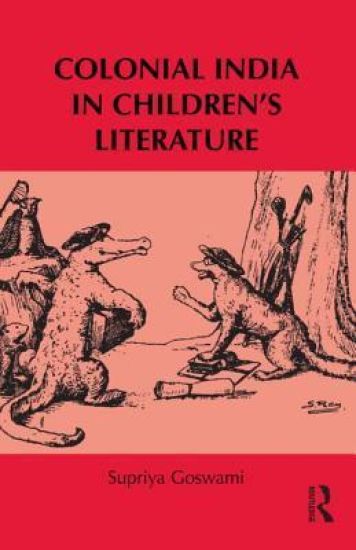
Colonial India in Children's Literature
Colonial India in Children’s Literature is the first book-length study to explore the intersections of children’s literature and defining historical moments in colonial India. Engaging with important theoretical and critical literature that deals with colonialism, hegemony, and marginalization in children's literature, Goswami proposes that British, Anglo-Indian, and Bengali children’s literature respond to five key historical events: the missionary debates preceding the Charter Act of 1813, the defeat of Tipu Sultan, the Mutiny of 1857, the birth of Indian nationalism, and the Swadeshi movement resulting from the Partition of Bengal in 1905. Through a study of works by Mary Sherwood (1775-1851), Barbara Hofland (1770-1844), Sara Jeanette Duncan (1861-1922), Rudyard Kipling (1865-1936), Upendrakishore Ray (1863-1915), and Sukumar Ray (1887-1923), Goswami examines how children’s literature negotiates and represents these momentous historical forces that unsettled Britain’s imperial ambitions in India. Goswami argues that nineteenth-century British and Anglo-Indian children’s texts reflect two distinct moods in Britain’s colonial enterprise in India. Sherwood and Hofland (writing before 1857) use the tropes of conversion and captivity as a means of awakening children to the dangers of India, whereas Duncan and Kipling shift the emphasis to martial prowess, adaptability, and empirical knowledge as defining qualities in British and Anglo-Indian children. Furthermore, Goswami’s analysis of early nineteenth-century children’s texts written by women authors redresses the preoccupation with male authors and boys’ adventure stories that have largely informed discussions of juvenility in the context of colonial India.This groundbreaking book also seeks to open up the canon by examining early twentieth-century Bengali children’s texts that not only draw literary inspiration from nineteenth-century British children’s literature, but whose themes are equally shaped by empire.
Caliban's Curse

Caliban's Curse

Supriya Nair

The University of Michigan Press
1996
sidottu
Ever present in the work of contemporary Barbadian novelist George Lamming, author of In the Castle of My Skin, Natives of My Person, The Emigrants, and The Pleasures of Exile, are the subjects of history and revolution. In Caliban's Curse, Supriya M. Nair traces these themes and situates Lamming's work within the ongoing discourses of nationalism and identity. Retracing the history of colonial intervention in the anglophone Caribbean and seeking connections among Africa, the Caribbean, and England, Caliban's Curse moves beyond the popular perception of the archipelago as an ahistorical tourist paradise and presents the islands as a space populated by the tragic and triumphant cultures of the black diaspora.Caliban's Curse draws upon a range of theories--postcolonial, Marxist, and feminist--to contextualize the black diaspora of the modern Caribbean through one of its primary anglophone novelists. Putting George Lamming in conversation with such contemporaries as C.L.R. James, Derek Walcott, and Wilson Harris, Nair argues that Lamming's works expand the protest of Shakespeare's Caliban to articulate a reinvention of Caribbean cultures. Both cursed by and cursing the weight of colonial history, Lamming works against the paralysis induced by such an encounter; his work serves to rewrite canonical icons and to reimagine popular cultures. "Supriya Nair writes about the problems of history and social revolution with passion and clarity and an amazing range of critical and cultural reference. . . . She brings to existing studies of Lamming a wide and sustained knowledge of the forces that have shaped the West Indian novel, and the wider postcolonial debates in which these novels are read and discussed." --Simon Gikandi, University of MichiganSupriya Nair is Associate Professor of English, Tulane University.
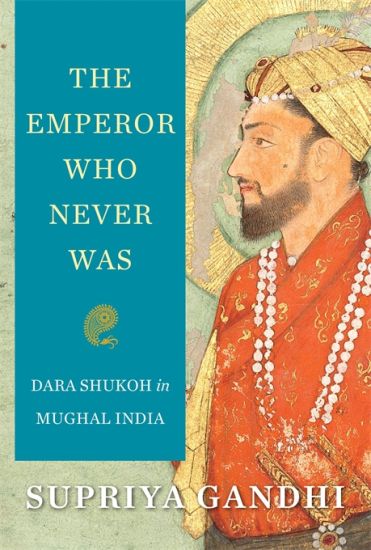
The Emperor Who Never Was

The Emperor Who Never Was

Supriya Gandhi

The Belknap Press
2020
sidottu
The definitive biography of the eldest son of Emperor Shah Jahan, whose death at the hands of his younger brother Aurangzeb changed the course of South Asian history.Dara Shukoh was the eldest son of Shah Jahan, the fifth Mughal emperor, best known for commissioning the Taj Mahal as a mausoleum for his beloved wife Mumtaz Mahal. Although the Mughals did not practice primogeniture, Dara, a Sufi who studied Hindu thought, was the presumed heir to the throne and prepared himself to be India’s next ruler. In this exquisite narrative biography, the most comprehensive ever written, Supriya Gandhi draws on archival sources to tell the story of the four brothers—Dara, Shuja, Murad, and Aurangzeb—who with their older sister Jahanara Begum clashed during a war of succession. Emerging victorious, Aurangzeb executed his brothers, jailed his father, and became the sixth and last great Mughal. After Aurangzeb’s reign, the Mughal Empire began to disintegrate. Endless battles with rival rulers depleted the royal coffers, until by the end of the seventeenth century Europeans would start gaining a foothold along the edges of the subcontinent.Historians have long wondered whether the Mughal Empire would have crumbled when it did, allowing European traders to seize control of India, if Dara Shukoh had ascended the throne. To many in South Asia, Aurangzeb is the scholastic bigot who imposed a strict form of Islam and alienated his non-Muslim subjects. Dara, by contrast, is mythologized as a poet and mystic. Gandhi’s nuanced biography gives us a more complex and revealing portrait of this Mughal prince than we have ever had.