

Kirjahaku
Etsi kirjoja tekijän nimen, kirjan nimen tai ISBN:n perusteella.
1000 tulosta hakusanalla Suresh K Agarwal


The 3rd American Dream: That is Global in Reach
Suresh K. Sharma
Createspace Independent Publishing Platform
2014
nidottu
An entrepreneur offers a vision for a new wave of American economic success. A unique, original and timely recommendation for the economic future of the United States in the 21st century, offering well-researched and well thought-out proposals sure to spark discussion "Mr. Sharma is an intellectual business leader". Drawing on history, economic theory and his own experience as an immigrant, an employee and an entrepreneur, Sharma (Global Outsourcing, 2005) lays out a road map for American prosperity based on innovation and a high-tech infrastructure that allows the best and brightest to both collaborate and compete. The book begins with an overview of what the author defines as the two previous American dreams: one in an agricultural economy based on family farms in the 19th century, and the other in a broad base of homeowners subsidized by government policy in the 20th century. Sharma's vision for the 21st century and beyond relies on a governmental policy that provides a structure for federally backed startup funding-a structure, he says, more effective than venture capitalists focused on quick profits and one that will become self-sustaining as successful businesses share equity rather than repay interest. That startup funding would be supported by a network of national and regional hubs for education and innovation, guided by the understanding that manufacturing as well as the service industry are necessary for a stable economy. The book goes into detail as to how the education, health and energy sectors would develop under this plan. It is clear that Sharma has thought through the details of his fundamental reorganization of the economy, as the book offers not only big-picture theoretical explanations for his advice, but also itemized discussions of how his proposed structures, such as a Cabinet-level innovation department and an integrated system of in-person and remote education, should be set up, funded and operated. The book successfully handles a very broad and integrated topic in a very clear and distilled way. It is almost breathtaking in its scope, vision and sheer audacity. Although the book is at times overly enthusiastic about American uniquenesses - "In any other country, if one played well and lost the game it is still applauded, but not in the United States"; "We forget that Americans, by nature, are the most competitive people on this planet" - Sharma does point out that he reached this conclusion after years of international experience. After all, "While the world is copying the past, America is innovating" for future. Sharma's call to the 'policy makers to be predictive to stay relevant to the present' is very timely in the age of big data analytics. It is time for everyone to understand what needs to be done to create a futuristic business and life ecosystem that unleash the potential of each and every human being on this planet. USA has a distinct advantage to show a practical roadmap for that This is the revised 2nd Edition of the book that has already received very positive endorsements over last one year.

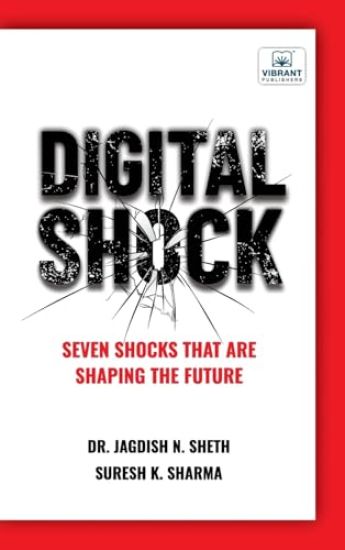
In a world where technology shapes every aspect of our lives, "Digital Shock: Seven Shocks That Are Shaping the Future" delves into the profound disruptions we face today-and those still to come. Digital technologies like the Internet and social media have thrust us into unforeseen and new ways of life. We are also witnessing rapid advancements in fields such as Codifying Trust, Artificial Intelligence, Quantum Computing, and others.In this digital age, technology has transformed mobility and agriculture, but it has also led to resource depletion and health issues.How did we manage these shifts in the past, and how will we cope with even greater changes in the present and future? Will we survive in the current world of the Internet, mobile phones, eCommerce, and social media? Or, are we in for a rude shock? Will we adapt or become a lonely 'Society of One'?"Digital Shock," written by prominent global thought leaders and some of the most published authors of our time, identifies seven shocks we are all experiencing in the 21st century. These include coping with digital addiction, families living like roommates, the emergence of virtual communities, the borderless world of social media, lack of governance, and the need to adaptively reuse physical assets like factories and malls.Contrary to doomsday thinkers, we believe humanity will not only absorb each shockbut also consider it as an opportunity for more discoveries and innovations. We foresee that withour cognitive capabilities, and some proactive planning by each individual and society, wewill once again embrace the future not only to survive but also to thrive.Hence, this book is neither academic nor prescriptive, nor is it a treatise on technology. Itdiffers in its execution and engagement of this critical subject that impacts all our lives.
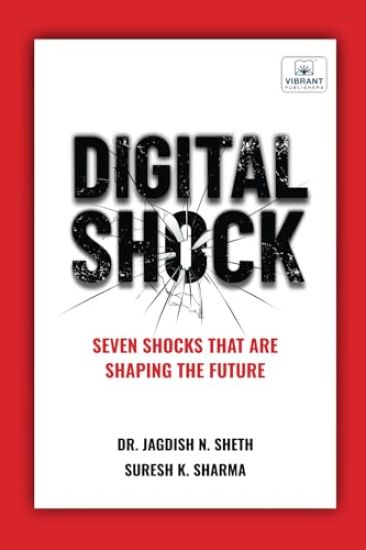
In a world where technology shapes every aspect of our lives, "Digital Shock: Seven Shocks That Are Shaping the Future" delves into the profound disruptions we face today-and those still to come. Digital technologies like the Internet and social media have thrust us into unforeseen and new ways of life. We are also witnessing rapid advancements in fields such as Codifying Trust, Artificial Intelligence, Quantum Computing, and others.In this digital age, technology has transformed mobility and agriculture, but it has also led to resource depletion and health issues.How did we manage these shifts in the past, and how will we cope with even greater changes in the present and future? Will we survive in the current world of the Internet, mobile phones, eCommerce, and social media? Or, are we in for a rude shock? Will we adapt or become a lonely 'Society of One'?"Digital Shock," written by prominent global thought leaders and some of the most published authors of our time, identifies seven shocks we are all experiencing in the 21st century. These include coping with digital addiction, families living like roommates, the emergence of virtual communities, the borderless world of social media, lack of governance, and the need to adaptively reuse physical assets like factories and malls.Contrary to doomsday thinkers, we believe humanity will not only absorb each shock but also consider it as an opportunity for more discoveries and innovations. We foresee that withour cognitive capabilities, and some proactive planning by each individual and society, we will once again embrace the future not only to survive but also to thrive.Hence, this book is neither academic nor prescriptive, nor is it a treatise on technology. It differs in its execution and engagement of this critical subject that impacts all our lives.
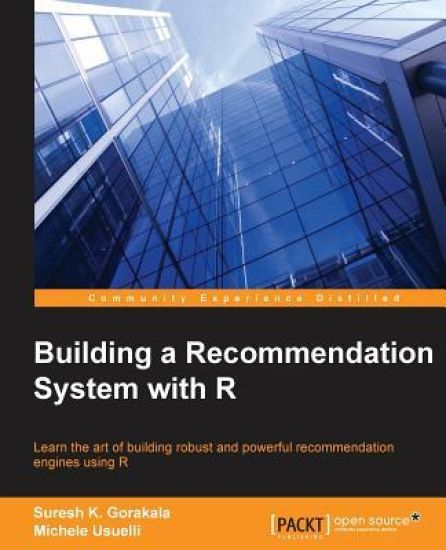
Building a Recommendation System with R
Suresh K. Gorakala; Michele Usuelli
Packt Publishing Limited
2015
nidottu
Learn the art of building robust and powerful recommendation engines using R About This Book • Learn to exploit various data mining techniques • Understand some of the most popular recommendation techniques • This is a step-by-step guide full of real-world examples to help you build and optimize recommendation engines Who This Book Is For If you are a competent developer with some knowledge of machine learning and R, and want to further enhance your skills to build recommendation systems, then this book is for you. What You Will Learn • Get to grips with the most important branches of recommendation • Understand various data processing and data mining techniques • Evaluate and optimize the recommendation algorithms • Prepare and structure the data before building models • Discover different recommender systems along with their implementation in R • Explore various evaluation techniques used in recommender systems • Get to know about recommenderlab, an R package, and understand how to optimize it to build efficient recommendation systems In Detail A recommendation system performs extensive data analysis in order to generate suggestions to its users about what might interest them. R has recently become one of the most popular programming languages for the data analysis. Its structure allows you to interactively explore the data and its modules contain the most cutting-edge techniques thanks to its wide international community. This distinctive feature of the R language makes it a preferred choice for developers who are looking to build recommendation systems. The book will help you understand how to build recommender systems using R. It starts off by explaining the basics of data mining and machine learning. Next, you will be familiarized with how to build and optimize recommender models using R. Following that, you will be given an overview of the most popular recommendation techniques. Finally, you will learn to implement all the concepts you have learned throughout the book to build a recommender system. Style and approach This is a step-by-step guide that will take you through a series of core tasks. Every task is explained in detail with the help of practical examples.

Industrializing Innovation-the Next Revolution
Suresh K. Sharma; Karl E. Meyer
Springer Nature Switzerland AG
2019
sidottu
Over the past 25 years, the field of innovation, entrepreneurship and commercialization has reached a critical mass and maturity. It is not only possible but also essential to scale it so that an immense amount of untapped human innovative potential can be unleashed for the benefit of our people. Further, R&D centers and existing entrepreneurial ecosystems can be made more impactful. Firstly, this book succinctly identifies the entire field of innovation into one comprehensive and meaningful framework to help understand its evolution, incremental growth, super acceleration, and exponential explosion that has resulted in an innovation log jam. Secondly, it maps out common characteristics and approaches that make innovation, venture capital and investments into startups succeed much better. And, last, but not the least, it outlines measures to commercialize them in a massive way and "industrialize" innovation going forward including creating next generation 'Innovation Hubs'.
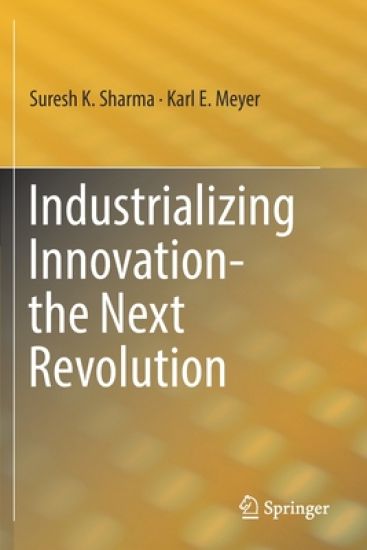
Industrializing Innovation-the Next Revolution
Suresh K. Sharma; Karl E. Meyer
Springer Nature Switzerland AG
2020
nidottu
Over the past 25 years, the field of innovation, entrepreneurship and commercialization has reached a critical mass and maturity. It is not only possible but also essential to scale it so that an immense amount of untapped human innovative potential can be unleashed for the benefit of our people. Further, R&D centers and existing entrepreneurial ecosystems can be made more impactful. Firstly, this book succinctly identifies the entire field of innovation into one comprehensive and meaningful framework to help understand its evolution, incremental growth, super acceleration, and exponential explosion that has resulted in an innovation log jam. Secondly, it maps out common characteristics and approaches that make innovation, venture capital and investments into startups succeed much better. And, last, but not the least, it outlines measures to commercialize them in a massive way and "industrialize" innovation going forward including creating next generation 'Innovation Hubs'.

Photovoltaic Based Multilevel Inverter For Grid System
Suresh K. P.; Pandiyan P.; Senthilkumar M.
Lap Lambert Academic Publishing
2018
nidottu

ANFIS Controller Based Energy Management System
Suresh K. P.; Lenin Pugalhanthi P.; Senthilkumar R.
Lap Lambert Academic Publishing
2020
nidottu

HYBRID MICROGRID
Suresh K; Azhagumurugan R; Rajakumar P
Lap Lambert Academic Publishing
2022
nidottu


MICRORRED HÍBRIDA
Suresh K; Azhagumurugan R; Rajakumar P
Ediciones Nuestro Conocimiento
2022
nidottu




Photovoltaik-basierter Multilevel-Wechselrichter für Netzsysteme
Suresh K P; Pandiyan P; Senthilkumar M
Verlag Unser Wissen
2023
pokkari
Diese Forschungsarbeit stellt eine neue einphasige Topologie mit hohem Wirkungsgrad und hohem Leistungsfaktor f r ein Netzsystem mit 220 V Ausgangsspannung vor. Das System besteht im Wesentlichen aus einer Photovoltaikanlage, einem Gleichspannungswandler, einem einphasigen kaskadierten Multilevel-Wechselrichter, einem Systemregler und einem Netzsystem. Da die PV-Spannung f r das einphasige Netzsystem unzureichend ist, wurde der Aufw rtswandler so konzipiert, dass er die PV-Spannung auf eine stabile Gleichspannung ohne Batteriespeicherung hochsetzt. Bei dem vorgeschlagenen DC-DC-Wandler wird die Ausgangsspannung mit einem PI-Regler gesteuert. Die Ausgangsleistung der PV-Anlage kann sich durch Umgebungsbedingungen wie Einstrahlung und Temperatur ndern. Daher kann die Spannungs-Strom-Kennlinie einer Photovoltaikanlage nichtlinear sein, und es wurde ein Regler mit der Bezeichnung Maximum Power Point Tracking (MPPT) entwickelt, um die Leistung der Solaranlage so anzupassen, dass kontinuierlich die maximale Leistung aus den Solarmodulen gewonnen wird. Um die durch die Verwendung von Transformatoren entstehenden Verluste, die Gr e und das Gewicht zu reduzieren, wird ein transformatorloser Multilevel-Wechselrichter f r das Netzsystem verwendet. In dem vorgeschlagenen System wurde die sinusf rmige PWM zur Synthese der Ausgangsspannung verwendet.

Onduleur multiniveau basé sur le photovoltaïque pour le réseau électrique
Suresh K. P.; Pandiyan P.; Senthilkumar M.
Editions Notre Savoir
2023
nidottu