
Kirjahaku
Etsi kirjoja tekijän nimen, kirjan nimen tai ISBN:n perusteella.
1000 tulosta hakusanalla Susan Herman Livingstone

Managers who hire employees, human resource directors who train line managers and supervisors to do the hiring, and consultants will all benefit from this hands-on manual. The book takes readers through each step in the hiring process, including job definition, recruitment, interviewing, testing and checking references. Each chapter briefly outlines key concepts and includes several exercises and worksheets that will serve as a complete hiring strategy that can be customized to any manager's specific hiring needs.

The Third Edition of this widely used and respected book has been thoroughly revised and updated to offer the most current research, thinking, and best practices regarding crime victims and crime victim services. Using an engaging and comprehensible format, editors Robert C. Davis, Arthur J. Lurigio, and Susan Herman provide a synopsis of the contemporary literature and debates on significant topics in the field of criminal victimization. New to the Third Edition: Utilizes the latest research and studies in the areas of violence, abuse, and victims' rights: While the chapter titles may appear similar, all feature new contributors in this edition and many new key areas with associated research are addressed. Included among the new topics covered are elder abuse, school-based violence, victims of homicide, victims of terrorist acts, the role of first responders, and the roles of various people on victim support. Focuses on the emerging issues and policies in the fields of victim rights and crime prevention: New contributors, all preeminent experts in their fields, update original concepts to bring forward current trends, recent research, along with policy changes in victimization crimes and victim services. Makes material more accessible to the non-technical reader: Written jargon-free, chapters are now introduced with vignettes, which provide individual case studies to motivate the material to follow. In addition, the text includes topical subjects to enhance student interest by tying it into current events. Intended Audience: This is an ideal core textbook for victims of crime and general victims courses at the advanced undergraduate and graduate levels. It is also an excellent resource for researchers, practitioners, victims' rights advocates, and those who deal with victims in the fields of Law, Social Work, Counseling, and Criminal Justice.

In this eye-opening work, the president of the ACLU takes a hard look at the human and social costs of the War on Terror. A decade after 9/11, it is far from clear that the government's hastily adopted antiterrorist tactics--such as the Patriot Act--are keeping us safe, but it is increasingly clear that these emergency measures in fact have the potential to ravage our lives--and have already done just that to countless Americans. From the Oregon lawyer falsely suspected of involvement with terrorism in Spain to the former University of Idaho football player arrested on the pretext that he was needed as a "material witness" (though he was never called to testify), this book is filled with unsettling stories of ordinary people caught in the government's dragnet. These are not just isolated mistakes in an otherwise sound program, but demonstrations of what can happen when our constitutional protections against government abuse are abandoned. Whether it's running a chat room, contributing to a charity, or even urging a terrorist group to forego its violent tactics, activities that should be protected by the First Amendment can now lead to prosecution. Blacklists and watchlists keep people grounded at airports and strand American citizens abroad, although these lists are rife with errors--errors that cannot be challenged. National Security Letters allow the FBI to demand records about innocent people from libraries, financial institutions, and internet service providers without ever going to court. Government databanks now brim with information about every aspect of our private lives, while efforts to mount legal challenges to these measures have been stymied. Barack Obama, like George W. Bush, relies on secrecy and exaggerated claims of presidential prerogative to keep the courts and Congress from fully examining whether these laws and policies are constitutional, effective, or even counterproductive. Democracy itself is undermined. This book is a wake-up call for all Americans, who remain largely unaware of the post-9/11 surveillance regime's insidious and continuing growth.

Herman provides an analysis and reference guide for the rights that the Sixth Amendment guarantees in all criminal prosecutions. She provides a history of the generation of each right from ancient times through the present. The public trial chapters analyze the development of Supreme Court case law interpreting the Sixth Amendment right and the companion First Amendment right of public access to trials, and then discuss current issues in interpretation of the Sixth Amendment right, including the controversial issue of cameras in the courtroom and the current questions about open proceedings involving alleged terrorists. The speedy trial chapters trace the development of the ideal of prompt proceedings and the Supreme Court's laws in this area, including a critique of the major Supreme Court cases.Discussion of recent case law highlights open issues regarding the scope of the Sixth Amendment rights and comments on the impact of speedy trial legislation introduced in the 1970s. Each section concludes with a bibliographical essay discussing the major books and law review articles written in each area and also included a table of cases cited.

The Promise Effect: How to Create a Life That Wasn't Going to Happen Anyway
Susan Woldman Elfer; Josselyne Herman-Saccio
Slw Fine Art
2010
nidottu

Moby Dick, Or The Whale: The Good Parts
Susan Brassfield Cogan; Herman Melville
Createspace Independent Publishing Platform
2009
nidottu

Advanced Introduction to US Civil Liberties
Susan N. Herman
EDWARD ELGAR PUBLISHING LTD
2023
sidottu
Elgar Advanced Introductions are stimulating and thoughtful introductions to major fields in the social sciences, business, and law, expertly written by the world’s leading scholars. Designed to be accessible yet rigorous, they offer concise and lucid surveys of the substantive and policy issues associated with discrete subject areas. This insightful Advanced Introduction provides a kaleidoscopic overview of key US civil liberties, including freedom of speech, press, assembly, and religion, limitations on search and seizure, due process in criminal proceedings, autonomy rights, rights of equality, and democratic participation. Key Features: Discusses the historical development and current status of core civil libertiesExamines the tension between libertarian and egalitarian views of civil libertiesPromotes further understanding of the role of the US Supreme Court and other actors in setting levels of protection for civil libertiesProvides an overview of common themes in development and interpretation of constitutionally protected civil liberties in multiple areas, including abortion Featuring examples of how key civil liberties have been shaped by historical, legal, and philosophical forces, this Advanced Introduction will be essential reading for students and scholars in American studies, history, human rights, law and politics, and political science.

Advanced Introduction to US Civil Liberties
Susan N. Herman
EDWARD ELGAR PUBLISHING LTD
2023
nidottu
Elgar Advanced Introductions are stimulating and thoughtful introductions to major fields in the social sciences, business, and law, expertly written by the world’s leading scholars. Designed to be accessible yet rigorous, they offer concise and lucid surveys of the substantive and policy issues associated with discrete subject areas. This insightful Advanced Introduction provides a kaleidoscopic overview of key US civil liberties, including freedom of speech, press, assembly, and religion, limitations on search and seizure, due process in criminal proceedings, autonomy rights, rights of equality, and democratic participation. Key Features: Discusses the historical development and current status of core civil libertiesExamines the tension between libertarian and egalitarian views of civil libertiesPromotes further understanding of the role of the US Supreme Court and other actors in setting levels of protection for civil libertiesProvides an overview of common themes in development and interpretation of constitutionally protected civil liberties in multiple areas, including abortion Featuring examples of how key civil liberties have been shaped by historical, legal, and philosophical forces, this Advanced Introduction will be essential reading for students and scholars in American studies, history, human rights, law and politics, and political science.

Launching a Redesign of University Principal Preparation Programs
Elaine Lin Wang; Susan M Gates; Rebecca Herman
RAND
2018
nidottu
The Wallace Foundation's University Principal Preparation Initiative (UPPI) is a four-year effort to support the redesign of seven universities' principal preparation programs--with engagement of state and district partners--according to evidence-based principles and practices. This report provides insight into the first year of UPPI implementation.

When Parkinson's Strikes Early
Barbara Blake-Krebs M a; Linda Herman; Susan Reese
Hunter House Publishers
2001
sidottu
Parkinson's disease is often associated with the elderly, but half a million sufferers are in their early fifties or younger. This disorder carries both a physical and social stigma, with neurological degeneration made worse by the refusal of many to seek help. When Parkinson's Strikes Early grew out of an Internet discussion group in 1996, and was further inspired by actor Michael J. Fox's revelation that he has Parkinson's disease. This book covers symptoms, side effects of medication, support networks, and surgery options, and explores the physical, emotional, and social struggles that face young people with Parkinson's. Resources, advocacy ideas, and an index are also included.

Susan Hekman believes we are witnessing an intellectual sea change. The main features of this change are found in dichotomies between language and reality, discourse and materiality. Hekman proposes that it is possible to find a more intimate connection between these pairs, one that does not privilege one over the other. By grounding her work in feminist thought and employing analytic philosophy, scientific theory, and linguistic theory, Hekman shows how language and reality can be understood as an indissoluble unit. In this broadly synthetic work, she offers a new interpretation of questions of science, modernism, postmodernism, and feminism so as to build knowledge of reality and extend how we deal with nature and our increasingly diverse experiences of it.
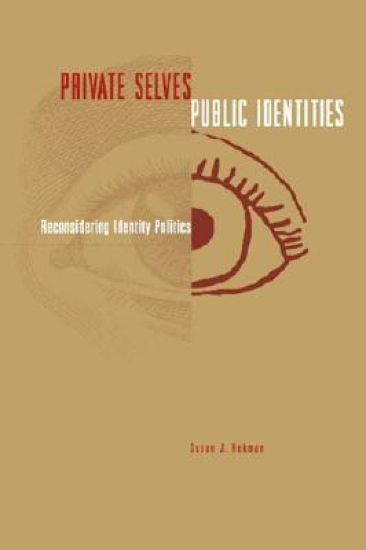
In an age when "we are all multiculturalists now," as Nathan Glazer has said, the politics of identity has come to pose new challenges to our liberal polity and the presuppositions on which it is founded. Just what identity means, and what its role in the public sphere is, are questions that are being hotly debated. In this book Susan Hekman aims to bring greater theoretical clarity to the debate by exposing some basic misconceptions—about the constitution of the self that defines personal identity, about the way liberalism conceals the importance of identity under the veil of the "abstract citizen," and about the difference and interrelationship between personal and public identity. Hekman’s use of object relations theory allows her to argue, against the postmodernist resort to a "fictive" subject, for a core self that is socially constructed in the early years of childhood but nevertheless provides a secure base for the adult subject. Such a self is social, particular, embedded, and connected—a stark contrast to the neutral and disembodied subject posited in liberal theory. This way of construing the self also opens up the possibility for distinguishing how personal identity functions in relation to public identity. Against those advocates of identity politics who seek reform through the institutionalization of group participation, Hekman espouses a vision of the politics of difference that eschews assigning individuals to fixed groups and emphasizes instead the fluidity of choice arising from the complex interaction between the individual’s private identity and the multiple opportunities for associating with different groups and the public identities they define. Inspired by Foucault’s argument that "power is everywhere," Hekman maps out a dual strategy of both political and social/cultural resistance for this new politics of identity, which recognizes that with significant advances already won in the political/legal arena, attitudinal change in civil society presents the greatest challenge for achieving more progress today in the struggle against racism, sexism, and other forms of oppression.
In an age when "we are all multiculturalists now," as Nathan Glazer has said, the politics of identity has come to pose new challenges to our liberal polity and the presuppositions on which it is founded. Just what identity means, and what its role in the public sphere is, are questions that are being hotly debated. In this book Susan Hekman aims to bring greater theoretical clarity to the debate by exposing some basic misconceptions—about the constitution of the self that defines personal identity, about the way liberalism conceals the importance of identity under the veil of the "abstract citizen," and about the difference and interrelationship between personal and public identity. Hekman’s use of object relations theory allows her to argue, against the postmodernist resort to a "fictive" subject, for a core self that is socially constructed in the early years of childhood but nevertheless provides a secure base for the adult subject. Such a self is social, particular, embedded, and connected—a stark contrast to the neutral and disembodied subject posited in liberal theory. This way of construing the self also opens up the possibility for distinguishing how personal identity functions in relation to public identity. Against those advocates of identity politics who seek reform through the institutionalization of group participation, Hekman espouses a vision of the politics of difference that eschews assigning individuals to fixed groups and emphasizes instead the fluidity of choice arising from the complex interaction between the individual’s private identity and the multiple opportunities for associating with different groups and the public identities they define. Inspired by Foucault’s argument that "power is everywhere," Hekman maps out a dual strategy of both political and social/cultural resistance for this new politics of identity, which recognizes that with significant advances already won in the political/legal arena, attitudinal change in civil society presents the greatest challenge for achieving more progress today in the struggle against racism, sexism, and other forms of oppression.

In 1903 Bogdan Kistiakovsky railed against Lenin's concept of a vanguard party to lead the revolution, remarking that he did not want to see the Romanov autocracy replaced with the despotism of Lenin in the name of the dictatorship of the proletariat. His charge was wholly consistent with a life (1868–1920) devoted to the development of rule of law in the Russian Empire—a new government based on respect for national minorities, human rights, and constitutional federalism. Susan Heuman's study shows the fresh urgency of Kistiakovsky's ideas as Russia, Ukraine, and the other countries of the former Soviet Union seek to establish precisely those values that Kistiakovsky put forth ninety years ago. Heuman's analysis and portrait of Kistiakovsky will provoke scholars of Russian and Ukrainian intellectual history to reassess early twentieth-century politics and society in the Russian Empire.

In 1903 Bogdan Kistiakovsky railed against Lenin's concept of a vanguard party to lead the revolution, remarking that he did not want to see the Romanov autocracy replaced with the despotism of Lenin in the name of the dictatorship of the proletariat. His charge was wholly consistent with a life (1868–1920) devoted to the development of rule of law in the Russian Empire—a new government based on respect for national minorities, human rights, and constitutional federalism. Susan Heuman's study shows the fresh urgency of Kistiakovsky's ideas as Russia, Ukraine, and the other countries of the former Soviet Union seek to establish precisely those values that Kistiakovsky put forth ninety years ago. Heuman's analysis and portrait of Kistiakovsky will provoke scholars of Russian and Ukrainian intellectual history to reassess early twentieth-century politics and society in the Russian Empire.

Omaelämänkerrallinen kertomus selvännäköisen ihmisen elämästä, jossa hän samanaikaisesti on yhteydessä henkimaailmaan ja kokee tämän maailman haasteet.