The Bongster children learn that elections have consequences-even for children. Following an election defeat, Ronald Rump, the mayor of New Blighty, absconds with the tax money from the town coffers. The new mayor is even worse. He steals parents away from their children and holds them hostage in his pub. The resourceful Bongsters, with the assistance of their pets and a giant virus, recover the stolen money and pay the ransom for their parents. Will the loathsome politicians get their royal comeuppance?
The Bongster children learn that elections have consequences-even for children. Following an election defeat, Ronald Rump, the mayor of New Blighty, absconds with the tax money from the town coffers. The new mayor is even worse. He steals parents away from their children and holds them hostage in his pub. The resourceful Bongsters, with the assistance of their pets and a giant virus, recover the stolen money and pay the ransom for their parents. Will the loathsome politicians get their royal comeuppance?
Selected as a Doody's Core Title for 2022 and 2023! Comprehensive, authoritative, and up to date, Pizzo and Poplack’s Pediatric Oncology, 8th Edition, remains your most trusted source of information on the care and research of children with cancer. This award-winning text is the single most comprehensive reference on the biology and genetics of childhood cancer, its diagnosis and multimodal treatment, and long-term management. In the tradition of excellence established by Drs. Philip A. Pizzo and David G. Poplack, this 8th Edition keeps you fully informed while helping you collaborate more effectively with others on the cancer care team to enhance quality-of-life issues for patients and families. Covers all aspects of the breadth and depth of childhood cancer, including basic science, diagnostic tools, principles of treatment, and clinical trials, as well as highly detailed, definitive coverage of each pediatric malignancy. Includes updates to current treatment approaches based on the results of recently completed and published clinical research. Contains new information on the biology of pediatric malignancies and strategies for the conduct of clinical trials that reflect the rapid pace of laboratory discovery. Features chapters on palliative care and education, and covers supportive care in contexts such as emergencies, infectious disease, and nutrition. Provides expert guidance on state-of-the-art, multidisciplinary care for children and families, including psychosocial aspects of care and perspectives from patients and parents. Discusses the cooperative nature of pediatric oncology as a model for cancer research with information from cooperative clinical trial groups and consortia. Enrich Your eBook Reading ExperienceRead directly on your preferred device(s), such as computer, tablet, or smartphone. Easily convert to audiobook, powering your content with natural language text-to-speech.
Pizzo and Poplack’s Principles and Practice of Pediatric Oncology, 9th Edition remains the definitive, comprehensive reference in pediatric oncology. Under the expert editorial leadership of Drs. Susan M. Blaney, Peter C. Adamson, and Lee J. Helman, this edition builds on a legacy of excellence spanning decades. A world-renowned team of international, multidisciplinary experts delivers authoritative, up-to-date insights into the biology and genetics of childhood cancer, diagnostic techniques, and multimodal treatment approaches. The Ninth Edition integrates the latest research breakthroughs, including advances in targeted therapies, immunotherapies, and precision medicine. It also expands its in-depth coverage of supportive care, symptom management, survivorship, and the long-term effects of therapy. This award-winning text continues to be the essential guide for pediatric oncologists, hematologists, researchers, and trainees dedicated to improving outcomes for children with cancer. Comprehensive Scope: Covers all aspects of pediatric cancer, from basic biology and genetics to diagnosis, treatment, and long-term survivorship. Cutting-Edge Updates: Reflects the latest clinical trial data and breakthroughs in targeted and immune-based therapies. Precision Medicine Focus: Highlights biomarker-driven approaches and personalized treatment strategies. Supportive Care Expertise: Provides deep guidance on symptom management, palliative care, and psychosocial support for children and families. Trusted Authority: Written and edited by leading experts, ensuring evidence-based, multidisciplinary perspectives.
The definitive account of the housing bubble that caused the Great Recession—and earned Wall Street fantastic profits.The American housing bubble of the 2000s caused the worst global financial crisis since the Great Depression. In this definitive account, Adam Levitin and Susan Wachter pinpoint its source: the shift in mortgage financing from securitization by Fannie Mae and Freddie Mac to “private-label securitization” by Wall Street banks. This change set off a race to the bottom in mortgage underwriting standards, as banks competed in laxity to gain market share.The Great American Housing Bubble tells the story of the transformation of mortgage lending from a dysfunctional, local affair, featuring short-term, interest-only “bullet” loans, to a robust, national market based around the thirty-year fixed-rate mortgage, a uniquely American innovation that served as the foundation for the middle class.Levitin and Wachter show how Fannie and Freddie’s market power kept risk in check until 2003, when mortgage financing shifted sharply to private-label securitization, as lenders looked for a way to sustain lending volume following an unprecedented refinancing wave. Private-label securitization brought a return of bullet loans, which had lower initial payments—enabling borrowers to borrow more—but much greater back-loaded risks. These loans produced a vast oversupply of underpriced mortgage finance that drove up home prices unsustainably. When the bubble burst, it set off a destructive downward spiral of home prices and foreclosures.Levitin and Wachter propose a rebuild of the housing finance system that ensures the widespread availability of the thirty-year fixed-rate mortgage, while preventing underwriting competition and shifting risk away from the public to private investors.
Vasileios Adamidis; Elizabeth C. Britt; David A. Frank; Michael Gagarin; Eugene Garver; Mark A. Hannah; Catherine L. Langford; Craig A. Meyer; Susan E. Provenzano; Nick J. Sciullo; Laura A. Webb
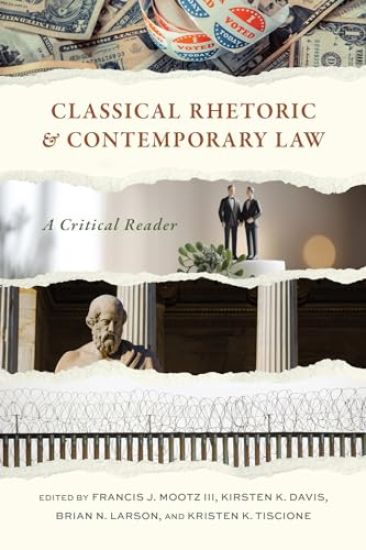
Pairs passages from works of classical rhetoric with contemporary legal rulings to highlight and analyze their deep and abiding connections in matters of persuasionClassical Rhetoric and Contemporary Law: A Critical Reader is a rich work that analyzes the interplay between ancient rhetorical traditions and modern legal practice, reestablishing the lost connections between law and classical rhetoric. From Isocrates’s Panegyricus in 380 BCE to the landmark US Supreme Court case Trump v. Hawaii in 2018, and from Antiphon’s fifth century BCE First Tetralogy to 1995’s O. J. Simpson trial, the volume draws on an array of sources to illuminate how ancient rhetorical insights may even today challenge and enrich our grasp of contemporary legal principles. The collection opens with a brisk review of the historical development of rhetoric. The second part examines a pair of rhetorical theorists whose works frame the period across which classical rhetoric declined as a mode of thought. A contemporary appellate case contrasts with the work of Giambattista Vico, an eighteenth-century professor of rhetoric who warned of the separation of law from rhetoric. The analysis of the work of twentieth-century scholars ChaÏm Perelman and Lucie Olbrects-Tyteca shows that where Cartesian rationality fails, the humanistic tradition of rhetoric allows the law to respond to the needs of justice. In the third part, ten case studies bring together a classical rhetorical theorist with a contemporary court case, demonstrating the abiding relevance of the classical tradition to contemporary jurisprudence. With its cross-disciplinary appeal, Classical Rhetoric and Contemporary Law encompasses the work of legal, rhetorical, English, and communication scholars alike, catalyzing interactive exploration into the profound ways ancient rhetorical insights continue to shape our comprehension of today’s legal landscape.CONTRIBUTORS Vasileios Adamidis / Elizabeth C. Britt / Kirsten K. Davis / David A. Frank / Michael Gagarin / Eugene Garver / Mark A. Hannah / Catherine L. Langford / Brian N. Larson / Craig A. Meyer / Francis J. Mootz III / Susan E. Provenzano / Nick J. Sciullo / Kristen K. Tiscione / Laura A. Webb
________________'This anthology will help turn your intellectual understanding of oppression into an emotional one' - New Statesman'Thanks for being who you are and for giving us such exposure to wonderful people. Palestine is proud of you' - Suad Amiry________________The Palestine Festival of Literature was established in 2008. Bringing together writers from all corners of the globe, it aims to help Palestinians break the cultural siege imposed by the Israeli military occupation, to strengthen their artistic links with the rest of the world, and to reaffirm, in the words of Edward Said, ‘the power of culture over the culture of power’.Celebrating the tenth anniversary of PalFest, This Is Not a Border is a collection of essays, poems and stories from some of the world’s most distinguished artists, responding to their experiences at this unique festival. Both heartbreaking and hopeful, their gathered work is a testament to the power of literature to promote solidarity and courage in the most desperate of situations.Contributors: Susan Abulhawa, Suad Amiry, Victoria Brittain, Jehan Bseiso, Teju Cole, Molly Crabapple, Selma Dabbagh, Mahmoud Darwish, Najwan Darwish, Geoff Dyer, Yasmin El-Rifae, Adam Foulds, Ru Freeman, Omar Robert Hamilton, Suheir Hammad, Nathalie Handal, Mohammed Hanif, Jeremy Harding, Rachel Holmes, John Horner, Remi Kanazi, Brigid Keenan, Mercedes Kemp, Omar El-Khairy, Nancy Kricorian, Sabrina Mahfouz, Jamal Mahjoub, Henning Mankell, Claire Messud, China Miéville, Pankaj Mishra, Deborah Moggach, Muiz, Maath Musleh, Michael Palin, Ed Pavlic, Atef Abu Saif, Kamila Shamsie, Raja Shehadeh, Gillian Slovo, Ahdaf Soueif, Linda Spalding, Will Sutcliffe, Alice WalkerWith messages from China Achebe, Michael Ondaatje and J. M. Coetzee________________'Every literary act, whether it is a great epic poem or an honest piece of journalism or a simple nonsense tale for children is a blow against the forces of stupidity and ignorance and darkness … The Palestine Festival of Literature exists to do just that – and I salute it for its work. Not only this year but for as long as it is necessary' - Philip Pullman
A leadership and learning expert shows you how to change your behavior, develop soft skills, and achieve personal and professional growth through a series of small experiments she calls “Flexing.” A personnel shift at your organization puts you into a leadership role you don't feel prepared for. Your boss tells you that you seem aloof and unapproachable in client meetings. You need to win the support of the members of a local community group for a project you feel passionate about.Addressing these diverse issues depends on improving your soft skills—such as time management, team building, communication and listening, creative thinking, and problem-solving. But this isn’t as easy as it may seem.Sue Ashford, the chair of the Management and Organizations group at the Ross School of Business, has the solution. In this timely book, she introduces Flexing—a technique individuals, teams, and entire organizations can use to learn, grow, and develop their skills and knowledge with every new project, work assignment, and problem. Flexing empowers you to embrace any challenge and adapt to any change, yielding practical, valuable takeaways that ensure growth.Flexing helps you move ahead when you’re confronted with a new challenge, or simply want to develop a vital skill. It’s a journey that begins with setting a flex goal—stating explicitly what you want to learn and how you want to grow. Once that flex goal is set, you then begin to run experiments, solicit feedback from peers or colleagues, and monitor and tweak your progress on the way to achieving your goal. Flexing can be tailored to each person, allowing you to reflect on your own experiences and incorporate the lessons you learn in the next project you tackle. It’s a growth mindset that will help you become the best version of yourself.Flexing also works with teams and organizations. Ashford teaches small groups and large how to implement flexing to ensure their members are ready for new challenges. With more people moving to remote working full-time and developing new ways of collaborating in teams, this warm and practical guide will help every professional and any organization on the journey to greater effectiveness.
This course manual instructs students in recombinant DNA techniques and other essential molecular biology techniques in the context of projects. The project approach inspires and captivates students; it involves them in the scientific experience, providing continuity to laboratory bench time and an understanding of the principles underlying the techniques presented. Molecular Biology is a must for any department, operating under budgetary constraints that offers or plans to offer a course in molecular cloning.
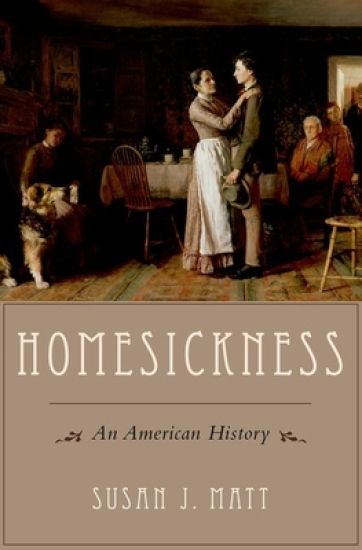
Homesickness today is dismissed as a sign of immaturity, what children feel at summer camp, but in the nineteenth century it was recognized as a powerful emotion. When gold miners in California heard the tune "Home, Sweet Home," they sobbed. When Civil War soldiers became homesick, army doctors sent them home, lest they die. Such images don't fit with our national mythology, which celebrates the restless individualism of colonists, explorers, pioneers, soldiers, and immigrants who supposedly left home and never looked back. Using letters, diaries, memoirs, medical records, and psychological studies, this wide-ranging book uncovers the profound pain felt by Americans on the move from the country's founding until the present day. Susan Matt shows how colonists in Jamestown longed for and often returned to England, African Americans during the Great Migration yearned for their Southern homes, and immigrants nursed memories of Sicily and Guadalajara and, even after years in America, frequently traveled home. These iconic representatives of the undaunted, forward-looking American spirit were often homesick, hesitant, and reluctant voyagers. National ideology and modern psychology obscure this truth, portraying movement as easy, but in fact Americans had to learn how to leave home, learn to be individualists. Even today, in a global society that prizes movement and that condemns homesickness as a childish emotion, universities counsel young adults and their families on how to manage the transition away from home, suburbanites pine for their old neighborhoods, and companies take seriously the emotional toll borne by relocated executives and road warriors. In the age of helicopter parents and boomerang kids, and the new social networks that sustain connections across the miles, Americans continue to assert the significance of home ties. By highlighting how Americans reacted to moving farther and farther from their roots, Homesickness: An American History revises long-held assumptions about home, mobility, and our national identity.
Due to some of the limitations imposed by MS, such as chronic fatigue, depression, and muscle weakness, patients often become sedentary, gaining excess weight and developing poor eating and exercise habits. The LIFE Program for MS is a user-friendly teaching tool that helps sufferers to incorporate new behaviors into their daily routines, to live a healthier life and reduce the chances of secondary illnesses, such as cancer, stroke, and heart disease. Drawing on her own experience as a professional athlete, as well as her work at the Jacobs Neurological Institute in Buffalo, New York, Susan J. Epstein provides readers with tips and strategies for healthy eating, managing weight, incorporating exercise into daily life, and managing and conserving both mental and physical energy for daily living. She also emphasizes the importance of establishing a support system of coaches who can provide the MS patient with motivation and reinforcement. Finally, she addresses the unpredictable factors in life that affect behavior outcomes, whether family, environment, vocation, or self-awareness.
Restoration Theatre and Crisis is a seminal study of the drama of the Restoration, in particular that of the Popish Plot and Exclusion Crisis. This was a time of unprecedented political partisanship in the theatre. This book cosniders all the known plays of this period, including works by Dryden and Behn, in their historical context. It examines the complex ways in which the drama both reflected and intervened in the political process, at a time when the crisis fractured an already fragile post-interregnum consensus, and modern party political methods first began to develop. Susan Owen discusses the ways in which Tory and Whig playwrights engaged in dramatic dialogue, deliberately commenting on and revising each other's themes and topics. The book also explores the arena of sexual politics, examining the political significance of themes such as disharmony in the family, and the importance of rape as a dramatic signifier of monstrosity associated with rebellion by the Tories and tyranny and popery by the Whigs. Restoration Theatre and Crisis considers the use of sexuality as a political discourse, and ways in which ideas about libertinism and constructions of masculinity and femininity intersect with political concerns in the drama. Thus the book bridges the gap between `gender-blind' political accounts and studies which have focused on gender themes in the drama in isolation from party politics.
Homesickness today is dismissed as a sign of immaturity, what children feel at summer camp, but in the nineteenth century it was recognized as a powerful emotion. When gold miners in California heard the tune "Home, Sweet Home," they sobbed. When Civil War soldiers became homesick, army doctors sent them home, lest they die. Such images don't fit with our national mythology, which celebrates the restless individualism of colonists, explorers, pioneers, soldiers, and immigrants who supposedly left home and never looked back. Using letters, diaries, memoirs, medical records, and psychological studies, this wide-ranging book uncovers the profound pain felt by Americans on the move from the country's founding until the present day. Susan Matt shows how colonists in Jamestown longed for and often returned to England, African Americans during the Great Migration yearned for their Southern homes, and immigrants nursed memories of Sicily and Guadalajara and, even after years in America, frequently traveled home. These iconic symbols of the undaunted, forward-looking American spirit were often homesick, hesitant, and reluctant voyagers. National ideology and modern psychology obscure this truth, portraying movement as easy, but in fact Americans had to learn how to leave home, learn to be individualists. Even today, in a global society that prizes movement and that condemns homesickness as a childish emotion, colleges counsel young adults and their families on how to manage the transition away from home, suburbanites pine for their old neighborhoods, and companies take seriously the emotional toll borne by relocated executives and road warriors. In the age of helicopter parents and boomerang kids, and the new social networks that sustain connections across the miles, Americans continue to assert the significance of home ties. By highlighting how Americans reacted to moving farther and farther from their roots, Homesickness: An American History revises long-held assumptions about home, mobility, and our national identity.
Women remain dramatically underrepresented in elective office, including in entry-level political offices. While they enjoy the freedom to stand for office and therefore have an equal legal footing with men, this persistent gender imbalance raises pressing questions about democratic legitimacy, the inclusivity of American politics, and the quality of political representation. The reasons for women's underrepresentation remain the subject of much debate. One explanation--that the United States lacks sufficient openings for political newcomers--has become less compelling in recent years, as states that have adopted term limits have not seen the expected gains in women's office holding. Other accounts about candidate scarcity, gender inequalities in society, and the lingering effects of gendered socialization have some merit; however, these accounts still fail to explain the relatively low numbers. This book argues that a major problem with current accounts exists in their underlying assumption that there is a single model of candidate emergence. The prediction is that women's office holding will rise automatically as women acquire the same backgrounds as men and assimilate to men's pathways to office. In this view, the main reasons for women's political underrepresentation can be found in society rather than in politics. Carroll and Sanbonmatsu argue for a new approach that considers women on their own terms and that focuses on the political origins of women's representation. Drawing upon an original and comparative survey of women state legislators across all fifty states, from 1981 and 2008, and follow-up surveys after the 2008 elections, the authors find that gender differences in pathways to the legislatures, first evident in 1981, have been surprisingly persistent over time. They found that, while the ambition framework better explains men's decisions to run for office, women are much more reliant on the existence of organizational and party support. By rethinking the nature of women's representation, this study calls for a reorientation of academic research on women's election to office and provides insight into new strategies for political practitioners concerned about women's political equality.
Women remain dramatically underrepresented in elective office, including in entry-level political offices. While they enjoy the freedom to stand for office and therefore have an equal legal footing with men, this persistent gender imbalance raises pressing questions about democratic legitimacy, the inclusivity of American politics, and the quality of political representation. The reasons for women's underrepresentation remain the subject of much debate. One explanation--that the United States lacks sufficient openings for political newcomers--has become less compelling in recent years, as states that have adopted term limits have not seen the expected gains in women's office holding. Other accounts about candidate scarcity, gender inequalities in society, and the lingering effects of gendered socialization have some merit; however, these accounts still fail to explain the relatively low numbers. This book argues that a major problem with current accounts exists in their underlying assumption that there is a single model of candidate emergence. The prediction is that women's office holding will rise automatically as women acquire the same backgrounds as men and assimilate to men's pathways to office. In this view, the main reasons for women's political underrepresentation can be found in society rather than in politics. Carroll and Sanbonmatsu argue for a new approach that considers women on their own terms and that focuses on the political origins of women's representation. Drawing upon an original and comparative survey of women state legislators across all fifty states, from 1981 and 2008, and follow-up surveys after the 2008 elections, the authors find that gender differences in pathways to the legislatures, first evident in 1981, have been surprisingly persistent over time. They found that, while the ambition framework better explains men's decisions to run for office, women are much more reliant on the existence of organizational and party support. By rethinking the nature of women's representation, this study calls for a reorientation of academic research on women's election to office and provides insight into new strategies for political practitioners concerned about women's political equality.
This is a book about the risks and rewards of home ownership in the 21st century. Using a range of vivid examples, it shows how housing markets work to concentrate wealth into property, how the role of mortgage markets has changed, and how financial markets have failed to manage the credit and investment risks to which home occupiers are exposed. A clear-sighted view of the problems of the housing economy, Safe as Houses? makes complex economic ideas accessible to an interdisciplinary readership. It exposes a kaleidoscope of overlapping markets whose workings tie the meagre budgets of the poorest home-buyers to the massive turnover of the world's largest financial exchanges. Home ownership is a risky business. But in a thought-provoking analysis, Susan Smith argues that the precarious financial position of the average home-occupier may benefit as much from the cautious use of innovative instruments as from the wholesale dismantling of financial capitalism. Interdisciplinary in style, drawing from cultural economy, material sociology, and economic anthropology, as well as from mainstream housing economics, this book provides a clear analysis of the housing market in the current financial crisis, with a practical edge, engaging with policy, practice, and everyday life.
This is a book about the risks and rewards of home ownership in the 21st century. Using a range of vivid examples, it shows how housing markets work to concentrate wealth into property, how the role of mortgage markets has changed, and how financial markets have failed to manage the credit and investment risks to which home occupiers are exposed. A clear-sighted view of the problems of the housing economy, Safe as Houses? makes complex economic ideas accessible to an interdisciplinary readership. It exposes a kaleidoscope of overlapping markets whose workings tie the meagre budgets of the poorest home-buyers to the massive turnover of the world's largest financial exchanges. Home ownership is a risky business. But in a thought-provoking analysis, Susan Smith argues that the precarious financial position of the average home-occupier may benefit as much from the cautious use of innovative instruments as from the wholesale dismantling of financial capitalism. Interdisciplinary in style, drawing from cultural economy, material sociology, and economic anthropology, as well as from mainstream housing economics, this book provides a clear analysis of the housing market in the current financial crisis, with a practical edge, engaging with policy, practice, and everyday life.
In Growing in Love and Wisdom, Susan Stabile draws on a unique dual perspective to explore the value of interreligious dialogue, the essential spiritual dynamics that operate across faith traditions, and the many fruitful ways Buddhist meditation practices can deepen Christian prayer. Raised as a Catholic, Stabile devoted 20 years of her life to practicing Buddhism and was ordained as a Tibetan Buddhist nun before returning to Catholicism in 2001. She begins the book by examining the values and principles shared by the two faith traditions, focusing on the importance of prayer--particularly contemplative prayer--to both Christianity and Tibetan Buddhism. Both traditions seek to effect a fundamental transformation in the lives of believers, and both stress the need for experiences that have deep emotional resonance, that go beyond the level of concepts to touch the heart. Stabile illuminates the similarities between Tibetan Buddhist meditations and Christian forms of prayer such as Ignatian Contemplation and Lectio Divina; she explores as well such guided Buddhist practices as Metta and Tonglen, which cultivate compassion and find echoes in Jesus' teachings about loving one's enemies and transcending self-cherishing. The heart of the book offers 15 Tibetan Buddhist practices adapted to a contemplative Christian perspective. Stabile provides clear instructions on how to do these meditations as well as helpful commentary on each, explaining its purpose and the relation between the original and her adaptation. Throughout, she highlights the many remarkably close parallels in the teachings of Jesus and Buddha. Arguing that engagement between religions offers mutual enrichment and greater understanding of both traditions, Growing in Love and Wisdom shows how Buddhist meditation can be fruitfully joined to Christian prayer.
In 1877, the American Humane Society was formed as the national organization for animal and child protection. Thirty years later, there were 354 anticruelty organizations chartered in the United States, nearly 200 of which were similarly invested in the welfare of both humans and animals. In The Rights of the Defenseless, Susan J. Pearson seeks to understand the institutional, cultural, legal, and political significance of the perceived bond between these two kinds of helpless creatures, and the attempts made to protect them.Unlike many of today’s humane organizations, those Pearson follows were delegated police powers to make arrests and bring cases of cruelty to animals and children before local magistrates. Those whom they prosecuted were subject to fines, jail time, and the removal of either animal or child from their possession. Pearson explores the limits of and motivation behind this power and argues that while these reformers claimed nothing more than sympathy with the helpless and a desire to protect their rights, they turned “cruelty” into a social problem, stretched government resources, and expanded the state through private associations. The first book to explore these dual organizations and their storied history, The Rights of the Defenseless will appeal broadly to reform-minded historians and social theorists alike.