
Kirjahaku
Etsi kirjoja tekijän nimen, kirjan nimen tai ISBN:n perusteella.
1000 tulosta hakusanalla Susan Joan Collins
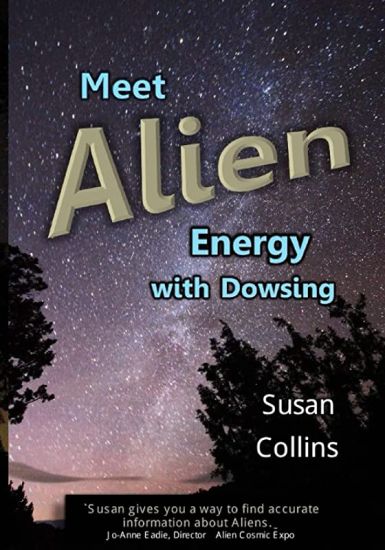
Have you ever wondered if there are Space Aliens visiting our planet? Maybe you or a friend has had an unusual experience with "Something" that isn't part of our "normal" reality. The truth is we live in a multidimensional world. What we can see, hear and touch with our normal senses doesn't include what we can perceive with our electromagnetic senses. Dowsing, a natural biofeedback system that anyone can learn, is a way to investigate the electromagnetic realms where Alien Beings and energies seem to be able to intersect with our world. This book will teach you to dowse so that you can safely interact with these energies . It will help you create the psychic protection to interview interdimensional Beings to see if they are here to help you or if you should use the techniques presented to remove them. The truth is out there and "Meet Alien Energy with Dowsing" will help you find it Testimonials for this book: "Susan's knowledge of Dowsing gives balance and a new perspective to the topic of UFOology. She gives you a way to find accurate information and Aliens and our interactions with them. Susan is a brilliant Speaker, Teacher and Dowser."JoAnne Eadie, Director of Alien Cosmic Expo 2015-2018 "Susan has brought forward an important and timely dowsing system that works with the seen and unseen worlds that surround us. Delving into these topics with the right intentions will help us unlock hidden worlds of experience that will answer some of our most profound questions." Jason Quitt, author of Forbidden Knowledge www.thecrystalsun.ca
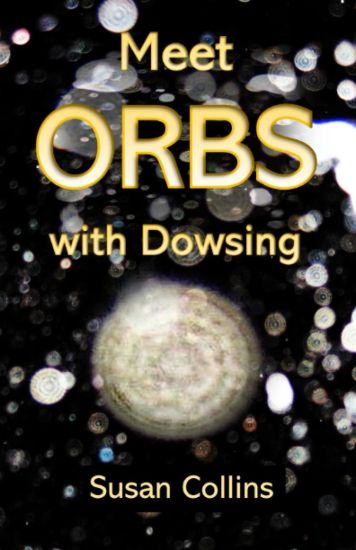
The presence of "Orbs" (ephemeral, unidentifiable lights and misty shapes) in photographs and videos has left many people asking if they are evidence of spirit presence in our world, or do they show persistent, catastrophic camera malfunctions. Some people dismiss the images as simply dust particles caught by the camera, and while it is true that some Orb photos may be explained away that easily, I believe that the images present in many photos (and this book) simply cannot be explained by conventional knowledge of the physical universe. I think that continued investigation of these energy phenomena will lead not only to new answers about the structure of our universe, but to new questions as well. This book is lavishly illustrated with full-colour photographs of an astounding variety of Orbs and provides detailed instructions on how to safely interact and photograph them. "Are you interested in Orbs, Angels, Spirit Guides and other non-physical phenomena? My friend Susan Collins has investigated these things and incorporated her knowledge in this book. I think you will find it interesting." Raymon Gracewww.raymongrace.us "Susan is a very highly regarded teacher and a regular speaker at the West Coast Dowsing and Metaphysics Conference. She presents her original research and invites your curiosity into the fascinating phenomenon of Orbs: what they may be, where they appear, and their interaction with humans. This book will lead you into full engagement with the Orb phenomena. A fascinating read." Karen Ashley, Past Director, West Coast Dowsing/Metaphysical Conferencedowserswestcoast.com "Susan Collins is a world leader in the field of earth, environment and universal energy dowsing. Her discoveries, and powerful techniques, benefit people globally. Her contributions and teachings are invaluable in the field of energy work." Tim Bell, Energy and Dowsing Practitioner
Sometimes we have problems in our lives and we don't know why This book will teach you to dowse to figure out if Earth, Environmental or Psychic energies are preventing you from moving forward into health and success and show you ways to remove those obstacles. In this book Susan shares her renowned Dowsing and Triage Protocols that will help you accurately pinpoint energies that are causing issues in your life. The Triage Checklists guide you to find the source of symptoms and suggest remedies to transform the energies around you to create successful ongoing outcomes. There are sections on Map Dowsing, Visionary Detection, Chakra Alignment, Spirit Release, using Charts and even a Glossary that will help you understand the wonderful world of dowsing Dowsing is a natural biofeedback technology that anyone can learn to use. Even if you've never dowsed before this book will give you the fundamental information you need. For more detailed information on dowsing, please see Susan's other Kindle books or one of Susan's print books at www.dowser.ca. Medical, legal, and financial advice are not provided. Susan Collins has been a professional dowser for over twenty years and has taught dowsing to thousands of people around the world. She is pleased to share her knowledge and experience in this book.


An introduction to the famous horse paintings that positioned Rothenberg as a virtuoso of 1970s American figuration Susan Rothenberg’s (1945–2020) iconic horse paintings of the 1970s brought her much acclaim as a young painter and offered the artist an apt vehicle for her expressive gesture and keen understanding of the picture plane. This pivotal series remains the work for which Rothenberg is best known, and this in-depth volume offers readers the opportunity to explore these works alongside a foreword by artist Joan Jonas, an interview with artist Mary Heilmann and an essay by curator and scholar Michael Auping. As critic Hilton Kramer famously wrote of her work in Artforum in 1977, “Rothenberg ... has combined the elements of Degas’ horses with Barnett Newman’s vertical ‘zips.’ Which is an interesting combination of elements, to say the least. But it is in the quality of the painting itself that this artist makes her deepest impression.” It was on the basis of these works that Rothenberg was featured in the seminal New Image Painting exhibition of 1974.

Most existing housing offers a poor fit for older people and people with disabilities, and new construction adds less than 2 per cent to the housing each year. Ninety-nine percent of the housing that will be in use in the year 2000 exists today. The long-needed anthology "Staying Put: Adapting the Places Instead of the People" emphasizes the disabilities and abilities of environments instead of individuals. With contributions from leading authorities, it integrates a wide range of theoretical and practical ideas about housing adaptation for researchers, students, consumers, policymakers, and practitioners in human services and the building trades.
Men Who Hate Women and the Women Who Love Them
Susan Forward; Joan Torres
Random House USA Inc
2002
pokkari
Is this the way love is supposed to feel?- Does the man you love assume the right to control how you live and behave?- Have you given up important activities or people to keep him happy?- Is he extremely jealous and possessive?- Does he switch from charm to anger without warning?- Does he belittle your opinions, your feelings, or your accomplishments?- Does he withdraw love, money, approval, or sex to punish you?- Does he blame you for everything that goes wrong in the relationship?- Do you find yourself "walking on eggs" and apologizing all the time? If the questions here reveal a familiar pattern, you may be in love with a misogynist -- a man who loves you, yet causes you tremendous pain because he acts as if he hates you. In this superb self-help guide, Dr. Susan Forward draws on case histories and the voices of men and women trapped in these negative relationships to help you understand your man's destructive pattern and the part you play in it. She shows how to break the pattern, heal the hurt, regain your self-respect, and either rebuild your relationship or find the courage to love a truly loving man.
Challenges and Potential of a Collaborative Approach to Education Reform
Susan Bodilly; Joan Chun; Gina Ikemoto; Sue Stockly
RAND
1995
pokkari
How has the Collaborating for Education Reform Initiative fared at the sites that have adopted it? 450-character abstract: The Ford Foundation developed the Col aborating for Education Reform Initiative, providing grants to collaboratives in urban settings to improve the quality of teaching. Eight sites signed on, and the Rand Corporation assessed their progress. The authors found that, while none had met final goals, the collaboratives had varying degrees of success and some offered promise. By adopting such techniques as clear communication of expectations and involvement of school staff, collabo ratives stand a better chance of success.
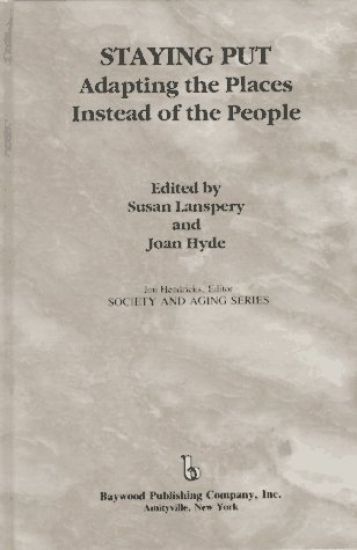
Most existing housing offers a poor fit for older people and people with disabilities, and new construction adds less than 2 per cent to the housing each year. Ninety-nine percent of the housing that will be in use in the year 2000 exists today. The long-needed anthology "Staying Put: Adapting the Places Instead of the People" emphasizes the disabilities and abilities of environments instead of individuals. With contributions from leading authorities, it integrates a wide range of theoretical and practical ideas about housing adaptation for researchers, students, consumers, policymakers, and practitioners in human services and the building trades.
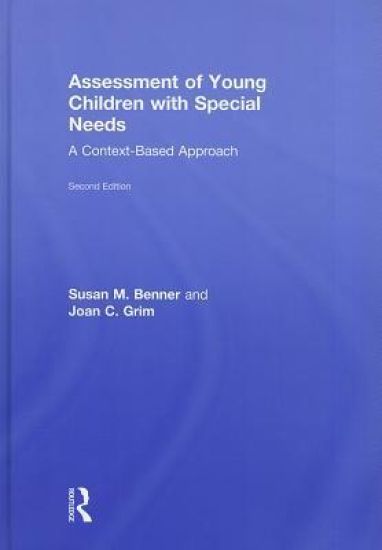
Assessment of Young Children with Special Needs, Second Edition helps prepare teachers for the task of evaluating the skills of infants, toddlers, and preschool children with developmental delays and those considered at risk to experience developmental delays or difficulties. A child’s environment is a critical consideration when focusing on assessment, and authors Susan Benner and Joan Grim explore the important issues of family resources, health, multidimensional environmental influences, economic deprivation, and domestic violence on infant and child development. This textbook conveys a sense of respect for parents, the powerful influence assessment results can and do have in the lives of young children with special needs, and an understanding of the complexity of child development, progression, and measurement. This book sets the tone for important values and beliefs to honor throughout one’s professional life. This fully revised edition addresses recent legislation, updated versions of assessment, and the newest assessment tools that teachers will come across. The popular full-length case studies of the first edition have been updated, and vignettes of other cases are fully integrated across chapters, bringing the text alive with meaning. Assessment of Young Children with Special Needs, Second Edition now includes expanded discussion on progress monitoring and response to intervention, functional behavioral analysis, pros and cons of norm-referenced testing, web-based gathering tools, ELL students, and screening for autism.
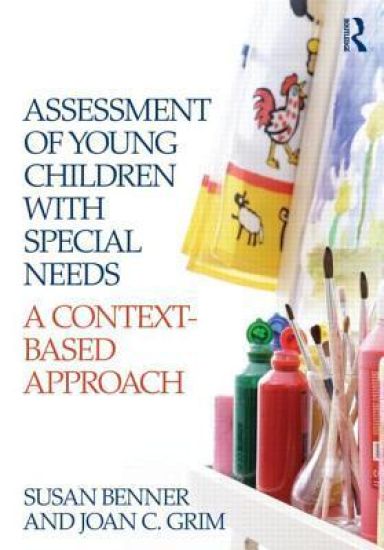
Assessment of Young Children with Special Needs, Second Edition helps prepare teachers for the task of evaluating the skills of infants, toddlers, and preschool children with developmental delays and those considered at risk to experience developmental delays or difficulties. A child’s environment is a critical consideration when focusing on assessment, and authors Susan Benner and Joan Grim explore the important issues of family resources, health, multidimensional environmental influences, economic deprivation, and domestic violence on infant and child development. This textbook conveys a sense of respect for parents, the powerful influence assessment results can and do have in the lives of young children with special needs, and an understanding of the complexity of child development, progression, and measurement. This book sets the tone for important values and beliefs to honor throughout one’s professional life. This fully revised edition addresses recent legislation, updated versions of assessment, and the newest assessment tools that teachers will come across. The popular full-length case studies of the first edition have been updated, and vignettes of other cases are fully integrated across chapters, bringing the text alive with meaning. Assessment of Young Children with Special Needs, Second Edition now includes expanded discussion on progress monitoring and response to intervention, functional behavioral analysis, pros and cons of norm-referenced testing, web-based gathering tools, ELL students, and screening for autism.
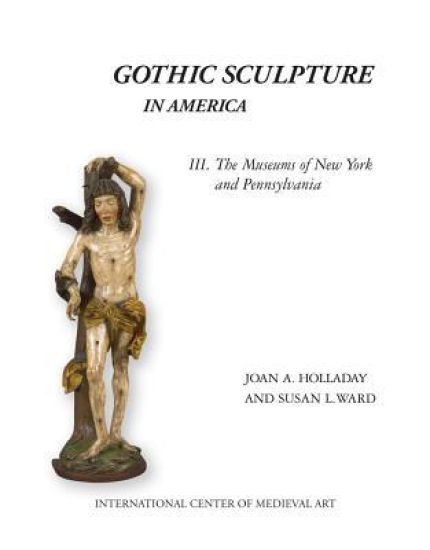
Gothic Sculpture in America III
Joan A. Holladay; Susan L. Ward
International Center of Medieval Art
2016
sidottu
With 446 entries examining some 550 works of figural, architectural, and decorative sculpture in 27 museums and public institutions, this volume continues the Census of Gothic Sculpture in America started by Dorothy Gillerman in 1989. In addition to such large and well-known collections as the Philadelphia Museum of Art and the Glencairn Museum, smaller collections and those not known for their medieval works, like the Barnes Foundation and the Explorers Club, are also inventoried. Generously supported by grants from the National Endowment for the Humanities and the Getty Foundation, this book includes entries by 35 individual specialists.

Ethical Educational Leadership in Turbulent Times
Joan Poliner Shapiro; Steven Jay Gross; Susan H. Shapiro
TAYLOR FRANCIS LTD
2025
sidottu
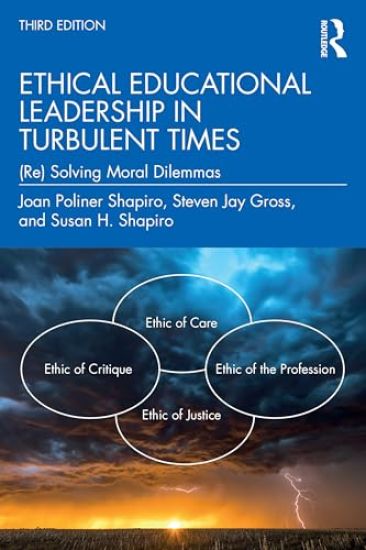
Educational leaders not only face moral and ethical decisions regarding their classrooms, schools, districts, and education institutions, but they also must consider the complexities and threats that impact their communities. Amidst the ongoing challenges of pandemics and natural disasters, this process is exceptionally daunting. Ethical Educational Leadership in Turbulent Times is an engaging, case-study-based text that assists leaders in their ethical decision-making processes during a time of turbulence and uncertainty. The book is framed by Gross’ Turbulence Theory and Shapiro and Stefkovich’s Multiple Ethical Paradigms of justice, critique, care, and the profession. Presenting clear explanations of theory in combination with authentic dilemmas developed by practitioners, this book will assist leaders in dealing with challenging situations in their own settings. Ethical Educational Leadership in Turbulent Times, 3rd edition is a valuable book for both aspiring and practicing educational administrators and leaders.New in this edition: Updated cases throughout to reflect contemporary issues and recent scholarship in the field. New topical case coverage on topics relating to the post-pandemic climate, race and ethnicity, social media, and culturally sensitive teaching. An entirely new chapter with cases about technology, including the strengths and weaknesses of AI in education.
Ethical Educational Leadership in Turbulent Times
Joan Poliner Shapiro; Steven Jay Gross; Susan H. Shapiro
TAYLOR FRANCIS LTD
2025
nidottu
Educational leaders not only face moral and ethical decisions regarding their classrooms, schools, districts, and education institutions, but they also must consider the complexities and threats that impact their communities. Amidst the ongoing challenges of pandemics and natural disasters, this process is exceptionally daunting. Ethical Educational Leadership in Turbulent Times is an engaging, case-study-based text that assists leaders in their ethical decision-making processes during a time of turbulence and uncertainty. The book is framed by Gross’ Turbulence Theory and Shapiro and Stefkovich’s Multiple Ethical Paradigms of justice, critique, care, and the profession. Presenting clear explanations of theory in combination with authentic dilemmas developed by practitioners, this book will assist leaders in dealing with challenging situations in their own settings. Ethical Educational Leadership in Turbulent Times, 3rd edition is a valuable book for both aspiring and practicing educational administrators and leaders.New in this edition: Updated cases throughout to reflect contemporary issues and recent scholarship in the field. New topical case coverage on topics relating to the post-pandemic climate, race and ethnicity, social media, and culturally sensitive teaching. An entirely new chapter with cases about technology, including the strengths and weaknesses of AI in education.
Neural Plasticity and Cognitive Development
Joan Stiles; Judy S. Reilly; Susan C. Levine; Doris A. Trauner; Ruth Nass
Oxford University Press Inc
2012
sidottu
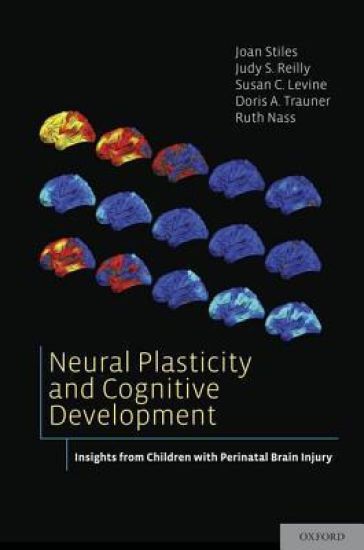
The advent of modern neurobiological methods over the last three decades has provided overwhelming evidence that it is the interaction of genetic factors and the experience of the individual that guides and supports brain development. Brains do not develop normally in the absence of critical genetic signaling, and they do not develop normally in the absence of essential environmental input. The key to understanding the origins and emergence of both the brain and behavior lies in understanding how inherited and environmental factors are engaged in the dynamic and interactive processes that define and direct development of the neurobehavioral system. Neural Plasticity and Cognitive Development focuses on children who suffered focal brain insult (typically stroke) in the pre- or perinatal period which provides a model for exploring the dynamic nature of early brain and cognitive development. In most, though not all, of the cases considered, the injuries affect substantial portions of one cerebral hemisphere, resulting in patterns of neural damage that would compromise cognitive ability in adults. However, longitudinal behavioral studies of this population of children have revealed only mild cognitive deficits, and preliminary data from functional brain imaging studies suggest that alternative patterns of functional organization emerge in the wake of early injury. Neural Plasticity and Cognitive Development posits that the capacity for adaptation is not the result of early insult. Rather, it reflects normal developmental processes which are both dynamic and adaptive operating against a backdrop of serious perturbation of the neural substrate.

Northfield
Marie Booth Ferre; Susan Post Ross; Joan McRae Stoia
Arcadia Publishing Library Editions
2014
sidottu