Kirjahaku
Etsi kirjoja tekijän nimen, kirjan nimen tai ISBN:n perusteella.
1000 tulosta hakusanalla Susan Sellers
An accessible introduction to French feminist theory and contemporary French women's writing for non-French speakers. The book offers a context to this challenging, controversial body of work by giving clear accounts of the philosophical, post-structural and psychoanalytic debates which have had such an impact on French intellectual life in recent years, and to which French feminist writers offer a response.
Woman as gorgon, woman as temptress: the classical and biblical mythology which has dominated Western thinking defines women in a variety of patriarchally encoded roles. This study addresses the surprising persistence of mythical influence in contemporary fiction. Opening with the question 'what is myth?', the first section provides a wide-ranging review of mythography. It traces how myths have been perceived and interpreted by such commentators as Sigmund Freud, Carl Jung, Bruno Bettelheim, Roland Barthes, Jack Zipes and Marina Warner. This leads to an examination of the role that mythic narrative plays in social and self formation, drawing on the literary, feminist and psychoanalytic theories of Julia Kristeva, Luce Irigaray, Helene Cixous and Judith Butler to delineate the ways in which women's mythos can transcend the limitations of logos and give rise to potent new models for individual and cultural regeneration.In this light, Susan Sellers offers challenging new readings of a wide range of contemporary women's fiction, including works by A. S. Byatt, Angela Carter, Anne Rice, Michele Roberts, Emma Tennant and Fay Weldon. Topics explored include fairy tale as erotic fiction, new religious writing, vampires and gender-bending, mythic mothers, genre fiction, the still-persuasive paradigm of feminine beauty, and the radical potential of comedy.
"You see, even after all these years, I wonder if you really loved me." Vanessa and Virginia are sisters, best friends, bitter rivals, and artistic collaborators. As children, they fight for attention from their overextended mother, their brilliant but difficult father, and their adored brother, Thoby. As young women, they support each other through a series of devastating deaths, then emerge in bohemian Bloomsbury, bent on creating new lives and groundbreaking works of art. Through everything--marriage, lovers, loss, madness, children, success and failure--the sisters remain the closest of co-conspirators. But they also betray each other. In this lyrical, impressionistic account, written as a love letter and elegy from Vanessa to Virginia, Sellers imagines her way into the heart of the lifelong relationship between writer Virginia Woolf and painter Vanessa Bell. With sensitivity, imagination, and fidelity to what it known of both lives, Sellers has created a powerful portrait of sibling rivalry.
This book is a clear and accessible introduction to the writings of Helene Cixous, novelist, dramatist and critic, whose work has had a major impact on feminist theory and practice. Susan Sellers, a major scholar on Cixous, provides a lucid account of Cixous's theoretical position, and in particular her distinctive theory of an 'écriture féminine'. She discusses the development of Cixous's literary oeuvre in the context of this theory, and analyses a selection of the works in detail to illustrate the different stages in Cixous's writing career. Focusing on the key novels and plays, Sellers explores a range of issues and themes central to her work; the correlation between the death of Cixous's own father and her 'coming-into-being' as a writer; the psychological process of separation and individuation and the creation of a female authorial self; the discovery of the other and the dramatization of love; the delineation/depiction of an alternative form of relationship between self and other which would have a significance in a wider sphere than that of the merely personal. This much-needed book will be welcomed by students in literature and literary theory, feminism and women's studies, English and French studies and philosophy.
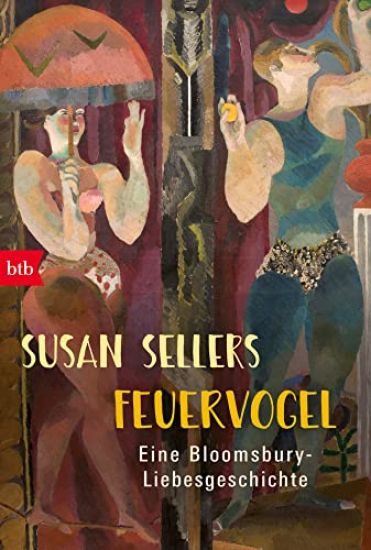
This richly imagined novel tells the surprising story of two of Bloomsbury's most unlikely lovers - John Maynard Keynes, the distinguished economist, and the extrovert Russian dancer Lydia Lopokova. Firebird is the third novel of prize-winning author Susan Sellers, who is also an expert on Bloomsbury and the writing of Virginia Woolf.Weaving biography and fiction, Firebird explores the tangle of Bloomsbury's bohemian relationships as lifestyles are challenged and allegiances shift following Lydia's explosive arrival. It is the winter of 1921 and Diaghilev's Ballets Russes launch a flamboyant new production at London's Alhambra Theatre. Maynard Keynes is in the audience, though he expects little from the evening. Despite Lydia's many triumphs, including the title role in Stravinsky's Firebird, Maynard's mind is made up - he considers her 'a rotten dancer'. Besides, Lydia has at least one husband in tow and Maynard has only ever loved men. Tonight, however, he is moved by her performance, and when the ballet closes in financial disaster leaving its cast penniless, he invites Lydia to move into his Bloomsbury house.No strangers to scandalously unconventional liaisons, Maynard's Bloomsbury friends - Virginia and Leonard Woolf, Vanessa and Clive Bell, Duncan Grant and Lytton Strachey - are intrigued to find the resolutely homosexual Maynard falling for a woman. They assume it is a passing fad. After all, Lydia is a noisy, uneducated chatterbox, while Maynard is a brilliant intellectual whose encylopaedic knowledge and genius for strategy have already made him indispensable to the Treasury. But when Maynard pulls out of a Royal Commission tour to stay close to Lydia, his friends realise they must act. As Virginia writes to her sister Vanessa, everything they value risks ruin from this 'parokeet' whose conversation is limited to 'one shriek, two dances'. Anything other than a brief affair would be 'a fatal and irreparable mistake'. Maynard must be rescued from himself. Vividly recreating Lydia's life-changing journey from Tsarist St Petersburg to Jazz Age London via the Paris of Proust and Picasso, this compelling new novel celebrates a love story that is utterly unexpected, true, and stranger than fiction.
Hélène Cixous: Live Theory
Ian Blyth; Susan Sellers
Continuum International Publishing Group Ltd.
2004
sidottu
Helene Cixous: Live Theory provides a clear and informative introduction to one of the most important and influential European writers working today. The book opens with an overview of the key features of Cixous's theory of ecriture feminine (feminine writing). The various manifestations of ecriture feminine are then explored in chapters on Cixous's fictional and theatrical writing, her philosophical essays, and her intensely personal approach to literary criticism. The book concludes with a new, lively and wide-ranging interview with Helene Cixous in which she discusses her influences and inspirations, and her thoughts on the nature of writing and the need for an ethical relationship with the world. Also offering a survey of the many English translations of Cixous's work, this book is an indispensable introduction to her work for students of Literature, Philosophy, Cultural and Gender Studies.
Hélène Cixous: Live Theory
Ian Blyth; Susan Sellers
Continuum International Publishing Group Ltd.
2004
nidottu
Helene Cixous: Live Theory provides a clear and informative introduction to one of the most important and influential European writers working today. The book opens with an overview of the key features of Cixous's theory of ecriture feminine (feminine writing). The various manifestations of ecriture feminine are then explored in chapters on Cixous's fictional and theatrical writing, her philosophical essays, and her intensely personal approach to literary criticism. The book concludes with a new, lively and wide-ranging interview with Helene Cixous in which she discusses her influences and inspirations, and her thoughts on the nature of writing and the need for an ethical relationship with the world. Also offering a survey of the many English translations of Cixous's work, this book is an indispensable introduction to her work for students of Literature, Philosophy, Cultural and Gender Studies.
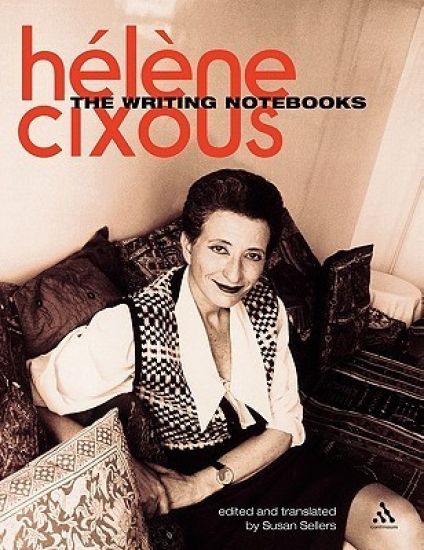
The Writing Notebooks
Helene Cixous; Susan Sellers
Continuum International Publishing Group Ltd.
2006
nidottu
Hne Cixous is among the most influential and original literary critics and feminist thinkers of our time. This volume reproduces - for the first time, in any language - a collection of pages from her original writing notebooks, offering a unique insight into her radical thought and work. The material gathered here ranges across the full spectrum of Cixous' writing, including the concept of criture minine, and the starting points and sources of inspiration for her poetry and prose. The editor's introduction succinctly outlines the central tenets of Cixous' theory of writing. Each extract is accompanied by editorial commentary and a translation, both by Susan Sellers. The book concludes with an interview with Cixous herself, in which she discusses the writing process, her own criticism, fiction and poetry and the value and importance of these notebooks. Students and teachers of literature, psychoanalysis, philosophy and feminist theory will find this an illuminating and inspiring collection of writings. Edited by Susan Sellers, Professor of English and Related Literature at the Univeristy of St Andrews.
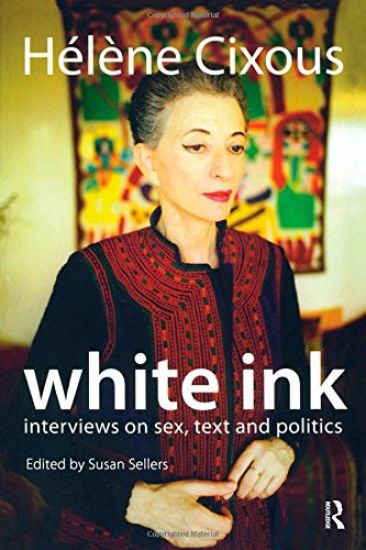
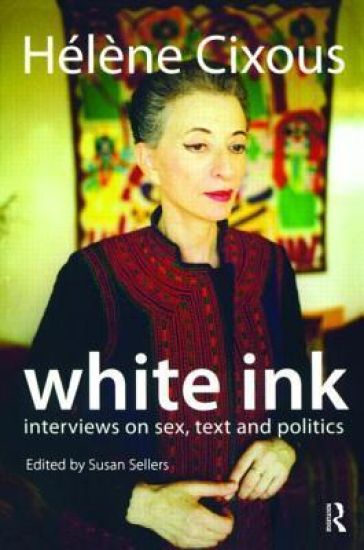
Helene Cixous is widely regarded as one of the world's most influential feminist writers and thinkers. "White Ink" brings together her most revealing interviews, available in English for the first time. Spanning over four decades and including a new interview with the editor Susan Sellers, this collection presents a brilliant, running commentary on the subjects at the heart of Cixous' writing.Here, Cixous discusses her books and her creative process, her views on and insights into literature, philosophy, theatre, politics, aesthetics, faith and ethics, human relations and the state of the world. As she responds to interviewers' questions, Cixous is prompted to reflect on her roles and activities as poet, playwright, feminist theorist, professor of literature, philosopher, woman, Jew. Each interview is a remarkable performance, an event in language and thought where Cixous' celebrated intellectual and poetic force can be witnessed 'in action'. The accessibility of the interview format provides an excellent starting-point for readers new to Cixous, while those already familiar with her work will find unexpected insights and fresh elucidations of her thought.
Helene Cixous is widely regarded as one of the world's most influential feminist writers and thinkers. "White Ink" brings together her most revealing interviews, available in English for the first time. Spanning over four decades and including a new interview with the editor Susan Sellers, this collection presents a brilliant, running commentary on the subjects at the heart of Cixous' writing. Here, Cixous discusses her books and her creative process, her views on and insights into literature, philosophy, theatre, politics, aesthetics, faith and ethics, human relations and the state of the world.As she responds to interviewers' questions, Cixous is prompted to reflect on her roles and activities as poet, playwright, feminist theorist, professor of literature, philosopher, woman, Jew. Each interview is a remarkable performance, an event in language and thought where Cixous' celebrated intellectual and poetic force can be witnessed 'in action'. The accessibility of the interview format provides an excellent starting-point for readers new to Cixous, while those already familiar with her work will find unexpected insights and fresh elucidations of her thought.
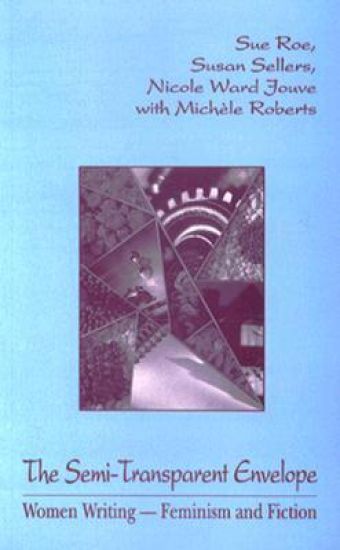
The Semi-transparent Envelope
Roe Sue; Sellers Susan; Jouve Nicole Ward; Roberts Michele
Marion Boyars Publishers Ltd
1994
nidottu
Urban Neighborhoods in a New Era
Clarence N. Stone; Robert P. Stoker; John Betancur; Susan E. Clarke; Marilyn Dantico; Martin Horak; Karen Mossberger; Juliet Musso; Jefferey M. Sellers; Ellen Shiau; Harold Wolman; Donn Worgs
University of Chicago Press
2015
sidottu
For decades, North American cities racked by deindustrialization and population loss have followed one primary path in their attempts at revitalization: a focus on economic growth in downtown and business areas. Neighborhoods, meanwhile, have often been left severely underserved. There are, however, signs of change. This collection of studies by a distinguished group of political scientists and urban planning scholars offers a rich analysis of the scope, potential, and ramifications of a shift still in progress. Focusing on neighborhoods in six cities-Baltimore, Chicago, Denver, Los Angeles, Phoenix, and Toronto-the authors show how key players, including politicians and philanthropic organizations, are beginning to see economic growth and neighborhood improvement as complementary goals. The heads of universities and hospitals in central locations also find themselves facing newly defined realities, adding to the fluidity of a new political landscape even as structural inequalities exert a continuing influence. While not denying the hurdles that community revitalization still faces, the contributors ultimately put forth a strong case that a more hospitable local milieu can be created for making neighborhood policy. In examining the course of experiences from an earlier period of redevelopment to the present postindustrial city, this book opens a window on a complex process of political change and possibility for reform.