
Kirjahaku
Etsi kirjoja tekijän nimen, kirjan nimen tai ISBN:n perusteella.
1000 tulosta hakusanalla Susan Weiss
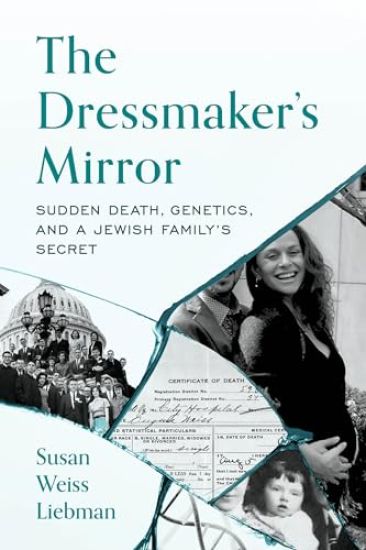
My niece was 36, newly married, and “on top of the world,” when she collapsed and died. Her autopsy report caused us to panic—there was something in our blood that could trigger sudden death. As a mother, I prayed for the curse to spare my children. As a geneticist, I plotted to find the killer. Without planning to do so, I became a medical detective.The book tells of the sorrows a mutation caused my family for generations, revealing a history of resilience and hope. As the stories unfold, I weave in discussions about genetic testing, screening, and gene therapy. The aim is to raise awareness of the crucial role of genetic testing in safeguarding personal health and patient care. I believe I became a geneticist at a time when few women pursued this path because I was destined to help understand the family illness and advocate for genetic testing. Experts agree on the value of genetic testing when there is a family history of disease, or if the patient has an illness frequently caused by a mutation. Knowing the disease mutation lets other family members find out if they have it too and need preventive care. The book explains that doctors can order tests with genetic counseling at relatively low cost and how this will help them prescribe preventive actions, make earlier diagnoses, and get better outcomes. The book’s genetic discussions also delve into the implications of broad-based genetic screening without a family history. Policymakers are currently considering the benefits and drawbacks of this approach and I present both sides of this debate. While working on this book I uncovered a family secret hidden for over one hundred years. Family lore had it that a heavy dressmaker’s mirror fell on and killed my uncle when he was four. But the death certificate told a different story. The true cause of my uncle’s death was heart failure. My grandparents fabricated the dressmaker’s mirror accident to protect their surviving children’s marriage prospects. Long before the discovery of DNA, my grandparents intuited and feared James Watson’s message, "We used to think that our fatewas in our stars, but now we know that, in large measure, our fateis in ourgenes.” The book suggests genetic testing and associated medical intervention can yet change our fates.
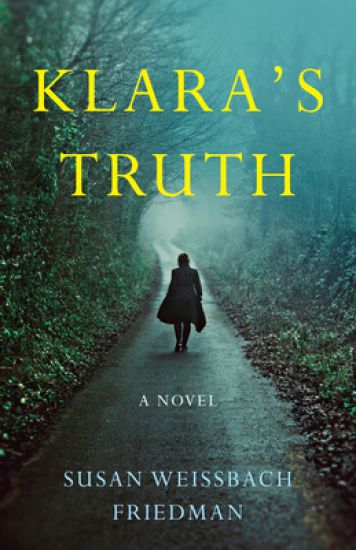
It is May 2014, and Dr. Klara Lieberman - forty-nine, single, professor of archaeology at a small liberal arts college in Maine, a contained person living a contained life - has just received a letter from her estranged mother, Bessie, that will dramatically change her life. Her father, she learns - the man who has been absent from her life for the last forty-three years, and about whom she has long been desperate for information - is dead. Has been for many years, in fact, which Bessie clearly knew. But now the Polish government is giving financial reparations for land it stole from its Jewish citizens during WWII, and Bessie wants the money. Klara has little interest in the money - but she does want answers about her father. She flies to Warsaw, determined to learn more. In Poland, Klara begins to piece together her father's, and her own, story. She also connects with extended family, begins a romantic relationship, and discovers her calling: repairing the hundreds of forgotten, and mostly destroyed, pre-War Jewish cemeteries in Poland. Along the way, she becomes a more integrated, embodied, and interpersonally connected individual - one with the tools to make peace with her past and, for the first time in her life, build purposefully toward a bigger future.
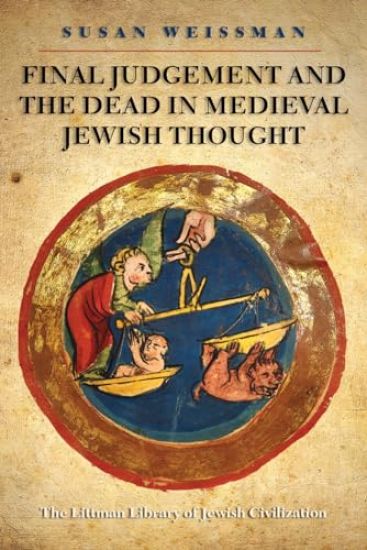
Final Judgement and the Dead in Medieval Jewish Thought
Susan Weissman
LIVERPOOL UNIVERSITY PRESS
2025
nidottu
Through a detailed analysis of ghost tales in the Ashkenazi pietistic work Sefer ?asidim, Susan Weissman documents a major transformation in Jewish attitudes and practices regarding the dead and the afterlife that took place between the rabbinic period and medieval times. She reveals that a huge influx of Germano-Christian beliefs, customs, and fears relating to the dead and the afterlife seeped into medieval Ashkenazi society among both elite and popular groups. In matters of sin, penance, and posthumous punishment, the infiltration of Christian notions was so strong as to effect a radical departure in Pietist thinking from rabbinic thought and to spur outright contradiction of talmudic principles regarding the realm of the hereafter. Although it is primarily a study of the culture of a medieval Jewish enclave, this book demonstrates how seminal beliefs of medieval Christendom and monastic ideals could take root in a society with contrary religious values—even in the realm of doctrinal belief.
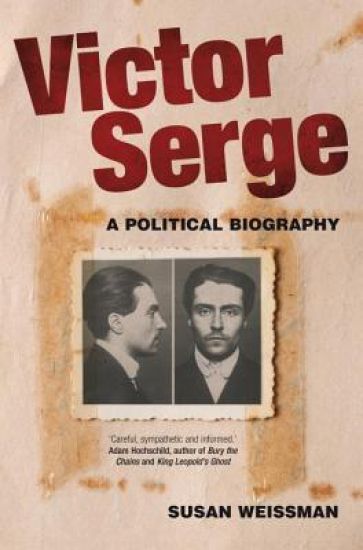
Revolutionary novelist, historian, anarchist, Bolshevik and dissident-Victor Serge is one of the most compelling figures to have emerged from the history of the Soviet Union. A dedicated activist who joined the Bolsheviks in 1919 and fought in the siege of Petrograd, only to be later consigned to poverty and persecution for rejecting both capitalism and Stalinism, he was a keen observer of his times. Carefully wrought and meticulously researched, Susan Weissman's Victor Serge is the definitive biography of an extraordinary man.
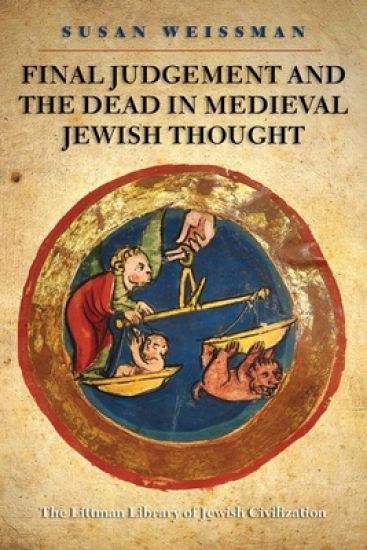
Final Judgment and the Dead in Medieval Jewish Thought
Susan Weissman
The Littman Library of Jewish Civilization
2019
sidottu
Through a detailed analysis of ghost tales in the Ashkenazi pietistic work Sefer ?asidim, Susan Weissman documents a major transformation in Jewish attitudes and practices regarding the dead and the afterlife that took place between the rabbinic period and medieval times. She reveals that a huge influx of Germano-Christian beliefs, customs, and fears relating to the dead and the afterlife seeped into medieval Ashkenazi society among both elite and popular groups. In matters of sin, penance, and posthumous punishment, the infiltration of Christian notions was so strong as to effect a radical departure in Pietist thinking from rabbinic thought and to spur outright contradiction of talmudic principles regarding the realm of the hereafter. Although it is primarily a study of the culture of a medieval Jewish enclave, this book demonstrates how seminal beliefs of medieval Christendom and monastic ideals could take root in a society with contrary religious values—even in the realm of doctrinal belief.

Wiley GAAP Field Guide 2002
Patrick R. Delaney; Barry J. Epstein; Ralph Nach; Susan Weiss Budak
John Wiley Sons Inc
2025
nidottu
Pocket-sized companion to the GAAP guide that gives the reader with practical examples on how to apply the GAAP standards.
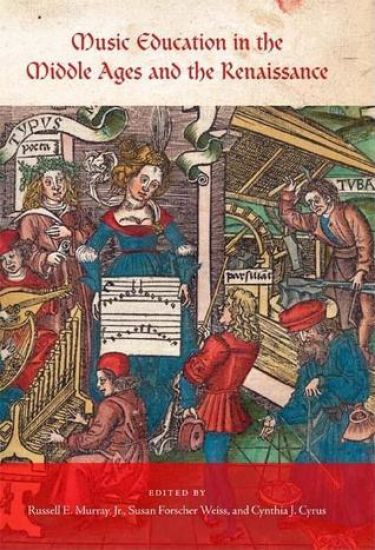
Music Education in the Middle Ages and the Renaissance
Susan Forscher Weiss; Russell E. Murray; Cynthia J. Cyrus
Indiana University Press
2010
sidottu
What were the methods and educational philosophies of music teachers in the Middle Ages and the Renaissance? What did students study? What were the motivations of teacher and student? Contributors to this volume address these topics and other—including gender, social status, and the role of the Church—to better understand the identities of music teachers and students from 650 to 1650 in Western Europe. This volume provides an expansive view of the beginnings of music pedagogy, and shows how the act of learning was embedded in the broader context of the early Western art music tradition.

In considering this book, will the reader especially note that it is not a "Life" or a "Biography" of Edgar Allan Poe, of which too many already exist and to which nothing can be added after the exhaustive works of Woodbury and Prof. Harrison. I have not treated Poe in his character of poet or author, but confined myself to his private home-life, domestic and social, as I have heard it described by Poe's most intimate friends who knew him from infancy. Edgar Allan Poe (born Edgar Poe; January 19, 1809 - October 7, 1849) was an American writer, editor, and literary critic. Poe is best known for his poetry and short stories, particularly his tales of mystery and the macabre. He is widely regarded as a central figure of Romanticism in the United States and American literature as a whole, and he was one of the country's earliest practitioners of the short story. Poe is generally considered the inventor of the detective fiction genre and is further credited with contributing to the emerging genre of science fiction. He was the first well-known American writer to try to earn a living through writing alone, resulting in a financially difficult life and career. Poe was born in Boston, the second child of two actors. His father abandoned the family in 1810, and his mother died the following year. Thus orphaned, the child was taken in by John and Frances Allan of Richmond, Virginia. They never formally adopted him, but Poe was with them well into young adulthood. Tension developed later as John Allan and Edgar repeatedly clashed over debts, including those incurred by gambling, and the cost of secondary education for the young man. Poe attended the University of Virginia for but left after a year due to lack of money. Poe quarreled with Allan over the funds for his education and enlisted in the Army in 1827 under an assumed name. It was at this time that his publishing career began, albeit humbly, with the anonymous collection Tamerlane and Other Poems (1827), credited only to "a Bostonian". With the death of Frances Allan in 1829, Poe and Allan reached a temporary rapprochement. However, Poe later failed as an officer cadet at West Point, declaring a firm wish to be a poet and writer, and he ultimately parted ways with John Allan. Poe switched his focus to prose and spent the next several years working for literary journals and periodicals, becoming known for his own style of literary criticism. His work forced him to move among several cities, including Baltimore, Philadelphia, and New York City. In Richmond in 1836, he married Virginia Clemm, his 13-year-old cousin. In January 1845, Poe published his poem "The Raven" to instant success. His wife died of tuberculosis two years after its publication. For years, he had been planning to produce his own journal The Penn (later renamed The Stylus), though he died before it could be produced. Poe died in Baltimore on October 7, 1849, at age 40; the cause of his death is unknown and has been variously attributed to alcohol, brain congestion, cholera, drugs, heart disease, rabies, suicide, tuberculosis, and other agents. 3] Poe and his works influenced literature in the United States and around the world, as well as in specialized fields such as cosmology and cryptography. Poe and his work appear throughout popular culture in literature, music, films, and television. A number of his homes are dedicated museums today. The Mystery Writers of America present an annual award known as the Edgar Award for distinguished work in the mystery genre.
Reproduction of the original: The Home Life of Poe by Susan Archer Weiss
Reproduction of the original: The Home Life of Poe by Susan Archer Weiss
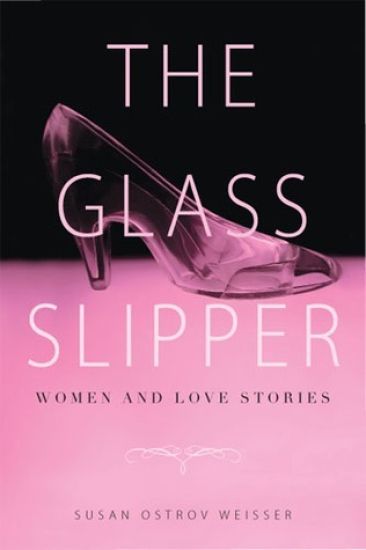
Why is the story of romance in books, magazines, and films still aimed at women rather than at men? Even after decades of feminism, traditional ideas and messages about romantic love still hold sway and, in our “postfeminist” age, are more popular than ever. Increasingly, we have become a culture of romance: stories of all kinds shape the terms of love. Women, in particular, love a love story.The Glass Slipper is about the persistence of a familiar Anglo-American love story into the digital age. Comparing influential classics to their current counterparts, Susan Ostrov Weisser relates in highly amusing prose how these stories are shaped and defined by and for women, the main consumers of romantic texts. Following a trajectory that begins with Jane Austen and concludes with Internet dating sites, Weisser shows the many ways in which nineteenth-century views of women’s nature and the Victorian idea of romance have survived the feminist critique of the 1970s and continue in new and more ambiguous forms in today’s media, with profound implications for women.More than a book about romance in fiction and media, The Glass Slipper illustrates how traditional stories about women’s sexuality, femininity, and romantic love have survived as seemingly protective elements in a more modern, feminist, sexually open society, confusing the picture for women themselves. Weisser compares diverse narratives—historical and contemporary from high literature and “low” genres—discussing novels by Jane Austen and Charlotte Brontë, Victorian women’s magazines, and D. H. Lawrence’s Lady Chatterley’s Lover; Disney movies; popular Harlequin romance novels; masochistic love in films; pornography and its relationship to romance; and reality TV and Internet ads as romantic stories. Ultimately, Weisser shows that the narrative versions of the Glass Slipper should be taken as seriously as the Glass Ceiling as we see how these representations of romantic love are meant to inform women’s beliefs and goals. In this book, Weisser’s goal is not to shatter the Glass Slipper, but to see through it.
Though all women are women, no woman is only a woman, wrote Elizabeth Spelman in The Inessential Woman. Gone are the days when feminism translated simply into the advocacy of equality for women. Women's interests are not always aligned; race, class, and sexuality complicate the equation. In recent years, feminist ideologies have become increasingly diverse. Today, one feminist's most ardent political opponent may well be another feminist. As feminism grows increasingly diverse, the time has come to ask a painful and frequently avoided question: what does it mean for women to oppress women? This pathbreaking, provocative anthology addresses this troublesome dilemma from various feminist perspectives, offering an interdisciplinary collection of writings that widens our understanding of oppression to take into account women who are at odds. The book examines the social, political, and psychological ramifications of this phenomenon, as evidenced in a range of texts, from women's antislavery writing to women's anti-abortion writing, from mother-daughter incest stories to maternal surrogacy narratives, from the Bible to the popular romance nove, from Jane Austen to Alice Walker. The value of the volume is perhaps best summed up by an early response to the idea?This is a book that should never be written; feminists should concentrate on how men oppress women. Ironically, it is precisely because the subject triggers such responses, the authors argue, that a volume such as Feminist Nightmares has become a necessity.
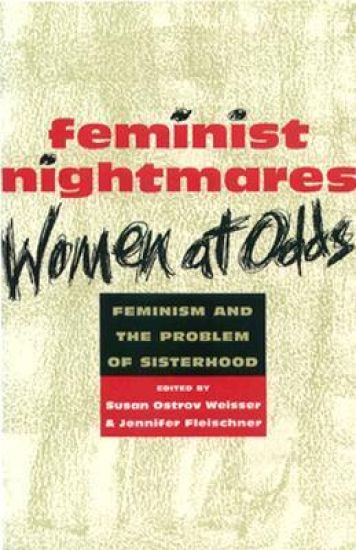
Though all women are women, no woman is only a woman, wrote Elizabeth Spelman in The Inessential Woman. Gone are the days when feminism translated simply into the advocacy of equality for women. Women's interests are not always aligned; race, class, and sexuality complicate the equation. In recent years, feminist ideologies have become increasingly diverse. Today, one feminist's most ardent political opponent may well be another feminist. As feminism grows increasingly diverse, the time has come to ask a painful and frequently avoided question: what does it mean for women to oppress women? This pathbreaking, provocative anthology addresses this troublesome dilemma from various feminist perspectives, offering an interdisciplinary collection of writings that widens our understanding of oppression to take into account women who are at odds. The book examines the social, political, and psychological ramifications of this phenomenon, as evidenced in a range of texts, from women's antislavery writing to women's anti-abortion writing, from mother-daughter incest stories to maternal surrogacy narratives, from the Bible to the popular romance nove, from Jane Austen to Alice Walker. The value of the volume is perhaps best summed up by an early response to the idea?This is a book that should never be written; feminists should concentrate on how men oppress women. Ironically, it is precisely because the subject triggers such responses, the authors argue, that a volume such as Feminist Nightmares has become a necessity.
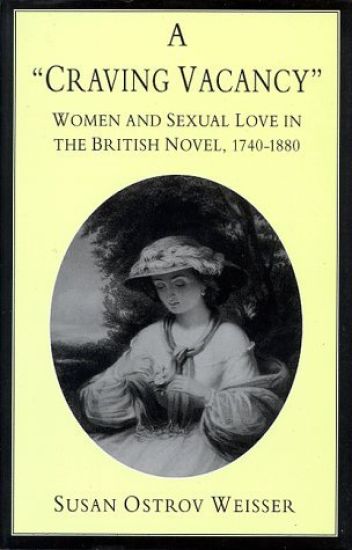
What is the problem of sexual love? Neither inclusive of all aspects of sexuality nor fully synonomous with the idealized mythos of romantic love, sexual love as desire is marked by the highly charged intersection of sexuality and romantic love; it is a space where gender is imagined and enacted. In A Craving Vacancy, Susan Ostrov Weisser examines sexuality in the context of changing ideas of romantic love and feminity in Victorian Britain. Focusing her analysis on the works of Samuel Richardson, George Eliot, and Emily and Charlotte Bronte, Weisser reveals the complex relationship between conceptions of romantic passion and ideologies of sexuality. She illuminates the Victorian period as a time when these conceptions were shifting according to changing ideas of gender. With close attention to textual details, she introduces the concept of Moral Femininity, placing it in useful opposition to the competing Victorian ideal of the Lady.By forging a direct link between sexuality and romantic love ideology in the 19th century, and by highlighting the way in which the literary preoccupation with these subjects arises from anxieties about the construction of gender, A Craving Vacancy breaks important new ground.
What is the problem of sexual love? Neither inclusive of all aspects of sexuality nor fully synonomous with the idealized mythos of romantic love, sexual love as desire is marked by the highly charged intersection of sexuality and romantic love; it is a space where gender is imagined and enacted. In A Craving Vacancy, Susan Ostrov Weisser examines sexuality in the context of changing ideas of romantic love and feminity in Victorian Britain. Focusing her analysis on the works of Samuel Richardson, George Eliot, and Emily and Charlotte Bronte, Weisser reveals the complex relationship between conceptions of romantic passion and ideologies of sexuality. She illuminates the Victorian period as a time when these conceptions were shifting according to changing ideas of gender. With close attention to textual details, she introduces the concept of Moral Femininity, placing it in useful opposition to the competing Victorian ideal of the Lady.By forging a direct link between sexuality and romantic love ideology in the 19th century, and by highlighting the way in which the literary preoccupation with these subjects arises from anxieties about the construction of gender, A Craving Vacancy breaks important new ground.
Un Estudio Social Psicologico de La Planificacion Familiar
Susan Pick de Weiss
Siglo XXI Ediciones
1979
pokkari