

Kirjahaku
Etsi kirjoja tekijän nimen, kirjan nimen tai ISBN:n perusteella.
1000 tulosta hakusanalla Susan Wells Bennett



The Thief of Todays and Tomorrows
Susan Wells Bennett
Createspace Independent Publishing Platform
2010
nidottu


Wild Life: The Brass Monkey Series
Susan Wells Bennett
Createspace Independent Publishing Platform
2011
nidottu

Night Life: Brass Monkey Series
Susan Wells Bennett
Createspace Independent Publishing Platform
2012
nidottu

New Life: Brass Monkey Series
Susan Wells Bennett
Createspace Independent Publishing Platform
2012
nidottu

This volume presents a rhetorical model for understanding the diverse discourses of modernity. Wells describes modernity as a system of texts which we are only now learning to read. In order to comprehend how these texts organize our world, she argues, we must grasp how reason and desire interact to create meaning. To this end, Wells offers a rhetoric based on an understanding of meaning as intersubjectivity created through the work of language. Wells elaborates this "rhetoric of intersubjectivity" by drawing on both Jurgen Habermas's concept of communicative rationality and on Jacques Lacan's theory of desire, affirming the significance of reason and desire for rhetorical studies. From scientific articles to classroom altercations, contemporary government hearings to Montaigne's "Essays", Wells organizes several using rhetoric as an art, and she shows how rhetoric operates in practice.

This volume presents a rhetorical model for understanding the diverse discourses of modernity. Wells describes modernity as a system of texts which we are only now learning to read. In order to comprehend how these texts organize our world, she argues, we must grasp how reason and desire interact to create meaning. To this end, Wells offers a rhetoric based on an understanding of meaning as intersubjectivity created through the work of language. Wells elaborates this "rhetoric of intersubjectivity" by drawing on both Jurgen Habermas's concept of communicative rationality and on Jacques Lacan's theory of desire, affirming the significance of reason and desire for rhetorical studies. From scientific articles to classroom altercations, contemporary government hearings to Montaigne's "Essays", Wells organizes several using rhetoric as an art, and she shows how rhetoric operates in practice.
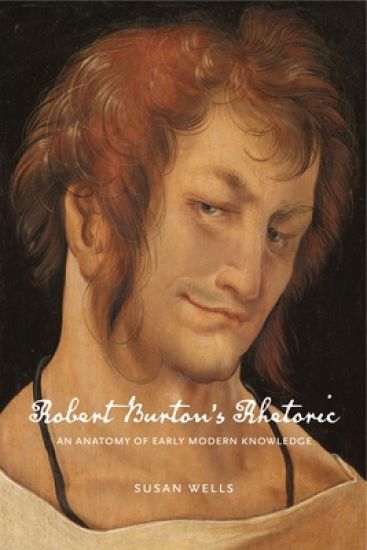
Published in five editions between 1621 and 1651, The Anatomy of Melancholy marks a unique moment in the development of disciplines, when fields of knowledge were distinct but not yet restrictive. In Robert Burton’s Rhetoric, Susan Wells analyzes the Anatomy, demonstrating how its early modern practices of knowledge and persuasion can offer a model for transdisciplinary scholarship today.In the first decades of the seventeenth century, Robert Burton attempted to gather all the existing knowledge about melancholy, drawing from professional discourses including theology, medicine, and philology as well as the emerging sciences. Examining this text through a rhetorical lens, Wells provides an account of these disciplinary exchanges in all their subtle variety and abundant wit, showing that questions of how knowledge is organized and how it is made persuasive are central to rhetorical theory. Ultimately, Wells argues that in addition to a book about melancholy, Burton’s Anatomy is a meditation on knowledge.A fresh interpretation of The Anatomy of Melancholy, this volume will be welcomed by scholars of early modern English and the rhetorics of health and medicine, as well as those interested in transdisciplinary work and rhetorical theory.
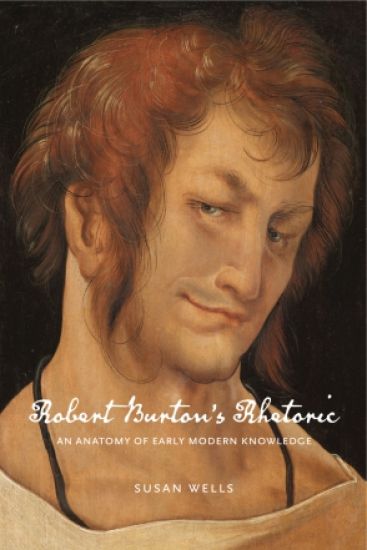
Published in five editions between 1621 and 1651, The Anatomy of Melancholy marks a unique moment in the development of disciplines, when fields of knowledge were distinct but not yet restrictive. In Robert Burton’s Rhetoric, Susan Wells analyzes the Anatomy, demonstrating how its early modern practices of knowledge and persuasion can offer a model for transdisciplinary scholarship today.In the first decades of the seventeenth century, Robert Burton attempted to gather all the existing knowledge about melancholy, drawing from professional discourses including theology, medicine, and philology as well as the emerging sciences. Examining this text through a rhetorical lens, Wells provides an account of these disciplinary exchanges in all their subtle variety and abundant wit, showing that questions of how knowledge is organized and how it is made persuasive are central to rhetorical theory. Ultimately, Wells argues that in addition to a book about melancholy, Burton’s Anatomy is a meditation on knowledge.A fresh interpretation of The Anatomy of Melancholy, this volume will be welcomed by scholars of early modern English and the rhetorics of health and medicine, as well as those interested in transdisciplinary work and rhetorical theory.

Rediscovers women doctors who helped create styles of medical writing still used today In the last decades of the nineteenth century, two thousand women physicians formed a significant and lively scientific community in the United States. Many were active writers; they participated in the development of medical record-keeping and research, and they wrote self-help books, social and political essays, fiction, and poetry. Out of the Dead House rediscovers the contributions these women made to the developing practice of medicine and to a community of women in science. Susan Wells combines studies of medical genres, such as the patient history or the diagnostic conversation, with discussions of individual writers. The women she discusses include Ann Preston, the first woman dean of a medical college; Hannah Longshore, a successful practitioner who combined conventional and homeopathic medicine; Rebecca Crumpler, the first African American woman physician to publish a medical book; and Mary Putnam Jacobl, writer of more than 180 medical articles and several important books. Wells shows how these women learned to write, what they wrote, and how these texts were read. Out of the Dead House also documents the ways that women doctors influenced medical discourse during the formation of the modern profession. They invented forms and strategies for medical research and writing, including methods of using survey information, taking patient histories, and telling case histories. Out of the Dead House adds a critical episode to the developing story of women as producers and critics of culture, including scientific culture.

Chronic physical illnesses-such as lupus, Sjogren's syndrome, fibromyalgia, chronic fatigue syndrome, inflammatory bowel disorders, Lyme disease, interstitial cystitis, multiple sclerosis-take their toll on every aspect of a person's life. Though millions of people manage to cook, care for children, or work despite their disability, they do so with fatigue, pain, and the grinding uncertainty of living with chronic illness.A thoughtful exploration of this experience, A Delicate Balance provides both up-to-date practical advice and inspiration for the millions of Americans who struggle daily against chronic illness. From locating a suitable health-care provider and making sense of the powerful emotions that accompany chronic illness, to seeking accommodations under the Americans with Disabilities Act and applying for Social Security Disability Insurance, A Delicate Balance is informed by in-depth, personal interviews with patients, care providers, and family members. The result is a compassionate and immensely hopeful book for anyone touched by a chronic disease.
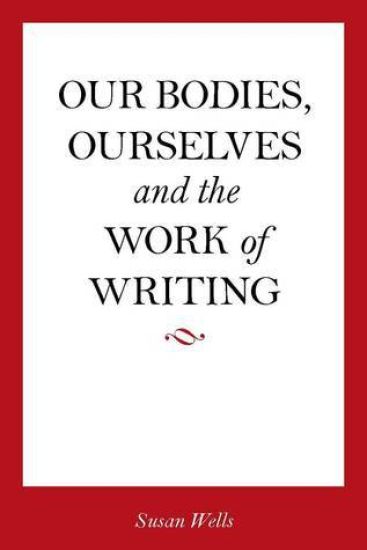
Our Bodies, Ourselves, first published by a mainstream press in 1973, is now in its eighth major edition. It has been translated into twenty-nine languages, has generated a number of related projects, and, with over four million copies sold, is as popular as ever. This study tells the story of the first two decades of the pioneering best-seller—a collectively produced guide to women's health—from its earliest, most experimental and revolutionary years, when it sought to construct a new, female public sphere, to its 1984 revision, when some of the problems it first posed were resolved and the book took the form it has held to this day. Wells undertakes a rhetorical and sociological analysis of the best-seller and of the work of the Boston Women's Health Book Collective that produced it. In the 1960s and 1970s, as social movements were on the rise and many women entered higher education, new writing practices came into existence. In the pages of Our Bodies, Ourselves, matters that had been private became public. Readers, encouraged to trust their own experiences, began to participate in a conversation about health and medicine. The writers of Our Bodies, Ourselves researched medical texts and presented them in colloquial language. Drafting and revising in groups, they invented new ways of organizing the task of writing. Above all, they presented medical information by telling stories. We learn here how these stories were organized, and how the writers drew readers into investigating both their own bodies and the global organization of medical care. Extensive archival research and interviews with the members of the authorial collective shed light on a grassroots undertaking that revolutionized the writing of health books and forever changed the relationship between health experts and ordinary women.

Our Bodies, Ourselves, first published by a mainstream press in 1973, is now in its eighth major edition. It has been translated into twenty-nine languages, has generated a number of related projects, and, with over four million copies sold, is as popular as ever. This study tells the story of the first two decades of the pioneering best-seller—a collectively produced guide to women's health—from its earliest, most experimental and revolutionary years, when it sought to construct a new, female public sphere, to its 1984 revision, when some of the problems it first posed were resolved and the book took the form it has held to this day. Wells undertakes a rhetorical and sociological analysis of the best-seller and of the work of the Boston Women's Health Book Collective that produced it. In the 1960s and 1970s, as social movements were on the rise and many women entered higher education, new writing practices came into existence. In the pages of Our Bodies, Ourselves, matters that had been private became public. Readers, encouraged to trust their own experiences, began to participate in a conversation about health and medicine. The writers of Our Bodies, Ourselves researched medical texts and presented them in colloquial language. Drafting and revising in groups, they invented new ways of organizing the task of writing. Above all, they presented medical information by telling stories. We learn here how these stories were organized, and how the writers drew readers into investigating both their own bodies and the global organization of medical care. Extensive archival research and interviews with the members of the authorial collective shed light on a grassroots undertaking that revolutionized the writing of health books and forever changed the relationship between health experts and ordinary women.

Have you ever wondered if you should pursue "full time ministry". What if God has you in the marketplace on purpose. What if He has called you to reach those who would never visit the inside of a church building? This book will give you insight as to your purpose on the job not matter what that looks like.

What a woman with Alzheimer's Disease never forgot: A tribute to mom
Susan Wells
Xulon Press
2020
nidottu
When a loved one is diagnosed with Alzheimer's disease, is the primary focus on what the loved one forgets? If so, we overlook critical aspects of the spiritual being - the part Alzheimer's can't destroy. Kathleen Neubauer was diagnosed with Alzheimer's disease in 2004 and went home to heaven in 2011. During Kathleen's seven-year battle, what intrigued her daughter, Susan, wasn't all her mom forgot, but what she continued to remember. The things Kathleen remembered came forth from her spirit and became winsome qualities and spiritual resilience that provided inner strength - not only for herself but also for her family. What could not be destroyed and remained in Kathleen became chapters in this book. May each chapter touch your heart and inspire you to follow in her footsteps. You also can gain inner strength as you remember to include in your daily life what a woman with Alzheimer's disease never forgot.