Kirjojen hintavertailu. Mukana 12 386 716 kirjaa ja 12 kauppaa.

Kirjahaku

Etsi kirjoja tekijän nimen, kirjan nimen tai ISBN:n perusteella.

1000 tulosta hakusanalla Sylvia Huot

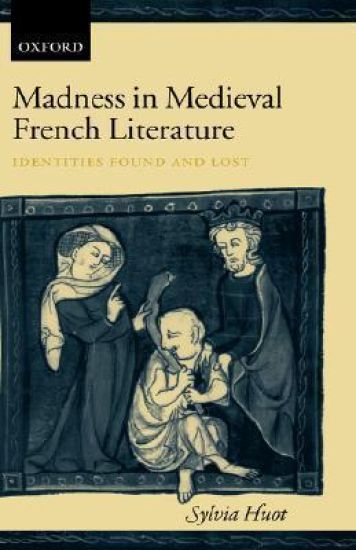
Madness in Medieval French Literature

Madness in Medieval French Literature

Sylvia Huot

Oxford University Press
2003
sidottu
Madness is a frequent theme in medieval French literature. It afflicts the two greatest heroes of the Arthurian world, Lancelot and Tristan, as well as numerous other knights and unlucky lovers in courtly tradition. It also appears in devotional literature, whether in the form of the 'holy fool' who impersonates madness as a kind of penance or in the motif of lunatics cured through the miraculous intervention of a saint. These texts manifest a wide range of attitudes towards madness, which may be associated with nobility and refinement of character, with chivalric or spiritual transcendence, with tragic illness and impairment, with comic ineptitude, or with sin and degradation. Tracing these various depictions allows for a study of how and why madness is used in different texts and different genres. This new book, from one of the leading critics in medieval studies, ties in with contemporary interest in the politics of identity, and literary constructions of identity. There are many studies of gender, sexuality, race and ethnicity, and class in medieval literature and society, but far fewer of madness. Yet madness is the ultimate 'queerness' or 'otherness', the limit of the human condition. Madness has been identified as an important topic in feminist criticism, but has been explored largely with regard to nineteenth- and twentieth-century studies. The cultural significance of madness in the Middle Ages is often misrepresented in contemporary discussions. Sylvia Huot redresses that imbalance.
Outsiders

Outsiders

Sylvia Huot

University of Notre Dame Press
2016
nidottu
Giants are a ubiquitous feature of medieval romance. As remnants of a British prehistory prior to the civilization established, according to the Historium regum Britannie, by Brutus and his Trojan followers, giants are permanently at odds with the chivalric culture of the romance world. Whether they are portrayed as brute savages or as tyrannical pagan lords, giants serve as a limit against which the chivalric hero can measure himself. In Outsiders: The Humanity and Inhumanity of Giants in Medieval French Prose Romance, Sylvia Huot argues that the presence of giants allows for fantasies of ethnic and cultural conflict and conquest, and for the presentation—and suppression—of alternative narrative and historical trajectories that might have made Arthurian Britain a very different place. Focusing on medieval French prose romance and drawing on aspects of postcolonial theory, Huot examines the role of giants in constructions of race, class, gender, and human subjectivity. She selects for study the well-known prose Lancelot and the prose Tristan, as well as the lesser known Perceforest, Le Conte du papegau, Guiron le Courtois, and Des Grantz Geants. By asking to what extent views of giants in Arthurian romance respond to questions that concern twenty-first-century readers, Huot demonstrates the usefulness of current theoretical concepts and the issues they raise for rethinking medieval literature from a modern perspective.
Outsiders

Outsiders

Sylvia Huot

UNIVERSITY OF NOTRE DAME PRESS
2022
sidottu
Giants are a ubiquitous feature of medieval romance. As remnants of a British prehistory prior to the civilization established, according to the Historium regum Britannie, by Brutus and his Trojan followers, giants are permanently at odds with the chivalric culture of the romance world. Whether they are portrayed as brute savages or as tyrannical pagan lords, giants serve as a limit against which the chivalric hero can measure himself. In Outsiders: The Humanity and Inhumanity of Giants in Medieval French Prose Romance, Sylvia Huot argues that the presence of giants allows for fantasies of ethnic and cultural conflict and conquest, and for the presentation—and suppression—of alternative narrative and historical trajectories that might have made Arthurian Britain a very different place. Focusing on medieval French prose romance and drawing on aspects of postcolonial theory, Huot examines the role of giants in constructions of race, class, gender, and human subjectivity. She selects for study the well-known prose Lancelot and the prose Tristan, as well as the lesser known Perceforest, Le Conte du papegau, Guiron le Courtois, and Des Grantz Geants. By asking to what extent views of giants in Arthurian romance respond to questions that concern twenty-first-century readers, Huot demonstrates the usefulness of current theoretical concepts and the issues they raise for rethinking medieval literature from a modern perspective.
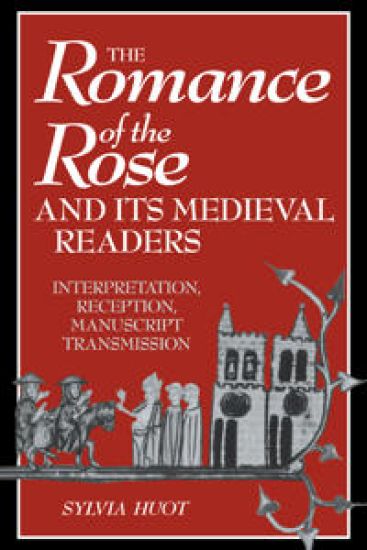
The Romance of the Rose and its Medieval Readers

The Romance of the Rose and its Medieval Readers

Sylvia Huot

Cambridge University Press
2007
pokkari
The Romance of the Rose was one of the most important works of medieval vernacular literature. It was composed in the thirteenth century and exerted a profound influence on literature in France, England, the Netherlands and Italy for the next 200 years. In this book, Sylvia Huot investigates how medieval readers understood the text, assessing the evidence to be found in well over 200 surviving manuscripts: annotations, glosses, illuminations, marginal doodles, rewritings, expansions and abridgements. This allows a picture to emerge of the interests and concerns of its readers, including such important fourteenth-century figures as the monastic author Guillaume de Deguilleville and the court poet Guillaume de Machaut. The book contains analyses of individual versions of the poem. It offers an interesting perspective on the interpretative difficulties of this learned and complex poem.
Allegorical Play in the Old French Motet

Allegorical Play in the Old French Motet

Sylvia Huot

Stanford University Press
1997
sidottu
The motet began as a form of sacred vocal music in several parts; a cantus firmus or tenor, drawn from sacred Latin chant, served as a foundation for one or more upper voices. The French motet was a well-established form by the middle of the thirteenth century, as were bilingual motets that combined at least one French and one Latin text among the upper voices. Though some attention is paid to melodic structure and the relationship between text and music, this book focuses on the literary artistry of the texts of French and bilingual motets, notably the special feature of motets that distinguished them from other medieval lyric forms: the phenomenon of polytextuality. The author analyzes both the interaction of the texts within a motet (when there is more than one texted voice) and the relationship between the texted voice(s) and the tenor. Although some French motets employ vernacular refrains as tenors, the vast majority use Latin tenors, thus maintaining an explicit tie to the liturgical origins of the genre. This presence of sacred and profane elements within a single motet presents an interpretive dilemma that the author suggests can be resolved through an allegorical or parodic reading; indeed, she argues that the tension between allegory and parody is an essential feature of the French motet. The book examines the creative juxtaposition of sacred tenors and vernacular lyric motifs, and the resulting interplay of allegorical and parodic meanings, focusing in particular on the female persona as object of desire and as desiring subject, and on the motives of the separation and reunion of lovers. The author's analysis also discusses the links between the French motet and the secular lyric, the allegorization of love poetry in sermons and mystical texts, sacred parody, and the playful use of liturgical and biblical citations in erotic poetry.
From Song to Book

From Song to Book

Sylvia Huot

Cornell University Press
2019
pokkari
As the visual representation of an essentially oral text, Sylvia Huot points out, the medieval illuminated manuscript has a theatrical, performative quality. She perceives the tension between implied oral performance and real visual artifact as a fundamental aspect of thirteenth- and fourteenth-century poetics. In this generously illustrated volume, Huot examines manuscript texts both from the performance-oriented lyric tradition of chanson courtoise, or courtly love lyric, and from the self-consciously literary tradition of Old French narrative poetry. She demonstrates that the evolution of the lyrical romance and dit, narrative poems which incorporate thematic and rhetorical elements of the lyric, was responsible for a progressive redefinition of lyric poetry as a written medium and the emergence of an explicitly written literary tradition uniting lyric and narrative poetics. Huot first investigates the nature of the vernacular book in the thirteenth and fourteenth centuries, analyzing organization, page layout, rubrication, and illumination in a series of manuscripts. She then describes the relationship between poetics and manuscript format in specific texts, including works by widely read medieval authors such as Guillaume de Lorris, Jean de Meun, and Guillaume de Machaut, as well as by lesser-known writers including Nicole de Margival and Watriquet de Couvin. Huot focuses on the writers' characteristic modifications of lyric poetics; their use of writing and performance as theme; their treatment of the poet as singer or writer; and of the lady as implied reader or listener; and the ways in which these features of the text were elaborated by scribes and illuminators. Her readings reveal how medieval poets and book-makers conceived their common project, and how they distinguished their respective roles.
Sylvia

Sylvia

Leonard Michaels

Farrar, Straus and Giroux
2007
nidottu
First acclaimed as a story-length memoir, then expanded into a novel, "Sylvia "draws us into the lives of a young couple whose struggle to survive Manhattan in the early 1960s involves them in sexual fantasias, paranoia, drugs, and the extreme intimacy of self-destructive violence.Reproducing a time and place with extraordinary clarity, Leonard Michaels explores with self-wounding honesty the excruciating particulars of a youthful marriage headed for disaster.