Kirjojen hintavertailu. Mukana 11 342 296 kirjaa ja 12 kauppaa.

Kirjahaku

Etsi kirjoja tekijän nimen, kirjan nimen tai ISBN:n perusteella.

602 tulosta hakusanalla Szabó Csaba

Unreliable

Unreliable

Csaba Szabo

Columbia University Press
2025
sidottu
Reproducibility is fundamental to the scientific method. After reading a paper describing research findings, a scientist should be able to repeat the experiment and obtain the same results. Yet an alarming number—perhaps as high as 90 percent—of published biomedical research papers face challenges in independent replication. Such issues range from honest mistakes to outright fraud. The scope of this crisis, however, underscores deeper systemic issues within the scientific community: its culture, incentives, and institutions.In Unreliable, the distinguished scientist Csaba Szabo examines the causes and consequences of the reproducibility crisis in biomedical research, showing why the factors that encourage misconduct stem from flaws in real-world science. There are many culprits, including commonplace research methods and dubious statistical techniques. Academic career incentives, hypercompetition for grant funding, and a bias toward publishing positive results have exacerbated the problem. Deliberate data manipulation and fabricated findings churned out by “paper mills” are disturbingly common. Academic institutions and publishers, for their part, have perpetuated a culture of impunity.Szabo explores how these failures have hindered scientific progress and impeded the development of new treatments, and he introduces readers to the “science sleuths” who tirelessly uncover misconduct. He proposes comprehensive reforms, from scientific training to the grant system through the publication process, to address the root causes of the crisis. Written in clear language and leavened with a keen sense of irony, Unreliable is an essential account of the reproducibility crisis that gives readers an inside look at how science is actually done.
Unreliable

Unreliable

Csaba Szabo

Columbia University Press
2025
pokkari
Reproducibility is fundamental to the scientific method. After reading a paper describing research findings, a scientist should be able to repeat the experiment and obtain the same results. Yet an alarming number—perhaps as high as 90 percent—of published biomedical research papers face challenges in independent replication. Such issues range from honest mistakes to outright fraud. The scope of this crisis, however, underscores deeper systemic issues within the scientific community: its culture, incentives, and institutions.In Unreliable, the distinguished scientist Csaba Szabo examines the causes and consequences of the reproducibility crisis in biomedical research, showing why the factors that encourage misconduct stem from flaws in real-world science. There are many culprits, including commonplace research methods and dubious statistical techniques. Academic career incentives, hypercompetition for grant funding, and a bias toward publishing positive results have exacerbated the problem. Deliberate data manipulation and fabricated findings churned out by “paper mills” are disturbingly common. Academic institutions and publishers, for their part, have perpetuated a culture of impunity.Szabo explores how these failures have hindered scientific progress and impeded the development of new treatments, and he introduces readers to the “science sleuths” who tirelessly uncover misconduct. He proposes comprehensive reforms, from scientific training to the grant system through the publication process, to address the root causes of the crisis. Written in clear language and leavened with a keen sense of irony, Unreliable is an essential account of the reproducibility crisis that gives readers an inside look at how science is actually done.
Roman Religion in the Danubian Provinces
The Danubian provinces represent one of the largest macro-units within the Roman Empire, with a large and rich heritage of Roman material evidence. Although the notion itself is a modern 18th-century creation, this region represents a unique area, where the dominant, pre-Roman cultures (Celtic, Illyrian, Hellenistic, Thracian) are interconnected within the new administrative, economic and cultural units of Roman cities, provinces and extra-provincial networks. This book presents the material evidence of Roman religion in the Danubian provinces through a new, paradigmatic methodology, focusing not only on the traditional urban and provincial units of the Roman Empire, but on a new space taxonomy. Roman religion and its sacralised places are presented in macro-, meso- and micro-spaces of a dynamic empire, which shaped Roman religion in the 1st-3rd centuries AD and created a large number of religious glocalizations and appropriations in Raetia, Noricum, Pannonia Superior, Pannonia Inferior, Moesia Superior, Moesia Inferior and Dacia. Combining the methodological approaches of Roman provincial archaeology and religious studies, this work intends to provoke a dialogue between disciplines rarely used together in central-east Europe and beyond. The material evidence of Roman religion is interpreted here as a dynamic agent in religious communication, shaped by macro-spaces, extra-provincial routes, commercial networks, but also by the formation and constant dynamics of small group religions interconnected within this region through human and material mobilities. The book also presents for the first time a comprehensive list of sacralised spaces and divinities in the Danubian provinces.
Sanctuaries in Roman Dacia

Sanctuaries in Roman Dacia

Csaba Szabo

Archaeopress
2018
nidottu
This book is the first comprehensive work focusing on lived ancient religious communication in Roman Dacia. Testing for the first time the ‘Lived Ancient Religion’ approach in terms of a peripheral province from the Danubian area, this work looks at the role of ‘sacralised’ spaces, known commonly as sanctuaries in the religious communication of the province. The author analyses the role of space sacralisation, religious appropriation, embodiment and the social impact of religious communication in urban contexts (Apulum), military contexts (Porolissum and Mehadia), and numerous examples from rural (non-urban) environments (Ampelum, Germisara, Ad Mediam, and many others). The book concentrates not only on the creation and maintenance of sacralised spaces in public and secondary locations, but also on their role at the micro-level of objects, semi-micro level of spaces (settlements), and the macro-level of the province and the Danubian region as a whole. Innovatively as regards provincial archaeological research, this book emphasises the spatial aspects of lived ancient religion by analysing for the first time the sanctuaries as spaces of religious communication in Dacia. The work also contains a significant chapter on the so-called ‘small-group’ religions (the Bacchic, Mithraic and Dolichenian groups of the province), which are approached for the first time in detail. The study also gives the first comprehensive list of archaeologicallyepigraphically- attested, and presumed sacralised spaces within Dacia.
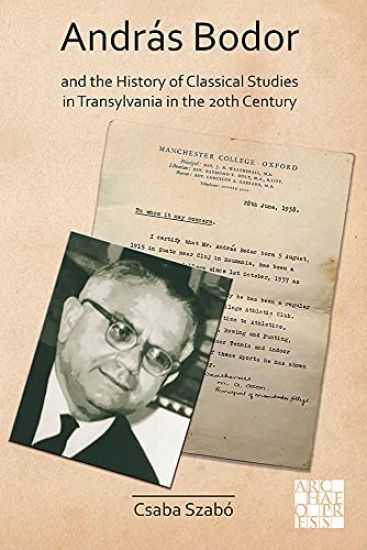
András Bodor and the History of Classical Studies in Transylvania in the 20th century
András Bodor and the history of classical studies in Transylvania in the 20th century is the first comprehensive work focusing on the life of a classicist from Transylvania, presenting in detail the life and academic heritage of András Bodor (1915-1999). Based on 1348 newly identified letters, 209 photographs (including 25 portraits), András Bodor’s complete bibliography and his unpublished memoir from 1915-1959, the work offers also the first publication of Bodor’s academic correspondence (107 letters) and also extracts from his unpublished journal. Based on a large number of unpublished documents and the major works of Bodor, the book tries to reconstruct the life and academic heritage of a classicist from the periphery of Europe, a region that changed so many times over the long course of the 20th century. András Bodor appears as a student torn between theology and classical studies, a Transylvanian Hungarian who ended up at Oxford, a lecturer at the Hungarian University of Cluj, a researcher who had the idea of establishing a new school of classics, marginalised and compromising, a quiet teacher of the newly established Babe?-Bolyai University and also a senior professor engaged in education policy. The personality and work of Bodor is presented through the short history of classics in Transylvania, Romania, reflecting on the European and global changes of the discipline.
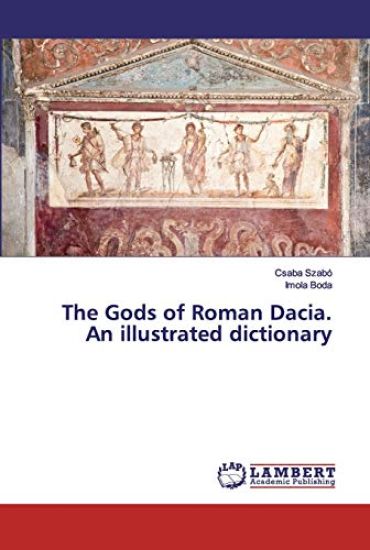
The Gods of Roman Dacia. An illustrated dictionary

The Gods of Roman Dacia. An illustrated dictionary

Csaba Szabó; Imola Boda

LAP Lambert Academic Publishing
2019
pokkari
This dictionary is a revised and extended version of the mythological dictionary of the Bibliography of Roman Religion in Dacia (BRRD) published in 2014. The main aim of the dictionary of the BRRD was to offer the first comprehensive mythological dictionary and list of divinities and personifications attested on epigraphic and figural monuments from Dacia, mostly for students and the greater public. The pictures (more than 100 illustrations) represent in most of the cases some iconographic analogies found in the territory of Dacia or - when there is no figurative representation - inscriptions. Because the results of the CSIR projects focusing on Roman material of Romania are still not published, most of the pictures are from the monumental work of Ortolf Harl, the Bilddatenbank Ubi Erat Lupa (abbreviated as lupa in the text with the register number of the picture) and from the digital catalogue of bronze statuettes of Roman Dacia. Other photos are used from publications mentioned in the bibliography.
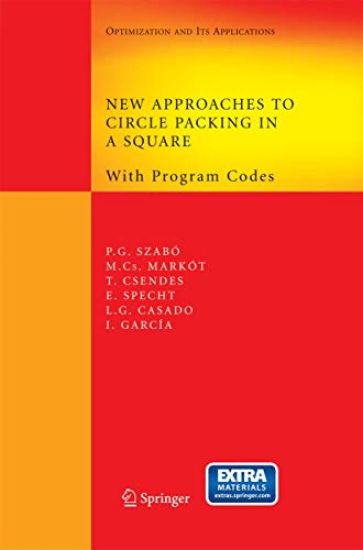
New Approaches to Circle Packing in a Square

New Approaches to Circle Packing in a Square

Péter Gábor Szabó; Mihaly Csaba Markót; Tibor Csendes; Eckard Specht; Leocadio G. Casado; Inmaculada García

Springer-Verlag New York Inc.
2007
sidottu
In one sense, the problem of finding the densest packing of congruent circles in a square is easy to understand. But on closer inspection, this problem reveals itself to be an interesting challenge of discrete and computational geometry with all its surprising structural forms and regularities. This book summarizes results achieved in solving the circle packing problem over the past few years, providing the reader with a comprehensive view of both theoretical and computational achievements. Typically illustrations of problem solutions are shown, elegantly displaying the results obtained.Beyond the theoretically challenging character of the problem, the solution methods developed in the book also have many practical applications.Since the codes can be worked with directly, they will enable the reader to improve on them and solve problem instances that still remain challenging, or to use them as a starting point for solving related application problems.
New Approaches to Circle Packing in a Square

New Approaches to Circle Packing in a Square

Péter Gábor Szabó; Mihaly Csaba Markót; Tibor Csendes; Eckard Specht; Leocadio G. Casado; Inmaculada García

Springer-Verlag New York Inc.
2014
nidottu
In one sense, the problem of finding the densest packing of congruent circles in a square is easy to understand. But on closer inspection, this problem reveals itself to be an interesting challenge of discrete and computational geometry with all its surprising structural forms and regularities. This book summarizes results achieved in solving the circle packing problem over the past few years, providing the reader with a comprehensive view of both theoretical and computational achievements. Typically illustrations of problem solutions are shown, elegantly displaying the results obtained.Beyond the theoretically challenging character of the problem, the solution methods developed in the book also have many practical applications.Since the codes can be worked with directly, they will enable the reader to improve on them and solve problem instances that still remain challenging, or to use them as a starting point for solving related application problems.
István Szabó

István Szabó

Susan Rubin Suleiman

BLOOMSBURY PUBLISHING PLC
2024
nidottu
István Szabó is one of the few Hungarian filmmakers to have earned a major international reputation over the past half century. This thoughtful and original book is the first examination of Szabó’s contribution to contemporary thought, engaging the troubled history of Europe in the 20th and 21st centuries. István Szabó’s importance as a filmmaker lies not only in his attention to film’s formal elements but in his deep and ongoing engagement with some of the most urgent ethical and existential questions of our time. With detailed analyses of István Szabó’s major films, from his 1960s works to his Academy Award for Best Foreign Film winner, Mephisto, and on through Szabó’s last film in 2020, Final Report, Susan Rubin Suleiman focuses on four important questions pertaining to existential choice: to leave home or to stay in a communist country? To collaborate or not with an authoritarian regime? To affirm or to deny one’s Jewishness in the face of antisemitism? To seek or to give up on community in the face of individual or national conflicts? Above all, Suleiman addresses the single most important philosophical question that haunts Szabó’s work, as it does that of many other Central European intellectuals and filmmakers of our time. That is, how do individuals attempt, through the life choices they make or that are foisted on them, to create a viable self in extreme historical situations over which they have no control?
István Szabó

István Szabó

Susan Rubin Suleiman

BLOOMSBURY PUBLISHING PLC
2024
sidottu
István Szabó is one of the few Hungarian filmmakers to have earned a major international reputation over the past half century. This thoughtful and original book is the first examination of Szabó’s contribution to contemporary thought, engaging the troubled history of Europe in the 20th and 21st centuries. István Szabó’s importance as a filmmaker lies not only in his attention to film’s formal elements but in his deep and ongoing engagement with some of the most urgent ethical and existential questions of our time. With detailed analyses of István Szabó’s major films, from his 1960s works to his Academy Award for Best Foreign Film winner, Mephisto, and on through Szabó’s last film in 2020, Final Report, Susan Rubin Suleiman focuses on four important questions pertaining to existential choice: to leave home or to stay in a communist country? To collaborate or not with an authoritarian regime? To affirm or to deny one’s Jewishness in the face of antisemitism? To seek or to give up on community in the face of individual or national conflicts? Above all, Suleiman addresses the single most important philosophical question that haunts Szabó’s work, as it does that of many other Central European intellectuals and filmmakers of our time. That is, how do individuals attempt, through the life choices they make or that are foisted on them, to create a viable self in extreme historical situations over which they have no control?
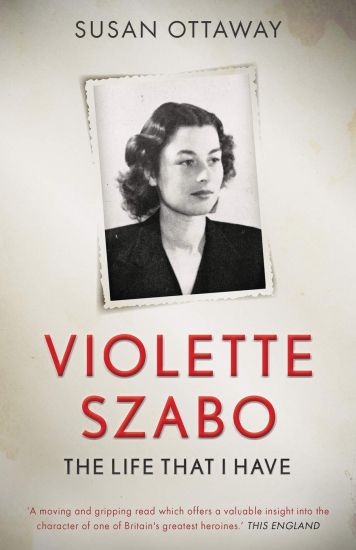
Violette Szabo

Violette Szabo

Susan Ottaway

Lume Books
2020
pokkari
The story of Violette Szabo is one of the most extraordinary in the annals of World War II espionage and covert operations.Totally fearless and a dead shot, Violette Szabo volunteered to become part of the Special Operations Executive, Britain's premier sabotage and subversion organization of the time. On 7 June 1944, Violette left behind a two-year-old daughter to parachute into France on a special mission.Szabo and other British agents were assigned to organise French resistance fighters to hinder the advance of the SS Das Reich Division to the Normandy beaches. Unfortunately, Szabo's party was soon ambushed by the SS.Unable to walk due to a twisted ankle, Szabo covered the retreat of her comrades with machine-gun fire. Captured, she went through a series of interrogations and changes of confinement before ending up at Ravensbruck, the German all-women's concentration camp. She was finally executed on 26 January 1945. She was twenty-three years old.This exceptional work has been written with the assistance of Violette Szabo's daughter, Tanya, and unravels fact and fiction about one of the most fascinating characters of World War II.
Joe Szabo: Hometown

Joe Szabo: Hometown

Joe Szabo

Damiani
2020
sidottu
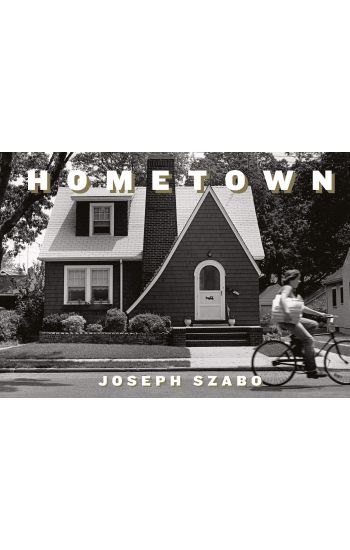
Hometown collects a series of suburban landscape photographs taken on Long Island between 1973-1980 by Joseph Szabo. Sharing the same DNA as his Teenage and Almost Grown series, Szabo’s Hometown images conjure up an instant nostalgia, recalling fond memories of Szabo’s childhood and adolescence in suburbia. Szabo explains, “The Hometown scenes reminded me of places I knew from my youth, places that I saw on my way to school, church, or the museum. They struck an emotional chord in me, one that is hard to put into words but that revealed their connection to my own past. In that sense, Hometown is autobiographical.”Building on his past work, Hometown gives context to the suburban lives that Szabo has documented so effectively for almost forty years.
The Cinema of István Szabó

The Cinema of István Szabó

John Cunningham

Wallflower Press
2014
sidottu
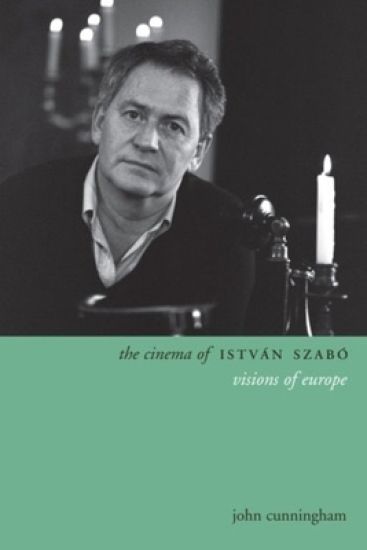
Istvan Szabo is one of Hungary's most celebrated and best-known film directors, and the only Hungarian to have won an Academy Award for Best Foreign Language Film, for Mephisto (1981). In a career spanning over five decades Szabo has relentlessly examined the place of the individual in European history, particularly those caught up in the turbulent events of Central Europe and his own native Hungary. His protagonists struggle to find a place for themselves, some meaning in their lives, security and a sense of being, against a background of two world wars (Colonel Redl, Confidence), the Holocaust (Sunshine), the Hungarian Uprising and the Cold War (Father, 25 Fireman's Street, Taking Sides). This is the first English-language study of all his feature films and uses material from interviews with Szabo and his collaborators. Also included are chapters on his formative years, including his time at the famous Budapest Film Academy and the relationship of the state to the film industry in Hungary.
The Cinema of István Szabó

The Cinema of István Szabó

John Cunningham

Wallflower Press
2014
pokkari
Istvan Szabo is one of Hungary's most celebrated and best-known film directors, and the only Hungarian to have won an Academy Award for Best Foreign Language Film, for Mephisto (1981). In a career spanning over five decades Szabo has relentlessly examined the place of the individual in European history, particularly those caught up in the turbulent events of Central Europe and his own native Hungary. His protagonists struggle to find a place for themselves, some meaning in their lives, security and a sense of being, against a background of two world wars (Colonel Redl, Confidence), the Holocaust (Sunshine), the Hungarian Uprising and the Cold War (Father, 25 Fireman's Street, Taking Sides). This is the first English-language study of all his feature films and uses material from interviews with Szabo and his collaborators. Also included are chapters on his formative years, including his time at the famous Budapest Film Academy and the relationship of the state to the film industry in Hungary.