

Kirjahaku
Etsi kirjoja tekijän nimen, kirjan nimen tai ISBN:n perusteella.
1000 tulosta hakusanalla T S McNeil
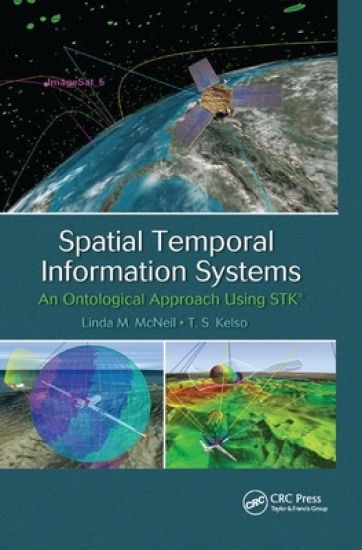
Designed to be a high-level, approachable resource for engineers who need further insight into spatial temporal information systems from an ontological perspective, Spatial Temporal Information Systems: An Ontological Approach using STK® explains the dynamics of objects interaction from signal analysis to trajectory design, spatial modeling, and other spatial analytics by using STK®, which is a general-purpose modeling and analysis application for any type of space, defense, or intelligence system.Building a foundation to begin the study of spatial temporal information systems, the book details a form of analysis that is a powerful tool for modeling, engineering, and operations of space, cyberspace, satellites, missile defense, and electronic systems. It discusses the many applications of space technologies by using a mission-proven software for timely and cost-effective development that serves public interests in civil, commercial, academic, national, and international space communities. Written for readers with a background in physics or engineering, the book is also designed for the beginning analyst sitting behind a desk who needs more information on STK.Upon reading this book, STK new users and power users will not only understand what the tools are, but also how the software can be used to make their job easier. In addition, satellite operators and analysts benefit from the ability to utilize a variety of propagators satellite applications. Analytics, semi-analytic and numerical integrators are discussed, including Keplerian orbital elements and full numerical integration of STK’s High Precision Orbit Propagation or simplified as a two-body analysis. This tool, as well as this book, will bring breadth and depth to the understanding of systems dynamics and the ontology of objects in relationship to other objects and vehicles including central bodies.
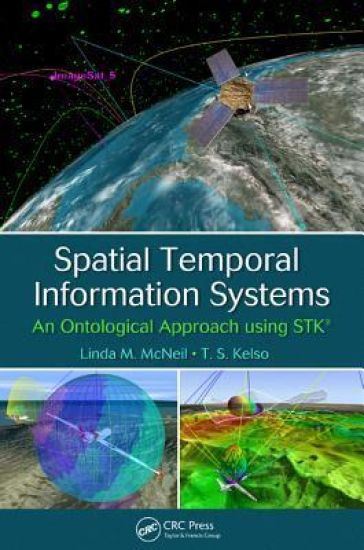
Designed to be a high-level, approachable resource for engineers who need further insight into spatial temporal information systems from an ontological perspective, Spatial Temporal Information Systems: An Ontological Approach using STK® explains the dynamics of objects interaction from signal analysis to trajectory design, spatial modeling, and other spatial analytics by using STK®, which is a general-purpose modeling and analysis application for any type of space, defense, or intelligence system.Building a foundation to begin the study of spatial temporal information systems, the book details a form of analysis that is a powerful tool for modeling, engineering, and operations of space, cyberspace, satellites, missile defense, and electronic systems. It discusses the many applications of space technologies by using a mission-proven software for timely and cost-effective development that serves public interests in civil, commercial, academic, national, and international space communities. Written for readers with a background in physics or engineering, the book is also designed for the beginning analyst sitting behind a desk who needs more information on STK.Upon reading this book, STK new users and power users will not only understand what the tools are, but also how the software can be used to make their job easier. In addition, satellite operators and analysts benefit from the ability to utilize a variety of propagators satellite applications. Analytics, semi-analytic and numerical integrators are discussed, including Keplerian orbital elements and full numerical integration of STK’s High Precision Orbit Propagation or simplified as a two-body analysis. This tool, as well as this book, will bring breadth and depth to the understanding of systems dynamics and the ontology of objects in relationship to other objects and vehicles including central bodies.
Charles Schiffman, Petitioner, V. Fred T. Wilkinson, Warden, United States Penitentiary, McNeil Island, U.S. Supreme Court Transcript of Record with Supporting Pleadings
Moses Polakoff; Simon E Sobeloff
Gale, U.S. Supreme Court Records
2011
pokkari


Fact: Chocolate contains the alkaloid theobromine, which in high doses can be toxic to humans, and in even small amounts can kill dogs, parrots, horses, and cats. This means that despite its name, the Kit-Kat candy bar is not a recommended snack for your kitty-cat. I wonder how many cats have died because of this confusion. Fact: The most germ-laden place on your toilet isn't the seat or even the bowl--it's the handle. The solution: Don't flush. Let the next guy worry about it. There are "just the facts"--and then there are just the facts that will frighten the bejeezus out of you. And thanks to this little gem of a bathroom book, you'll never look at the world the same way again, without, er, dry heaving a little bit. From the sneaky fish that can swim up our genitals to the E. coli bacteria lurking in the very water we drink, disturbing phenomena are everywhere we turn. Educational, entertaining, and undeniably horrifying, this book isn't guaranteed to help you, um, go to the bathroom, but it's certain to make your time there more...informed.

T. S. Eliot's allusions to Indic philosophy in several poems - from the Sanskrit ending of The Waste Land to the 'What Krishna meant' section of Four Quartets - have puzzled and intrigued readers since the poems first appeared. In T. S. Eliot and Indic Traditions, Professor Cleo McNelly Kearns places Eliot's lifelong interest in Indic philosophy and religion in the context of his concomitant studies in Western philosophy and his views on literary theory and poetic practice. The author establishes the depth and extent of his knowledge not only of Sanskrit and Pali texts but also of the scholarly tradition through which they were interpreted in the West. She explores as well Eliot's keen sense of the important distinctions between specific schools of thought. Kearns concludes that Eliot was less interested in synthesizing various traditions than in comparing texts and traditions for what he called 'the difference they can make to one another'.
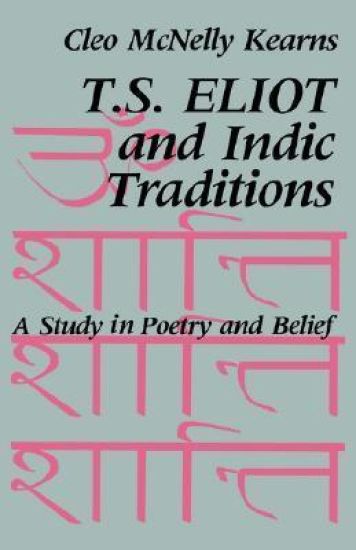
T. S. Eliot‘s allusions to Indic philosophy in several poems - from the Sanskrit ending of The Waste Land to the ‘What Krishna meant’ section of Four Quartets - have puzzled and intrigued readers since the poems first appeared. In T. S. Eliot and Indic Traditions, Professor Cleo McNelly Kearns places Eliot’s lifelong interest in Indic philosophy and religion in the context of his concomitant studies in Western philosophy and his views on literary theory and poetic practice. The author establishes the depth and extent of his knowledge not only of Sanskrit and Pali texts but also of the scholarly tradition through which they were interpreted in the West. She explores as well Eliot’s keen sense of the important distinctions between specific schools of thought. Kearns concludes that Eliot was less interested in synthesizing various traditions than in comparing texts and traditions for what he called ‘the difference they can make to one another’.
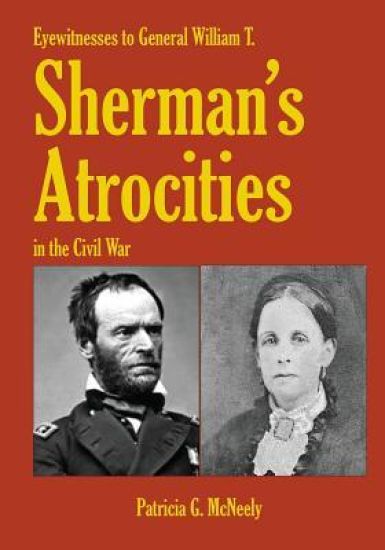
Eyewitnesses to General W.T. Sherman's Atrocities in the Civil War
Patricia G. McNeely
Createspace Independent Publishing Platform
2016
nidottu
General William T. Sherman went to great lengths during the burning of Columbia, South Carolina, to protect his "particular friend Miss Poyas," whose family he visited frequently while he was a bachelor stationed at Fort Moultrie between 1842 and 1846. The book and letters that Sherman signed and gave to her before, during and after the Civil War, along with an eyewitness account of his visits, have been privately saved for more than 150 years by descendants of Mary Catherine Poyas Walker. Recently released, the documents, along with other eyewitness accounts, provide significant new insight into Sherman's personal life as well as evidence of the atrocities committed by his troops in his military, economic and psychological war on civilians in Georgia and the Carolinas. The documents and eyewitnesses also finally and convincingly end the 150-year-old controversy about who burned Columbia. Admitting his strategy to destroy towns in his path rather than leaving occupying forces, Sherman told Mary Catherine that he "had not wanted to burn the town, it was such a pretty place," but "could leave no part" of his army to keep it.

Eyewitnesses to General William T. Sherman's Campaign in the Civil War
Patricia G. McNeely
Createspace Independent Publishing Platform
2017
nidottu
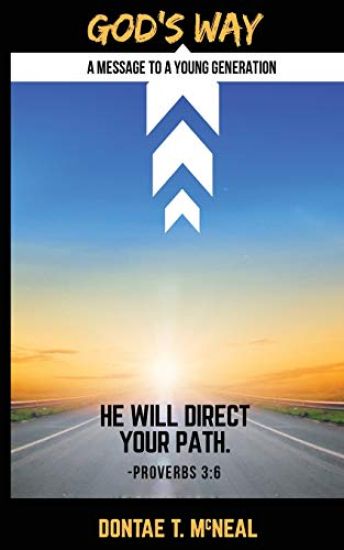
God's Way: A Message to a Young Generation
Dontae T. McNeal
Createspace Independent Publishing Platform
2018
nidottu
God's Way is a reference for young people between the ages of 12 to 34. This book sends the message that it's okay to be young, and have a relationship with God. Content shared stresses the importance of including God in everyday situations such as: Being a Church Boy (preacher's kid, a Christian) Mentorship Having a Calling (an assignment from God) College Career Relationships
![Love a la Mode. a Comedy. Written by a Person of Honour. [The Preface Is Signed T. S.]](/covers/9781241733292.jpg)
Love a la Mode. a Comedy. Written by a Person of Honour. [The Preface Is Signed T. S.]
T S
British Library, Historical Print Editions
2011
pokkari
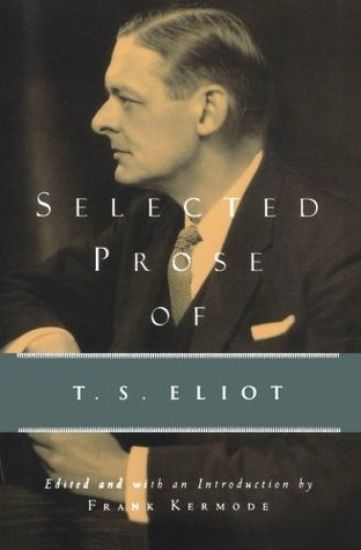
Thirty-one essays-categorized as "essays in generalization," "appreciations of individual authors," and "social and religious criticism"- written over a half century. This volume reveals Eliot's original ideas, cogent conclusions, and skill and grace in language. Edited and with an Introduction by Frank Kermode; Index. Published jointly with Farrar, Straus & Giroux.

T.S. Eliot and Early Modern Literature, for the first time, considers the full imaginative and moral engagement of one of the most influential poets of the twentieth century, T.S. Eliot, with the Early Modern period of literature in English (1580-1630). This engagement haunted Eliot's poetry and critical writing across his career, and would have a profound impact on subsequent poetry across the world, as well as upon academic literary criticism, and wider cultural perceptions. To this end, the book elucidates and contextualizes several facets of Eliot's thinking and its impact: through establishment of his original and eclectic understanding of the Early Modern period in relation to the literary and critical source materials available to him; through consideration of uncollected and archival materials, which suggest a need to reassess established readings of the poet's career; and through attention to Eliot's resonant formulations about the period in consequent literary, critical and artistic arenas. To the end of his life, Eliot had to fend off the presumption that he had, in some way, 'invented' the Early Modern period for the modern age. Yet the presumption holds some force - it is famously and influentially an implication running through Eliot's essays on that earlier period, and through his many references to its writings in his poetry, that the Early Modern period formed the most exact historical analogy for the apocalyptic events (and consequent social, cultural and literary turmoil) of the first half of the twentieth-century. T.S. Eliot and Early Modern Literature gives a comprehensive sense of the vital engagement of this self-consciously modern poet with the earlier period he always declared to be his favourite.
Though better known for his poetry, T. S. Eliot wrote seven important plays between 1926 and 1958, of which Murder in the Cathedral (1935) and The Cocktail Party (1949) may be most produced. Posthumously, he won Tony Awards in 1983 for the musical adaptation of his poetry in the Broadway production of Cats. He was at the forefront of a mid-twentieth-century revival of the genre of verse drama and also wrote a considerable body of dramatic criticism. Notwithstanding the hundreds of critical sources annotated in this bibliography, the Eliot industry has neglected the plays in recent years, producing few important studies on par with those on the poetry.This new sourcebook surveys the entire dramaturgical and critical discourse surrounding Eliot's plays. A separate chapter for each play provides characters, synopsis, detailed production history, critical overview of both performance reviews and scholarly response, textual notes and influences, and publishing history. The comprehensive bibliography is divided into sections for primary works, including Eliot's plays and essays on drama plus interviews and archival materials, and secondary sources, including scholarly and review criticism in general and of single plays. Also featured are a chronology of major career events, an introductory analysis, and an appendix of additional performance adaptations. Two other appendixes offer chronological access to all secondary sources and succinct data on major productions and their credits. Fully cross-referenced and indexed, this exhaustive compendium makes information and resources immediately accessible to anyone doing research on Eliot or modern British and American drama.
T.S. Eliot: The Waste Land
Red Globe Press
1968
nidottu