Kirjojen hintavertailu. Mukana 11 342 296 kirjaa ja 12 kauppaa.

Kirjahaku

Etsi kirjoja tekijän nimen, kirjan nimen tai ISBN:n perusteella.

1000 tulosta hakusanalla T. S. DeBrosse

Jeremy Chikalto and Leviathan Island

Jeremy Chikalto and Leviathan Island

T. S. DeBrosse

Viral Cat Press
2012
nidottu
Apollyon, the Angel of the Bottomless Pit, is being hounded by demons. After returning to Earth, Jeremy and Maren take a trip to Leviathan Island where two love triangles collide in the Bermuda Triangle. Will they find romance--or the green-eyed monster?Follow the Haze-crossed lovers as they jump out of the frying pan and into the submarine, pay a heavy price for the company of a hermit, and discover whether the devil they know is better than the ones they don't. Prepare for the pending Apocalypse and watch prophesy unravel in this thrilling sequel to Jeremy Chikalto and The Hazy Souls.
Jeremy Chikalto and the Hazy Souls

Jeremy Chikalto and the Hazy Souls

T S DeBrosse

Viral Cat Press
2011
pokkari
Jeremy Chikalto claimed for years he can look behind the air, but the people of the planet Watico think he's just delusional royalty. When Jeremy performs at an awards ceremony for achievement in Earth Studies, things go from bad to cataclysmic, and Jeremy and his friend Maren are warped into an ancient conflict that binds together Watico and Earth.As Jeremy develops shocking new abilities, Maren has to decide whether he's really grown up or still a loose cannon. Even worse, Jeremy pulls them both into the heart of the maelstrom, where forces are plotting to leverage his fate. Can Jeremy discover his cosmic role in the final conflict and still save his loved ones?
The Essential T.S. Eliot

The Essential T.S. Eliot

T. S. Eliot

Ecco Press
2020
sidottu
A selection of the most significant and enduring poems from one of the twentieth century's major writers, chosen and introduced by Vijay SeshadriT.S. Eliot was a towering figure in twentieth century literature, a renowned poet, playwright, and critic whose work--including "The Love Song of J. Alfred Prufrock" (1915), The Waste Land (1922), Four Quartets (1943), and Murder in the Cathedral (1935)--continues to be among the most-read and influential in the canon of American literature. The Essential T.S. Eliot collects Eliot's most lasting and important poetry in one career-spanning volume, now with an introduction from Vijay Seshadri, one of our foremost poets.
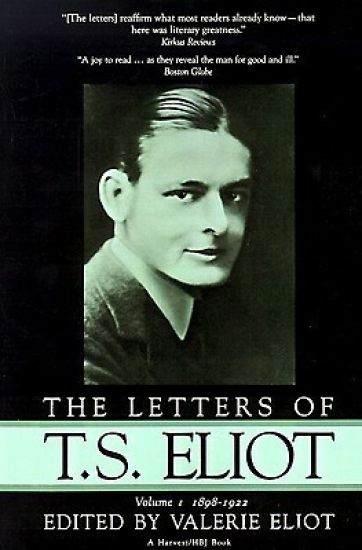
The Letters of T.S. Eliot: Volume 1, 1898-1922
T. S. Eliot, Nobel laureate and a great literary presence of the twentieth century, is renowned for his unique voice as poet, critic, and dramatist. This first volume of his long-awaited correspondence covers the period from his childhood in St. Louis, Missouri, until the end of 1922, by which time he had settled permanently in England, married, and published "The Love Song of J. Alfred Prufrock, " The Sacred Wood, and The Waste Land.Included her are all the significant extant letters Eliot wrote up to age 24 as well as many letters written to him by his family, friends, and contemporaries. There are insights into his struggle to earn a living, care for a wife who was frequently ill, edit a magazine, and become known as a critic and poet. And through the correspondence emerges a memorable view of the social and intellectual milieu before and after World War I.Valerie Eliot has written a detailed introduction, provided annotations and commentary, and selected numerous photographs of Eliot and his world, many of which have never been shown publicly. All these elements combine to create an exceptional portrait of Eliot in the early years of his personal and professional development -- the closest approximation readers will ever have to an autobiography of the poet.
T. S. Eliot Selected Poems

T. S. Eliot Selected Poems

T. S. Eliot

Ecco Press
2025
nidottu
Chosen by Eliot himself, the poems in this volume represent the poet's most important work before Four Quartets. Included here is some of the most celebrated verse in modern literature--"The Love Song of J. Alfred Prufrock," "Gerontion," "The Waste Land," "The Hollow Men," and "Ash Wednesday"--as well as many other fine selections from Eliot's early work.
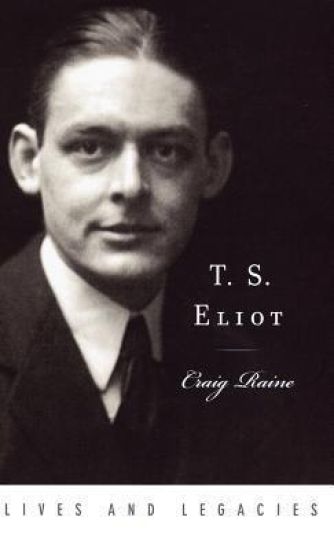
T. S. Eliot

T. S. Eliot

Craig Raine

Oxford University Press Inc
2007
sidottu
The winner of the Nobel Trize for Literature, the twentieth century's most famous poet and its most influential literary arbiter, T.S. Eliot has long been thought to be an obscure and difficult poet--forbiddingly learned, maddeningly enigmatic. Now, in this brilliant exploration of T.S. Eliot's work, prize-winning poet Craig Raine reveals that, on the contrary, Eliot's poetry (and drama and criticism) can be seen as a unified and coherent body of work. Indeed, despite its manifest originality, its radical experimentation, and its dazzling formal variety, his verse yields meaning just as surely as other more conventional poetry. Raine argues that an implicit controlling theme--the buried life, or the failure of feeling--unfolds in surprisingly varied ways throughout Eliot's work. But alongside Eliot's desire "to live with all intensity" was also a distrust of "violent emotion for its own sake." Raine illuminates this paradoxical Eliot--an exacting anti-romantic realist, skeptical of the emotions, yet incessantly troubled by the fear of emotional failure--through close readings of such poems as "The Love Song of J Alfred Prufrock," "Gerontion," The Hollow Men, Ash Wednesday, and many others. The heart of the book contains extended analyses of Eliot's two master works--The Waste Land and Four Quartets. Raine also examines Eliot's criticism--including his coinage of such key literary terms as the objective correlative, dissociation of sensibility, the auditory imagination--and he concludes with a convincing refutation of charges that Eliot was an anti-Semite. Here then is a volume absolutely indispensable for all admirers of T.S. Eliot and, in fact, for everyone who loves modern literature.
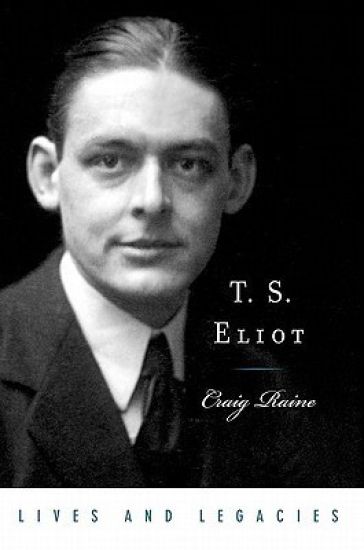
T. S. Eliot

T. S. Eliot

Craig Raine

Oxford University Press Inc
2011
nidottu
The twentieth century's most famous poet and its most influential literary arbiter, T.S. Eliot has long been thought to be an obscure and difficult writer-forbiddingly learned, maddeningly enigmatic. In this compelling exploration, prize-winning poet Craig Raine finds a way to read and make sense of Eliot's full corpus. He illuminates a paradoxical Eliot--an exacting anti-romantic realist, skeptical of the emotions, yet incessantly troubled by the fear of emotional failure--through close readings of his poetry, with extended analyses of Eliot's two master works--The Waste Land and Four Quartets. Raine also examines Eliot's criticism--including his coinage of such key literary terms as the objective correlative, dissociation of sensibility, the auditory imagination, and his biography, crafting a book that provides a concise introduction for beginners and a provocative set of arguments for Eliot admirers.
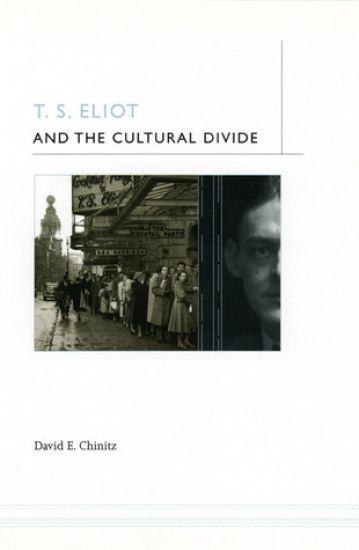
T. S. Eliot and the Cultural Divide

T. S. Eliot and the Cultural Divide

David E. Chinitz

University of Chicago Press
2005
nidottu
For decades T. S. Eliot has been applauded and denounced as a staunch champion of high art and an implacable opponent of popular culture. But Eliot's elitism was never what it seemed. "T. S. Eliot and the Cultural Divide" represents this great writer as the complex figure he was, an artist attentive not only to literature but also to detective fiction, Vaudeville Theater, jazz, and the songs of Tin Pan Alley. David Chinitz argues that Eliot was productively engaged with popular culture in some form at every stage of his career, and that his response to it, as expressed in his poetry, plays, and essays, was dynamic rather than hostile. He shows that American jazz, for example, was a major influence on Eliot's poetry during its maturation. He discusses Eliot's surprisingly persistent interest in popular culture, both in such famous works as "The Waste Land" and in such lesser-known pieces as "Sweeney Agonistes". And he traces Eliot's long, quixotic struggle to close the widening gap between high art and popular culture through a new type of public art: contemporary popular verse drama. What results is a work that will persuade adherents and detractors alike to return to Eliot and find in him a writer who liked a good show, a good thriller, and a good tune, as well as a "great" poem.
T. S. Eliot and the Cultural Divide

T. S. Eliot and the Cultural Divide

David E. Chinitz

University of Chicago Press
2003
sidottu
For decades T. S. Eliot has been applauded and denounced as a staunch champion of high art and an implacable opponent of popular culture. But Eliot's elitism was never what it seemed. "T. S. Eliot and the Cultural Divide" represents this great writer as the complex figure he was, an artist attentive not only to literature but also to detective fiction, Vaudeville Theater, jazz, and the songs of Tin Pan Alley. David Chinitz argues that Eliot was productively engaged with popular culture in some form at every stage of his career, and that his response to it, as expressed in his poetry, plays, and essays, was dynamic rather than hostile. He shows that American jazz, for example, was a major influence on Eliot's poetry during its maturation. He discusses Eliot's surprisingly persistent interest in popular culture, both in such famous works as "The Waste Land" and in such lesser-known pieces as "Sweeney Agonistes". And he traces Eliot's long, quixotic struggle to close the widening gap between high art and popular culture through a new type of public art: contemporary popular verse drama. What results is a work that will persuade adherents and detractors alike to return to Eliot and find in him a writer who liked a good show, a good thriller, and a good tune, as well as a "great" poem.
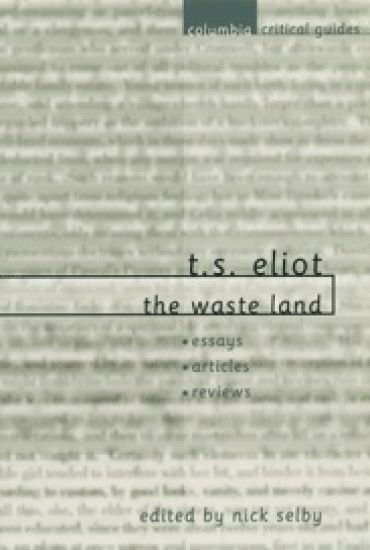
T. S. Eliot: "The Waste Land"

T. S. Eliot: "The Waste Land"

Columbia University Press
2001
sidottu
Selby (American studies, U. of Wales, Swansea) considers the critical history of T.S. Eliot's The Waste Land . Selby contends that the poem "is a crucial document that marks and produces a change in sensibility from unity of thought to a modern even postmodern apprehension of the plurality of exper
T. S. Eliot: "The Waste Land"

T. S. Eliot: "The Waste Land"

Columbia University Press
2001
pokkari
The Waste Land (1922) is widely recognized as a central text of modernism and is often described as the most important poem of the twentieth century. This guide begins with early reviews and discussions from the 1920s and '30s, considered alongside Eliot's own critical essays, showing how he set the critical terms by which his poem has been read. Examining the ways in which the poem became accepted as a literary classic, the guide then looks at New Critical and Formalist readings. The final chapters examine deconstructive readings that challenge The Waste Land's assumed cultural power by looking at it in light of Marxist, feminist, psychoanalytical, and cultural materialist reading practices.
T. S. Eliot

T. S. Eliot

James E. Miller Jr.

Pennsylvania State University Press
2005
sidottu
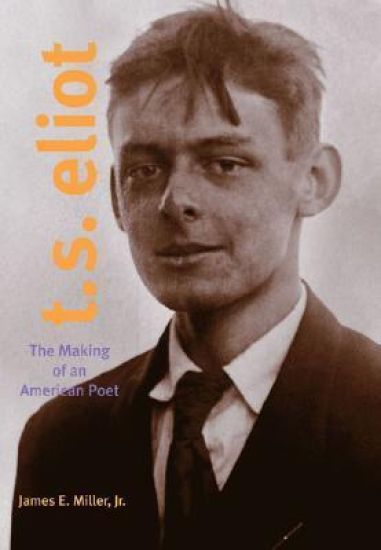
Late in his life T. S. Eliot, when asked if his poetry belonged in the tradition of American literature, replied: “I’d say that my poetry has obviously more in common with my distinguished contemporaries in America than with anything written in my generation in England. That I’m sure of. . . . In its sources, in its emotional springs, it comes from America.” In T. S. Eliot: The Making of an American Poet, James Miller offers the first sustained account of Eliot’s early years, showing that the emotional springs of his poetry did indeed come from America.Miller challenges long-held assumptions about Eliot’s poetry and his life. Eliot himself always maintained that his poems were not based on personal experience, and thus should not be read as personal poems. But Miller convincingly combines a reading of the early work with careful analysis of surviving early correspondence, accounts from Eliot’s friends and acquaintances, and new scholarship that delves into Eliot’s Harvard years. Ultimately, Miller demonstrates that Eliot’s poetry is filled with reflections of his personal experiences: his relationships with family, friends, and wives; his sexuality; his intellectual and social development; his influences.Publication of T. S. Eliot: The Making of an American Poet marks a milestone in Eliot scholarship. At last we have a balanced portrait of the poet and the man, one that takes seriously his American roots. In the process, we gain a fuller appreciation for some of the best-loved poetry of the twentieth century.
T. S. Eliot's Personal Waste Land

T. S. Eliot's Personal Waste Land

James E. Miller Jr.

Pennsylvania State University Press
2005
pokkari
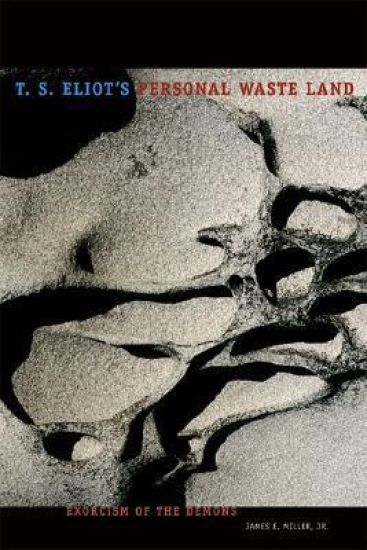
A major reinterpretation, T. S. Eliot's Personal Waste Land: Exorcism of the Demons takes Eliot at his word in his reiterated statements that The Waste Land was not a "criticism of the contemporary world" but a personal "grouse against life." It is the first critical work to investigate in depth the sources of the poem in Eliot's life, with particular attention to Eliot's "Calamus"-like attachment to a French youth during Eliot's graduate year in Paris, his subsequent precipitate (and disastrous) marriage following the death of his young French friend in World War I, and his 1921 nervous breakdown (suffering from what he called "an aboulie and emotional derangement which has been a lifelong affliction") that led to the writing of The Waste Land. Yet the main thrust of this work is not on Eliot's life, but on his poetry, exploring ways in which the fragmentary details of his life shape and illuminate the poems. While some consideration is given to the early, confession-like "Ode" (later suppressed), and to the famous "familiar compound ghost" of the later Four Quartets, primary attention is focused on the original drafts of The Waste Land. The poem emerges from a meticulous and detailed reading of the manuscripts as indeed a kind of elegy for a dead friend, with links to Tennyson's In Memoriam and Whitman's "When Lilacs Last in the Dooryard Bloom'd," and thus not a piece of "social criticism" but an expression of anguish and pain and despair working toward resignation, resolution, and reconciliation. It becomes clear that this interpretation is not dependent on biographical conjecture and reconstruction, but flows inevitably from simple close scrutiny of the intricate evolution of The Waste Land; therefore the firm establishment of the full facts of Eliot's early life is unnecessary to this "meaning." In following Eliot's own frequent hints, this book offers a vital corrective to all the previous readings (or misreadings) of The Waste Land, and has important implications for the entire Modernist Movement.
T. S. Eliot

T. S. Eliot

James E. Miller Jr.

Pennsylvania State University Press
2008
pokkari
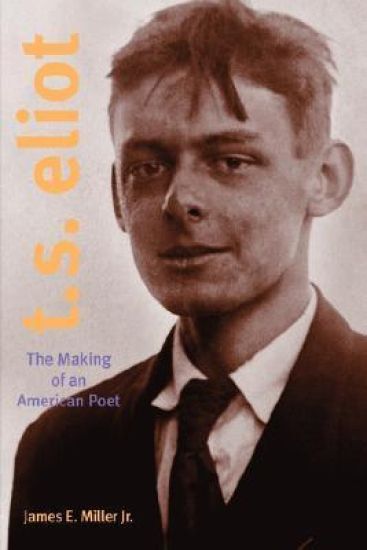
Late in his life T. S. Eliot, when asked if his poetry belonged in the tradition of American literature, replied: “I’d say that my poetry has obviously more in common with my distinguished contemporaries in America than with anything written in my generation in England. That I’m sure of. . . . In its sources, in its emotional springs, it comes from America.” In T. S. Eliot: The Making of an American Poet, James Miller offers the first sustained account of Eliot’s early years, showing that the emotional springs of his poetry did indeed come from America.Miller challenges long-held assumptions about Eliot’s poetry and his life. Eliot himself always maintained that his poems were not based on personal experience, and thus should not be read as personal poems. But Miller convincingly combines a reading of the early work with careful analysis of surviving early correspondence, accounts from Eliot’s friends and acquaintances, and new scholarship that delves into Eliot’s Harvard years. Ultimately, Miller demonstrates that Eliot’s poetry is filled with reflections of his personal experiences: his relationships with family, friends, and wives; his sexuality; his intellectual and social development; his influences.Publication of T. S. Eliot: The Making of an American Poet marks a milestone in Eliot scholarship. At last we have a balanced portrait of the poet and the man, one that takes seriously his American roots. In the process, we gain a fuller appreciation for some of the best-loved poetry of the twentieth century.
The Letters of T. S. Eliot: Volume 2: 1923-1925 Volume 2
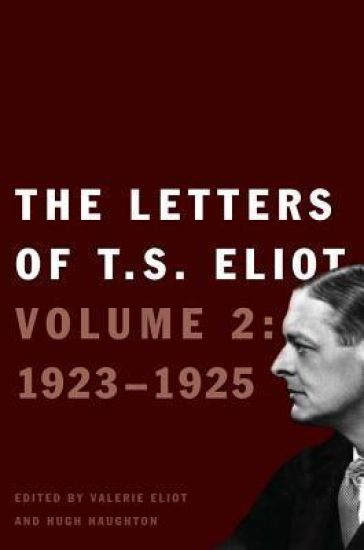
In two highly anticipated volumes, the correspondence of the twentieth century's eminent man of letters, from youth to early manhood Volume One: 1898-1922 presents some 1,400 letters encompassing the years of Eliot's childhood in St. Louis, Missouri, through 1922, by which time the poet had settled in England, married his first wife, and published The Waste Land. Since the first publication of this volume in 1988, many new materials from British and American sources have come to light. More than two hundred of these newly discovered letters are now included, filling crucial gaps in the record and shedding new light on Eliot's activities in London during and after the First World War. Volume Two: 1923-1925 covers the early years of Eliot's editorship of The Criterion, publication of The Hollow Men, and his developing thought about poetry and poetics. The volume offers 1,400 letters, charting Eliot's journey toward conversion to the Anglican faith, as well as his transformation from banker to publisher and his appointment as director of the new publishing house Faber & Gwyer. The prolific and various correspondence of this volume testifies to Eliot's growing influence as cultural commentator and editor.
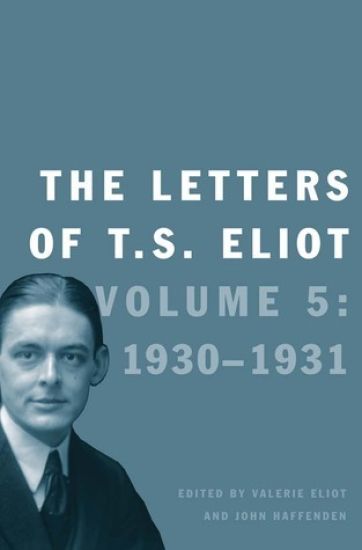
The Letters of T. S. Eliot: Volume 5: 1930-1931 Volume 5
The fifth volume of the correspondence of literary giant T. S. Eliot This fifth volume of the collected letters of poet, playwright, essayist, and literary critic Thomas Stearns Eliot covers the years 1930 through 1931. It was during this period that the acclaimed American-born writer earnestly embraced his newly avowed Anglo-Catholic faith, a decision that earned him the antagonism of friends like Virginia Woolf and Herbert Read. Also evidenced in these correspondences is Eliot's growing estrangement from his wife Vivien, with the writer's newfound dedication to the Anglican Church exacerbating the unhappiness of an already tormented union. Yet despite his personal trials, this period was one of great literary activity for Eliot. In 1930 he composed the poems Ash-Wednesday and Marina, and he published Coriolan and a translation of Saint-John Perse's Anabase the following year. As director at the British publishing house Faber & Faber and editor of The Criterion, he encouraged W. H. Auden, Stephen Spender, Louis MacNeice, and Ralph Hogdson, published James Joyce's Haveth Childers Everywhere, and turned down a book proposal from Eric Blair, better known by his pen name, George Orwell. Through Eliot's correspondences from this time the reader gets a full-bodied view of a great artist at a personal, professional, and spiritual crossroads.
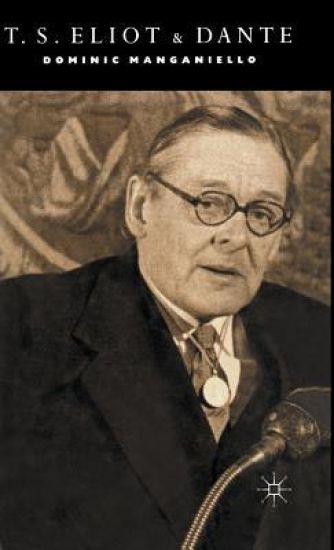
T. S. Eliot and Dante

T. S. Eliot and Dante

Dominic Manganiello

Palgrave Macmillan
1989
sidottu
Ezra Pound belatedly conceded that T.S.Eliot "was the true Dantescan voice" of the modern world. With this assertion in mind, this study examines the relationship between the two poets. It attempts to show how Dante's total vision impinges on Eliot's craft and thought.
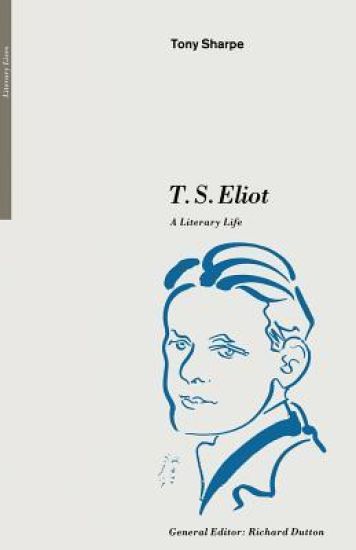
T. S. Eliot

T. S. Eliot

Tony Sharpe

Palgrave Macmillan
1991
nidottu
Part of a series which offers accounts of the literary careers of the most widely read British and Irish authors. This volume looks at T.S.Eliot and traces the professional, publishing and social contexts which shaped his writing.