Kirjojen hintavertailu. Mukana 11 244 527 kirjaa ja 12 kauppaa.

Kirjahaku

Etsi kirjoja tekijän nimen, kirjan nimen tai ISBN:n perusteella.

394 tulosta hakusanalla Tadeusz Pióro

Funtime, Endtime: Reading Frank O’Hara

Funtime, Endtime: Reading Frank O’Hara

Tadeusz Pióro

Peter Lang AG
2017
sidottu
This book is a comprehensive approach to interpreting Frank O’Hara’s highly influential work. Frank O’Hara’s poetry, initially inspired by the Modernist avant-garde, underwent a radical change around 1960. This change parallels the decline of Abstract Expressionism and the rise of Pop Art. The book includes historical contextualization as well as practical criticism. The author analyzes how Frank O’Hara could be regarded. As a Modernist poet, or as one who realizes that the aesthetic of High Modernism is on the wane, and is preparing himself for a paradigmatic change. Earlier poems are best seen as Modernist/avant-gardist, while the later ones as no less vanguard forays into uncharted territory. While the book takes up issues such as mimeticism, realism and abstraction in both poetry and painting, the boredom of the new as seen by Walter Benjamin, and the representational potential of the camp aesthetic, the main emphasis is on practical criticism, modes of reading O’Hara’s œuvre.
Poland's Holocaust

Poland's Holocaust

Tadeusz Piotrowski

McFarland Co Inc
2007
pokkari
With the end of World War I, a new Republic of Poland emerged on the maps of Europe, made up of some of the territory from the first Polish Republic, including Wolyn and Wilno, and significant parts of Belarus, Upper Silesia, Eastern Galicia, and East Prussia. The resulting conglomeration of ethnic groups left many substantial minorities wanting independence. The approach of World War II provided the minorities' leaders a new opportunity in their nationalist movements, and many sided with one or the other of Poland's two enemies--the Soviet Union and Nazi Germany--in hopes of achieving their goals at the expense of Poland and its people. Based on primary and secondary sources in numerous languages (including Polish, German, Ukrainian, Belorussian, Russian and English), this work examines the roles of the ethnic minorities in the collapse of the Republic and in the atrocities that occurred under the occupying troops. The Polish government's response to mounting ethnic tensions in the prewar era and its conduct of the war effort are also examined.
Vengeance of the Swallows

Vengeance of the Swallows

Tadeusz Piotrowski

McFarland Co Inc
2009
pokkari
Forced to endure occupation by both the Soviets and the Nazis, the author's family also faced the terror of Ukrainian "ethnic cleansing" by nationalist forces. The horror of the Nazi forced-labor camps wherein millions of Europeans were enslaved is vividly recounted, as is the family's time in displaced persons camps. Hundreds of thousands of refugees, unable or unwilling to return to their own countries, waited for the chance to enter these camps under the American Occupation Forces. The author's family subsequently immigrated to America. The book is based on family memories and recorded accounts; U.S. interviews and European published oral histories; published English, Polish, Ukrainian, German and Russian sources; U.N. documents and Nuremberg testimonies; and recent information from Warsaw.
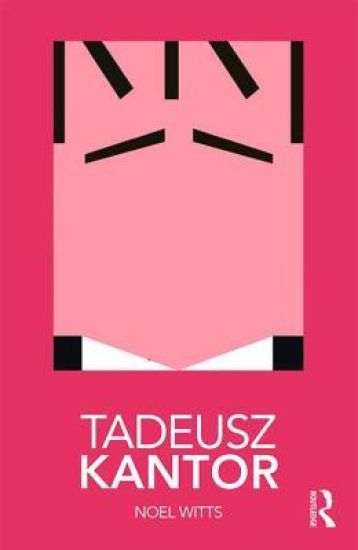
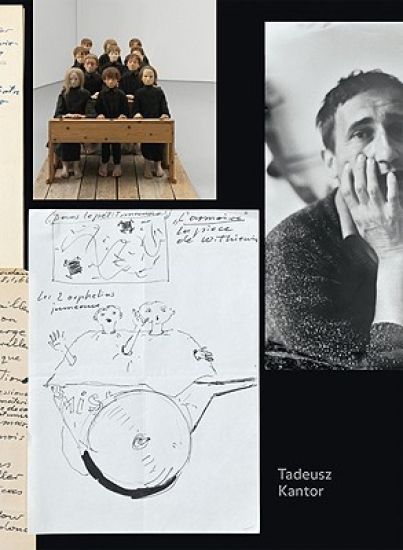
Tadeusz Kantor

Tadeusz Kantor

Noel Witts

CRC Press Inc
2018
sidottu
Tadeusz Kantor – a theoretician, director, innovator and painter famed for his very visual theatre style – was a key figure in European avant-garde theatre. He was also known for his challenging theatrical innovations, such as extending stages and the combination of mannequins with living actors. The book combines: a detailed study of the historical context of Kantor’s work an exploration of Kantor’s own writings on his theatrical craft a stylistic analysis of the key works, including The Dead Class and Let the Artists Die, and their critical reception an examination of the practical exercises devised by Kantor.As a first step towards critical understanding, and as an initial exploration before going on to further, primary research, Routledge Performance Practitioners offer unbeatable value for today’s student.
Tadeusz Kantor

Tadeusz Kantor

Noel Witts

CRC Press Inc
2018
nidottu
Tadeusz Kantor – a theoretician, director, innovator and painter famed for his very visual theatre style – was a key figure in European avant-garde theatre. He was also known for his challenging theatrical innovations, such as extending stages and the combination of mannequins with living actors. The book combines: a detailed study of the historical context of Kantor’s work an exploration of Kantor’s own writings on his theatrical craft a stylistic analysis of the key works, including The Dead Class and Let the Artists Die, and their critical reception an examination of the practical exercises devised by Kantor.As a first step towards critical understanding, and as an initial exploration before going on to further, primary research, Routledge Performance Practitioners offer unbeatable value for today’s student.
Tadeusz Bobrowski's 'A Memoir of my Life'

Tadeusz Bobrowski's 'A Memoir of my Life'

Addison Bross

East European Monographs
2008
sidottu
Many will recognize the name of Tadeusz Bobrowski-Joseph Conrad's uncle-a Polish landowner living in the Ukraine. A member of one of Tsar Alexander II's regional committees charged with abolishing serfdom, Bobrowski angered many of his fellow landowners by his commitment to land reform, yet he also clashed with Poles who supported the January Rising against Russia. After Conrad's parents' were killed for their anti-tsarist views, Bobrowski became the young author's guardian and encouraged him to go to sea. Throughout his life, he remained Conrad's constant correspondent and vital link to his homeland, and Bobrowski dire opinion of Polish society shaped the novelist's gloomy view of human politics. This volume is the first extensive English translation of Bobrowski's memoir, which offers a full portrait of the reformer's thoughts on an optimal plan for Poland under Russia's rule. His views contrasted sharply with the more common, Romantic conception of Polish patriotism-a form that encouraged armed uprisings against the Tsar's armies. Bobrowski urged independence through a plan of economic, social, and cultural improvement-an effort that came to be called "organic work." Bobrowski was called a tsarist collaborator and a coward, but his memoir reveals his practical humanitarianism, as well as a full portrait of Poland's political reality in the years of Conrad's childhood and youth.
Tadeusz Kowalik and Poland's Return to Capitalism Through Socialism
Tadeusz Kowalik lived through ten decades and three economic and political systems in Poland. He combined his academic study of economic ideas with his socialist ideals of building a fairer and more just society. This book covers the intellectual and political work of Kowalik, within the context of modern Polish history. Kowalik was part of a Polish School of critical left-wing political economists, that included Michal Kalecki and Oskar Lange. Kowalik contributed to the body of work produced by this group, which included his interpretation of their work. Kowalik participated in some of the most momentous events in post-war Polish history, helping to organise a group of intellectuals to advise the shipyard workers at the Gdansk shipyards in 1980. He became a vehement opponent of Poland’s neoliberal form of capitalism and left a body of work that illuminates our understanding of capitalism and socialism today.
Tadeusz Kosciuszko: The Life and Legacy of Poland's Most Famous General

Tadeusz Kosciuszko: The Life and Legacy of Poland's Most Famous General

Charles River

Createspace Independent Publishing Platform
2018
nidottu
*Includes pictures *Includes contemporary accounts *Includes online resources and a bibliography for further reading Many Americans labor under the misconception that the nation's colonial and national heritage was almost wholly accomplished by an English migration, and the notion of early American diversity ends at an acknowledgment of the slave trade conducted between Southern buyers, Northern shippers, the African continent and the Caribbean region. However, early America witnessed the development of New York by the Dutch, the southernmost regions by Spain, and what would become eastern Canada by the French after lengthy battles with Britain. In fact, the Seven Years' War during the 1750s was fought on a nearly global scale between several European belligerents. As a result, when the Revolution began, the Continental Army sported numerous volunteers from Ireland, Scotland, virtually every European nation between France and Russia, and men from the northern and southern borders of the European continent. There are good reasons America doesn't possess a constitutionally-confirmed national language, despite an English-speaking majority; among the early proposals for such a common language, German and French served as contenders, with the latter going on to become Western Europe's official diplomatic language. Likewise, those who accomplished the legislative, diplomatic, and military miracles that helped 13 separate colonies hold off the greatest power in the world represented a multi-national heritage. The prospects for a rustic, untrained revolution across the Atlantic carried powerful ramifications for politics, economics, and cultural identity of the individual. Autocrats of the 18th century feared an emerging model from the British-American war that might be refashioned by dissidents within their own colonies. Among those living the consequences of defeat and exile, the soldier class of Europe paid particularly close attention. Some were rapt by the growing ideology of the Enlightenment movement as it pertained to their own cultures while others grew weary of inertia imposed by an inability to practice their craft. For the gifted Tadeusz Kosciuszko, both were likely true. However, Poland's famous soldier, artist, engineer, and statesman possessed a uniquely expanded vision that perceived the American conflict as the test of a new universal paradigm. A philosophical revolution in itself, the vision held by Locke and Jefferson for a previously unknown standard of individual liberty found an obsessive place in Kosciuszko's life view. His response to its power was to make him a much-heralded citizen of both continents in perpetuity, in war and peacetime. A hero in Poland, Lithuania, and Belarus, Kosciuszkonot only fought as an officer in the Continental Army of General Washington, but also designed and constructed the defenses for some of America's earliest cities and important military defenses. As a friend to the fledgling state, he went on to lead a "national insurrection" in his Polish homeland against centuries-old Russian domination, mirroring the American effort. Denying allegiance and assistance to Tsars and Emperors such as Catherine and Napoleon unless Polish independence was guaranteed, Kosciuszko witnessed the disappearance of Poland from the world map, an absence not rectified for well over a century. Today, streets, bridges, monuments, and even neighborhoods bear Kosciuszko's name across the country, and in Polish communities, he is often hailed as a hero equal to General Washington himself. Tadeusz Kosciuszko: The Life and Legacy of Poland's Most Famous General profiles one of the Revolutionary War's most important figures. Along with pictures of important people, places, and events, you will learn about Kosciuszko like never before.
Tadeusz Kosciuszko: The Life and Legacy of Poland's Most Famous General

Tadeusz Kosciuszko: The Life and Legacy of Poland's Most Famous General

Charles River

Createspace Independent Publishing Platform
2018
nidottu
*Includes pictures*Includes contemporary accounts*Includes online resources and a bibliography for further readingMany Americans labor under the misconception that the nation's colonial and national heritage was almost wholly accomplished by an English migration, and the notion of early American diversity ends at an acknowledgment of the slave trade conducted between Southern buyers, Northern shippers, the African continent and the Caribbean region. However, early America witnessed the development of New York by the Dutch, the southernmost regions by Spain, and what would become eastern Canada by the French after lengthy battles with Britain. In fact, the Seven Years' War during the 1750s was fought on a nearly global scale between several European belligerents.As a result, when the Revolution began, the Continental Army sported numerous volunteers from Ireland, Scotland, virtually every European nation between France and Russia, and men from the northern and southern borders of the European continent. There are good reasons America doesn't possess a constitutionally-confirmed national language, despite an English-speaking majority; among the early proposals for such a common language, German and French served as contenders, with the latter going on to become Western Europe's official diplomatic language. Likewise, those who accomplished the legislative, diplomatic, and military miracles that helped 13 separate colonies hold off the greatest power in the world represented a multi-national heritage.The prospects for a rustic, untrained revolution across the Atlantic carried powerful ramifications for politics, economics, and cultural identity of the individual. Autocrats of the 18th century feared an emerging model from the British-American war that might be refashioned by dissidents within their own colonies. Among those living the consequences of defeat and exile, the soldier class of Europe paid particularly close attention. Some were rapt by the growing ideology of the Enlightenment movement as it pertained to their own cultures while others grew weary of inertia imposed by an inability to practice their craft.For the gifted Tadeusz Kosciuszko, both were likely true. However, Poland's famous soldier, artist, engineer, and statesman possessed a uniquely expanded vision that perceived the American conflict as the test of a new universal paradigm. A philosophical revolution in itself, the vision held by Locke and Jefferson for a previously unknown standard of individual liberty found an obsessive place in Kosciuszko's life view. His response to its power was to make him a much-heralded citizen of both continents in perpetuity, in war and peacetime. A hero in Poland, Lithuania, and Belarus, Kosciuszkonot only fought as an officer in the Continental Army of General Washington, but also designed and constructed the defenses for some of America's earliest cities and important military defenses. As a friend to the fledgling state, he went on to lead a "national insurrection" in his Polish homeland against centuries-old Russian domination, mirroring the American effort. Denying allegiance and assistance to Tsars and Emperors such as Catherine and Napoleon unless Polish independence was guaranteed, Kosciuszko witnessed the disappearance of Poland from the world map, an absence not rectified for well over a century.Today, streets, bridges, monuments, and even neighborhoods bear Kosciuszko's name across the country, and in Polish communities, he is often hailed as a hero equal to General Washington himself. Tadeusz Kosciuszko: The Life and Legacy of Poland's Most Famous General profiles one of the Revolutionary War's most important figures. Along with pictures of important people, places, and events, you will learn about Kosciuszko like never before.
Tadeusz Kosciuszko and Casimir Pulaski: The Lives of the Revolutionary War's Most Famous Polish Officers
*Includes pictures*Includes contemporary accounts*Includes online resources and a bibliography for further readingBy the time the Revolutionary War started, military confrontations between the world powers had become so common that combat was raised to the status of a fine art, consuming a large portion of time for adolescent males in training and comprising a sizeable component of the economy. Weaponry was developed to a degree of quality not accessible to most North Americans, and European aristocrats were reared in the mastery of swordsmanship with an emphasis on the saber for military use. Likewise, the cavalry, buoyed by a tradition of expert horsemanship and saddle-based combat, was a fighting force largely beyond reach for colonists, which meant that fighting on horses was an undeveloped practice in the fledgling Continental Army, and the American military did not yet fully comprehend the value of cavalry units. Few sword masters were to find their way to North America in time for the war, and the typical American musket was a fair hunting weapon rather than a military one. Even the foot soldier knew little of European military discipline.However, with European nations unceasingly at war, soldiers from one side or the other often found themselves in disfavor, were marked men in exile, or were fleeing from a superior force. To General George Washington's good fortune, a few found their way to the colonies to join in the cause. Some were adventurers recently cut off from their own borders, while others embraced the American urge for freedom that so closely mirrored the same movements in their home countries.Nations such as France undoubtedly had an elevating effect on America's capacity to make formal war, and Lafayette is the most famous foreigner to serve in the Continental Army, but some of the most important individuals who fought for the colonists came from Poland.One of the most important individuals who arrived at Washington's door was Polish aristocrat Kazimierz Michal Wladyslaw Wiktor Pulaski, known to future generations as the "Father of the American Cavalry." Few foreign participants in early American events are as widely decorated in non-military society as this Polish cavalry officer driven into exile from his own nation's fight for independence. Pulaski considered the American urge for resistance against Britain to be an inseparable principle from Poland's lengthy struggle against Russian domination.Tadeusz Kosciuszko possessed a uniquely expanded vision that perceived the American conflict as the test of a new universal paradigm. A philosophical revolution in itself, the vision held by Locke and Jefferson for a previously unknown standard of individual liberty found an obsessive place in Kosciuszko's life view. His response to its power was to make him a much-heralded citizen of both continents in perpetuity, in war and peacetime. A hero in Poland, Lithuania, and Belarus, Kosciuszko not only fought as an officer in the Continental Army of General Washington, but also designed and constructed the defenses for some of America's earliest cities and important military defenses. As a friend to the fledgling state, he went on to lead a "national insurrection" in his Polish homeland against centuries-old Russian domination, mirroring the American effort. Denying allegiance and assistance to Tsars and Emperors such as Catherine and Napoleon unless Polish independence was guaranteed, Kosciuszko witnessed the disappearance of Poland from the world map, an absence not rectified for well over a century.Today, streets, bridges, monuments, and even neighborhoods bear both men's names across the country, and in Polish-American communities, they are often hailed as heroes equal to Washington himself. Tadeusz Kosciuszko and Casimir Pulaski: The Lives of the Revolutionary War's Most Famous Polish Officers profiles two of the Revolutionary War's most important figures.
Tadeusz Kosciuszko and Casimir Pulaski: The Lives of the Revolutionary War's Most Famous Polish Officers
*Includes pictures*Includes contemporary accounts*Includes online resources and a bibliography for further readingBy the time the Revolutionary War started, military confrontations between the world powers had become so common that combat was raised to the status of a fine art, consuming a large portion of time for adolescent males in training and comprising a sizeable component of the economy. Weaponry was developed to a degree of quality not accessible to most North Americans, and European aristocrats were reared in the mastery of swordsmanship with an emphasis on the saber for military use. Likewise, the cavalry, buoyed by a tradition of expert horsemanship and saddle-based combat, was a fighting force largely beyond reach for colonists, which meant that fighting on horses was an undeveloped practice in the fledgling Continental Army, and the American military did not yet fully comprehend the value of cavalry units. Few sword masters were to find their way to North America in time for the war, and the typical American musket was a fair hunting weapon rather than a military one. Even the foot soldier knew little of European military discipline.However, with European nations unceasingly at war, soldiers from one side or the other often found themselves in disfavor, were marked men in exile, or were fleeing from a superior force. To General George Washington's good fortune, a few found their way to the colonies to join in the cause. Some were adventurers recently cut off from their own borders, while others embraced the American urge for freedom that so closely mirrored the same movements in their home countries.Nations such as France undoubtedly had an elevating effect on America's capacity to make formal war, and Lafayette is the most famous foreigner to serve in the Continental Army, but some of the most important individuals who fought for the colonists came from Poland.One of the most important individuals who arrived at Washington's door was Polish aristocrat Kazimierz Michal Wladyslaw Wiktor Pulaski, known to future generations as the "Father of the American Cavalry." Few foreign participants in early American events are as widely decorated in non-military society as this Polish cavalry officer driven into exile from his own nation's fight for independence. Pulaski considered the American urge for resistance against Britain to be an inseparable principle from Poland's lengthy struggle against Russian domination.Tadeusz Kosciuszko possessed a uniquely expanded vision that perceived the American conflict as the test of a new universal paradigm. A philosophical revolution in itself, the vision held by Locke and Jefferson for a previously unknown standard of individual liberty found an obsessive place in Kosciuszko's life view. His response to its power was to make him a much-heralded citizen of both continents in perpetuity, in war and peacetime. A hero in Poland, Lithuania, and Belarus, Kosciuszko not only fought as an officer in the Continental Army of General Washington, but also designed and constructed the defenses for some of America's earliest cities and important military defenses. As a friend to the fledgling state, he went on to lead a "national insurrection" in his Polish homeland against centuries-old Russian domination, mirroring the American effort. Denying allegiance and assistance to Tsars and Emperors such as Catherine and Napoleon unless Polish independence was guaranteed, Kosciuszko witnessed the disappearance of Poland from the world map, an absence not rectified for well over a century.Today, streets, bridges, monuments, and even neighborhoods bear both men's names across the country, and in Polish-American communities, they are often hailed as heroes equal to Washington himself. Tadeusz Kosciuszko and Casimir Pulaski: The Lives of the Revolutionary War's Most Famous Polish Officers profiles two of the Revolutionary War's most important figures.
Tadeusz Kantor's Memory

Tadeusz Kantor's Memory

Polish Theatre Perspectives
2018
pokkari
Tadeusz Kantor (1915-1990) was a Polish visual artist, writer, and theatre director, who can be placed among a select group of the twentieth century's most influential performance practitioners. The breadth and diversity of his artistic endeavours align Kantor with such varied figures as Stanislaw Ignacy Witkiewicz (Witkacy), Marcel Duchamp, Vsevolod Meyerhold, Oskar Schlemmer, Antonin Artaud, Jackson Pollock, Jerzy Grotowski, Allan Kaprow, Peter Brook, Pina Bausch, and Robert Wilson. In significant ways, Kantor's work with the Cricot 2 company and his theories of theatre consistently challenged and expanded the boundaries of traditional and non-traditional theatre forms.Tadeusz Kantor's Memory: Other pasts, other futures -- published following Kantor's centenary year and the 60th anniversary of the founding of Cricot 2, as well as anniversaries of the group's key productions The Dead Class (1975), Wielopole, Wielopole (1980), and Let the Artists Die (1985) -- gathers international perspectives from across academia and the arts to offer a major critical reappraisal of Kantor's work. The book includes scholarly contributions by researchers from around the world, alongside reflections by leading collaborators and colleagues, and a selection of rarely seen images. Together, these materials offer an invaluable, contemporary insight into Kantor's theoretical and artistic practice and an unprecedented view of its global sphere of influence.Michal Kobialka is Professor of Theatre Arts at the Department of Theatre Arts and Dance, University of Minnesota. He has published over 75 articles, essays, and reviews in academic journals in the US and Europe. He is the author of A Journey Through Other Spaces: Essays and Manifestos, 1944-1990 (University of California Press, 1993), This Is My Body: Representational Practices in the Early Middle Ages (University of Michigan Press, 1999), and Further on, Nothing: Tadeusz Kantor's Theatre (University of Minnesota Press, 2009); editor of Of Borders and Thresholds: Theatre History, Practice, and Theory (University of Minnesota Press, 1999); and co-editor (with Barbara Hanawalt) of Medieval Practices of Space (University of Minnesota Press, 2000) as well as (with Rosemarie K. Bank) of Theatre/Performance Historiography: Time, Space, Matter (Palgrave, 2015).Natalia Zarzecka is Director of Cricoteka: The Centre for the Documentation of the Art of Tadeusz Kantor, in Krakow, where she has led development of the centre's new building and museum space on the Vistula river. She has co-curated several Polish and international exhibitions, including within the Kantor Centenary programme at Cricoteka (2015) and 'An Impossible Journey: The Art and Theatre of Tadeusz Kantor' at the Sainsbury Centre for Visual Arts in Norwich, UK, within the Polska! Year (2009). She is co-editor of Italian and Polish editions of the Wielopole, Wielopole Dossier (Titivillus, 2006; Cricoteka, 2007) and Kantor Was Here (Black Dog Publishing, 2011), co-translator (with Silvia Parlagreco) of Podroz Tadeusza Kantora kompendium biograficzne (2002), and author of various texts on Tadeusz Kantor and Cricoteka.For more information about Polish Theatre Perspectives, and to view Open Access editions of this and other PTP titles, please visit www.ptp.press.
Tadeusz Kotarbinski’s Action Theory

Tadeusz Kotarbinski’s Action Theory

Piotr Tomasz Makowski

Springer International Publishing AG
2016
sidottu
The book introduces Tadeusz Kotarbinski’s philosophy of action into the mainstream of contemporary action-theoretical debates. Piotr Makowski shows that Kotarbinski–Alfred Tarski’s teacher and one of the most important philosophers of the renowned Lvov-Warsaw school—proposed a groundbreaking, original, and (in at least a few respects) still fresh perspective in action theorizing. The book examines and develops Kotarbinski’s ideas in the context of the most recent discussions in the philosophy of action. The main idea behind Kotarbinski’s action theory—and thus, behind this book—is the significance of the philosophical investigations of the general conditions of effectiveness, efficiency, and economy of intentional actions. Makowski presents and reinterprets Kotarbinski’s views on these dimensions of our activities and sheds new light on the most important areas of action theory.
Tadeusz Kotarbinski’s Action Theory

Tadeusz Kotarbinski’s Action Theory

Piotr Tomasz Makowski

Springer International Publishing AG
2018
nidottu
The book introduces Tadeusz Kotarbinski’s philosophy of action into the mainstream of contemporary action-theoretical debates. Piotr Makowski shows that Kotarbinski–Alfred Tarski’s teacher and one of the most important philosophers of the renowned Lvov-Warsaw school—proposed a groundbreaking, original, and (in at least a few respects) still fresh perspective in action theorizing. The book examines and develops Kotarbinski’s ideas in the context of the most recent discussions in the philosophy of action. The main idea behind Kotarbinski’s action theory—and thus, behind this book—is the significance of the philosophical investigations of the general conditions of effectiveness, efficiency, and economy of intentional actions. Makowski presents and reinterprets Kotarbinski’s views on these dimensions of our activities and sheds new light on the most important areas of action theory.
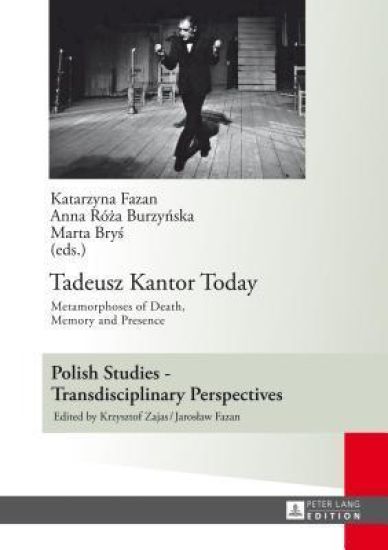
Tadeusz Kantor Today
This book is a compendium of texts by international authors which reflect on Tadeusz Kantor’s art in a broad range of contexts. The studies include works of prominent art historians, theatrologists and artists. The present revisiting of Kantor’s artistic œuvre reflects a contemporary historiographic approach. The authors place value on individual memory and consider contemporary art outside the traditional boundaries of particular artistic genres. The studies employ the latest strategies for researching theatrical performance as autonomous statements, without a literary anchor. Thanks to this approach, the eschatological and historical issues, crucial to the sphere of reference of Kantor’s Theatre of Death, have acquired a new presence – as art that liberates thinking in the here-and-now.
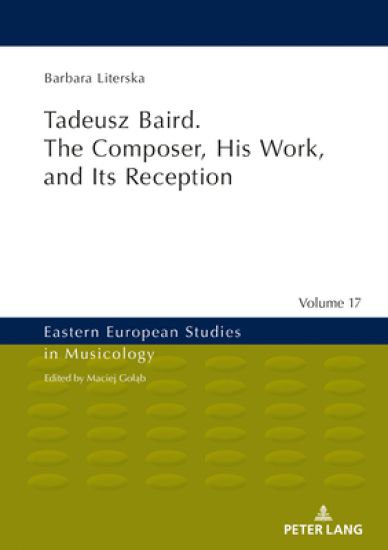
Tadeusz Baird. The Composer, His Work, and Its Reception
This book is the first monographic study of Tadeusz Baird – one of the greatest Polish composers of the second half of the 20th century, a connoisseur of music tradition and a prophet of the future of music (postmodernity), a composer of worldwide renown, an erudite. Baird was deeply engaged in art, aware of the threats and problems of contemporary world, and endowed with a sense of a mission. His personality was shaped by traumatic experiences during World War II and during the late 1940s and early 1950s. He was very demanding of himself and others. As signaled in the title, the book is an extensive, monographic representation of the composer's work and concepts in their stylistic, cultural, and esthetic contexts.
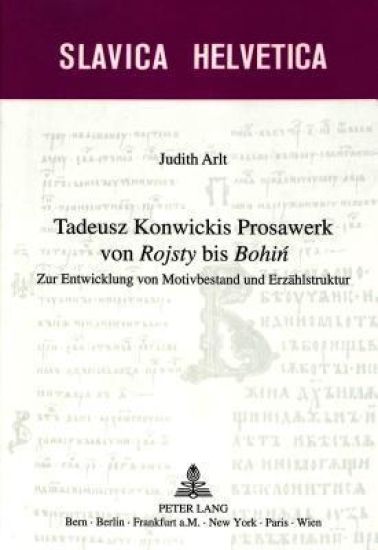
Tadeusz Konwickis Prosawerk Von «Rojsty» Bis «Bohin»
Die hier vorliegende Monographie stellt erstmals das erzahlerische Werk von Tadeusz Konwicki (geb. 1926 in Nowa Wilejka, Litauen, 1945 nach Polen ubersiedelt, lebt seit 1947 in Warschau) von den sozialistisch-realistischen Anfangen bis in die jungste Zeit vor. Aus einer produktionsasthetischen Perspektive wird die Entfaltung des variationenreichen und dennoch koharenten autobiographischen Mythos Konwickis analysiert. Dabei zeigt sich, dass Konwicki uber lange Zeitraume hinweg sein literarisches Material (Figuren, Namen, Sprache, Schauplatze und Zeitpunkte des Geschehens) sorgfaltig benutzt, um eine immer gleiche Ich-Aussage kunstvoll in jeweils anders konstruierten Hindernissen zu inszenieren."
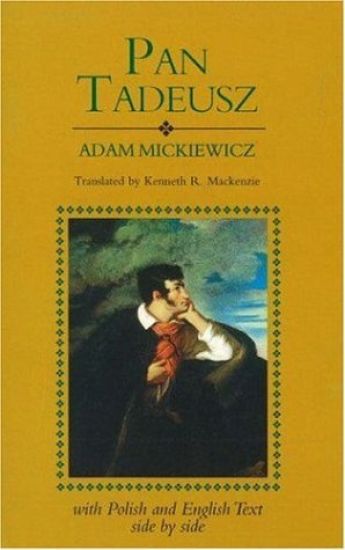
Pan Tadeusz

Pan Tadeusz

Adam Mickiewicz; Kennety MacKenzie

Hippocrene Books Inc.,U.S.
1992
pokkari
Translated by Kenneth R MacKenzie, Pan Tadeusz is an epic tale of country life among the Polish and Lithuanian gentry in the years 1811 and 1812. It is a poem of the love of country, to which all people belong.