

Kirjahaku
Etsi kirjoja tekijän nimen, kirjan nimen tai ISBN:n perusteella.
1000 tulosta hakusanalla Tamara L. Harris

The Fake Food Cookbook Volume 2
Karestin Harrison; Tamara L. Honesty
TAYLOR FRANCIS LTD
2025
nidottu
The Fake Food Cookbook Volume 2: Prop Foods You Can Eat for Theatre, Film, and TV provides step-by-step instructions to create realistic edible prop food.Developed by props artisans worldwide, these recipes ensure edible prop food for theatre, opera, film, and TV productions and showcase a variety of price points and skill. From appetizers such as caviar and oysters and entrées such as lobster and trout filets to desserts, breakfasts, and a plethora of beverages, every meal is covered in this how-to guide. Full-color images of the process and finished products illustrate each recipe. Proper food handling and food allergen awareness are the foundation of each recipe, to ensure safe productions and use of edible prop foods. The appendices include comprehensive lists of plays that feature edible food props and a detailed guide to hidden food allergens.The Fake Food Cookbook Volume 2 is a valuable resource for anyone involved in creating edible props for the stage or set, including students looking to master the art of realistic food creation, educators, and experienced props artisans seeking new tips.

The Fake Food Cookbook Volume 2
Karestin Harrison; Tamara L. Honesty
TAYLOR FRANCIS LTD
2025
sidottu
The Fake Food Cookbook Volume 2: Prop Foods You Can Eat for Theatre, Film, and TV provides step-by-step instructions to create realistic edible prop food.Developed by props artisans worldwide, these recipes ensure edible prop food for theatre, opera, film, and TV productions and showcase a variety of price points and skill. From appetizers such as caviar and oysters and entrées such as lobster and trout filets to desserts, breakfasts, and a plethora of beverages, every meal is covered in this how-to guide. Full-color images of the process and finished products illustrate each recipe. Proper food handling and food allergen awareness are the foundation of each recipe, to ensure safe productions and use of edible prop foods. The appendices include comprehensive lists of plays that feature edible food props and a detailed guide to hidden food allergens.The Fake Food Cookbook Volume 2 is a valuable resource for anyone involved in creating edible props for the stage or set, including students looking to master the art of realistic food creation, educators, and experienced props artisans seeking new tips.

From the dramatization of local legends to the staging of plays by Shakespeare and other canonical playwrights to the exploration of contemporary sociopolitical problems and their effects on women and children, Mayan theatre is a flourishing cultural institution in southern Mexico. Part of a larger movement to define Mayan self-identity and reclaim a Mayan cultural heritage, theatre in Mayan languages has both reflected on and contributed to a growing awareness of Mayans as contemporary cultural and political players in Mexico and on the world's stage. In this book, Tamara Underiner draws on fieldwork with theatre groups in Chiapas, Tabasco, and Yucatán to observe the Maya peoples in the process of defining themselves through theatrical performance. She looks at the activities of four theatre groups or networks, focusing on their operating strategies and on close analyses of selected dramatic texts. She shows that while each group works under the rubric of Mayan or indigenous theatre, their works are also in constant dialogue, confrontation, and collaboration with the wider, non-Mayan world. Her observations thus reveal not only how theatre is an agent of cultural self-definition and community-building but also how theatre negotiates complex relations among indigenous communities in Mayan Mexico, state governments, and non-Mayan artists and researchers.

Confronting an ecological crisis in 1860, French officials initiated an unprecedented policy of alpine reforestation. The Alps, Pyrenees, and Massif Central mountains were fragile and degraded, scientific experts determined, and the salvation of the mountains (for the benefit of lowland farmers and urban areas) would require watershed restorations and reduced access to forest and pasture for alpine peasants. This book is an environmental and political history of the disputes over the uses of mountains and forests in France from the mid-nineteenth century to the eve of World War II. Grounded in detailed case studies of two highland communities—Jarrier in Savoie and Massat in Ariège—the book sheds new light on one of the most pronounced conflicts between upland peasants and the state in modern France. Whited argues that the state did not push aside seemingly marginal people in a quick, decisive move justified by the imperatives of modernization. Instead, protesting peasants employed an increasingly flexible arsenal of political responses that forced the state to backtrack and compromise.

This book is for clients—and for clinicians to recommend to their clients—who want to enhance the process of psychotherapy and get the most out of a therapeutic relationship. Kaiser writes in a friendly, accessible tone, and explains what exactly therapy is and how it works, including the beginning, middle, and ending stages of the therapy process. She elaborates on the dynamics of the relationship between therapist and client, including such issues as power, boundaries, trust, and termination, and describes the four common factors of change: the client, the therapeutic relationship, hope, and technique. Furthermore, she explains the basic aspects of brain development and how psychotherapy physically changes the brain. This book familiarizes potential clients with four major therapeutic approaches—psychodynamic, developmental, cognitive– behavioral, and humanistic—and explains the characteristics of individual, family, and group therapy. Through case studies, Kaiser reveals the healing potential of the therapeutic relationship, including the experience of being deeply understood by and coming to trust a therapist. Kaiser offers much food for thought, as well as compassion, wisdom, encouragement, and practical suggestions for those who choose to take this fascinating and fruitful journey.

A collection of translated prayers, hymns and rituals from hieroglyphic texts in honor of the ancient Egyptian gods and goddesses. Hardcover edition.

A collection of translated prayers, hymns and rituals from hieroglyphic texts in honor of the ancient Egyptian gods and goddesses.


Race Traps: A Deeper Look Into Systematized Oppression in the USA
Tamara L. Williams
Moving Spirits Inc.
2014
nidottu

Instructional Development and Classroom Communication
Tamara L. Burk
University Press of America
2005
nidottu
This book is about teachers learning about teaching. As increasingly complex educational models and new theories of student learning have become part of the discourse of higher education, college instructors have sought new opportunities for instructional development. However, while more and more schools are supporting these programs, there have been very few efforts to examine the outcomes of faculty training. This book follows a group of faculty through efforts to make their teaching more interactive, and describes the results by reporting the reactions of the first-year college students in their classes. Included along the way are the personal reflections of the faculty members as they struggle with new techniques, and revelations about what worked and what didn't. The result is a compelling case for peer and institutional support in the ongoing process of instructional development.

We are surrounded by data and data visualizations in our everyday lives. To help ensure that students can critically evaluate data--and use it to promote social justice--this book outlines principles and practices for teaching data literacy as part of social studies education. The author shows how social studies content and skills can enhance data literacy, and its importance in supporting students' historical thinking and civic engagement. Shreiner also provides a rationale for including data literacy in the social studies curriculum and highlights the special knowledge and skills social studies teachers offer in promoting a critical, humanistic form of data literacy. Recognizing that many social studies teachers feel poorly equipped to teach data literacy, this book offers practical advice, summaries of the benefits and challenges to students, guidance for incorporating data literacy across elementary and secondary grades, and strategies to help students analyze, use, and create data visualizations.Book Features:Helps social studies teachers and teacher educators understand the value of teaching data literacy.Highlights the special role social studies teachers can play in supporting critical, humanistic data literacy.Synthesizes research and scholarship on teaching data literacy in social studies.Provides a suggested scope and sequence for incorporating data literacy into the social studies curriculum across grade levels.Offers multiple ideas for resources and tools that can support data literacy instruction in social studies.

We are surrounded by data and data visualizations in our everyday lives. To help ensure that students can critically evaluate data--and use it to promote social justice--this book outlines principles and practices for teaching data literacy as part of social studies education. The author shows how social studies content and skills can enhance data literacy, and its importance in supporting students' historical thinking and civic engagement. Shreiner also provides a rationale for including data literacy in the social studies curriculum and highlights the special knowledge and skills social studies teachers offer in promoting a critical, humanistic form of data literacy. Recognizing that many social studies teachers feel poorly equipped to teach data literacy, this book offers practical advice, summaries of the benefits and challenges to students, guidance for incorporating data literacy across elementary and secondary grades, and strategies to help students analyze, use, and create data visualizations.Book Features:Helps social studies teachers and teacher educators understand the value of teaching data literacy.Highlights the special role social studies teachers can play in supporting critical, humanistic data literacy.Synthesizes research and scholarship on teaching data literacy in social studies.Provides a suggested scope and sequence for incorporating data literacy into the social studies curriculum across grade levels.Offers multiple ideas for resources and tools that can support data literacy instruction in social studies.
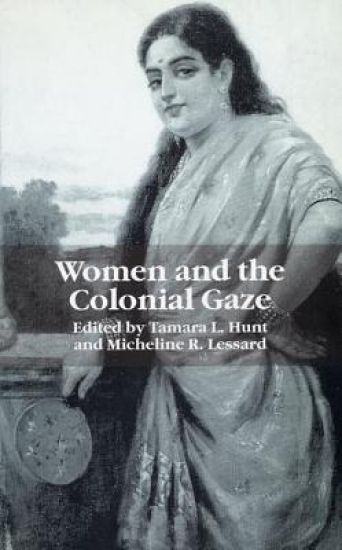
Women and the Colonial Gaze
Tamara L. (EDT) Hunt; Micheline R. (EDT) Lessard
New York University Press
2002
sidottu
"Considered as a whole, this collection offers a basis for generalisations and specialised inquiry that will support both teaching and further research on the role of women in world history."--Itinerario "The book deserves credit for stimulating such questions, which have broad appeal among scholars of colonialism, including those who do not work on gender. Its broad coverage and accessible language give it access to a wider audience than many academic anthologies, thereby advancing the interests of all those who value the study of colonial history."--Journal of Colonialism and Colonial History Women and the Colonial Gaze is the first collection to present a broad chronological and geographical examination of the ways in which images and stereotypes of women have been used to define relationships between colonial powers and subject peoples. In essays ranging from ancient Rome to twentieth-century Asia and Africa, the contributions suggest that the use of gender as a tool in the imperialist context is much older and more comprehensive than previously suggested.Contributors look particularly at the ways in which colonizers constructed a national identity by creating a contrast with the colonial "other," in contexts ranging from Christian views of Islam women in medieval Spain to French beliefs about Native American women. They also examine the ways in which images of gender as constructed by colonial powers impacted the lives of native women from colonial-era India to Korea to Swaziland. Comparative in its approach, the volume will appeal to students and historians of women's studies, colonialism, and the development of national identity.

Women and the Colonial Gaze
Tamara L. (EDT) Hunt; Micheline R. (EDT) Lessard
New York University Press
2002
pokkari
"Considered as a whole, this collection offers a basis for generalisations and specialised inquiry that will support both teaching and further research on the role of women in world history."--Itinerario "The book deserves credit for stimulating such questions, which have broad appeal among scholars of colonialism, including those who do not work on gender. Its broad coverage and accessible language give it access to a wider audience than many academic anthologies, thereby advancing the interests of all those who value the study of colonial history."--Journal of Colonialism and Colonial History Women and the Colonial Gaze is the first collection to present a broad chronological and geographical examination of the ways in which images and stereotypes of women have been used to define relationships between colonial powers and subject peoples. In essays ranging from ancient Rome to twentieth-century Asia and Africa, the contributions suggest that the use of gender as a tool in the imperialist context is much older and more comprehensive than previously suggested.Contributors look particularly at the ways in which colonizers constructed a national identity by creating a contrast with the colonial "other," in contexts ranging from Christian views of Islam women in medieval Spain to French beliefs about Native American women. They also examine the ways in which images of gender as constructed by colonial powers impacted the lives of native women from colonial-era India to Korea to Swaziland. Comparative in its approach, the volume will appeal to students and historians of women's studies, colonialism, and the development of national identity.

Wisdom for the Weary: Overcoming Life's Obstacles
Tamara L. Jones
Semaj Publishing, Incorporated
2017
nidottu
'Wisdom for the Weary: Overcoming Life's Obstacles, Vol. 1' is a 30-day devotional to assist individuals who have and are currently experiencing a tough time with life. The author hopes to give readers the tools to acknowledge where they were, are and the ability to bring themselves out with the grace of God.