Kirjojen hintavertailu. Mukana 11 244 527 kirjaa ja 12 kauppaa.

Kirjahaku

Etsi kirjoja tekijän nimen, kirjan nimen tai ISBN:n perusteella.

1000 tulosta hakusanalla Tarik Cyril Amar

James Bond's Socialist Rivals

James Bond's Socialist Rivals

Tarik Cyril Amar

OXFORD UNIVERSITY PRESS INC
2024
sidottu
In August 1973, the large and growing television audience of the Soviet Union first laid eyes on what would become its quintessential if fictitious hero spy. He was nothing like the West's action man and sex icon James Bond who had risen to global fame in the 1960s. By contrast, Shtirlits made his first appearance as a handsome yet somewhat tired-looking, middle-aged man on a meditative stroll in wintry woods, to the score of a very slow piano rendition of the show's wistful signature theme. The Cold War East, the Soviet Union and its sphere of domination and influence in Eastern Europe, produced a rich array of home-made intelligence heroes who became vastly popular among television audiences in the 1960s and '70s. In this work, Tarik Cyril Amar recovers and analyzes a world of spy fiction entertainment, focusing on three blockbuster series in the former Soviet bloc: Seventeen Moments of Spring (USSR), Stakes Greater Than Life (Poland), and The Invisible Visor (East Germany). Not only did these shows feature secret agents as heroes, but they were also important to party-state authorities, including security and intelligence services, who were combatting Western subversion and deliberately polishing their own image behind the Iron Curtain. The series made reference to World War II, the Holocaust, and the Cold War, shaping public interpretations of historical events and inspiring a rising generation to join intelligence services, including Vladmir Putin. And they remained persistently popular, surviving the collapse of the authoritarian-socialist political regimes under which they had been produced. Based on exhaustive research of unpublished primary sources in archives in Berlin, Moscow, and Warsaw, James Bond's Socialist Rivals offers a more expansive vision of the phenomenon of the spy as popular-culture hero and of the complex nature of Cold War interactions across ideological divisions, geopolitical blocs, and national borders.
The Paradox of Ukrainian Lviv

The Paradox of Ukrainian Lviv

Tarik Cyril Amar

Cornell University Press
2015
sidottu
The Paradox of Ukrainian Lviv reveals the local and transnational forces behind the twentieth-century transformation of Lviv into a Soviet and Ukrainian urban center. Lviv's twentieth-century history was marked by violence, population changes, and fundamental transformation ethnically, linguistically, and in terms of its residents' self-perception. Against this background, Tarik Cyril Amar explains a striking paradox: Soviet rule, which came to Lviv in ruthless Stalinist shape and lasted for half a century, left behind the most Ukrainian version of the city in history. In reconstructing this dramatically profound change, Amar illuminates the historical background in present-day identities and tensions within Ukraine.
The Paradox of Ukrainian Lviv

The Paradox of Ukrainian Lviv

Tarik Cyril Amar

Cornell University Press
2019
pokkari
The Paradox of Ukrainian Lviv reveals the local and transnational forces behind the twentieth-century transformation of Lviv into a Soviet and Ukrainian urban center. Lviv's twentieth-century history was marked by violence, population changes, and fundamental transformation ethnically, linguistically, and in terms of its residents' self-perception. Against this background, Tarik Cyril Amar explains a striking paradox: Soviet rule, which came to Lviv in ruthless Stalinist shape and lasted for half a century, left behind the most Ukrainian version of the city in history. In reconstructing this dramatically profound change, Amar illuminates the historical background in present-day identities and tensions within Ukraine.
Tarik

Tarik

Jeremy Hodgson

Jeremy William Hodgson
2024
pokkari
A thousand years into the future: Humanity, having overpopulated and depleted five planets, seeks a new home. Five hundred light-years across the cosmos, Tarik beckons.Soon, the first generation of Tarik-born humans reaches maturity: a new breed of colonists ready to explore the planet's rich and diverse life.When nature-loving Timothy embarks on a trip to secure his future as an aspiring biologist, he meets cabin attendant Jessica, a beautiful young woman yet to find her place in the world.Then comes a terrifying crash. As sole survivors stranded in the middle of a primaeval forest, they must work together to make it back to Timothy's home.Their journey brings them closer and teaches them more about Tarik and its wild and intelligent life than any textbook could. Soon, they learn to communicate telepathically with the planet's intelligent beings.But just as they begin to feel at one with Tarik and its lifeforms, the threat of humanity resurfaces when they encounter criminal colonists determined to slaughter the intelligent creatures for profit and start an interspecies war in the process.Can they save Tarik and its inhabitants from the worst of humankind? And in doing so, will they finally forge a new purpose and path for themselves and our kind? Only Tarik knows.
Telecity

Telecity

Tarik Fathy

Praeger Publishers Inc
1991
sidottu
This study examines the growth of the information society and the impact of its technologies on city form and urban life. It establishes a theoretical framework that integrates the consequences of technology on the physical city, the dynamics of its economic activities and location decisions, and its social processes.Tarik A. Fathy's main concern in this work is the relationship between socioeconomic forces of social change and the physical transformation process of the existing city in Western countries. The focus is on the influence of technology, not as an autonomous or deterministic factor, but as an analytical element in order to investigate which form of the city accommodates these social changes and which structure appropriates them. The complexity of the social impact of technology and the broad interests of many disciplines in technological change foreshadow an innovative approach that establishes the influence of current social transformations and their forms in urban life. Fathy argues that the revolutionary use and application of information technologies produces a telecity--a critical mass of inhabitants engaged in interactive communication networks where remote services, facilities, and work dominate life. He finds that this new telecity is strikingly different in physical layout and needs, and economic and social processes from the nineteenth- and early twentieth-century city. He concludes this study of the telecity concept by proposing four public policy implications. Scholars and designers in the fields of urban studies, urban planning, sociology, and urban/regional economics will find this work of great interest.
Hepatitis B Virus, An Issue of Clinics in Liver Disease

Hepatitis B Virus, An Issue of Clinics in Liver Disease

Tarik Asselah; Patrick Marcellin

Elsevier - Health Sciences Division
2013
sidottu
The Guest Editors have assembled top international experts to present clinical reviews on the most current data being utilized in the diagnosis, treatment, and management of HBV. In fact, the most recent EASL meeting fndings are included in many of the articles. Special focus is given to Results of Treatment of Chronic Hepatitis B with Pegylated Interferon; Impact of Therapy on the Long Term Outcome of Chronic Hepatitis B; HBsAg Quantification: Clinical; HBV Infection and Hepatocellular Carcinoma; HIV-HBV Co-Infection: An Update; Hepatitis Delta: The Rediscovery; and Treatment of Patients with HBV Related Decompensated Cirrhosis and Liver Transplanted Patients.
Cytopathology, An Issue of Surgical Pathology Clinics

Cytopathology, An Issue of Surgical Pathology Clinics

Tarik El Sheikh

Elsevier - Health Sciences Division
2014
sidottu
Topics that are essential to the surgical pathologist in cytopathology are included in this issue of Surgical Pathology Clinics. Topics include cytopathology of the Thyroid; Pancreas, Salivary glands; Lung; Urine; Gynecologic; Metastasis of unknown origin; and Preparation techniques and Cell transfer. Expert cytopathologist and prolific author and researcher and expert clinician Tarik Elsheikh leads this issue as Guest Editor. "The latest edition of this book is always in use by our trainees and cytology staff. A most helpful up to date reference book"Reviewed by: Dr David Poller, Consultant Pathologist & Reader in Pathology on behalf of PathLab.org, Aug 2014 "The latest edition of this book is always in use by our trainees and cytology staff. A most helpful up to date reference book"Reviewed by: Dr David Poller, Consultant Pathologist & Reader in Pathology on behalf of PathLab.org, Aug 2014
Neuropathology, An Issue of Surgical Pathology Clinics

Neuropathology, An Issue of Surgical Pathology Clinics

Tarik Tihan

Elsevier - Health Sciences Division
2015
sidottu
This issue of Surgical Pathology Clinics takes a departure from its presentation of Differential Diagnosis, Histopathology, Staging, and Prognosis of tumors in different anatomic sites. This special issue is devoted to topics in pathology informatics as they relate to the practice of surgical pathology. Topics include: Basics of Information Systems (Hardware, Software); Networks, Interfaces and Communications; Databases; Data Representation, Coding and Communication Standards; Laboratory Information Systems; Enhancing and Customizing Laboratory Information Systems to Improve/Enhance Pathologist Workflow; Laboratory Management and Operations; Specialized Laboratory Information Systems; Middleware and Laboratory Automation; Synoptic Reporting in Anatomical Pathology; Bar Coding and Tracking; Molecular Pathology Informatics; Informatics and Autopsy Pathology; Pathology Informatics and Project Management; Digital Imaging Basics; Use of Digital Images in Clinical Practice; Whole Slide Imaging; Telepathology; Mobile Technologies for the Surgical Pathologist; Image Analysis; Advanced Imaging Techniques; Healthcare Information Systems; Data Security and Reliability; Role of Informatics in Patient Safety and Quality Assurance; Role of Pathology Informatics in IT Leadership; Selection and Implementation of New Information Systems; Biomedical Informatics and Research Informatics; Training in Pathology Informatics; and Building Tools for the Surgical Pathologist: Next Generation Pathologist. Editor of this issue, Dr Anil Parwani, is Professor of Pathology and Biomedical Informatics and Director of Division of Pathology Informatics. Dr. Parwani is well known as expert in the area of Anatomical Pathology Informatics, which includes design of quality assurance tools, tissue banking informatics, clinical and research data integration and mining, synoptic reporting in anatomical pathology, clinical applications of whole slide imaging, digital imaging, telepathology, image analysis and lab automation and workflow processes, such as barcoding and voice recognition.
Motion Control of Functionally Related Systems

Motion Control of Functionally Related Systems

Tarik Uzunovic; Asif Šabanovic

CRC Press
2020
sidottu
This book is concerned with the development of design techniques for controlling motion of mechanical systems which are employed to execute certain tasks acting collaboratively. The book introduces unified control design procedure for functionally related systems. The controllers for many different tasks in motion control can be successfully designed by applying the proposed simple procedure. The book gives an overview of the control methods appearing in the motion control area and the detailed design procedures for the class of systems that are required to execute certain task together. Tasks can generally be divided in their components, denoted as functions in the book. It is shown how dynamics of those tasks can be described. Based on the presented description, several control methods were discussed. Applicability of the introduced control design approach was demonstrated in subsequent chapters for various tasks.
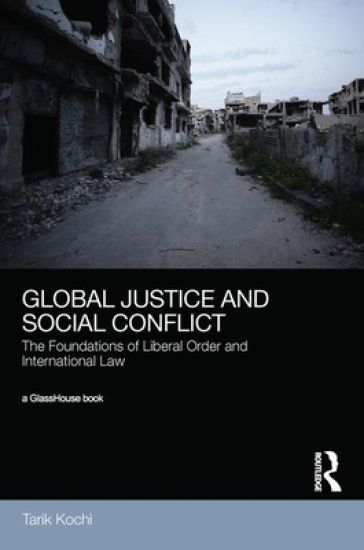
Global Justice and Social Conflict
Global Justice and Social Conflict offers a ground-breaking historical and theoretical reappraisal of the ideas that underpin and sustain the global liberal order, international law and neoliberal rationality.Across the 20th and 21st centuries, liberalism, and increasingly neoliberalism, have dominated the construction and shape of the global political order, the global economy and international law. For some, this development has been directed by a vision of ‘global justice’. Yet, for many, the world has been marked by a history and continued experience of injustice, inequality, indignity, insecurity, poverty and war – a reality in which attempts to realise an idea of justice cannot be detached from acts of violence and widespread social conflict. In this book Tarik Kochi argues that to think seriously about global justice we need to understand how both liberalism and neoliberalism have pushed aside rival ideas of social and economic justice in the name of private property, individualistic rights, state security and capitalist ‘free’ markets. Ranging from ancient concepts of natural law and republican constitutionalism, to early modern ideas of natural rights and political economy, and to contemporary discourses of human rights, humanitarian war and global constitutionalism, Kochi shows how the key foundational elements of a now globalised political, economic and juridical tradition are constituted and continually beset by struggles over what counts as justice and over how to realise it. Engaging with a wide range of thinkers and reaching provocatively across a breadth of subject areas, Kochi investigates the roots of many globalised struggles over justice, human rights, democracy and equality, and offers an alternative constitutional understanding of the future of emancipatory politics and international law.Global Justice and Social Conflict will be essential reading for scholars and students with an interest in international law, international relations, international political economy, intellectual history, and critical and political theory.
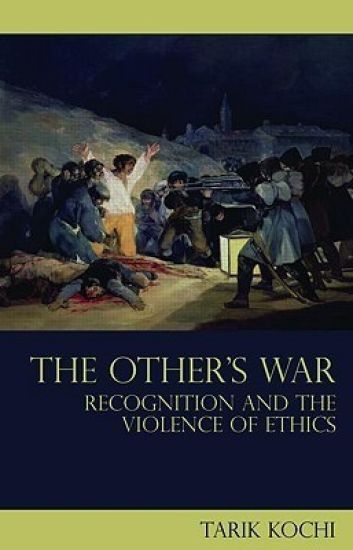
The Other's War

The Other's War

Tarik Kochi

Birkbeck Law Press
2009
sidottu
The Other's War is an intervention into a set of contemporary moral, political and legal debates over the legitimacy of war and terrorism within the context of the so-called global War on Terror. Tarik Kochi considers how, despite the variety of its approaches – just war theory, classical realist, post-Kantian, poststructuralist – contemporary ethical, political and legal philosophy still struggles to produce a convincing account of war. Focusing on the philosophical problem of the rightness of war, The Other's War responds to this lack. Through a discussion of a number of key Western intellectual traditions, Kochi demonstrates how often conflicting and contradictory conceptions of war’s rightness have developed in modernity. He shows how a process of ordering violence around different notions of right has constantly redrawn the boundaries of what constitutes ‘legitimate’ violence. Such a process has consequences for anyone who claims to be fighting a ‘just war’. Building upon this account and drawing upon the philosophical heritage of G.W.F. Hegel and Ernst Bloch, The Other’s War proposes a new understanding of war, not just as a social condition characterised by violent conflict and struggles for power, but as the attempt of individuals and groups to realise their normative claims through violence. Kochi argues that both of these aspects of war are an expression of the metaphysics of human subjectivity. War begins with, and is the radical exaggeration of, a fundamental activity of human subjectivity, in which the subject constitutes its normative and material identity; realising and positing itself through acts that involve negation and violence. By drawing consideration of the problem of war back to the level of a philosophical examination of the metaphysics of human subjectivity, The Other's War develops a novel theory of war that helps us to better understand the nature of contemporary conflict as a process of recognition. From this perspective, judgment, it is concluded, needs to be constantly guided by the effort to recognise the ethics of the other's war.
The Other's War

The Other's War

Tarik Kochi

Birkbeck Law Press
2010
nidottu
The Other's War is an intervention into a set of contemporary moral, political and legal debates over the legitimacy of war and terrorism within the context of the so-called global War on Terror. Tarik Kochi considers how, despite the variety of its approaches – just war theory, classical realist, post-Kantian, poststructuralist – contemporary ethical, political and legal philosophy still struggles to produce a convincing account of war. Focusing on the philosophical problem of the rightness of war, The Other's War responds to this lack. Through a discussion of a number of key Western intellectual traditions, Kochi demonstrates how often conflicting and contradictory conceptions of war’s rightness have developed in modernity. He shows how a process of ordering violence around different notions of right has constantly redrawn the boundaries of what constitutes ‘legitimate’ violence. Such a process has consequences for anyone who claims to be fighting a ‘just war’. Building upon this account and drawing upon the philosophical heritage of G.W.F. Hegel and Ernst Bloch, The Other’s War proposes a new understanding of war, not just as a social condition characterised by violent conflict and struggles for power, but as the attempt of individuals and groups to realise their normative claims through violence. Kochi argues that both of these aspects of war are an expression of the metaphysics of human subjectivity. War begins with, and is the radical exaggeration of, a fundamental activity of human subjectivity, in which the subject constitutes its normative and material identity; realising and positing itself through acts that involve negation and violence. By drawing consideration of the problem of war back to the level of a philosophical examination of the metaphysics of human subjectivity, The Other's War develops a novel theory of war that helps us to better understand the nature of contemporary conflict as a process of recognition. From this perspective, judgment, it is concluded, needs to be constantly guided by the effort to recognise the ethics of the other's war.
Global Justice and Social Conflict
Global Justice and Social Conflict offers a ground-breaking historical and theoretical reappraisal of the ideas that underpin and sustain the global liberal order, international law and neoliberal rationality.Across the 20th and 21st centuries, liberalism, and increasingly neoliberalism, have dominated the construction and shape of the global political order, the global economy and international law. For some, this development has been directed by a vision of ‘global justice’. Yet, for many, the world has been marked by a history and continued experience of injustice, inequality, indignity, insecurity, poverty and war – a reality in which attempts to realise an idea of justice cannot be detached from acts of violence and widespread social conflict. In this book Tarik Kochi argues that to think seriously about global justice we need to understand how both liberalism and neoliberalism have pushed aside rival ideas of social and economic justice in the name of private property, individualistic rights, state security and capitalist ‘free’ markets. Ranging from ancient concepts of natural law and republican constitutionalism, to early modern ideas of natural rights and political economy, and to contemporary discourses of human rights, humanitarian war and global constitutionalism, Kochi shows how the key foundational elements of a now globalised political, economic and juridical tradition are constituted and continually beset by struggles over what counts as justice and over how to realise it. Engaging with a wide range of thinkers and reaching provocatively across a breadth of subject areas, Kochi investigates the roots of many globalised struggles over justice, human rights, democracy and equality, and offers an alternative constitutional understanding of the future of emancipatory politics and international law.Global Justice and Social Conflict will be essential reading for scholars and students with an interest in international law, international relations, international political economy, intellectual history, and critical and political theory.
Energy Audits

Energy Audits

Tarik Al-Shemmeri

John Wiley Sons Inc
2011
nidottu
Energy efficiency is today a crucial topic in the built environment - for both designers and managers of buildings. This increased interest is driven by a combination of new regulations and directives within the EU and worldwide to combat global warming. All buildings now must now acquire and display an EPC (energy performance certificate), a rating similar to the A–G rating given to white goods. But in order to understand how to be more efficient in energy use, you need first to understand the mechanisms of both energy requirements and how energy is used in buildings. Energy Audits: a workbook for energy management in buildings tackles the fundamental principles of thermodynamics through day-to-day engineering concepts and helps students understand why energy losses occur and how they can be reduced. It provides the tools to measure process efficiency and sustainability in power and heating applications, helping engineers to recognize why energy losses occur and how they can be reduced utilizing familiar thermodynamic principles. The author describes the sources of energy available today; explains how energy is used in buildings – and how energy is lost - and how this can be controlled and reduced. Investments in energy efficiency are considered for a number of case studies conducted on real buildings The book explains the theory; illustrates it with case studies and worked examples; and then tests students’ understanding with tutorial problems. This is an invaluable resource for students on engineering and building courses where energy management is now a core topic.
Life Journey: Variated Preludes

Life Journey: Variated Preludes

Tarık Kaan Alkan

Amazon Digital Services LLC - Kdp Print Us
2020
nidottu
6 Variated Preludes1.Inception2.Dreams3.Life Journey4.Spirit Of The Universe5.Sunrise6.Thoughts and LifeIn my album which I compose for piano between 2019-2020 years named "Life Journey" consisting of "Variated Preludes"I tried to explain what I understand from life in 6 works. This pieces are respectively as "Inception", "Dreams", "Life Journey", "Spirit Of The Universe", "Sunrise", and "Thoughts and Life". I think there weren't a piece type of Variated Preludes because of that I want to explain what does it mean. Variated Preludes are the preludes which have variations. It means not vary the melodies vary the thoughts.
No Bonds So Strong

No Bonds So Strong

Tarik Daniels

Global Genius Society
2018
nidottu
NO BONDS SO STRONG is a story about a group of friends in Detroit, where life is very real, and learning to deal with life is even more real. Balancing the inner city world with the gay world is a challenge that forces them to turn to each other when none of them have the answers, but not without tragedy, heartbreak, and betrayal. This story takes the blindfolds off what you think you know, and introduces you to truths. Their truths. Unfiltered Truths.