Kirjojen hintavertailu. Mukana 11 244 527 kirjaa ja 12 kauppaa.

Kirjahaku

Etsi kirjoja tekijän nimen, kirjan nimen tai ISBN:n perusteella.

798 tulosta hakusanalla Tayeb Said Amer

L'Amiti? Trahie. T.- 1 - Le Temps de la Recherche

L'Amiti? Trahie. T.- 1 - Le Temps de la Recherche

Tayeb Said Amer

International Book Market Service Ltd
2023
pokkari
La vie est un roman que nous crivons chaque jour. Lorsque nous commandons la vie, son d roulement est un beau r ve: la vie est sans heurt. Elle n'est pas une succession d'abus et d' checs. Les pulsions sont ma tris es; les d sirs sont contr l s; les plaisirs sont limit s; la gentillesse est un atout; les guerres sont d test es. Lorsque la vie nous commande, son d roulement est une longue chaine de m chancet et de mensonge, d'envie et de jalousie, de d ception et de trahison: les checs sont devant la porte; la guerre est un d sir qu'on livre contre ses voisins, contre l'autre, contre un autre peuple.

L'Amitié Trahie. T- 2 - Le Temps de Subir.

L'Amitié Trahie. T- 2 - Le Temps de Subir.

Tayeb Said Amer

International Book Market Service Ltd
2024
pokkari
La vie est un beau roman que nous crivons chaque jour. Lorsque nous commandons la vie, son d roulement est un beau r ve: la vie est sans heurt. Elle n'est pas une succession d'abus et d' checs. Les pulsions sont ma tris es; les d sirs sont contr l s; les plaisirs sont limit s; la gentillesse est un atout; les guerres sont d test es. Lorsque la vie nous commande, son d roulement est une longue chaine de m chancet et de mensonge, d'envie et de jalousie, de d ception et de trahison: les checs sont devant la porte; la guerre est un d sir qu'on livre contre ses voisins, contre l'autre, contre un autre peuple.
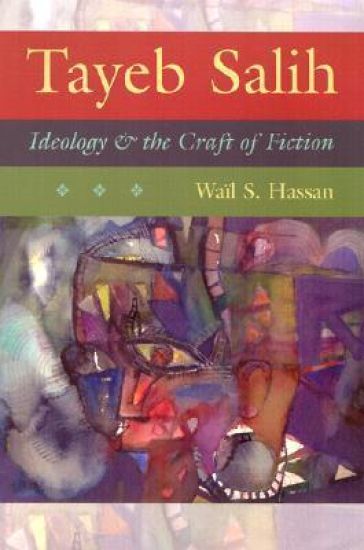
Tayeb Salih

Tayeb Salih

Waïl S. Hassan

Syracuse University Press
2003
nidottu
Undertaking a sustained interpretation of Sudanese novelist Tayeb Salih's novels and short stories, this study focuses primarily on the ways in which his work depicts the clashing of Arab ideologies - that is, questions of tradition, modernity, imperialism, gender and political authority.
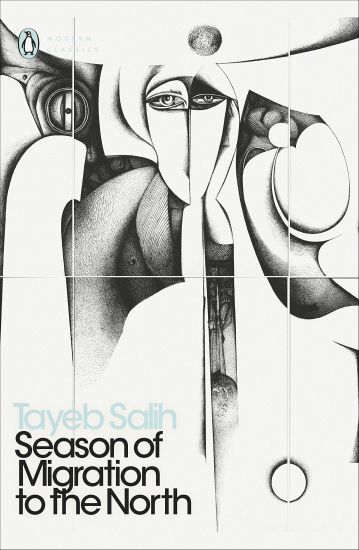
Season of Migration to the North

Season of Migration to the North

Tayeb Salih

Penguin Classics
2003
pokkari
The story of a man undone by a culture that in part created him, Season of Migration to the North, is a powerful and evocative examination of colonization in two vastly different worlds. When a young man returns to his village in the Sudan after many years studying in Europe, he finds that among the familiar faces there is now a stranger - the enigmatic Mustafa Sa'eed. As the two become friends, Mustafa tells the younger man the disturbing story of his own life in London after the First World War. Lionized by society and desired by women as an exotic novelty, Mustafa was driven to take brutal revenge on the decadent West and was, in turn, destroyed by it. Now the terrible legacy of his actions has come to haunt the small village at the bend of the Nile.
International Human Resource Management

International Human Resource Management

Tayeb Monir

Oxford University Press
2004
sidottu
This new textbook provides comprehensive coverage of the key issues facing multinational corporations (MNCs) in their management of human resources across diverse national boundaries. It attempts to answer the question, "Can there be a uniform set of best human resource management (HRM) practices applicable across a spectrum of nations irrespective of cultural and institutional individualities?" The book takes a broad definition of HRM and begins with a summary of key discussions and models in this area before setting them in the international context of the MNC. Adopting an integrated approach, the book covers the theories and practices of international HRM and sets them in context with numerous reference to news stories and case studies developed from the author's own extensive research. The book is student-focussed with strong learning features including objectives, chapter summaries, reading lists and an activities section in each chapter.
Parable and Politics in Early Islamic History

Parable and Politics in Early Islamic History

Tayeb El-Hibri

Columbia University Press
2010
sidottu
The story of the succession to the Prophet Muhammad and the rise of the Rashidun Caliphate (632-661 AD) is familiar to historians from the political histories of medieval Islam, which treat it as a factual account. The story also informs the competing perspectives of Sunni and Shi'i Islam, which read into it the legitimacy of their claims. Yet while descriptive and varied, these approaches have long excluded a third reading, which views the conflict over the succession to the Prophet as a parable. From this vantage point, the motives, sayings, and actions of the protagonists reveal profound links to previous texts, not to mention a surprising irony regarding political and religious issues. In a controversial break from previous historiography, Tayeb El-Hibri privileges the literary and artistic triumphs of the medieval Islamic chronicles and maps the origins of Islamic political and religious orthodoxy. Considering the patterns and themes of these unified narratives, including the problem of measuring personal qualification according to religious merit, nobility, and skills in government, El-Hibri offers an insightful critique of both early and contemporary Islam and the concerns of legitimacy shadowing various rulers. In building an argument for reading the texts as parabolic commentary, he also highlights the Islamic reinterpretation of biblical traditions, both by Qur'anic exegesis and historical composition.
Parable and Politics in Early Islamic History

Parable and Politics in Early Islamic History

Tayeb El-Hibri

Columbia University Press
2018
pokkari
The story of the succession to the Prophet Muhammad and the rise of the Rashidun Caliphate (632-661) is familiar to historians from the political histories of medieval Islam, which treat it as a factual account. The story also informs the competing perspectives of Sunni and Shi'i Islam, which read into it the legitimacy of their claims. Yet while descriptive and varied, these approaches have long excluded a third reading, which views the conflict over the succession to the Prophet as a parable. From this vantage point, the motives, sayings, and actions of the protagonists reveal profound links to previous texts, not to mention a surprising irony regarding political and religious issues.In a controversial break from previous historiography, Tayeb El-Hibri privileges the literary and artistic triumphs of the medieval Islamic chronicles and maps the origins of Islamic political and religious orthodoxy. Considering the patterns and themes of these unified narratives, including the problem of measuring personal qualification according to religious merit, nobility, and skills in government, El-Hibri offers an insightful critique of both early and contemporary Islam and the concerns of legitimacy shadowing various rulers. In building an argument for reading the texts as parabolic commentary, he also highlights the Islamic reinterpretation of biblical traditions, both by Qur'anic exegesis and historical composition.
Reinterpreting Islamic Historiography

Reinterpreting Islamic Historiography

Tayeb El-Hibri

Cambridge University Press
1999
sidottu
The history of the early ‘Abbasid Caliphate has long been studied as a factual or interpretive synthesis of various accounts preserved in the medieval Islamic chronicles. Tayeb El-Hibri’s book breaks with the traditional approach, applying a literary-critical reading to examine the lives of the caliphs. By focusing on the reigns of Harun al-Rashid and his successors, the study demonstrates how the various historical accounts were not in fact intended as faithful portraits of the past, but as allusive devices used to shed light on controversial religious, political and social issues of the period. The analysis also reveals how the exercise of decoding Islamic historigraphy, through an investigation of the narrative strategies and thematic motifs used in the chronicles, can uncover new layers of meaning and even identify the early narrators. This is an important book which represents a landmark in the field of early Islamic historiography.
Mansi A Rare Man in His Own Way

Mansi A Rare Man in His Own Way

Tayeb Salih

Banipal Books
2020
pokkari
Tayeb Salih is internationally known for his classic novel Season of Migration to the North. With humour, wit and erudite poetic insights, Salih shows another side in this affectionate memoir of his exuberant and irrepressible friend Mansi Yousif Bastawrous, sometimes known as Michael Joseph and sometimes as Ahmed Mansi Yousif. Playing Hardy to Salih’s Laurel Mansi takes centre stage among memorable 20th-century arts and political figures, including Samuel Beckett, Margot Fonteyn, Omar Sharif, Arnold Toynbee, Richard Crossman and even the Queen, but always with Salih’s poet “Master” al-Mutanabbi ready with an adroit comment.
The Abbasid Caliphate

The Abbasid Caliphate

Tayeb El-Hibri

Cambridge University Press
2021
sidottu
The period of the Abbasid Caliphate (750–1258) has long been recognized as the formative period of Islamic civilization with its various achievements in the areas of science, literature, and culture. This history of the Abbasid Caliphate from its foundation in 750 and golden age under Harun al-Rashid to the conquest of Baghdad by the Mongols in 1258 examines the Caliphate as an empire and institution, and probes its influence over Islamic culture and society. Ranging widely to survey the entire five-century history of the Abbasid dynasty, Tayeb El-Hibri examines the resilience of the Caliphate as an institution, as a focal point of religious definitions, and as a source of legitimacy to various contemporary Islamic monarchies. The study revisits ideas of 'golden age' and 'decline' with a new reading, tries to separate Abbasid history from the myths of the Arabian Nights, and shows how the legacy of the caliphs continues to resonate in the modern world in direct and indirect ways.
The Abbasid Caliphate

The Abbasid Caliphate

Tayeb El-Hibri

Cambridge University Press
2021
pokkari
The period of the Abbasid Caliphate (750–1258) has long been recognized as the formative period of Islamic civilization with its various achievements in the areas of science, literature, and culture. This history of the Abbasid Caliphate from its foundation in 750 and golden age under Harun al-Rashid to the conquest of Baghdad by the Mongols in 1258 examines the Caliphate as an empire and institution, and probes its influence over Islamic culture and society. Ranging widely to survey the entire five-century history of the Abbasid dynasty, Tayeb El-Hibri examines the resilience of the Caliphate as an institution, as a focal point of religious definitions, and as a source of legitimacy to various contemporary Islamic monarchies. The study revisits ideas of 'golden age' and 'decline' with a new reading, tries to separate Abbasid history from the myths of the Arabian Nights, and shows how the legacy of the caliphs continues to resonate in the modern world in direct and indirect ways.
Season of Migration to the North

Season of Migration to the North

Tayeb Salih

New York Review of Books
2009
nidottu
After years of study in Europe, the young narrator of Season of Migration to the North returns to his village along the Nile in the Sudan. It is the 1960s, and he is eager to make a contribution to the new postcolonial life of his country. Back home, he discovers a stranger among the familiar faces of childhood--the enigmatic Mustafa Sa'eed. Mustafa takes the young man into his confidence, telling him the story of his own years in London, of his brilliant career as an economist, and of the series of fraught and deadly relationships with European women that led to a terrible public reckoning and his return to his native land. But what is the meaning of Mustafa's shocking confession? Mustafa disappears without explanation, leaving the young man--whom he has asked to look after his wife--in an unsettled and violent no-man's-land between Europe and Africa, tradition and innovation, holiness and defilement, and man and woman, from which no one will escape unaltered or unharmed. Season of Migration to the North is a rich and sensual work of deep honesty and incandescent lyricism. In 2001 it was selected by a panel of Arab writers and critics as the most important Arab novel of the twentieth century.
The Wedding of Zein and Other Stories

The Wedding of Zein and Other Stories

Tayeb Salih

New York Review of Books
2010
nidottu
"The Wedding of Zein" unfolds in the same village on the upper Nile where Tayeb Salih's tragic masterpiece Season of Migration to the North is set. Here, however, the story that emerges through the overlapping, sometimes contradictory voices of the villagers is comic. Zein is the village idiot, and everyone in the village is dumbfounded when the news goes around that he will be getting married--Zein the freak, Zein who burst into laughter the moment he was born and has kept women and children laughing ever since, Zein who lost all his teeth at six and whose face is completely hairless, Zein married at last? Zein's particular role in the life of the village has been the peculiar one of falling in love again and again with girls who promptly marry another man. It would be unheard of for him to get married himself. In Tayeb Salih's wonderfully agile telling, the story of how this miracle came to be is one that engages the tensions that exist in the village, or indeed in any community: tensions between the devout and the profane, the poor and the propertied, the modern and the traditional. In the end, however, Zein's ridiculous good luck augurs an ultimate reconciliation, opening a prospect of a world made whole. Salih's classic novella appears here with two of his finest short stories, "The Doum Tree of Wad Hamid" and "A Handful of Dates."
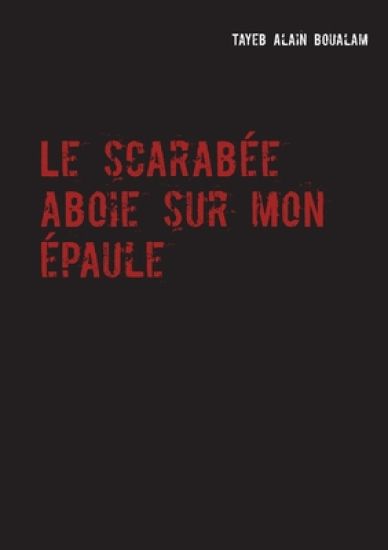
Le scarabée aboie sur mon épaule

Le scarabée aboie sur mon épaule

Tayeb Alain Boualam

Books on Demand
2019
pokkari
Ivresses sombres ou merveill es. Femmes l g res ou saintes. Solitude ou amiti s. Errances nocturnes ou r ves veill s. Cris de rage ou silences apais s. H ritier direct des recueils; L'or et la merde, et des Po mes de l'enfant mort ( Inclus dans Les po sies d'autrefois pour les bleus lendemains), cette derni re cr ation s'en veut l'ultime d veloppement et la synth se n cessaire. Certes, le regard peut parfois sembler noir, mais il est vivant et entier; de cette vie et pl nitude toujours compagnes de po sie.