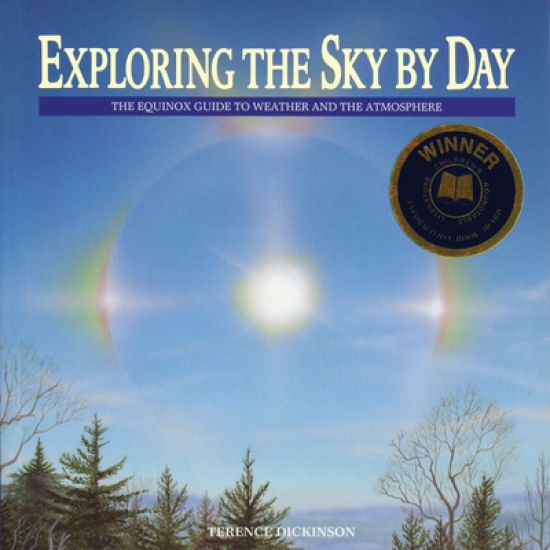
Winner of the Children’s Roundtable Literature Information Book Award. Ideal for inquisitive children and adults alike, astronomer Terence Dickinson’s classic guide Exploring the Sky by Day offers fascinating insight into clouds, weather and other phenomena we witness in the sky. The book first introduces the reader to the atmosphere and the 10 types of clouds, and then answers nearly every question a young reader might have about the sky and weather: • How fast do raindrops travel?; What causes a rainbow?; What causes lightning?; Why is the sky blue?; Why are tornadoes so destructive?; And many, many more! The book also covers less common sky phenomena, such as sundogs, haloes and auroras, and discusses more general topics like climate zones, seasons and weather forecasting. Brought to life with dozens of photographs and the colour illustrations of John Bianchi, Exploring the Sky by Day provides an excellent introduction to weather and the atmosphere.
'Exploring the Night Sky' is aimed at novice star gazers anxious to expand their astronomical repertoire beyond the Big and Little Dippers. Dickinson has designed a superb introduction to astronomy that is clear, concise, beautifully illustrated, and very "user friendly" no matter what the child's age. AUTHOR: Terence Dickinson is a prolific science writer specializing in astronomy. More than one million copies of his books are in print. He is the recipient of many national and international science awards, including the New York Academy of Sciences Book of the Year Award and the Royal Canadian Institute's Sandford Fleming Medal. He live near Kingston, Ontario. Dickinson's new edition of Nightwatch has already sold over 75,000 copies. Illustrated
The first edition of 'Hubble's Universe' displayed 300 pages of high-resolution celestial portraits selected by bestselling astronomy writer Terence Dickinson from the initial 22 years of the Hubble Space Telescope's exploration of distant galaxies. With the telescope now at the apex of its imaging capabilities, this second edition adds another chapter with more than 36 completely new images, including the first publication of a four-page fold-out of the Andromeda Galaxy, the nearest spiral galaxy to Earth, revealing more than one million individual stars.Thanks to Dickinson's familiarity with Hubble's history and discoveries and his access to top Hubble scientists for insight and accuracy, the text includes facts and tidbits not found in any other book. Combined with 330 brilliant images, the clear, succinct and illuminating narrative brings to life the fascinating forces at work in the universe.
A beautifully illustrated, accessible beginner’s guide to the Hubble Space Telescope. Acclaimed astronomer Terence Dickinson and his longtime editor, Tracy C. Read, team up to explore the starry treasures in our galaxy and beyond as revealed by the Hubble Space Telescope. Since Galileo pointed his telescope at the starry night in 1609 and discovered that the hazy patch above us was not a cloud but a “river” of uncountable stars—the Milky Way, our home galaxy—humans have been improving on ways to understand the cosmos. We have devised ever more powerful telescopes and placed them on mountaintops, far from the bright lights of cities. But the launch of the Hubble Space Telescope in 1990 was the first time we’d sent a telescope into space, beyond the distorting effects caused by looking through the Earth’s atmosphere. Orbiting roughly 350 miles above Earth and circling the planet more than 5,000 times a year, Hubble has made over 1.3 million observations, revealing the vast scope of the expanding universe beyond our solar system. In The Hubble Space Telescope: Our Eye on the Universe, young readers find out how this groundbreaking telescope gathers imagery and transmits it to Earth. This book shares what Hubble has taught us about the universe and explains its top discoveries. Chapters filled with the telescope’s latest photography offer insight into: stormy weather on our solar system’s planets and moons and dramatic collisions in space; star clusters, nebulas and the Milky Way Galaxy; the Milky Way’s galaxy neighbours; massive black holes and dark matter; planets beyond our solar system; star nurseries and glimpses of distant galaxies in deep space.
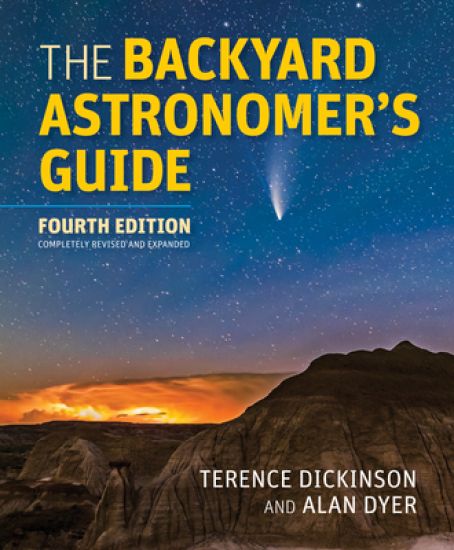
The touchstone for contemporary stargazers. This classic, groundbreaking guide has been the go-to field guide for both beginning and experienced amateur astronomers for nearly 30 years. The fourth edition brings Terence Dickinson and Alan Dyer’s invaluable manual completely up-to-date. Setting a new standard for astronomy guides, it will serve as the touchstone for the next generation of stargazers as well as longtime devotees. Technology and astronomical understanding are evolving at a breathtaking clip, and to reflect the latest information about observing techniques and equipment, this massively revised and expanded edition has been completely rebuilt (an additional 48 pages brings the page count to 416). Illustrated throughout with all-new photographs and star charts, this edition boasts a refreshed design and features five brand-new chapters, including three essential essays on binocular, telescope and Moon tours by renowned astronomy writer Ken Hewitt-White. With new content on naked-eye sky sights, LED lighting technology, WiFi-enabled telescopes and the latest advances in binoculars, telescopes and other astronomical gear, the fourth edition of The Backyard Astronomer’s Guide is sure to become an indispensable reference for all levels of stargazers. New techniques for observing the Sun, the Moon and solar and lunar eclipses are an especially timely addition, given the upcoming solar eclipses in 2023 and 2024. Rounding out these impressive offerings are new sections on dark sky reserves, astro-tourism, modern astrophotography and mobile phone astrophotography, making this book an enduring must-have guide for anyone looking to improve his or her astronomical viewing experience. The Backyard Astronomer’s Guide also features a foreword by Dr. Sara Seager, a Canadian-American astrophysicist and planetary scientist at the Massachusetts Institute of Technology and an internationally recognized expert in the search for exoplanets.
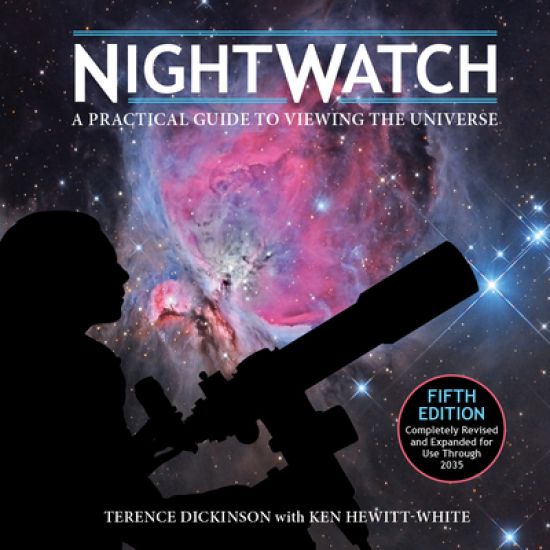
As NightWatch, Terence Dickinson’s classic stargazing guide, neared its 40th anniversary, Dickinson worked with a small group of trusted colleagues to give this groundbreaking reference an overhaul that will take it deep into the 21st century. Longtime astronomy writer and sky observer Ken Hewitt-White led the editorial team. A central aspect to this new edition is the subtle improvements to the unique seasonal star charts that present a 360-degree simulation of the night sky on one page and identify the stars and constellations on the facing page. Yet it is Dickinson’s clear, jargon-free language that will continue to inspire hundreds of thousands of people around the world to take up recreational astronomy. Much has happened in this popular hobby since the previous revisions in 2006. In response, the text has been substantially revised and updated throughout all 13 chapters. Moreover, the book has been completely redesigned and most of its many photographs have been replaced. A noted feature is the variety of superb astrophotos of star clusters, nebulas, galaxies and other celestial phenomena taken by accomplished amateur astronomers. Lavishly illustrated sections on the Moon and planets will inspire novice observers of the solar system. To accommodate the extensive revisions, NightWatch has grown from 192 pages to 208 pages. With the release of the Fifth Edition, we are also launching a new website, NightWatchBook.com, that will offer links to additional resources and will be regularly updated with information on new celestial events and equipment. Since the First Edition of NightWatch was released in 1983, the most significant transformations in amateur astronomy have been in optics and technology. For all the latest on gadgets and gear, renowned astrophotographer Alan Dyer, Dickinson’s coauthor of The Backyard Astronomer’s Guide, has contributed an entirely new chapter on basic digital astrophotography. Dyer has also modernized a key portion of an enlarged chapter on stargazing equipment, creating a welcoming place in NightWatch for today’s computerized telescopes. Stargazing enthusiasts of all levels of experience will discover much of value in an enduring reference conceived by one of the most respected names in amateur astronomy. This must-have Fifth Edition includes: a comprehensive, all-season guide to the night sky; constellation charts covering both northern- and southernhemisphere skies, making NightWatch a truly global resource; 20 carefully upgraded deep-sky charts revealing the locations and essential details about hundreds of naked-eye, binocular and telescopic objects; tips on choosing binoculars and telescopes and taking astrophotos; highlights of major features on the Moon to guide the budding lunar explorer; lists of solar and lunar eclipses, planet locations and the best lunar and planetary conjunctions to 2035; a range of resources for further study.
In the almost 15 years since the release of the fifth edition of The Universe and Beyond, our understanding of the universe has advanced exponentially. Previous editions guided readers through the intriguing world of black holes, dark matter and dark energy, toured the planets of other stars and plumbed the mysteries of quasars, pulsars, supernovas and the accelerating universe. In this new edition, Terence Dickinson and his longtime editorial partner Susan Dickinson joined forces to return to these earlier tours armed with exciting new information on the origin and evolution of the universe, the birth of planets, life on our solar system’s outer moons, runaway black holes, the first gravitational waves, an enigmatic interstellar visitor and more. These recent discoveries have spawned a host of questions about the universe that couldn’t even be imagined a decade ago. Illustrating this voyage are breathtaking photos captured by the groundbreaking Hubble Space Telescope during the later phase of its mission and by the newly launched James Webb Space Telescope, which has already allowed us to observe first stars and the formation of first galaxies and has provided information about potentially habitable exoplanets. The fully updated content showcases late-breaking science that has emerged since the last edition. Key topics include; The search for and discovery of thousands of new exoplanets; New ideas on the origin and evolution of the universe; The evolving distant universe as seen by the James Webb Space Telescope; New theories about life on Mars, Jupiter’s moon Europa and the outer moons in our solar system; New results from the Juno spacecraft orbiting Jupiter; The first direct image of a monstrous black hole; New telescopes and missions for the 2020s and 2030s. The sixth edition of The Universe and Beyond is completely redesigned, and the photos and illustrations have been updated with awe-inspiring new images of the cosmos.
The Adelphoe (The Brothers) of Terence is a Latin adaptation of a comedy of the same name by the Greek comic playwright Menander. The theme of the play is the perennially interesting question of the relationship between the generations and the proper way to bring up a son. In the introduction Mr Martin considers Terence in the context of Roman comedy generally and discusses the background of the Adelphoe. There is also a section on metre and scansion and a short analysis of the textual tradition. The full and detailed commentary, besides elucidating the text, seeks at all times to help the reader to understand the work as a play to be enjoyed. The edition is intended for use by students at school and university and for anyone wishing to read and appreciate the play in the original.
Terence's Eunuchus (The Eunuch) was his most successful play in his lifetime but has been surprisingly neglected by modern commentators. In this first ever full-scale commentary in English, Professor Barsby provides a thorough examination of the play in terms of its literary and dramatic qualities, its staging, and its relationship to the two plays of Menander's on which it is based. The commentary includes scene-by-scene discussions which bring out the development of character and plot, and the notes offer a close study of Terence's language in comparison with that of his predecessor Plautus. A full introduction puts Terence in his historical and literary context, and there are two appendices, one on metre and the other giving text and translation of the remains of Menander's Eunouchos and Kolax.
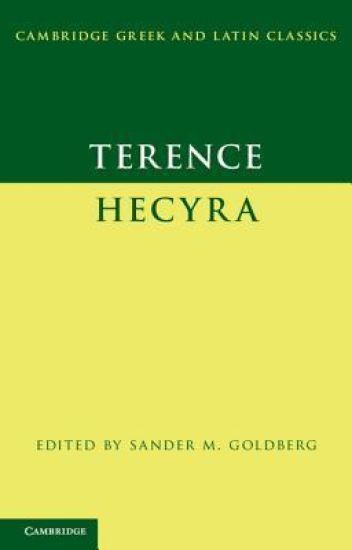
Terence's Hecyra raises social, literary and theatrical issues of great interest to modern students of Roman comedy and, indeed, of Roman culture more broadly. The play pays strikingly close attention to the domestic problems of women and experiments boldly with traditional comic forms, not only in its creation of anticipatory suspense, but through its variations on traditional situations and roles and its metatheatrical qualities. In addition, Terence's response in his prologues to the play's two putative failures is important, if tendentious, evidence for the mechanics of theatrical performance in the second century, especially the conjunction of theatrical and gladiatorial shows. This edition opens the play's many interpretive challenges to wider scrutiny while remaining attentive to the linguistic needs of students at all levels.
Terence's Hecyra raises social, literary and theatrical issues of great interest to modern students of Roman comedy and, indeed, of Roman culture more broadly. The play pays strikingly close attention to the domestic problems of women and experiments boldly with traditional comic forms, not only in its creation of anticipatory suspense, but through its variations on traditional situations and roles and its metatheatrical qualities. In addition, Terence's response in his prologues to the play's two putative failures is important, if tendentious, evidence for the mechanics of theatrical performance in the second century, especially the conjunction of theatrical and gladiatorial shows. This edition opens the play's many interpretive challenges to wider scrutiny while remaining attentive to the linguistic needs of students at all levels.
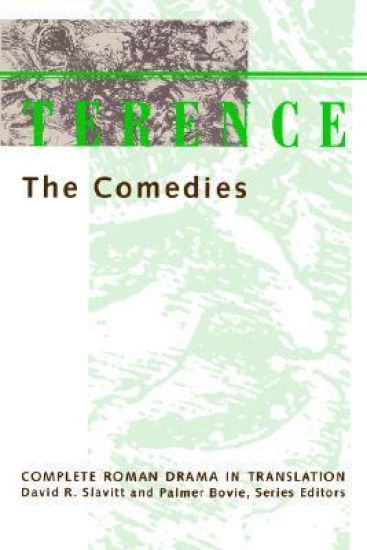
In English translations that achieve a lively readability without sacrificing the dramatic and comic impact of the original Latin, this volume presents all six comedies: The Girl from Andros (Andria), The Self-Tormentor (Heautontimorumenos), The Eunuch (Eunouchus), Phormios, The Brothers (Adelphoe), and Her Husband's Mother (Hecyra).