Kirjojen hintavertailu. Mukana 11 244 527 kirjaa ja 12 kauppaa.

Kirjahaku

Etsi kirjoja tekijän nimen, kirjan nimen tai ISBN:n perusteella.

1000 tulosta hakusanalla Terence O'Donnell

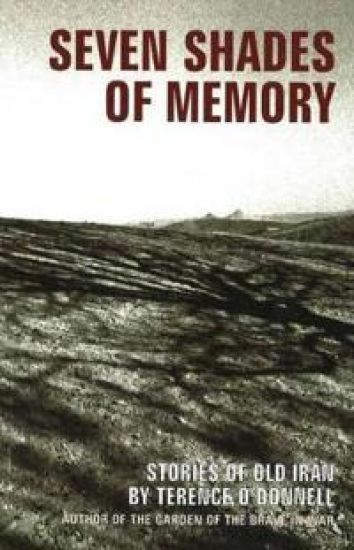
Seven Shades of Memory

Seven Shades of Memory

Terence O'Donnell

Mage Publishers
2006
nidottu
Terence O'Donnell lived in Iran from 1957-71, operating a farm from 1963-70 before returning to America. "Seven Shades of Memory" is his first collection of short stories. The stories share the theme of cultural collision, either as East meets West, or as members of different cultures within Iran tentatively interact. These stories show his prescient understanding of the multifaceted nuances of Persian culture and the Westerners who attempt to navigate through it.
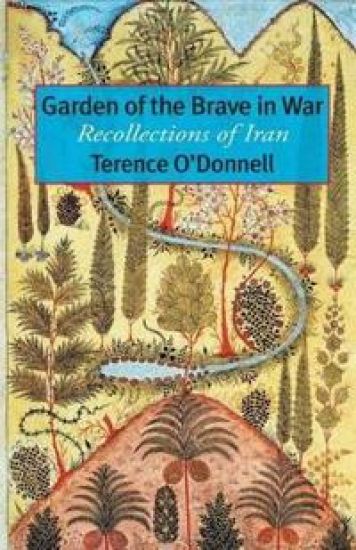
Garden of the Brave in War

Garden of the Brave in War

Terence O'Donnell

Mage Publishers
2013
nidottu
When Terence O'Donnell, an American who lived in Iran for fifteen years in the 1960s and 1970s, was asked what he was doing there, he replied, "The conviction of all Iranians, of most of my compatriots, and indeed of the Russians, was that I was engaged in intelligence work. I was, and what is more I filed a daily report. My employer was myself and my reports consisted of eight thousand pages of journal. This book was drawn from that material." For ten years, O'Donnell lived on a farm near Shiraz, in southern Iran, where he raised mainly pomegranates, but also quinces, grapes, chickens, and bees. He also made many Iranian friends. His memories of that time have yielded a masterpiece of national portraiture, wonderfully alive to the complexities of the Iranian character-courteous, capricious, deeply religious yet also playful, generous, and poetic. A work of shimmering beauty and sensitivity, Garden of the Brave in War will deepen every reader's understanding of the often elusive country that lies behind the headlines.
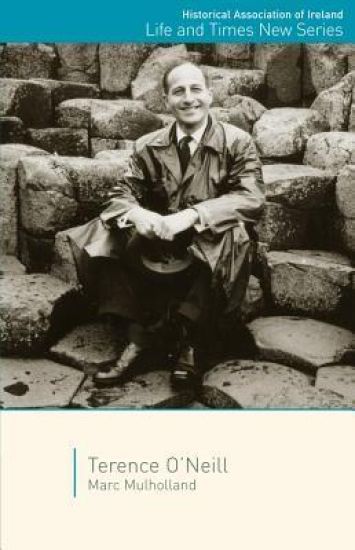
Terence O'Neill

Terence O'Neill

Marc Mulholland

University College Dublin Press
2013
nidottu
Terence O'Neill came to power as Prime Minister of Northern Ireland in 1963 with a bold plan to 'literally transform the face of Ulster'. For the next six years O'Neill proved himself to be Stormont's most controversial leader. Though born of the gentry, he was determined to break from the past. Motorways replaced railways, a New City was planned, and a New University built. By meeting with Taoiseachs of the Irish republic, O'Neill intended no less than to end the long cross-border Cold War. Most audaciously, he worked to end the centuries old political divide between catholic and protestant, even if this meant plunging his own Ulster Unionist Party into crisis. O'Neill stirred up passion and anger. While many saw him as Ireland's great hope, Ian Paisley denounced him as a traitor and Unionist ministers plotted his downfall. When the civil rights movement took to the streets in 1968, O'Neill's response was prophetic: 'it is a short step from the throwing of paving stones to the laying of tombstones.' Confronted by demonstrations and counter-demonstrations, pressure from London and rebellion in his own party, O'Neill gambled all on in a bid to re-cast the very shape of politics in the province. When finally he was 'literally blown from office' in April 1969, in the midst of rioting and loyalist bombs, thirty years of violence had begun. Marc Mulholland's study of O'Neill argues for the centrality of O'Neill to modern Irish history. Based upon exhaustive research, it brings to focus a period when Northern Ireland really did stand at the crossroads.
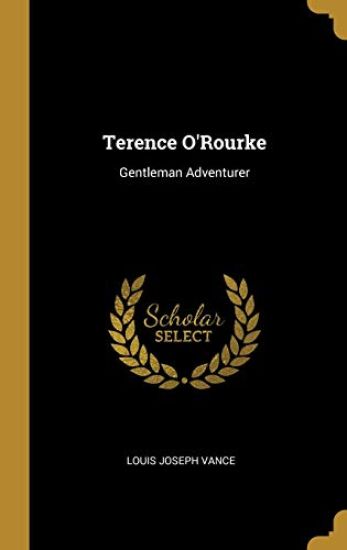
Terence O'Rourke: gentleman adventurer. By: Louis Joseph Vance

Terence O'Rourke: gentleman adventurer. By: Louis Joseph Vance

Louis Joseph Vance

Createspace Independent Publishing Platform
2017
nidottu
Louis Joseph Vance (September 19, 1879-December 16, 1933) was an American novelist, born in Washington, D. C., and educated in the preparatory department of the Brooklyn Polytechnic Institute. He wrote short stories and verse after 1901, then composed many popular novels. His character "Michael Lanyard", also known as "The Lone Wolf", was featured in eight books and 24 films between 1914 and 1949, and also appeared in radio and television series. Vance was separated from his wife (whom he had married in 1898 and who had borne him a son in 1899) when he was found dead in 1933. He was in a burnt armchair inside his New York apartment. A cigarette had ignited some benzene (used for cleaning his clothes or for his broken jaw) that he had on his body, and he had been intoxicated at the time of death. He had recently returned from the West Indies, where he had gathered material for a new book. The death was ruled accidental.
Someone to Love Us

Someone to Love Us

Terence O’Neill

HarperCollins
2010
nidottu
The harrowing true story of the young boy who captured the heart of the nation when he testified in court, to find justice against those responsible for his brother’s death. Terry O’Neill was just ten years old when he stood up in court to testify against his brutal foster parents, accused of the manslaughter of his twelve-year-old brother, Dennis. Terry and his brother had been taken into care and moved through many foster homes until they came to live on the Shropshire farm owned by Reginald and Esther Gough in 1945. There they were to suffer brutal beatings and little care or love – they survived as best they could, looking out for each other, until the terrible morning when Terry couldn’t wake Dennis. In a time when the country was united by war and struggle, the case shocked the nation and made headlines around the world. Terry, a small figure in the courtroom, captured the hearts of mothers and families everywhere, and the public outcry against the foster services led to the instigation of the first provisions to protect other vulnerable children from neglect and cruelty.
Decision Making in Social Work

Decision Making in Social Work

Terence O'Sullivan

Red Globe Press
2010
nidottu
At a time when accountability and the avoidance of risk are increasingly demanded of social work practitioners, the ability to make clear and reasoned professional decisions is essential. This welcome new edition provides a supportive framework for making social work judgements and assessments based on a structured and practical approach.Woven through with practice scenarios applicable to the many facets of social work, this text emphasizes the importance of good decision making to high-quality social work practice. Reassuringly clear throughout, this new addition to the BASW Practical Social Work series is core reading for all involved in the field of social work, whether as students, academics, practitioners or managers.
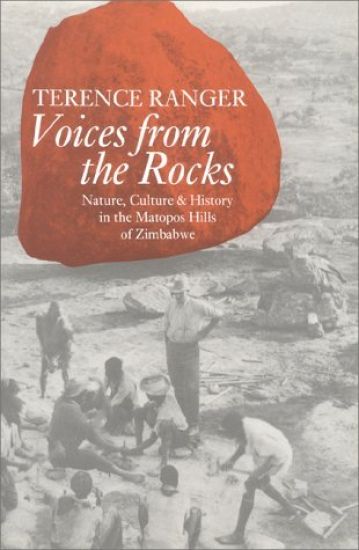
Voices from the Rocks

Voices from the Rocks

Terence O. Ranger

Indiana University Press
1999
pokkari
"Terence Ranger's Revolt in Southern Rhodesia 1896-97 opened out decades of important debate about religion and violence in the early colonial encounter. This book is its challenging, much awaited sequel at the very cutting edge of postcolonial studies." -Richard Werbner, Professor of Social Anthropology, University of Manchester Occupied by humanity for some 40,000 years, the Matopos Hills in Zimbabwe have become the scene of symbolic, ideological, and armed conflict over the last hundred years. Voices from the Rocks is about landscape, religion, conservation, political symbolism, and war in the Matopos Hills-not simply the geography of the National Park there, which is seen by most visitors as a "wild place." Terence Ranger reinstates culture and history into nature.
From Ignatius Loyola to John of the Cross
The 16th century saw the rise of movements of religious reform which, in Spain as elsewhere, contributed to make the history of the period such a ferment. In these essays Terence O’Reilly is concerned with the writings produced by these movements, notably Illuminism, the early Jesuits, Erasmianism, and the Carmelite reform, and with the mixture of medieval and new literary conventions that they display. The book first deals with Ignatius Loyola and his Spiritual Exercises, examining its origins in his experience of conversion and the books he read, and locating him not in the period of the militant Counter-Reform, but in an earlier world, linked to the teachings of 16th Spanish Erasmians and illuminists. One study, hitherto unpublished, presents the lost treatise in which the Dominican Melchor Cano argued that Ignatius was an alumbrado. The following sections move to the later the century, considering the connections between spirituality and literature in works such as the ode to Salinas and, above all, in the mystical poetry of John of the Cross and its basis in exegesis and liturgical and devotional texts.