
Kirjahaku
Etsi kirjoja tekijän nimen, kirjan nimen tai ISBN:n perusteella.
1000 tulosta hakusanalla Terence Soule

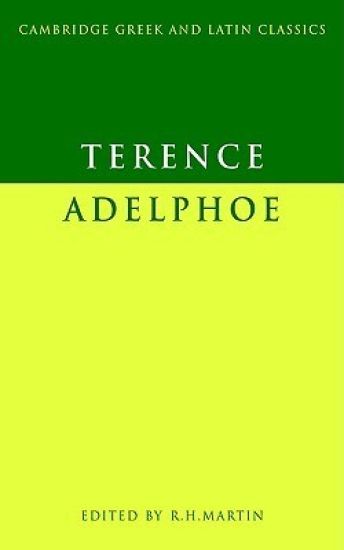
The Adelphoe (The Brothers) of Terence is a Latin adaptation of a comedy of the same name by the Greek comic playwright Menander. The theme of the play is the perennially interesting question of the relationship between the generations and the proper way to bring up a son. In the introduction Mr Martin considers Terence in the context of Roman comedy generally and discusses the background of the Adelphoe. There is also a section on metre and scansion and a short analysis of the textual tradition. The full and detailed commentary, besides elucidating the text, seeks at all times to help the reader to understand the work as a play to be enjoyed. The edition is intended for use by students at school and university and for anyone wishing to read and appreciate the play in the original.

Terence's Eunuchus (The Eunuch) was his most successful play in his lifetime but has been surprisingly neglected by modern commentators. In this first ever full-scale commentary in English, Professor Barsby provides a thorough examination of the play in terms of its literary and dramatic qualities, its staging, and its relationship to the two plays of Menander's on which it is based. The commentary includes scene-by-scene discussions which bring out the development of character and plot, and the notes offer a close study of Terence's language in comparison with that of his predecessor Plautus. A full introduction puts Terence in his historical and literary context, and there are two appendices, one on metre and the other giving text and translation of the remains of Menander's Eunouchos and Kolax.
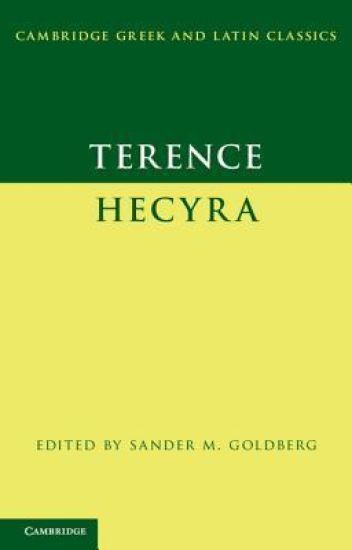
Terence's Hecyra raises social, literary and theatrical issues of great interest to modern students of Roman comedy and, indeed, of Roman culture more broadly. The play pays strikingly close attention to the domestic problems of women and experiments boldly with traditional comic forms, not only in its creation of anticipatory suspense, but through its variations on traditional situations and roles and its metatheatrical qualities. In addition, Terence's response in his prologues to the play's two putative failures is important, if tendentious, evidence for the mechanics of theatrical performance in the second century, especially the conjunction of theatrical and gladiatorial shows. This edition opens the play's many interpretive challenges to wider scrutiny while remaining attentive to the linguistic needs of students at all levels.
Terence's Hecyra raises social, literary and theatrical issues of great interest to modern students of Roman comedy and, indeed, of Roman culture more broadly. The play pays strikingly close attention to the domestic problems of women and experiments boldly with traditional comic forms, not only in its creation of anticipatory suspense, but through its variations on traditional situations and roles and its metatheatrical qualities. In addition, Terence's response in his prologues to the play's two putative failures is important, if tendentious, evidence for the mechanics of theatrical performance in the second century, especially the conjunction of theatrical and gladiatorial shows. This edition opens the play's many interpretive challenges to wider scrutiny while remaining attentive to the linguistic needs of students at all levels.
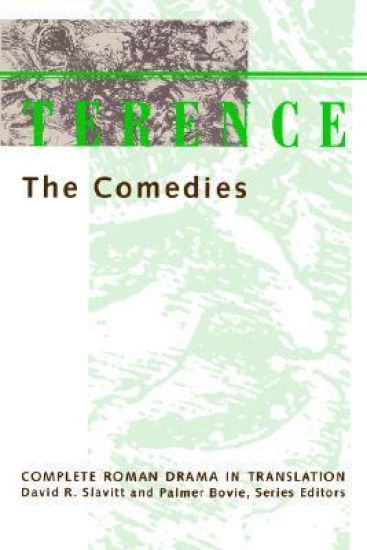
Terence
Johns Hopkins University Press
1992
pokkari
In English translations that achieve a lively readability without sacrificing the dramatic and comic impact of the original Latin, this volume presents all six comedies: The Girl from Andros (Andria), The Self-Tormentor (Heautontimorumenos), The Eunuch (Eunouchus), Phormios, The Brothers (Adelphoe), and Her Husband's Mother (Hecyra).
A Literal Translation Of The Phormio Of Terence (1880)
Terence
KESSINGER PUBLISHING, LLC
2010
sidottu

The Prologue, Interludes, and Epilogue to the Heauton-Timoroumenos of Terence, Acted by the Young Gentlemen of Beverley School, at Christmas, 1756.
Terence
Gale Ecco, Print Editions
2010
pokkari

Terence's Comedys, Translated Into English, and the Original Latin, from the Best Editions, on the Opposite Pages, with Critical and Explanatory Notes
Terence
Gale Ecco, Print Editions
2010
pokkari
A New Translation of the Heautontimorumenos, and Adelphi of Terence
Terence
Gale Ecco, Print Editions
2010
pokkari