Kirjojen hintavertailu. Mukana 11 457 366 kirjaa ja 12 kauppaa.

Kirjahaku

Etsi kirjoja tekijän nimen, kirjan nimen tai ISBN:n perusteella.

1000 tulosta hakusanalla Teresa L. Scheid

Tie A Knot and Hang On

Tie A Knot and Hang On

Teresa L. Scheid

AldineTransaction
2004
sidottu
The author provides a description and a sociological analysis of mental health care work, emphasizing the interaction of professionally generated norms that guide the emotional labor of mental health care workers, and the organizational contexts within which mental health care is provided. She concludes with a discussion of emerging institutional forces that will shape the mental health care system in the future.
Tie A Knot and Hang On

Tie A Knot and Hang On

Teresa L. Scheid

AldineTransaction
2004
nidottu
The author provides a description and a sociological analysis of mental health care work, emphasizing the interaction of professionally generated norms that guide the emotional labor of mental health care workers, and the organizational contexts within which mental health care is provided. She concludes with a discussion of emerging institutional forces that will shape the mental health care system in the future.
Comprehensive Care for HIV/AIDS

Comprehensive Care for HIV/AIDS

Teresa L. Scheid

Routledge
2016
nidottu
A comprehensive health care system consists of services that are coordinated and integrated along the full continuum of care. For HIV patients, this includes physical health care, infectious disease management, crisis care, mental health care, substance abuse counseling, and social support services including housing, transportation, subsistence, and supports for dealing with multiple sources of stigma. This book highlights the dilemmas faced in providing comprehensive, integrated care to individuals living with HIV, providing both an understanding of existing efforts to integrate diverse systems of care, as well as insight into ways in which systems of care must be challenged in order to meet the needs of people living with HIV. Comprehensive Care for HIV/AIDS is the result of collaborative work with the county Health Department, numerous community-based organizations, and several planning boards in a metropolitan area, which have sought to provide integrated care to people living with HIV. It will be a valuable resource to the diverse community of HIV researchers, advocates and providers.
Comprehensive Care for HIV/AIDS

Comprehensive Care for HIV/AIDS

Teresa L. Scheid

Routledge
2014
sidottu
A comprehensive health care system consists of services that are coordinated and integrated along the full continuum of care. For HIV patients, this includes physical health care, infectious disease management, crisis care, mental health care, substance abuse counseling, and social support services including housing, transportation, subsistence, and supports for dealing with multiple sources of stigma. This book highlights the dilemmas faced in providing comprehensive, integrated care to individuals living with HIV, providing both an understanding of existing efforts to integrate diverse systems of care, as well as insight into ways in which systems of care must be challenged in order to meet the needs of people living with HIV. Comprehensive Care for HIV/AIDS is the result of collaborative work with the county Health Department, numerous community-based organizations, and several planning boards in a metropolitan area, which have sought to provide integrated care to people living with HIV. It will be a valuable resource to the diverse community of HIV researchers, advocates and providers.
Ties That Enable

Ties That Enable

Teresa L. Scheid; S. Megan Smith

Rutgers University Press
2021
nidottu
Ties that Enable is written for students, providers, and advocates seeking to understand how best to improve mental health care – be it for themselves, their loved ones, their clients, or for the wider community. The authors integrate their knowledge of mental health care as researchers, teachers, and advocates and rely on the experiences of people living with severe mental health problems to help understand the sources of community solidarity. Communities are the primary source of social solidarity, and given the diversity of communities, solutions to the problems faced by individuals living with severe mental health problems must start with community level initiatives. “Ties that Enable” examines the role of a faith-based community group in providing a sense of place and belonging as well as reinforcing a valued social identity. The authors argue that mental health reform efforts need to move beyond a focus on individual recovery to more complex understandings of the meaning of community care. In addition, mental health care needs to move from a medical model to a social model which sees the roots of mental illness and recovery as lying in society, not the individual. It is our society’s inability to provide inclusive supportive environments which restrict the ability of individuals to recover. This book provides insights into how communities and system level reforms can promote justice and the higher ideals we aspire to as a society.
Ties That Enable

Ties That Enable

Teresa L. Scheid; S. Megan Smith

Rutgers University Press
2021
sidottu
Ties that Enable is written for students, providers, and advocates seeking to understand how best to improve mental health care – be it for themselves, their loved ones, their clients, or for the wider community. The authors integrate their knowledge of mental health care as researchers, teachers, and advocates and rely on the experiences of people living with severe mental health problems to help understand the sources of community solidarity. Communities are the primary source of social solidarity, and given the diversity of communities, solutions to the problems faced by individuals living with severe mental health problems must start with community level initiatives. “Ties that Enable” examines the role of a faith-based community group in providing a sense of place and belonging as well as reinforcing a valued social identity. The authors argue that mental health reform efforts need to move beyond a focus on individual recovery to more complex understandings of the meaning of community care. In addition, mental health care needs to move from a medical model to a social model which sees the roots of mental illness and recovery as lying in society, not the individual. It is our society’s inability to provide inclusive supportive environments which restrict the ability of individuals to recover. This book provides insights into how communities and system level reforms can promote justice and the higher ideals we aspire to as a society.
Reducing Race Differences in Direct-to-Consumer Pharmaceutical Advertising

Reducing Race Differences in Direct-to-Consumer Pharmaceutical Advertising

Stephany De Scisciolo; Teresa L. Scheid

Lexington Books
2018
sidottu
Reducing health disparities by increasing access to health information is a national health policy priority. Evidence exists that direct-to-consumer pharmaceutical advertising (DTCA) is effective in educating consumers about health issues. However, racial disparities exist in such advertising. In 2009, the Food and Drug Administration (FDA) issued a report that included recommendations for enhancing the ability of DTCA to reach disadvantaged populations, including racial and ethnic minorities. Reducing Race Differences in Direct to Consumer Pharmaceutical Advertising compares the pharmaceutical advertisements placed in five popular women’s magazines published prior to and following the 2009 FDA report to assess the impact of these recommendations on the content and appearance of advertisements placed in magazines of differing racial orientation. From a health policy perspective, the results are disappointing. The FDA recommendations had no impact on the frequency or content of the DTCA appearing in White-oriented versus Black-oriented magazines. In fact, far fewer drugs used to treat life-threatening conditions were advertised in Black-oriented magazines after the 2009 FDA recommendations. The book concludes that enhancing the educational and motivational value of DTCA will require more than a set of recommendations. The results shed light on the pharmaceutical industry’s compliance with both hard and soft regulation. Neither federal recommendations nor industry guidelines resulted in the changes to DTCA envisioned by the FDA. Regulatory action is necessary to ensure that pharmaceutical companies develop advertising campaigns that not only promote their products, but also positively impact the health outcomes of those who read their ads.
Darla

Darla

Teresa L Adams

Tellwell Talent
2022
pokkari
Darla is a playful puppy who just wants a loving family. She unfortunately begins her life chained to a box. Her first family does not show her any love or attention. But, she soon finds the kindness and happiness she so deserves. Read how her second family changes her life and how you can change the life of your pet too
The Task of Cultural Critique

The Task of Cultural Critique

Teresa L. Ebert

University of Illinois Press
2009
nidottu
In this study, Teresa L. Ebert makes a spirited, pioneering case for a new cultural critique committed to the struggles for human freedom and global equality. Demonstrating the implosion of the linguistic turn that isolates culture from historical processes, The Task of Cultural Critique maps the contours of an emerging materialist critique that contributes toward a critical social and cultural consciousness. Through groundbreaking analyses of cultural texts, Ebert questions the contemporary Derridian dogma that asserts "the future belongs to ghosts." Events-to-come are not spectral, she contends, but the material outcome of global class struggles. Not "hauntology" but history produces cultural practices and their conflictive representations--from sexuality, war, and consumption to democracy, torture, globalization, and absolute otherness. With close readings of texts from Proust and Balzac to "Chick Lit," from Lukács, de Man, Deleuze, and Marx to Derrida, Žižek, Butler, Kollontai, and Agamben, the book opens up new directions for cultural critique today.
Italian For Dummies Audio Set

Italian For Dummies Audio Set

Teresa L. Picarazzi

John Wiley Sons Inc
2007
cd
Whether you are moving to Italy or just planning a vacation, you’ll want to know some key words and phrases to make sure everything’s va bene. Italian For Dummies Audio Set has everything you need to introduce you to the language so that you can start to communicate with other Italian speakers (without memorizing a bunch of boring grammar notes and long vocabulary lists!). Each of the three hour-long CDs is filled with interesting conversation topics that allow you to listen to what you want to listen at your own pace. Soon, you’ll be able to communicate in Italian about: Work, jobs, and office lifeMaking small talkTraveling and making arrangementsAsking for directionsGetting help and assistanceOrdering at a restaurantBooking a room in a hotelExchanging money at the bankShopping in a store or boutique Along with all these topics, these CDs cover essential rules and building blocks of the Italian language, such as verb conjugation, tenses, and sentence structure, as well as a list of essential words. With this beginner audio set, you can pop any of the CDs in your CD player or computer and discover the joy and fun of speaking Italian!
Ludic Feminism and After

Ludic Feminism and After

Teresa L. Ebert

The University of Michigan Press
1995
nidottu
Following the equal-rights struggles of the 1960s, feminism became involved in the theoretical problems posed by poststructuralism, psychoanalysis, semiotics, queer theory, postcolonialism, and Marxism. After years of debate about whether feminism can or should accommodate these other modes of contemporary thought, Ludic Feminism and After provides a way of making a leap forward. Teresa Ebert rethinks such notions as ""pleasure,"" ""essentialism,"" ""performance,"" ""labor,"" ""class,"" ""body,"" and ""difference"" through readings of influential texts by feminists such as Gayatri Spivak, Rigoberta Mench, Donna Haraway, Jane Gallop, Judith Butler, Diana Fuss, and Teresa de Lauretis. She not only engages the theories of Derrida, Foucault, Lyotard, and Baudrillard, but also moves beyond the academic arena to address the ""backlash"" phenomenon and the writings of ""popular"" critics like Camille Paglia. Ebert argues that the crisis of feminist theory in postmodernity is about the very meaning of politics and the possibility for effective social change. The future of feminism and feminist theory, believes Ebert, lies in reclaiming radical knowledge(s) that have been obscured by what she calls ""ludic theory"": the branch of postmodernism that sees politics primarily as a linguistic and textual practice, and focuses on subverting cultural representations of difference. She argues instead for the possibilities of a ""resistance postmodernism"" in feminism: theory grounded in the social struggle over the ""material differences"" of labor and access to economic means and resources. Ebert's provocative and powerful book challenges ludic feminism within the academy, and outlines transformative politics and feminist theory that can address material crises, such as the international trade in young women for prostitution, dowry murders in India, and the genocidal rape in Bosnia. The author seeks to go beyond dominant theories to open a radically new space for an active third wave feminism. Ludic Feminism and After is sure to be influential and controversial. Teresa Ebert is Associate Professor of English, State University of New York at Albany.
Public Theology and Violent Rhetoric Examined in a Queer Womanist Critical Ethnography
Public theology is an emerging constructive tool. In its inception, public theology was largely contextualized as the ‘public church.’ However, this thoughtful and empathetic book situates our publics everywhere. Smallwood contends that those who have been harmed by violent rhetoric from speech actors who would ‘other’ them retain the capacity to have and hold a theology. This different entry point allows for people of faith, those who are and those who are not associated with a particular communion of faith or denominational affiliation to claim public space for theologizing. Here, public theology is about the capacity of those who are ‘othered’ to affirmatively express their faith and to critically engage with those who would deny and denigrate their ontology. ‘Enduring hardship as a good soldier’ does not mean exposing oneself to verbal abuse week after week. Many LGBTQIA+ persons are assaulted, degraded, humiliated, and derogated from the pulpits and podiums of places of worship. This abuse caused many to turn away from their faith. Those who withstood protracted verbal abuse turned it inward and began to hate themselves. Through ethnography, Smallwood tackles these tough truths and engages with LGBTQIA+ persons. This book critically examines both the harm done to them and the help that is to come from a paradigmatic shift in care. Smallwood emphasises how spiritual self-assessment, ritual, and indigenous spiritual practices offer a way to wholeness and healing. Drawing from Yoruba epistemology, this work offers a framework for rebirth, renewal, and reclamation.
Public Theology and Violent Rhetoric Examined in a Queer Womanist Critical Ethnography
Public theology is an emerging constructive tool. In its inception, public theology was largely contextualized as the ‘public church.’ However, this thoughtful and empathetic book situates our publics everywhere. Smallwood contends that those who have been harmed by violent rhetoric from speech actors who would ‘other’ them retain the capacity to have and hold a theology. This different entry point allows for people of faith, those who are and those who are not associated with a particular communion of faith or denominational affiliation to claim public space for theologizing. Here, public theology is about the capacity of those who are ‘othered’ to affirmatively express their faith and to critically engage with those who would deny and denigrate their ontology. ‘Enduring hardship as a good soldier’ does not mean exposing oneself to verbal abuse week after week. Many LGBTQIA+ persons are assaulted, degraded, humiliated, and derogated from the pulpits and podiums of places of worship. This abuse caused many to turn away from their faith. Those who withstood protracted verbal abuse turned it inward and began to hate themselves. Through ethnography, Smallwood tackles these tough truths and engages with LGBTQIA+ persons. This book critically examines both the harm done to them and the help that is to come from a paradigmatic shift in care. Smallwood emphasises how spiritual self-assessment, ritual, and indigenous spiritual practices offer a way to wholeness and healing. Drawing from Yoruba epistemology, this work offers a framework for rebirth, renewal, and reclamation.
Small World Big Flavors

Small World Big Flavors

Teresa L Polk; John H Polk

Teresa L Polk
2017
pokkari
Small World Big Flavors offers over 180 recipes and 450 pictures, including: A wide variety of cuisines, including Mexican, Greek, Asian, Indian, Italian, and many American favorites Appetizers, Soups and Salads, Main dishes, Sides, Desserts, and homemade Sauces and Seasonings Delicious made-from-scratch food that is fresh, all natural, and minimizes processed ingredients Recipes and tips for freezing and canning to help make meals economical and convenient Make-ahead tips to help make meals with family and friends simpler and more enjoyable John and Teresa Polk have grown to appreciate and love the different cultures and cuisines. They have a multi-cultural family, and have tasted great food while traveling across the U.S. and in many countries. They really enjoy cooking the foods they have experienced. Both also bring recipes from their parents and grandparents, which they want to pass along to their children (and you )
Delivering the Sermon

Delivering the Sermon

Teresa L. Fry Brown

Fortress Press,U.S.
2008
pokkari
Teresa L. Fry Brown introduces preachers to the effective use of voice and body in the animation of the word in the preaching moment. Suggestions and exercises for enhancing voice, diction, and nonverbal engagement of the listener are included in each chapter. These exercises may be used with groups or for individual enhancement of sermon delivery. Delivering the Sermon combines the latest research in communications, speech pathology, and homiletics with the author's own experience as a speech language pathologist to enable preachers to improve their effectiveness in preaching. The book is keyed to online sermon samples and other Web-based features such as sermon illustrations and art. Chapter 1 Adobe Acrobat Document Samples require Adobe Acrobat Reader Having trouble downloading and viewing PDF samples? Introduction Adobe Acrobat Document Samples require Adobe Acrobat Reader Having trouble downloading and viewing PDF samples? Table of Contents Adobe Acrobat Document Samples require Adobe Acrobat Reader Having trouble downloading and viewing PDF samples?
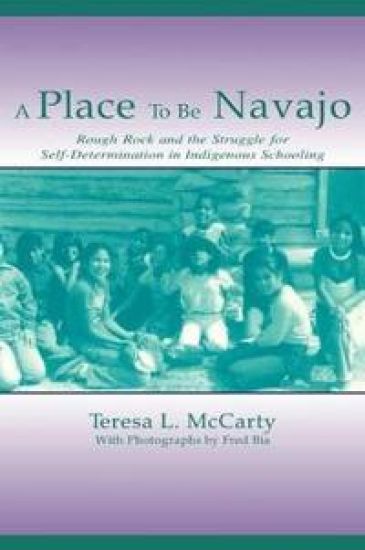
A Place to Be Navajo

A Place to Be Navajo

Teresa L. McCarty

Routledge Member of the Taylor and Francis Group
2002
sidottu
A Place To Be Navajo is the only book-length ethnographic account of a revolutionary Indigenous self-determination movement that began in 1966 with the Rough Rock Demonstration School. Called Diné Bi'ólta', The People's School, in recognition of its status as the first American Indian community-controlled school, Rough Rock was the first to teach in the Native language and to produce a body of quality children's literature by and about Navajo people. These innovations have positioned the school as a leader in American Indian and bilingual/bicultural education and have enabled school participants to wield considerable influence on national policy. This book is a critical life history of this singular school and community. McCarty's account grows out of 20 years of ethnographic work by the author with the Diné (Navajo) community of Rough Rock. The story is told primarily through written text, but also through the striking black-and-white images of photographer Fred Bia, a member of the Rough Rock community. Unlike most accounts of Indigenous schooling, this study involves the active participation of Navajo community members. Their oral testimony and that of other leaders in Indigenous/Navajo education frame and texture the account. Informed by critical theories of education, this book is not just the story of a single school and community. It is also an inquiry into the larger struggle for self-determination by Indigenous and other minoritized communities, raising issues of identity, voice, and community empowerment. A Place To Be Navajo asks whether school can be a place where children learn, question, and grow in an environment that values and builds upon who they are. The author argues that the questions Rough Rock raises, and the responses they summon, implicate us all.