Kirjahaku
Etsi kirjoja tekijän nimen, kirjan nimen tai ISBN:n perusteella.
1000 tulosta hakusanalla Terrence Robert Lloyd
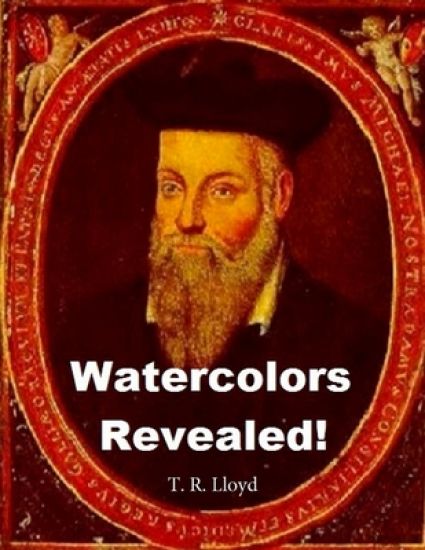
This book is about his soul and it's travels to the United States where it watched everything on TV That is something we may find hard to believe. The drawings in here were done by Dr. Michel de Nostredame over 450 years ago. It could not have been his son Cesar because he did not have that ability. He is the only one who saw these visions and then recorded them for us. The Vatican Libraryhas kept them in marvellous condition for many centuries. It is time that they (and you) know whatis in their collections. Since many of these events had not yet happened, we were not capable of translating them; But now we can
Nominations of Robert James Huggett, William A. Nitze, Kay Collett Goss, Terrence L. Bracy, Billy J. Anotubby, David Matt James, and Norma G. Udall
Palala Press
2018
pokkari
This work has been selected by scholars as being culturally important, and is part of the knowledge base of civilization as we know it. This work was reproduced from the original artifact, and remains as true to the original work as possible. Therefore, you will see the original copyright references, library stamps (as most of these works have been housed in our most important libraries around the world), and other notations in the work.This work is in the public domain in the United States of America, and possibly other nations. Within the United States, you may freely copy and distribute this work, as no entity (individual or corporate) has a copyright on the body of the work.As a reproduction of a historical artifact, this work may contain missing or blurred pages, poor pictures, errant marks, etc. Scholars believe, and we concur, that this work is important enough to be preserved, reproduced, and made generally available to the public. We appreciate your support of the preservation process, and thank you for being an important part of keeping this knowledge alive and relevant.
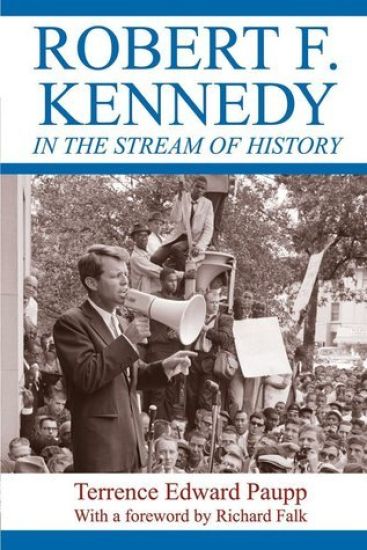
This assessment of the statesmanship, principles, and policies of Robert F. Kennedy places him "in the stream of history," to assess what came before his time in political life, what happened during that time, and what happened to his legacy after his assassination. Terrence Edward Paupp evaluates the themes and issues RFK confronted, responded to, and for which he provided visionary solutions.Paupp first chronicles the influence of Franklin D. Roosevelt's legacy as a prologue to the New Frontier and Great Society. During Robert F. Kennedy's time in power both in his brother's administration and on his own in the US Senate he struggled with striking a balance between power and purpose. In the years after John F. Kennedy's assassination, RFK emphasized the need to unite power and purpose, national and international concerns, ideals and practice. Much of this has been ignored, Paupp argues, by what C. Wright Mills called "the power elite."In assessing RFK's statesmanship, Paupp examines his commitments to human and civil rights, which linked themes and ideals within the US to those struggles taking place outside the country. Robert F. Kennedy brought zeal and passion to these problems by discussing the moral necessity of honouring human dignity while articulating practical solutions, policies, and programs to structural injustice. His legacy remains a beacon of light, intelligence, and hope in today's world.
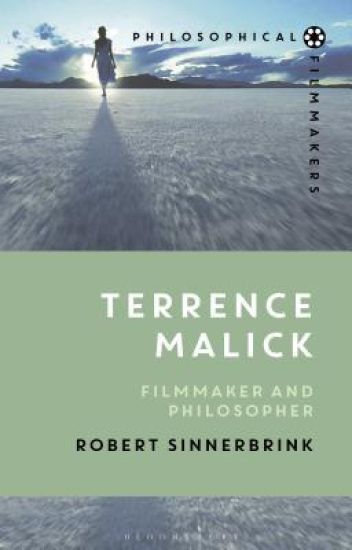
Many critics have approached Terrence Malick’s work from a philosophical perspective, arguing that his films express philosophy through cinema. With their remarkable images of nature, poetic voiceovers, and meditative reflections, Malick’s cinema certainly invites philosophical engagement. In Terrence Malick: Filmmaker and Philosopher, Robert Sinnerbrink takes a different approach, exploring Malick’s work as a case of cinematic ethics: films that evoke varieties of ethical experience, encompassing existential, metaphysical, and religious perspectives. Malick’s films are not reducible to a particular moral position or philosophical doctrine; rather, they solicit ethically significant forms of experience, encompassing anxiety and doubt, wonder and awe, to questioning and acknowledgment, through aesthetic engagement and poetic reflection. Drawing on a range of thinkers and approaches from Heidegger and Cavell, Nietzsche and Kierkegaard, to phenomenology and moral psychology Sinnerbrink explores how Malick’s films respond to the problem of nihilism the loss of conviction or belief in prevailing forms of value and meaning and the possibility of ethical transformation through cinema: from self-transformation in our relations with others to cultural transformation via our attitudes towards towards nature and the world. Sinnerbrink shows how Malick’s later films, from The Tree of Life to Voyage of Time, provide unique opportunities to explore cinematic ethics in relation to the crisis of belief, the phenomenology of love, and film’s potential to invite moral transformation.
This assessment of the statesmanship, principles, and policies of Robert F. Kennedy places him "in the stream of history," to assess what came before his time in political life, what happened during that time, and what happened to his legacy after his assassination. Terrence Edward Paupp evaluates the themes and issues RFK confronted, responded to, and for which he provided visionary solutions.Paupp first chronicles the influence of Franklin D. Roosevelt's legacy as a prologue to the New Frontier and Great Society. During Robert F. Kennedy's time in power—both in his brother's administration and on his own in the US Senate—he struggled with striking a balance between power and purpose. In the years after John F. Kennedy's assassination, RFK emphasized the need to unite power and purpose, national and international concerns, ideals and practice. Much of this has been ignored, Paupp argues, by what C. Wright Mills called "the power elite."In assessing RFK's statesmanship, Paupp examines his commitments to human and civil rights, which linked themes and ideals within the US to those struggles taking place outside the country. Robert F. Kennedy brought zeal and passion to these problems by discussing the moral necessity of honouring human dignity while articulating practical solutions, policies, and programs to structural injustice. His legacy remains a beacon of light, intelligence, and hope in today's world.
An Introduction to International Relations Revel Access Card
Patrick J. McDonald; Terrence L. Chapman; Robert G. Moser
Pearson College Div
2020
sidottu
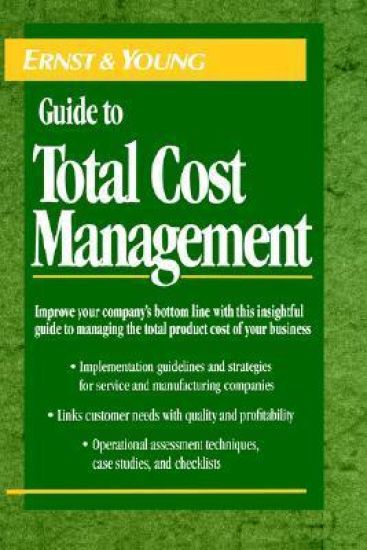
The Ernst & Young Guide to Total Cost Management
Michael R. Ostrenga; Terrence R. Ozan; Robert D. McIlhattan; Marcus D. Harwood
JOHN WILEY SONS INC
1993
sidottu
With the use of non-technical language it enables readers to understand the underlying dynamics of cost in order to facilitate effective decisions regarding products and services, workflows, capital investments and day-to-day monitoring of their business. Combining customer's needs and reactions with the financial awareness of a company's strengths and weaknesses, it ties into all current, major business concerns, including environmental awareness and international competitiveness. Features case studies, checklists and self-assessment techniques that will aid readers in initiating a total cost management program.
Treasure Island: a one act musical adaptation for young audiences: a one act musical adaptation for young audiences
P. L. Haines-Ainsworth; Terrence Alaric Levitt; Robert Louis Stevenson
Createspace Independent Publishing Platform
2015
nidottu
Withdrawing from Iraq
Walter L. Perry; Stuart E. Johnson; Keith Crane; David C. Gompert; John Gordon; Robert E. Hunter; Dalia Dassa Kaye; Terrence K. Kelly; Eric Peltz; Howard J. Shatz
RAND
2009
pokkari
Since 2007, security has improved dramatically in Iraq. The U.S. and Iraqi governments - and most Iraqis - want to see both the U.S. presence there reduced and the Iraqi government and security forces assuming a greater role in providing for public security. The challenge is to effect this drawdown while preserving security and stability in the country and in the region. In response to tasking from the U.S. Congress, RAND researchers conducted an independent study to examine drawdown schedules, risks, and mitigating strategies. They identified logistical constraints on moving equipment out of the country, assessed trends in insurgent activity and the ability of Iraqi security forces to counter it, and examined the implications for the size of the residual U.S. force and for security in Iraq and the region. This book presents alternative drawdown schedules - one consistent with the Obama administration's stated intentions and two others, one somewhat slower and another faster - that are responsive to these factors.It also recommends steps that the United States can take to alleviate anticipated constraints, overcome likely resistance, and reduce the potential risks associated with a drawdown. For more than 60 years, decisionmakers in the public and private sectors have turned to the RAND Corporation for objective analysis and effective solutions that address the challenges facing the nation and the world.
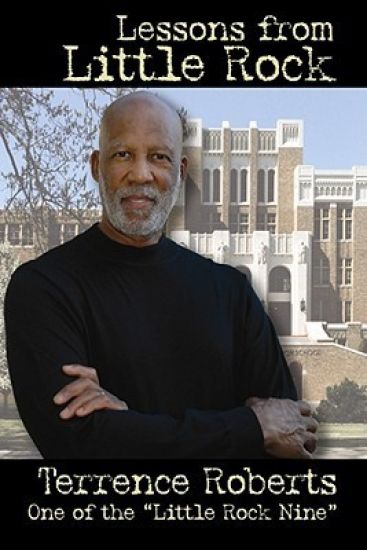
One of the Little Rock Nine tells how his life changed when he became a symbol of desegregation. Sober news reports of a U.S. Army convoy rumbling across the bridge into Little Rock cannot overpower this intimate, powerful, personal account of the integration of Little Rock Central High School. Showing what it felt like to be one of those nine students who wanted only a good high school education, Roberts' rich narrative and candid voice take readers through that rocky year, helping us realize that the historic events of the Little Rock integration crisis happened to real people - to children, parents, our fellow citizens.
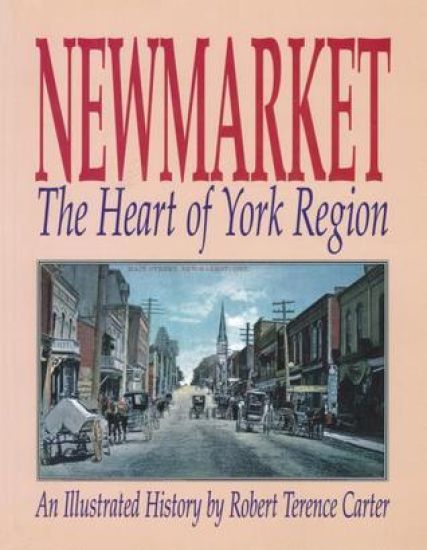
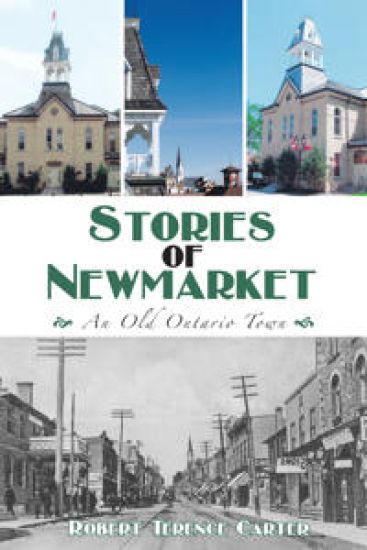
In the early 1800s, Timothy Robers, a Quaker millwright from Vermont, drew a flourishing community of fellow Quakers to the area which became the new-market for settles and traders. It soon became the commercial hub of a rich farming area. By the mid-1800s it was a central point on the Ontario, Simcoe, and Huron Railway. Over the following decades, gas deposits were confirmed there and a barge canal was built along with a street railway. In the early 20th century Newmarket languished through a long period of slow growth — wars and the Depression took a terrible toll on the small town. Yet in the 1940s it was another war that brought thousands of soldiers to Newmarket’s training camp on their way to battlefields in Europe. It took the 1960s to bring real prosperity — builders began developing the inexpensive land, industries came, and the town flourished. The pace of construction continued through the 1980s as Newmarket prepared for its busy life of today.
Newmarket, one of the oldest communities in Ontario, was founded on the Upper Canadian frontier in 1801 by Quakers from the United States. Fur traders, entrepreneurs, millers, and many others were soon to follow, some seeking independence, some seeking wealth, and some even seeking freedom from creditors. The community was at the heart of the 1837 Rebellion, found prosperity when a stop on the colonyis first railway, and has sent military personnel to every war in Canada's history since the War of 1812. Once a terminal on the street railway from Toronto to Lake Simcoe, Newmarket also bears the remnants of an aborted 19th-century barge canal. It was the seat of the York County government and today is the headquarters for the Region of York. Behind these events and many others that have shaped Newmarket's history are the people. Tradespeople, the core of the community, aspiring or experienced politicians including Family Compact members, rebels, war heroes, and even a frontier doctor who lived to the age of 118. Here are their stories, all illuminating the early history of Newmarket.
An Interesting Life In Interesting Times: A Memoir
Robert Terence Meredith
Independently Published
2019
nidottu
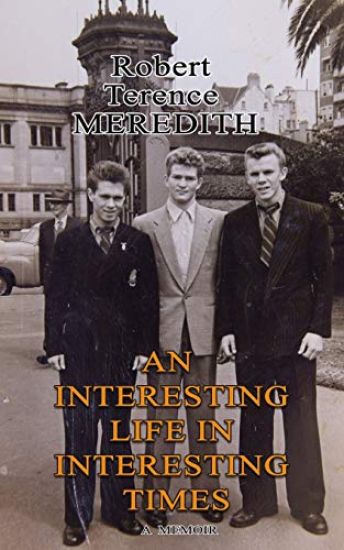
How much detail can you pack into a life. A lot as it turns out. Born in 1938 Bob Meredith moved around a great deal. Times were tough and when your Dad worked on the railways you moved; a lot. From the South Coast of Sydney to the farming heartland of New South Wales Bob, his parents and his four brothers had an interesting life. The working class anecdotes that Bob recalls with dry wit and self deprecation are a fascinating insight to the true grit of the people of those times and the lens of an observant child. They were just the beginning of an encyclopedic journey down memory lane when Bob decided to put pen to paper.
Answers for Robert Balfour-Ramsay of Balbirnie, Esq; to the petition of William Torrence, son of the deceast Thomas Torrence tenant in Kirkettle, and John Brunton flesher in Dalkeith.
Robert Balfour-Ramsay
Gale Ecco, Print Editions
2010
pokkari