Kirjahaku
Etsi kirjoja tekijän nimen, kirjan nimen tai ISBN:n perusteella.
1000 tulosta hakusanalla Terry L. Gore
Contrary to prevalent military historical thinking, the early medieval general was not an ignorant warrior chieftain, but an able, astute, intelligent, and often very cunning commander. Through the use of contemporary literature, art, and archaeological evidence, this study argues that these generals could and did effectively exercise command control before, during, and after battle. Using the examples of a dozen or so leaders and drawing upon over 60 battles, this study brings to light the genius and the adaptability of medieval generals.
Sexual Assault and Sexual Harassment in the U.S. Military
Andrew R Morral; Kristie L Gore; Terry L Schell
RAND
2015
nidottu
The Department of Defense Sexual Assault Prevention and Response Office asked the RAND Corporation to conduct an independent assessment of the rates of sexual assault, sexual harassment, and gender discrimination in the U.S. military. This Annex to Volume 2 contains detailed tabular results for the DoD active component from the 2014 RAND Military Workplace Study.
Survey for Assessing Racial/Ethnic Harassment and Discrimination in the U.S. Military
Miriam Matthews; Coreen Farris; Terry L Schell; Kristie L Gore
RAND
2021
nidottu
To help the U.S. Department of Defense (DoD) estimate the percentage of service members who experienced racial or ethnic harassment or discrimination in the past year, RAND Corporation researchers, with feedback from external experts and DoD representatives, developed a survey instrument. The authors of this report describe the instrument-development process, the instrument itself, and recommendations to support its use.
Sexual Assault and Sexual Harassment in the U.S. Military
Andrew R. Morral; Kristie L. Gore; Terry L. Schell
RAND
2015
pokkari
The Department of Defense Sexual Assault Prevention and Response Office asked the RAND Corporation to conduct an independent assessment of the rates of sexual assault, sexual harassment, and gender discrimination in the U.S. military. This volume presents survey results from the 2014 RAND Military Workplace Study for active- and reserve-component service members in the Army, Navy, Air Force, and Marine Corps.
Sexual Assault and Sexual Harassment in the U.S. Military
Andrew R. Morral; Kristie L. Gore; Terry L. Schell
RAND
2015
pokkari
The Department of Defense Sexual Assault Prevention and Response Office asked the RAND Corporation to conduct an independent assessment of sexual assault, sexual harassment, and gender discrimination in the U.S. military. The Coast Guard also requested inclusion of its members. This volume presents survey results from the 2014 RAND Military Workplace Study for the U.S. Coast Guard and the Coast Guard Reserve.
Sexual Assault and Sexual Harassment in the U.S. Military
Andrew R. Morral; Kristie L. Gore; Terry L. Schell
RAND
2015
pokkari
The Department of Defense Sexual Assault Prevention and Response Office asked the RAND Corporation to conduct an independent assessment of sexual assault, sexual harassment, and gender discrimination in the U.S. military. The Coast Guard also requested inclusion of its members. This Annex to Volume 3 contains detailed tabular results from the 2014 RAND Military Workplace Study for the U.S. Coast Guard active component.
Sexual Assault and Sexual Harassment in the U.S. Military
Andrew R. Morral; Kristie L. Gore; Terry L. Schell
RAND
2016
pokkari
The Department of Defense Sexual Assault Prevention and Response Office asked the RAND Corporation to independently assess rates of sexual assault, sexual harassment, and gender discrimination in the military. This volume presents the results of methodological investigations into sources of potential bias in estimates produced from the 2014 RAND Military Workplace Study for active- and reserve-component members in the U.S. military.
Author Terry L. Ware Sr. Presents: PoEtIc XpReSsIoNs: Vol 3, Variations of Anxiety Disorders
Tiffany S. Hooks; Keiona McGhee; Maya C. Houston
B.O.S.S. Publishing, LLC
2021
nidottu
Anxiety Disorders are normal emotions that at times can get the best of some of us. It's in those times that we must realize that things are not what they seem and if we only learn to breathe through the circumstance, we will make it through. If you are one that deals with Anxiety Disorders, know that you are not alone and there are those that can help you cope with whatever Anxiety Disorder you may deal with. You will be VICTORIOUS
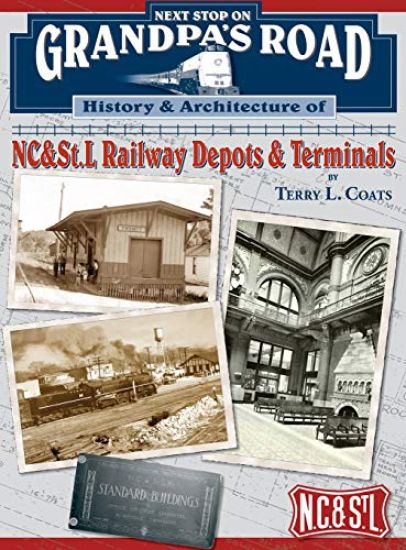
Next Stop on Grandpa's Road: History & Architecture of NC&St.L Railway Depots & Terminals
Terry L. Coats
Terry L. Coats
2019
sidottu
The history of the Nashville, Chattanooga & St. Louis Railway spanned 112 years. Its infancy sprang from an era when railroading replaced foot, horseback, the wagon, and the flatboat as the primary means of transporting goods. Its demise ushered in the era of Sputnik and the first space explorations.There was an allure to the depots of the Nashville, Chattanooga & St. Louis Railway. A station on the NC&St.L was a busy, noisy, and fascinating place. People and trains would come and go as baggage, mail, and freight moved back-and-forth between platforms and trains. Travelers hurried to make their way to their departing trains or to make connections between trains on which they had just arrived and those going on to farther destinations. Over 325 pages; 600+ photographs, illustration, and drawings An in-depth history of the NC&St.L Railway from 1845 to 1957 Of interest to railroaders seeking information of railroad stations as well as historians looking for photos of local architecture in Tennessee, Kentucky, Georgia, and Alabama. History of the NC&St.L through the perils of war from the War Between the States through the Great War and WWII. Detailed analysis of the architecture of the stations and terminals of the NC&St.L Information on signaling, telegraphy, and the roles of the employees aboard the trains and at the stations. Documents the struggles of the Civil Rights movement as it related to American railroads
Next Stop on Grandpa's Road: History & Architecture of NC&St.L Railway Depots & Terminals
Terry L. Coats
Terry L. Coats
2019
nidottu
Autobiography-Terry Lee Bradford: Lest I forget
Terry L. Bradford
Createspace Independent Publishing Platform
2015
nidottu
Communication skills determine how the world perceives us - and how we perceive the world. Communication is at the heart of who we are and all that we do. As a clinician, your communication impacts how you take care of patients, work with colleagues, teach trainees, and engage audiences and the public. Communication encompasses all aspects of human skills, from listening and clearly articulating thoughts to an awareness of physical gestures, specific word choice, tone, and volume. Whether engaging with patients, peers, care teams, family members, residents, researchers, insurance agencies, management, or journalists, successful communication requires focusing on the importance of the relationship and the mission of each interaction. Today, due to the rise of digital technologies including electronic medical records, online forums, and video conferences, the content of information, the platform, and the audience are continuously changing and expanding for physicians. There is a great need in the physician community to learn how to facilitate the exchange of information, provide psychosocial support, partake in shared-decision making, translate complex information, and resolve controversies with sound science in a variety of settings. Addressing physicians at every level of training and practice, Physician Communication: Connecting with Patients, Peers, and the Public will enable providers to examine, analyse, and improve their skills in the art and science of communication. Divided into four sections: Face-to-face Communications; Digital Communications;Public Speaking; and Traditional Media, this book will help physicians navigate various situations using different methods and modes of communication.
The Oxford Handbook of Prehistoric Oceania
Terry L. Hunt; Ethan E. Cochrane
Oxford University Press Inc
2022
nidottu
Oceania was the last region on earth to be permanently inhabited, with the final settlers reaching Aotearoa/New Zealand approximately AD 1300. This is about the same time that related Polynesian populations began erecting Easter Island's gigantic statues, farming the valley slopes of Tahiti and similar islands, and moving finely made basalt tools over several thousand kilometers of open ocean between Hawai'i, the Marquesas, the Cook Islands, and archipelagos in between. The remarkable prehistory of Polynesia is one chapter of Oceania's human story. Almost 50,000 years prior, people entered Oceania for the first time, arriving in New Guinea and its northern offshore islands shortly thereafter, a biogeographic region labelled Near Oceania and including parts of Melanesia. Near Oceania saw the independent development of agriculture and has a complex history resulting in the greatest linguistic diversity in the world. Beginning 1000 BC, after millennia of gradually accelerating cultural change in Near Oceania, some groups sailed east from this space of inter-visible islands and entered Remote Oceania, rapidly colonizing the widely separated separated archipelagos from Vanuatu to SAmoa with purposeful, return voyages, and carrying an intricately decorated pottery called Lapita. From this common cultural foundation these populations developed separate, but occasionally connected, cultural traditions over the next 3000 years. Western Micronesia, the archipelagos of Palau, Guam and the Marianas, was also colonized around 1500 BC by canoes arriving from the west, beginning equally long sequences of increasingly complex social formations, exchange relationships and monumental constructions. All of these topics and others are presented in The Oxford Handbook of Prehistoric Oceania, written by Oceania's leading archaeologists and allied researchers. Chapters describe the cultural sequences of the region's major island groups, provide the most recent explanations for diversity and change in Oceanic prehistory, and lay the foundation for the next generation of research.
Ella is an only child who is strong and knows her own mind. After an attack on campus she decides to go home to Toronto. After she gets her medical license she decides to move to Boston, where she meets Jayden and falls in love, but love isn't always easy. Ella's final thought is that there has to be life after love.
The common wisdom that business contributions to the common good are counterproductive in the new competitive global marketplace does not hold up to empirical research. In fact, doing good is good for business, and a majority of businesses do provide some form of community support, which Besser discovered in her exhaustive survey of the Iowa business community. Business owners and managers often act out of a sense of community spirit and a certain obligation to better the common good. While the increasingly globalized economy has encouraged a number of large corporations to become freewheelers, the vast majority of companies are firmly rooted in place and look at their locales with more than just a utilitarian eye.Extensive interviews with Iowa business owners, managers, and business and community leaders are combined with findings from prior studies of corporate citizenship, and the evidence clearly indicates that the majority of businesses provide some form of community support. Most owners feel they should do more than just make a profit, so they often seek ways to give back to their communities, a move that is usually nurtured within the business community itself. However, corporate altruism carries risks. Many business owners have unwittingly offended customers and clients by their acts of civic spirit. Besser concludes her book by addressing the potential threats to business social responsibility posed by globalization and recommends steps to enhance socially responsible capitalism. Anybody interested in the complex interaction of businesses and the communities they reside in will enjoy reading this positive revisitation of the mutually supportive relationship between trade and polity.
Although there is in the United States a clear national consensus supporting the protection of the environment, advocates often profoundly disagree about the policies best designed to achieve this end. The traditional answer has been that government must intervene, through legislation and regulation of behavior, to preserve environmental values. This book takes a different approach, examining the prospects (and pitfalls) for improving natural resource allocation and environmental quality through market processes. The authors demonstrate that governmental policies often exacerbate environmental problems because of inadequate incentives and information. A property rights approach that focuses on the costs of operating markets as well as governments lays the framework for thinking about problems ranging from the American Frontier to global warming. Property rights solutions that encourage market processes are proposed for public land management, outdoor recreation, water quantity and quality, and ocean fisheries. The final chapter tackles the "tougher problems" of global warming and acid rain. Free Market Environmentalism applies the economic way of thinking to environmental problems of growing importance. It will be appropriate for environmental economic courses, but an economics background is not a prerequisite for understanding this nontechnical, innovative approach to natural resource management.
Although there is in the United States a clear national consensus supporting the protection of the environment, advocates often profoundly disagree about the policies best designed to achieve this end. The traditional answer has been that government must intervene, through legislation and regulation of behavior, to preserve environmental values. This book takes a different approach, examining the prospects (and pitfalls) for improving natural resource allocation and environmental quality through market processes. The authors demonstrate that governmental policies often exacerbate environmental problems because of inadequate incentives and information. A property rights approach that focuses on the costs of operating markets as well as governments lays the framework for thinking about problems ranging from the American Frontier to global warming. Property rights solutions that encourage market processes are proposed for public land management, outdoor recreation, water quantity and quality, and ocean fisheries. The final chapter tackles the “tougher problems” of global warming and acid rain. Free Market Environmentalism applies the economic way of thinking to environmental problems of growing importance. It will be appropriate for environmental economic courses, but an economics background is not a prerequisite for understanding this nontechnical, innovative approach to natural resource management.
Representing a milestone of further accomplishment in scholarly investigation of the dialectics for ideological evolution in the USSR, this book will be a treasure for all who are interested in the development of Soviet ideology and should merit the attention of all specialists in Soviet studies. It is uniquely valuable because it is the first ext
Although there is in the United States a clear national consensus supporting the protection of the environment, advocates often profoundly disagree about the policies best designed to achieve this end. The traditional answer has been that government must intervene, through legislation and regulation of behavior, to preserve environmental values. Th
Free Market Environmentalism applies the economic way of thinking to environmental problems of growing importance. It examines the prospects (and pitfalls) for improving natural resource allocation and environmental quality through market processes. .