

Kirjahaku
Etsi kirjoja tekijän nimen, kirjan nimen tai ISBN:n perusteella.
1000 tulosta hakusanalla The Lightman George Garrett Anastasia


Lightman & Moss on the Law of Administrators and Receivers of Companies
SWEET MAXWELL LTD
2026
sidottu
The bestselling author of Einsteins Dreams explores the emotional and philosophical questions raised by recent discoveries in science with passion and curiosity. He looks at the dialogue between science and religion; the conflict between our human desire for permanence and the impermanence of nature; the possibility that our universe is simply an accident; the manner in which modern technology has separated us from direct experience of the world; and our resistance to the view that our bodies and minds can be explained by scientific logic and laws. Behind all of these considerations is the suggestion--at once haunting and exhilarating--that what we see and understand of the world is only a tiny piece of the extraordinary, perhaps unfathomable whole.
The Discoveries: Great Breakthroughs in 20th-Century Science, Including the Original Papers
Alan Lightman
Knopf Doubleday Publishing Group
2006
nidottu
A critical overview of some of the great scientific discoveries of the twentieth century examines the impact of each breakthrough, the personalities and human drama involved, and its meaning in terms of the pattern of scientific discovery, drawing on the original papers of Einstein, Bohr, McClintock, Pauling, and other notable scientists. Reprint. 17,500 first printing.
From the bestselling author of Einstein's Dreams comes this harrowing tale of one man's struggle to cope in a wired world, even as his own biological wiring short-circuits. As Boston's Red Line shuttles Bill Chalmers to work one summer morning, something extraordinary happens. Suddenly, he can't remember which stop is his, where he works, or even who he is. The only thing he can remember is his corporate motto: the maximum information in the minimum time. Bill's memory returns, but a strange numbness afflicts him. As he attempts to find a diagnosis for his deteriorating illness, he descends into a nightmarish tangle of inconclusive results, his company's manic frenzy, and his family's disbelief. Ultimately, Bill discovers that he is fighting not just for his body but also for his soul.
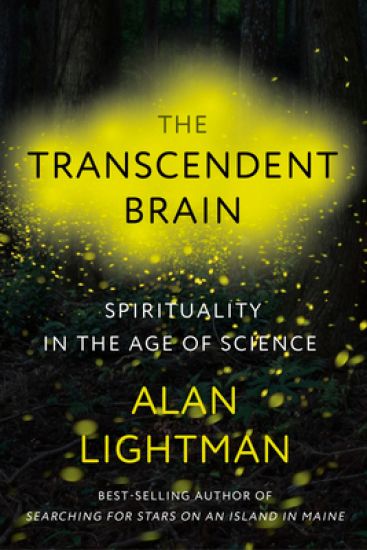
The Transcendent Brain: Spirituality in the Age of Science
Alan Lightman
Pantheon Books
2023
sidottu
From the acclaimed author of Einstein's Dreams comes a rich, fascinating answer to the question, Can the scientifically inclined still hold space for spirituality? "Lightman...belongs to a noble tradition of science writers, including Oliver Sacks and Lewis Thomas, who can poke endlessly into a subject and...stir up fresh embers of wonder." --The Wall Street Journal Gazing at the stars, falling in love, or listening to music, we sometimes feel a transcendent connection with a cosmic unity and things larger than ourselves. But these experiences are not easily understood by science, which holds that all things can be explained in terms of atoms and molecules. Is there space in our scientific worldview for these spiritual experiences? According to acclaimed physicist and novelist Alan Lightman, there may be. Drawing on intellectual history and conversations with contemporary scientists, philosophers, and psychologists, Lightman asks a series of thought-provoking questions that illuminate our strange place between the world of particles and forces and the world of complex human experience. Can strict materialism explain our appreciation of beauty? Or our feelings of connection to nature and to other people? Is there a physical basis for consciousness, the most slippery of all scientific problems? Lightman weaves these investigations together to propose what he calls "spiritual materialism"-- the belief that we can embrace spiritual experiences without letting go of our scientific worldview. In his view, the breadth of the human condition is not only rooted in material atoms and molecules but can also be explained in terms of Darwinian evolution. What is revealed in this lyrical, enlightening book is that spirituality may not only be compatible with science, it also ought to remain at the core of what it means to be human.
From the acclaimed author of Einstein's Dreams comes a rich, fascinating answer to the question, Can the scientifically inclined still hold space for spirituality? "Lightman...belongs to a noble tradition of science writers, including Oliver Sacks and Lewis Thomas, who can poke endlessly into a subject and...stir up fresh embers of wonder." --The Wall Street Journal Gazing at the stars, falling in love, or listening to music, we sometimes feel a transcendent connection with a cosmic unity and things larger than ourselves. But these experiences are not easily understood by science, which holds that all things can be explained in terms of atoms and molecules. Is there space in our scientific worldview for these spiritual experiences? According to acclaimed physicist and novelist Alan Lightman, there may be. Drawing on intellectual history and conversations with contemporary scientists, philosophers, and psychologists, Lightman asks a series of thought-provoking questions that illuminate our strange place between the world of particles and forces and the world of complex human experience. Can strict materialism explain our appreciation of beauty? Or our feelings of connection to nature and to other people? Is there a physical basis for consciousness, the most slippery of all scientific problems? Lightman weaves these investigations together to propose what he calls "spiritual materialism"-- the belief that we can embrace spiritual experiences without letting go of our scientific worldview. In his view, the breadth of the human condition is not only rooted in material atoms and molecules but can also be explained in terms of Darwinian evolution. What is revealed in this lyrical, enlightening book is that spirituality may not only be compatible with science, it also ought to remain at the core of what it means to be human.
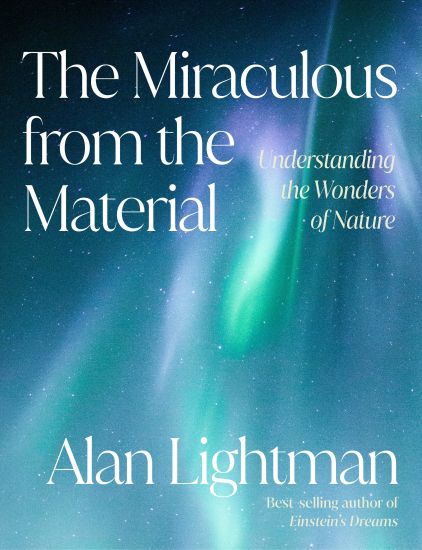
The Miraculous from the Material: Understanding the Wonders of Nature
Alan Lightman
Pantheon Books
2024
sidottu
A gorgeously illustrated exploration of the science behind the universe's most stunning natural phenomena--from atoms and parameciums to rainbows, snowflakes, spider webs, the rings of Saturn, galaxies, and more Nature is capable of extraordinary phenomena. Standing in awe of those phenomena, we experience a feeling of connection to the cosmos. For acclaimed physicist and novelist Alan Lightman, just as remarkable is that all of what we see around us--soap bubbles, scarlet ibises, shooting stars--are made out of the same material stuff and obey the same rules and laws. This is what Lightman calls "spiritual materialism," the belief that we can embrace spiritual experiences without letting go of our scientific worldview. Pairing 36 beautiful, full-color photos evoking some of nature's most awe-inspiring phenomena with accessible and lyrical personal essays, The Miraculous from the Material explores the fascinating science underlying the natural world. Why do rainbows make an arc? Why does a particular waterfall at Yosemite National Park sometimes glow like it's on fire? How does a hummingbird fly? The world has so many things to marvel at--and the science is just as fascinating. Lightman's imagination travels from the world of atoms and molecules to the animal kingdom, from places like Ha Long Bay, Vietnam and the Grand Canyon out to the solar system and beyond, illuminating the majesty of the cosmos and the remarkable science behind it. The Miraculous from the Material is a stunning, soaring ode to the beauty and wonder around us, and the perfect holiday gift for photography aficionados, life-long learners, and admirers of the natural world.
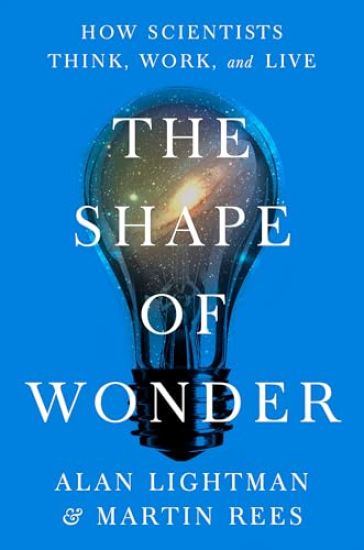
The Shape of Wonder: How Scientists Think, Work, and Live
Alan Lightman; Martin Rees
Pantheon Books
2025
sidottu
In this captivating, insightful book, acclaimed physicists Alan Lightman and Martin Rees illuminate the life and work of numerous scientists in order to demystify the scientific process and show that scientists are concerned citizens, just like the rest of us. "Remarkable. . . . Illuminating with refreshing clarity the ordinary and sometimes extraordinary work of scientists. This book is essential reading." --Jennifer Ackerman, bestselling author of What an Owl Knows In an age of rapid scientific discovery and technological advancement, it's understandable that many feel uneasy about the future. While we might have confidence in these new developments when we go to the hospital for a medical procedure, fly in an airplane, or take an elevator to the top floor of a building, the motivations and lives of scientists themselves feel shrouded from public view. There is a growing sense that scientists are not to be trusted--that they may be guided by political or financial interests, or beholden to governments, or state institutions. This growing mistrust of scientists is an urgent problem. With the onset of climate change, the imminent threats of pandemic or nuclear war, and rapid acceleration in the fields of artificial intelligence and DNA sequencing, innovations in science have the potential to change the world. It's crucial that we not only gain a better understanding of science as a field, but also reestablish trust with its practitioners. The Shape of Wonder guides us through the fascinating lives and minds of scientists around the world and throughout time, from a young theoretical physicist who works as a research assistant professor at the University of Washington and rock climbs in their free time; to German physicist Werner Heisenberg in his early life, when he was a student of music and philosophy; to Govind Swarup, an Indian astronomer whose work on radio telescopes was profoundly important. We get an inside peek at what makes scientists tick--their daily lives, passions, and concerns about the societies they live in. In this brilliant and elucidative work, Lightman and Rees pull back the curtain on the field of science, revealing that scientists are driven by the same sense of curiosity, wonder, and responsibility towards the future that shapes us all.
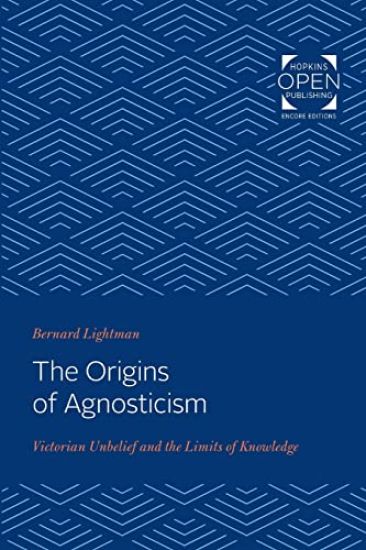
Originally published in 1987. The Origins of Agnosticism provides a reinterpretation of agnosticism and its relationship to science. Professor Lightman examines the epistemological basis of agnostics' learned ignorance, studying their core claim that "God is unknowable." To address this question, he reconstructs the theory of knowledge posited by Thomas Henry Huxley and his network of agnostics. In doing so, Lightman argues that agnosticism was constructed on an epistemological foundation laid by Christian thought. In addition to undermining the continuity in the intellectual history of religious thought, Lightman exposes the religious origins of agnosticism.

The Book of Sarah is missing from the bible, so artist Sarah Lightman sets out to make her own: questioning religion, family, motherhood and what it takes to be an artist in this quietly subversive visual autobiography from NW3. Drawings of an imaginary Hampstead bible, a baby monitor, the local landscape of Ellerdale Road and the outside of St Paul’s Girls’ School: books and streets, buildings and objects fill this bildungsroman set in North West London. Sarah Lightman has been drawing her life since she was a 22-year-old undergraduate at The Slade School of Art. The Book of Sarah traces her journey from modern Jewish orthodoxy to a feminist Judaism, as she searches between the complex layers of family and family history that she inherited and inhabited. While the act of drawing came easily, the letting go of past failures, attachments and expectations did not. It is these that form the focus of Sarah’s astonishingly beautiful pages, as we bear witness to her making the world her own.

Join Taylor the Toucan as she journeys through life's everyday moments and milestones with big feelings and even bigger reactions. In Taylor Doesn't Want To Go To School, learn about how the smallest things at school can cause the biggest meltdowns, and pick up some tips and strategies along the way.

Taylor the Toucan and the Dreaded Dinner Table
Deb Lightman
Kids First Pediatric Therapy
2022
pokkari
Join Taylor the Toucan as she journeys through life's everyday moments and milestones with big feelings and even bigger reactions.In Taylor and the Dreaded Dinner Table, readers follow along as she learns how different foods make her body feel, while parents learn some simple steps to start improving mealtime success.

Join Taylor the Toucan as she journeys through life's everyday moments and milestones with big feelings and even bigger reactions.In Taylor and the Video Game Vortex, watch as Taylor gets lost in her imagination and learn the power of connection to help kids transition.

Join Taylor the Toucan as she journeys through life's everyday moments and milestones with big feelings and even bigger reactions.In Taylor and the Terrifying Toilet, readers learn about different learning needs and how to make environments feel more supportive.
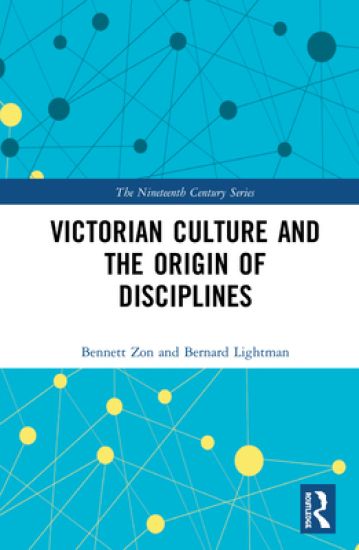
Victorian Culture and the Origin of Disciplines
Bernard Lightman; Bennett Zon
Routledge
2019
sidottu
Current studies in disciplinarity range widely across philosophical and literary contexts, producing heated debate and entrenched divergences. Yet, despite their manifest significance for us today seldom have those studies engaged with the Victorian origins of modern disciplinarity. Victorian Culture and the Origin of Disciplines adds a crucial missing link in that history by asking and answering a series of deceptively simple questions: how did Victorians define a discipline; what factors impinged upon that definition; and how did they respond to disciplinary understanding? Structured around sections on professionalization, university curriculums, society journals, literary genres and interdisciplinarity, Victorian Culture and the Origin of Disciplines addresses the tangled bank of disciplinarity in the arts, humanities, social sciences and natural sciences including musicology, dance, literature, and art history; classics, history, archaeology, and theology; anthropology, psychology; and biology, mathematics and physics. Chapters examine the generative forces driving disciplinary formation, and gauge its success or failure against social, cultural, political, and economic environmental pressures. No other volume has focused specifically on the origin of Victorian disciplines in order to track the birth, death, and growth of the units into which knowledge was divided in this period, and no other volume has placed such a wide array of Victorian disciplines in their cultural context.
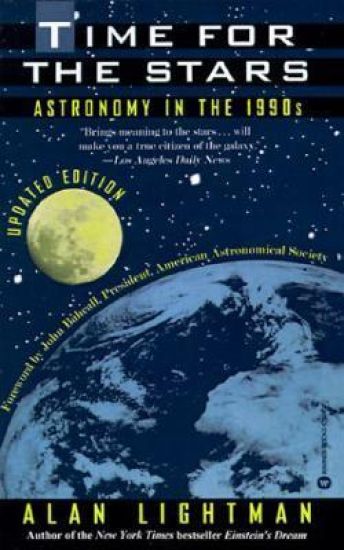
Now, Alan Lightman, the author of the brilliantly original bestselling novel Einstein's Dreams, presents the real-life drama of astronomy, a journey far into the stars that outpaces any fiction for adventure and excitement. Unsurpassed in its authoritativeness, TIME FOR THE STARS is based on the report of the National Academy of Science's Astronomy and Astrophysics Survey Committee, for whose science panel Alan Lightman served as chair. Here is a book that will introduce you to cosmic puzzles about people and planets stars and galaxies, and the beginnings and the ends of the universe. How do we know what's inside the sun? What are the prospects of finding other solar systems -- and extraterrestrial life -- in coming years? What was the universe like ten billion years ago? Will it keep on expanding forever? Here are the latest advances in technology that have rocketed us to dazzling new frontiers. They may catch you off guard. But they will leave you fixed in wonder.
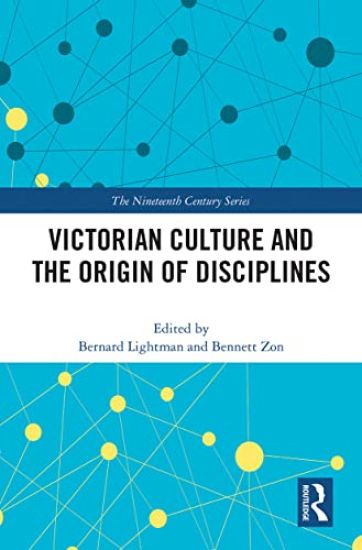
Victorian Culture and the Origin of Disciplines
Bernard Lightman; Bennett Zon
TAYLOR FRANCIS LTD
2021
nidottu
Current studies in disciplinarity range widely across philosophical and literary contexts, producing heated debate and entrenched divergences. Yet, despite their manifest significance for us today seldom have those studies engaged with the Victorian origins of modern disciplinarity. Victorian Culture and the Origin of Disciplines adds a crucial missing link in that history by asking and answering a series of deceptively simple questions: how did Victorians define a discipline; what factors impinged upon that definition; and how did they respond to disciplinary understanding? Structured around sections on professionalization, university curriculums, society journals, literary genres and interdisciplinarity, Victorian Culture and the Origin of Disciplines addresses the tangled bank of disciplinarity in the arts, humanities, social sciences and natural sciences including musicology, dance, literature, and art history; classics, history, archaeology, and theology; anthropology, psychology; and biology, mathematics and physics. Chapters examine the generative forces driving disciplinary formation, and gauge its success or failure against social, cultural, political, and economic environmental pressures. No other volume has focused specifically on the origin of Victorian disciplines in order to track the birth, death, and growth of the units into which knowledge was divided in this period, and no other volume has placed such a wide array of Victorian disciplines in their cultural context.