Kirjojen hintavertailu. Mukana 11 244 527 kirjaa ja 12 kauppaa.

Kirjahaku

Etsi kirjoja tekijän nimen, kirjan nimen tai ISBN:n perusteella.

1000 tulosta hakusanalla Thomas Aiello

Womb of Monsters

Womb of Monsters

Thomas Aiello

Writers Club Press
2001
pokkari
A hilarious satirical romp through the apocalypse.In the late sixties, a rogue psychiatrist created a gated community of mental patients called Yesterday, utilizing some revolutionary mental health techniques. When Orson Littlefield is sent to the Yesterday mental facility, he is introduced to a new medication that makes his delusions come to life. His next-door neighbor, who is actually just another part of his delusion, becomes enraged when Orson kicks yet another figment of his imagination into her yard. She then promptly murders him with a nuclear warhead. Meanwhile, the antichrist, a Louisiana bunny rabbit, rises to power and seduces the world. One testament later, a high school football star takes on the persona of savior for a sports starved small town. His life is naturally replete with miracles, disciples, a donkey, and plenty of sex. Interspersed throughout are author Thomas Aiello's own attempts to come to terms with the fact that all the characters in his story are just figments of his imagination. Newspapers come to life, girlfriends evaporate, and various characters throughout are stricken with stigmata. A social commentary, religious satire, and absurdist comedy that examines the fine line between imagination and reality: come look inside the Womb of Monsters.
Bayou Classic

Bayou Classic

Thomas Aiello

Louisiana State University Press
2010
nidottu
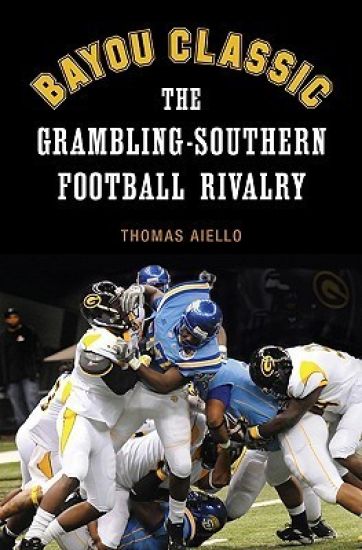
The annual clash in New Orleans between the Grambling State University Tigers and the Southern University Jaguars represents the fiercest and most anticipated in-state football rivalry in Louisiana. The most significant national game to feature historically black colleges and universities is more than a contest; the Bayou Classic is a lavish event, featuring celebrities, a fan festival, and a halftime ""Battle of the Bands"" that offers an intensity equal to that of the gridiron. In Bayou Classic, Thomas Aiello chronicles the history of the game and explores the two schools' broader significance to Louisiana, to sports, and to the black community.When the Southern University Bushmen football team traveled to Monroe, Louisiana, to play the Tigers of Louisiana Negro Normal and Industrial Institute for the first time on Armistice Day, 1932, few realized they were witnessing the birth of a phenomenon. Aiello recounts Southern's early dominance over the smaller, two-year institution; Southern's acceptance into the Southwestern Athletic Conference; Grambling's hiring of the legendary Eddie Robinson, who would lead the Tigers to 408 wins between 1941 and 1997; Grambling's first victory over Southern; and years of alternating home and away games. In 1974, the rivalry found a neutral site in New Orleans -- first at Tulane Stadium and then the Superdome -- and became the ""Bayou Classic."" An NBC television contract introduced the Bayou Classic to a nationwide audience and completed the transformation of the game into a major event. The Bayou Classic remains the only nationally broadcast game between two historically black schools. Aiello supplements his colorful narrative with period photographs and informative appendices providing game results, statistics, and all-star teams from every year the schools have played. ""To appreciate the rivalry,"" Coach Eddie Robinson once noted, ""you have to realize Grambling and Southern fans are close friends, as well as relatives."" Bayou Classic offers a splendid history for fans, friends, and those who want to know more about this special game.
Jim Crow's Last Stand

Jim Crow's Last Stand

Thomas Aiello

Louisiana State University Press
2015
sidottu
The last remnant of the racist Redeemer agenda in the Louisiana's legal system, the nonunanimous jury-verdict law permits juries to convict criminal defendants with only ten out of twelve votes. A legal oddity among southern states, the ordinance has survived multiple challenges since its ratification in 1880. Despite the law's long history, few are aware of its existence, its original purpose, or its modern consequences. At a time when Louisiana's penal system has fallen under national scrutiny, Jim Crow's Last Stand presents a timely, penetrating, and concise look at the history of this law's origins and its troubling legacy. The nonunanimous jury-verdict law originally allowed a guilty verdict with only nine juror votes, funneling many of those convicted into the state's burgeoning convict lease system. Yet the law remained on the books well after convict leasing ended. Historian Thomas Aiello describes the origins of the statute in Bourbon Louisiana-a period when white Democrats sought to redeem their state after Reconstruction-its survival through the civil rights era of the 1950s and 1960s, and the Supreme Court's decision in Johnson v. Louisiana (1972), which narrowly validated the state's criminal conviction policy. Spanning over a hundred years of Louisiana law and history, Jim Crow's Last Stand investigates the ways in which legal policies and patterns of incarceration contribute to a new form of racial inequality.
Jim Crow's Last Stand

Jim Crow's Last Stand

Thomas Aiello

Louisiana State University Press
2019
nidottu
A remnant of the racist post-Reconstruction Redeemer sociopolitical agenda, Louisiana's nonunanimous jury-verdict law permitted juries to convict criminal defendants with only nine, and later ten, out of twelve votes: a legal oddity. On the surface, it was meant to speed convictions. In practice, the law funneled many convicts- especially African Americans- into Louisiana's burgeoning convict lease system. Although it faced multiple legal challenges through the years, the law endured well after convict leasing had ended. Few were aware of its existence, let alone its original purpose. In fact, the original publication of Jim Crow's Last Stand was one of the first attempts to call attention to the historical injustice caused by this law. This updated edition of Jim Crow's Last Stand unpacks the origins of the statute in Bourbon Louisiana, traces its survival through the civil rights era, and ends with the successful effort to overturn the nonunanimous jury practice, a policy that officially went into effect on January 1, 2019.
The Trouble in Room 519

The Trouble in Room 519

Thomas Aiello

Louisiana State University Press
2021
nidottu
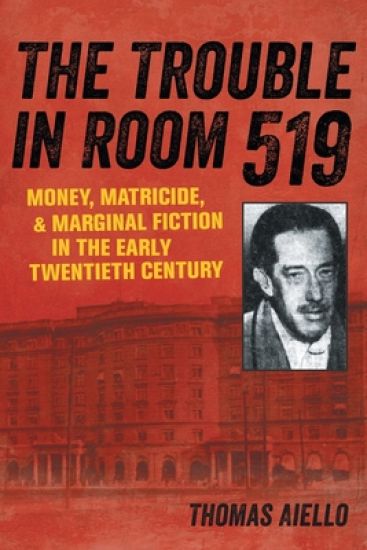
At approximately seven o'clock in the evening on May 7, 1950, Gordon Malherbe Hillman filled an empty bottle with water, capped it, and walked into his mother's room in the pair's fifth-floor suite at Boston's luxurious Copley Plaza Hotel. He then edged up behind the semi-invalid woman and bludgeoned her to death. Hotel staff had planned to evict the two the following day after several weeks of unpaid rent. Mounting debts had finally broken the fifty-year-old Hillman, a now-struggling author of mixed success, but it had not always been that way, as Thomas Aiello shows in his study of the life and work of this forgotten midcentury figure.As a youth, Hillman attended the prestigious Noble and Greenough School near Boston. Pursuing a career as a writer, he published several dozen pieces of short fiction and a critically acclaimed novel, Fortune's Cup (1941). Hollywood studios purchased the rights to two of his stories and made them into films, The Great Man Votes (1939) and Here I Am a Stranger (1940). But Hillman remained, for the most part, a middling magazine writer like the majority of fiction authors working during the Depression. Although most did not resort to acts of manic violence, Hillman's tenuous position in literary circles, along with his gradual descent into financial ruin, proved a far more common tale than the stories of literary success often pored over by critics and historians of this period.In The Trouble in Room 519: Money, Matricide, and Marginal Fiction in the Early Twentieth Century, Aiello weaves a compelling true crime narrative into his exploration of the economics of magazine fiction and the strains placed on authors by the publishing industry prior to World War II. Examining Hillman's writing as exemplary of Depression-era popular fiction, Aiello includes eight stories written by Hillman and originally published in prominent midcentury American magazines, including Collier's, Liberty, and McCall's, to provide additional context and insight into this trying time and tragic life.
Bound Labor in the Turpentine Belt

Bound Labor in the Turpentine Belt

Thomas Aiello

University Press of Florida
2024
sidottu
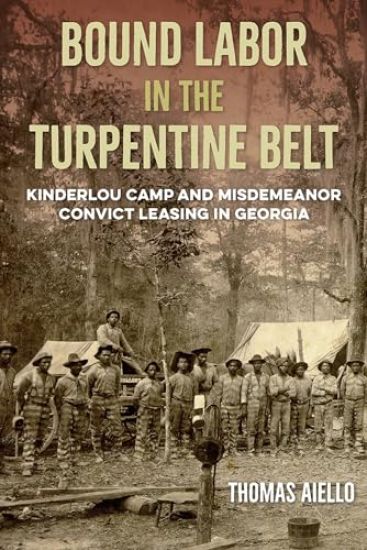
Uncovering a little-known system of bound labor in the post-Reconstruction South After the constitutional end to slavery in the United States, southern white landowners replaced labor by enslaved people with systems of bound labor in which people worked to pay off debts or legal fines. Through the story of a labor camp in Georgia, Thomas Aiello takes a close look at the Deep South’s dependence on debt peonage and convict leasing systems during the post-Reconstruction era and draws attention to a form of bound labor that has not been discussed by scholars of racialized incarceration. At the center of this study is the Kinderlou labor camp, which was owned by the prominent white McRee family of Valdosta. In south Georgia and north Florida, debt peonage and felony convict leasing operated separately from an often overlooked third system: misdemeanor convict leasing. This system was largely unregulated by prison officials, leading to abuses of persons with convictions working in the turpentine industry and the kidnapping of many Black residents of the area who had never been charged with crimes. Unlike other work camps, Kinderlou deployed all three systems to bolster its workforce, making it a unique manifestation of the region’s exploitative labor operations. Through deep archival research, Aiello uncovers injustices that drove local individuals who were imprisoned to work with federal prosecutors to seek relief and publicize the abuses they saw and experienced. The nexus of racism, work, and incarceration seen at Kinderlou is shown here to have been a form of slavery a half century after slavery’s official “end.” It also casts a long shadow on today’s carceral system. Publication of this work made possible by a Sustaining the Humanities through the American Rescue Plan grant from the National Endowment for the Humanities.
Bound Labor in the Turpentine Belt

Bound Labor in the Turpentine Belt

Thomas Aiello

University Press of Florida
2024
pokkari
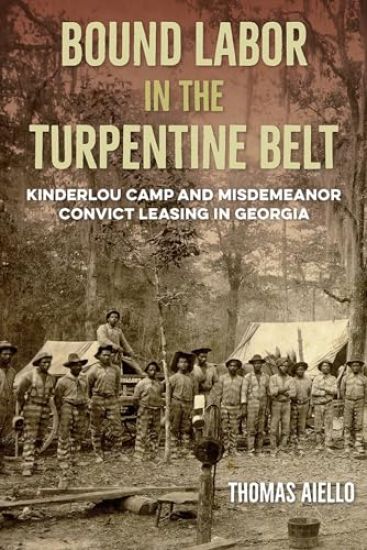
Uncovering a little-known system of bound labor in the post-Reconstruction South After the constitutional end to slavery in the United States, southern white landowners replaced labor by enslaved people with systems of bound labor in which people worked to pay off debts or legal fines. Through the story of a labor camp in Georgia, Thomas Aiello takes a close look at the Deep South’s dependence on debt peonage and convict leasing systems during the post-Reconstruction era and draws attention to a form of bound labor that has not been discussed by scholars of racialized incarceration. At the center of this study is the Kinderlou labor camp, which was owned by the prominent white McRee family of Valdosta. In south Georgia and north Florida, debt peonage and felony convict leasing operated separately from an often overlooked third system: misdemeanor convict leasing. This system was largely unregulated by prison officials, leading to abuses of persons with convictions working in the turpentine industry and the kidnapping of many Black residents of the area who had never been charged with crimes. Unlike other work camps, Kinderlou deployed all three systems to bolster its workforce, making it a unique manifestation of the region’s exploitative labor operations. Through deep archival research, Aiello uncovers injustices that drove local individuals who were imprisoned to work with federal prosecutors to seek relief and publicize the abuses they saw and experienced. The nexus of racism, work, and incarceration seen at Kinderlou is shown here to have been a form of slavery a half century after slavery’s official “end.” It also casts a long shadow on today’s carceral system. Publication of this work made possible by a Sustaining the Humanities through the American Rescue Plan grant from the National Endowment for the Humanities.
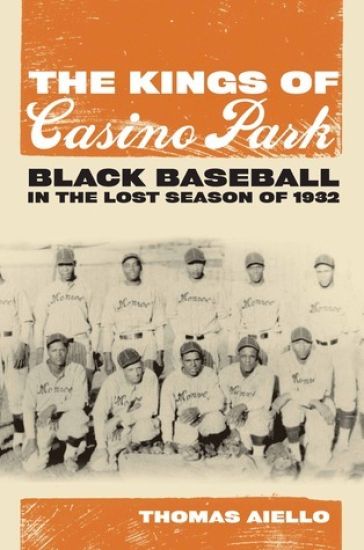
The Kings of Casino Park

The Kings of Casino Park

Thomas Aiello

The University of Alabama Press
2011
sidottu
In the 1930s, Monroe, Louisiana, was a town of twenty-six thousand in the northeastern corner of the state, an area described by the New Orleans Item as the 'lynch law center of Louisiana.' race relations were bad, and the Depression was pitiless for most, especially for the working class--a great many of whom had no work at all or seasonal work at best. Yet for a few years in the early 1930s, this unlikely spot was home to the Monarchs, a national-caliber Negro League baseball team. Crowds of black and white fans eagerly filled their segregated grandstand seats to see the players who would become the only World Series team Louisiana would ever generate, and the first from the American South. By 1932, the team had as good a claim to the national baseball championship of black America as any other. Partisans claim, with merit, that league officials awarded the National Championship to the Chicago American Giants in flagrant violation of the league's own rules: times were hard and more people would pay to see a Chicago team than an outfit from the Louisiana back country. Black newspapers in the South rallied to support Monroe's cause, railing against the league and the bias of black newspapers in the North, but the decision, unfair though it may have been, was also the only financially feasible option for the league's besieged leadership, who were struggling to maintain a black baseball league in the midst of the Great Depression. Aiello addresses long-held misunderstandings and misinterpretations of the Monarchs' 1932 season. He tells the almost-unknown story of the team--its time, its fortunes, its hometown--and positions black baseball in the context of American racial discrimination. He illuminates the culture-changing power of a baseball team and the importance of sport in cultural and social history.
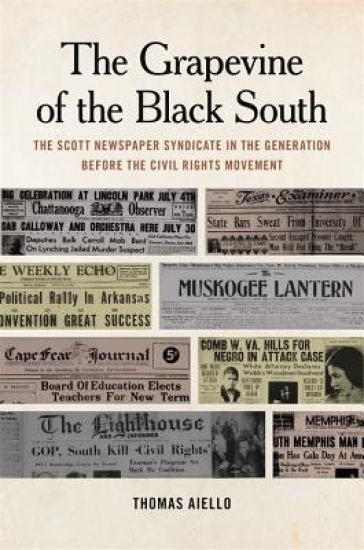
The Grapevine of the Black South

The Grapevine of the Black South

Thomas Aiello

University of Georgia Press
2018
pokkari
In the summer of 1928, William Alexander Scott began a small four-page weekly with the help of his brother Cornelius. In 1930 his Atlanta World became a semiweekly, and the following year W. A. began to implement his vision for a massive newspaper chain based out of Atlanta: the Southern Newspaper Syndicate, later dubbed the Scott Newspaper Syndicate. In April 1931 the World had become a triweekly, and its reach began drifting beyond the South.With The Grapevine of the Black South, Thomas Aiello offers the first critical history of this influential newspaper syndicate, from its roots in the 1930s through its end in the 1950s. At its heyday, more than 240 papers were associated with the Syndicate, making it one of the biggest organs of the black press during the period leading up to the classic civil rights era (1955–68).In the generation that followed, the Syndicate helped formalize knowledge among the African American population in the South. As the civil rights movement exploded throughout the region, black southerners found a collective identity in that struggle built on the commonality of the news and the subsequent interpretation of that news. Or as Gunnar Myrdal explained, the press was “the chief agency of group control. It [told] the individual how he should think and feel as an American Negro and create[d] a tremendous power of suggestion by implying that all other Negroes think and feel in this manner.” It didn’t create a complete homogeneity in black southern thinking, but it gave thinkers a similar set of tools from which to draw.
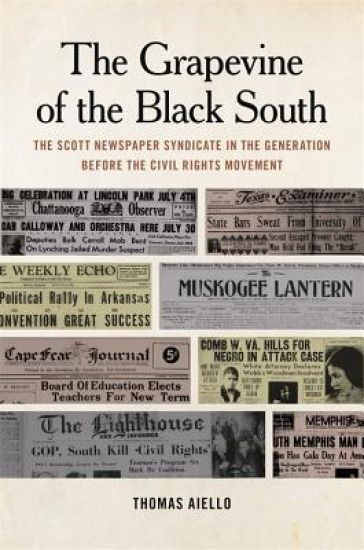
The Grapevine of the Black South

The Grapevine of the Black South

Thomas Aiello

University of Georgia Press
2018
sidottu
In the summer of 1928, William Alexander Scott began a small four-page weekly with the help of his brother Cornelius. In 1930 his Atlanta World became a semiweekly, and the following year W. A. began to implement his vision for a massive newspaper chain based out of Atlanta: the Southern Newspaper Syndicate, later dubbed the Scott Newspaper Syndicate. In April 1931 the World had become a triweekly, and its reach began drifting beyond the South.With The Grapevine of the Black South, Thomas Aiello offers the first critical history of this influential newspaper syndicate, from its roots in the 1930s through its end in the 1950s. At its heyday, more than 240 papers were associated with the Syndicate, making it one of the biggest organs of the black press during the period leading up to the classic civil rights era (1955–68).In the generation that followed, the Syndicate helped formalize knowledge among the African American population in the South. As the civil rights movement exploded throughout the region, black southerners found a collective identity in that struggle built on the commonality of the news and the subsequent interpretation of that news. Or as Gunnar Myrdal explained, the press was “the chief agency of group control. It [told] the individual how he should think and feel as an American Negro and create[d] a tremendous power of suggestion by implying that all other Negroes think and feel in this manner.” It didn’t create a complete homogeneity in black southern thinking, but it gave thinkers a similar set of tools from which to draw.
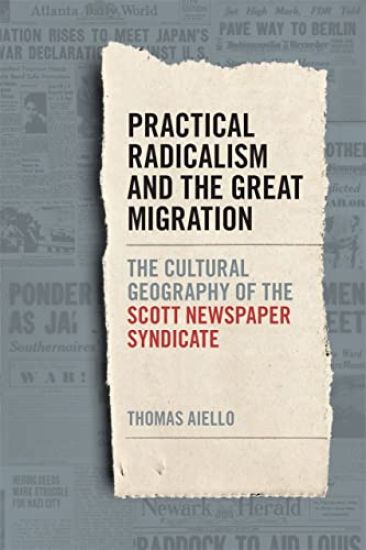
Practical Radicalism and the Great Migration

Practical Radicalism and the Great Migration

Thomas Aiello

UNIVERSITY OF GEORGIA PRESS
2023
pokkari
This book’s predecessor, The Grapevine of the Black South, emphasized the owners of the Atlanta Daily World and its operation of the Scott Newspaper Syndicate between 1931 and 1955. In a pragmatic effort to avoid racial confrontation developing from white fear, newspaper editors developed a practical radicalism that argued on the fringes of racial hegemony, saving their loudest vitriol for tyranny that was not local and thus left no stake in the game for would-be white saboteurs. Thomas Aiello reexamined historical thinking about the Depression-era Black South, the information flow of the Great Migration, the place of southern newspapers in the historiography of Black journalism, and even the ideological and philosophical underpinnings of the civil rights movement.With Practical Radicalism and the Great Migration, Aiello continues that analysis by tracing the development and trajectory of the individual newspapers of the Syndicate, evaluating those with surviving issues, and presenting them as they existed in proximity to their Atlanta hub. In so doing, he emphasizes the thread of practical radicalism that ran through Syndicate editorial policy. Practical Radicalism and the Great Migration is a supplement to The Grapevine of the Black South, providing a fuller picture of the Scott Newspaper Syndicate and the Black press in the 1930s, 1940s, and 1950s.
Practical Radicalism and the Great Migration

Practical Radicalism and the Great Migration

Thomas Aiello

UNIVERSITY OF GEORGIA PRESS
2023
sidottu
This book’s predecessor, The Grapevine of the Black South, emphasized the owners of the Atlanta Daily World and its operation of the Scott Newspaper Syndicate between 1931 and 1955. In a pragmatic effort to avoid racial confrontation developing from white fear, newspaper editors developed a practical radicalism that argued on the fringes of racial hegemony, saving their loudest vitriol for tyranny that was not local and thus left no stake in the game for would-be white saboteurs. Thomas Aiello reexamined historical thinking about the Depression-era Black South, the information flow of the Great Migration, the place of southern newspapers in the historiography of Black journalism, and even the ideological and philosophical underpinnings of the civil rights movement.With Practical Radicalism and the Great Migration, Aiello continues that analysis by tracing the development and trajectory of the individual newspapers of the Syndicate, evaluating those with surviving issues, and presenting them as they existed in proximity to their Atlanta hub. In so doing, he emphasizes the thread of practical radicalism that ran through Syndicate editorial policy. Practical Radicalism and the Great Migration is a supplement to The Grapevine of the Black South, providing a fuller picture of the Scott Newspaper Syndicate and the Black press in the 1930s, 1940s, and 1950s.
Model Airplanes Are Decadent and Depraved

Model Airplanes Are Decadent and Depraved

Thomas Aiello

Northern Illinois University Press
2015
pokkari
Model Airplanes are Decadent and Depraved tells the story of the American glue-sniffing epidemic of the 1960s, from the first reports of use to the unsuccessful crusade for federal legislation in the early 1970s. The human obsession with inhalation for intoxication has deep roots, from the oracle at Delphi to Judaic biblical ritual. The discovery of nitrous oxide, ether, and chloroform in the late eighteenth and early nineteenth centuries and the later development of paint thinners, varnishes, lighter fluid, polishes, and dry-cleaning supplies provided a variety of publicly available products with organic solvents that could be inhaled for some range of hallucinogenic or intoxicating effect. Model airplane glue was one of those products, but did not appear in warnings until the first reports of problematic behavior appeared in 1959, when children in several western cities were arrested for delinquency after huffing glue. Newspaper coverage both provided the initial shot across the bow for research into the subject and convinced children to give it a try. This "epidemic" quickly spread throughout the nation and the world. Though the hobby industry began putting an irritant in its model glue products in 1969 to make them less desirable to sniff, that wasn't what stopped the epidemic. Just as quickly as it erupted, the epidemic stopped when the media coverage and public hysteria stopped, making it one of the most unique epidemics in American history. The nation's focus drifted from adolescent glue sniffing to the countercultural student movement, with its attendant devotion to drug use, opposition to the Vietnam War, southern race policies, and anti-bureaucracy in general. This movement came to embody a tumultuous era fraught with violence, civil disobedience, and massive sea changes in American life and law—glue sniffing faded by comparison.
On Carpentry

On Carpentry

Thomas Aiello

Lulu.com
2011
pokkari
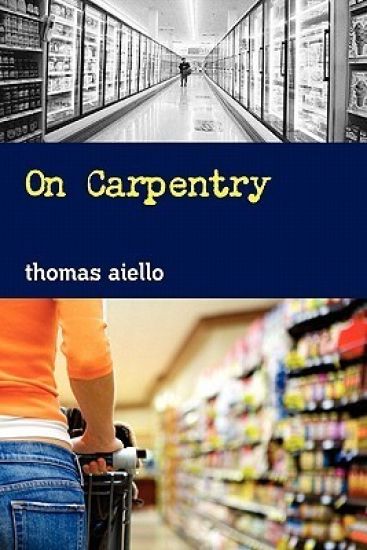
HOW TO DEAL WITH CANCER, LOVE, LOSS, ADDICTION, AND DEATH IN THE SOUTH, WITHOUT GOING COMPLETELY BAT-SHIT CRAZY. The more clairvoyant amongst the citizens might have seen the plague coming. The town's street design, after all, told the story: had the roads of Carbondale, Arkansas been the constellation lines between stars, reaching with the stretch of their potholes and paint to the homes of those infected, they would have told the story of the tripartite battle between Hercules, Hydra, and Cancer itself. On Carpentry is dually a comedy and tragedy about a mysterious outbreak of pancreatic cancer in Carbondale. Like all Southern stories, the novel is replete with crazy old ladies, renegade street ministers, and frustrated lemonade salesmen. There is cocaine. There are Easybake Potatoes. Such are the Confederate flags of our time, flapping in the cool, cancer-ridden, Southern wind.
The Tyranny of Architecture: A Vegan Apologetic
The Tyranny of Architecture is a full philosophical defense of veganism, one that defends the practice in a way fundamentally unique among such arguments. It makes the case that in a human society built on artificial constructs, the only demonstrable ethics not part of an imagined community is that of respecting the right to life and contentment, construed for farmed animals as adequate food, space, and other basic amenities, along with the right not to be tortured and killed for the unnecessary whims of humans existing mentally within a subset of artificial constructs that do not include those nonhuman animals.
The Battle for the Souls of Black Folk

The Battle for the Souls of Black Folk

Thomas Aiello

Praeger Publishers Inc
2016
sidottu
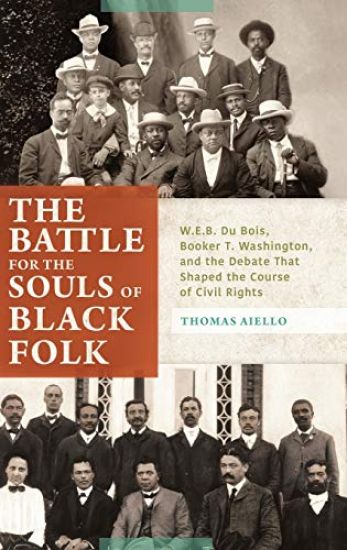
In the 20 years between 1895 and 1915, two key leaders—Booker T. Washington and W.E.B. Du Bois—shaped the struggle for African American rights. This book examines the impact of their fierce debate on America's response to Jim Crow and positions on civil rights throughout the 20th century—and evaluates the legacies of these two individuals even today.The debate between W.E.B. Du Bois and Booker T. Washington on how to further social and economic progress for African Americans lasted 20 years, from 1895 to Washington's death in 1915. Their ongoing conversation evolved over time, becoming fiercer and more personal as the years progressed. But despite its complexities and steadily accumulating bitterness, it was still, at its heart, a conversation—an impassioned contest at the turn of the century to capture the souls of black folk.This book focuses on the conversation between Washington and Du Bois in order to fully examine its contours. It serves as both a document reader and an authored text that enables readers to perceive how the back and forth between these two individuals produced a cacophony of ideas that made it anything but a bipolar debate, even though their expressed differences would ultimately shape the two dominant strains of activist strategy. The numerous chapters on specific topics and historical events follow a preface that presents an overview of both the conflict and its historiographical treatment; evaluates the legacies of both Washington and Du Bois, emphasizing the trajectories of their theories beyond 1915; and provides an explanation of the unique structure of the work.
The Life and Times of Louis Lomax

The Life and Times of Louis Lomax

Thomas Aiello

Duke University Press
2021
sidottu
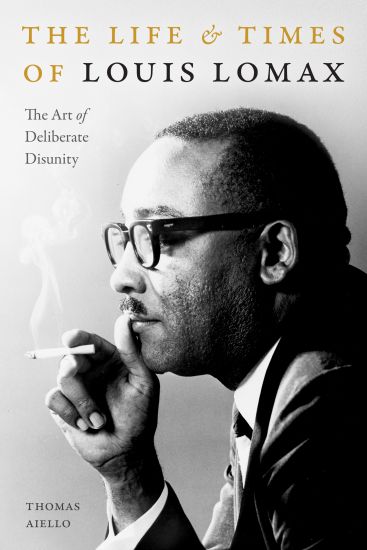
Syndicated television and radio host. Serial liar. Pioneering journalist. Convicted criminal. Close ally of Malcolm X and Martin Luther King Jr. Publicity-seeking provocateur. Louis Lomax's life was a study in contradiction. In this biography, Thomas Aiello traces the complicated and fascinating arc of Lomax's life and career, showing how the contradictions, tumult, and inconsistencies that marked his life reflected those of 1960s America. Aiello takes readers from Lomax's childhood in the Deep South to his early confidence schemes to his emergence as one of the loudest and most influential voices of the civil rights movement. Regardless of what political position he happened to take at any given moment, Lomax preached “the art of deliberate disunity,” in which the path to democracy could only be achieved through a diversity of opinions. Engaging and broad in scope, The Life and Times of Louis Lomax is the definitive study of one of the civil rights era's most complicated, important, and overlooked figures.
The Life and Times of Louis Lomax

The Life and Times of Louis Lomax

Thomas Aiello

Duke University Press
2021
pokkari
Syndicated television and radio host. Serial liar. Pioneering journalist. Convicted criminal. Close ally of Malcolm X and Martin Luther King Jr. Publicity-seeking provocateur. Louis Lomax's life was a study in contradiction. In this biography, Thomas Aiello traces the complicated and fascinating arc of Lomax's life and career, showing how the contradictions, tumult, and inconsistencies that marked his life reflected those of 1960s America. Aiello takes readers from Lomax's childhood in the Deep South to his early confidence schemes to his emergence as one of the loudest and most influential voices of the civil rights movement. Regardless of what political position he happened to take at any given moment, Lomax preached “the art of deliberate disunity,” in which the path to democracy could only be achieved through a diversity of opinions. Engaging and broad in scope, The Life and Times of Louis Lomax is the definitive study of one of the civil rights era's most complicated, important, and overlooked figures.