Kirjahaku
Etsi kirjoja tekijän nimen, kirjan nimen tai ISBN:n perusteella.
1000 tulosta hakusanalla Thomas Beller
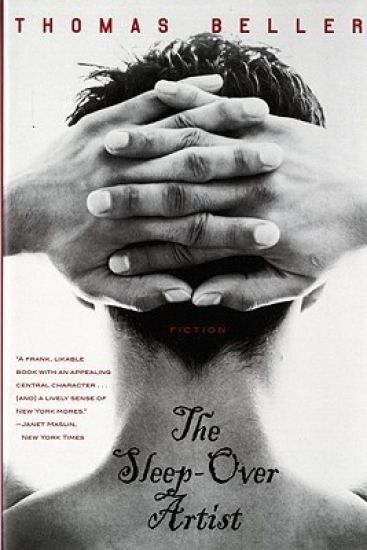
Writing with the sparkling wit and insight of his highly praised debut, Seduction Theory ("Brilliantly captures the great expectations and recurring ambivalence of youth."--The New York Times), Thomas Beller continues to plumb the adventures of his hero, Alex Fader, a youthful existentialist and sensualist with an insatiable appetite for trouble. The Sleep-Over Artist is an account of critical stages in Alex's life, mapping his progress from youthful delinquent to filmmaker whose career begins when he makes a documentary film exposing the prep school from which he has been expelled. Alex longs for the taste of family life that the early death of his father has denied him. As a young boy he sleeps over at his friends' houses and ingratiates himself with their families; as a young man he extends his sleep-overs to the lives of women, culminating in the ultimate sleep-over--an affair in England with a glamorous, slightly older woman, the mother of a young boy. Beller has a pitch-perfect ear for emotional nuance and a microscopic eye for rendering the wordless moments when a relationship catches fire and all too often begins to falter. The high-wire tension that electrifies The Sleep-Over Artist is Beller's ingenious portrait of a young man who longs to disappear and belong all at the same time. "Hilarious....captures perfectly the myriad stages of fear, discovery and elation that mark one's first sexual experience."--The New York Times Book Review, Katherine Dieckmann, 16 July 2000 " W]ell-crafted stories recall the witty phrasing of Updike, the poignant nostalgia of Cheever, the earnest but confused innocence of Salinger."--Library Journal "Featuring a New York that, like Kundera's Prague, is a vast hive of seductions....A moving portrait."--Publishers Weekly, 17 April 2000 "The gentle humor and delicacy of Sleep-Over Artist remind me of the stories of another young cosmopolite, F. Scott Fitzgerald."--Stewart O'Nan, author of A Prayer for the Dying "Fresh, sophisticated and most of all utterly readable...strikes a perfect balance between timely ironies and perennial emotional truths."--Eva Hoffman "Tom Beller is gifted with a wry, dry appreciation of life's sweet and unlikely subtleties."--Elizabeth Wurtzel, author of Prozac Nation and Bitch "A fine novel of Manhattan manners."--New York Observer

In "Seduction Theory," Thomas Beller writes of lonely friends and groping lovers, of awkward dates and dreamy yearnings of young adults caught in the lights of modern Manhattan. These ten stories capture those moments that change our lives and those that slip past us forever.
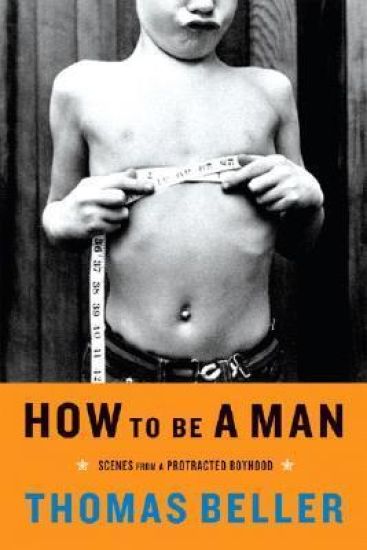
Acclaimed fiction writer Thomas Beller digs deep into his own history in this humorous and insightful collection about the state of masculinity. With sharp and engaging eloquence he discourses on T-shirts; being your mother's date at the Academy Awards; life at a bagel factory; the irrational pleasures of old American cars and the mysterious disappearance of the author's own particular vehicle from a street in downtown Manhattan; love, sex, and breakups in an office environment; the social ecology of street basketball including the sudden peril befalling a particular court in Manhattan and the heartwarming efforts of previously disparate community members to save it; coaches; the death of a parent; getting over J. D. Salinger; and an attempt to build a complicated piece of furniture for a beloved. Through stints as a bike messenger, a drummer, a boyfriend and possibly, potentially, finally a husband, Beller writes about the life-changing effects of love and marriage past, present, and future."
J.D. Salinger published his first story in The New Yorker at age twenty-nine. Three years later came The Catcher in The Rye, a novel that has sold more than sixty-five million copies and achieved mythic status since its publication in 1951. Subsequent books introduced a new type in contemporary literature: the introspective, hyperarticulate Glass family, whose stage is the Upper East Side. Yet we still know little about Salinger’s personal life and less about his character. This was by design. In 1953, determined to escape media attention, Salinger fled to New Hampshire, where he would live until his death in 2010. Even there, privacy proved elusive: a Time cover story; a memoir by Joyce Maynard (who dropped out of Yale as a freshman to move in with him); and a legal battle over an unauthorized biography, which darkened his last decades. Yet he continued to write, and is rumored to have left behind a mass of work that his estate intends to publish. Thomas Beller, a novelist who grew up in Manhattan, is the ideal guide to Salinger’s world. He gives us a sense of life at The New Yorker (where he was once a staff writer) and a portrait of editor Gus Lobrano, whose relationship with Salinger has rarely been written about. He visits Salinger’s summer camp and the apartment buildings where the author lived. He reads the famous works with obsessive attention, finding in them an image of his own life experience. The result is a quest biography about learning to know yourself in order to know your subject. J.D. Salinger is the triumph of a rare literary form: biography as work of art.
For players, coaches, writers, and fans, basketball is a science and an art, a religious sacrament, a source of entertainment, and a way of interacting with the world. In Lost in the Game Thomas Beller entwines these threads with his lifetime's experience as a player and journalist, roaming NBA locker rooms and city parks as a basketball flaneur in search of the meaning of the modern game. He captures the magnificence and mastery of today’s most accomplished NBA players while paying homage to the devotion of countless congregants in the global church of pickup basketball. He shares his own stories from the courts, meditating on basketball’s role in city life and its impact on the athlete’s psyche as he moves from youth to middle age. Part journalistic account, part memoir of a slightly talented player whose main gift is being tall, Lost in the Game charts the game’s inexorable gravitational hold on those who love it.
In his latest essay collection, Thomas Beller trains his piercing literary eye on how a single, seismic event indelibly shapes the trajectory of the common and mundane experiences of one's life. Weaving together a charming set of autobiographical stories, Beller interrogates the randomness and contingencies that separate sadness from joy, death from life. His father escaped the Nazis, only to die in America from cancer when Beller was nine years old. Beller measures how his loss impacted his life as the father of two young children and became a catalyst for understanding and an ever-present sorrow. At the same time, ordinary moments--from retrieving an iPod from the subway tracks or encountering the police at a Kinks concert to observing his young tutued ballerina daughter at a gas station--lead to instances of penetrating insight, self-deprecation, and flashes of humor. Degas at the Gas Station presents an endearing and bracingly honest portrait of the author as an ever-curious observer of the mysteries and profundities of everyday life.
Bellérophon, Tragédie. Académie Royale de Musique, l'An 1679
Bernard De Fontenelle; Thomas Corneille
Hachette Livre - BNF
2019
pokkari
Bellerophon, Tragedie. Academie Royale de Musique, Paris, 1679
Bernard De Fontenelle; Thomas Corneille
Hachette Livre - BNF
2020
pokkari
Bellérophon, tragédie. Académie royale de musique
Bernard de Fontenelle; Thomas Corneille
Hachette Livre Bnf
2022
pokkari
Bellerophon, tragedie. Academie royale de musique, Paris, 1679, St Germain en Laye, 3 janvier 1680
Bernard de Fontenelle; Thomas Corneille
Hachette Livre Bnf
2022
pokkari
Hello, Robot
Mateo Kries; Christoph Thun-Hohenstein; Katrien Laporte; Hortensia Völckers; Alexander Farenholtz; Ulrich Spiesshofer; Ameile Klein; Marlies Wirth; Gesche Joost; Bruce Stirling; Fredo De Smet; Frauke Zeller; David Harris Smith; Thomas Geisler; Fiona Raby; Anthony Dunne; Carlo Ratti; Daniele Belleri; Rosi Braidotti; et al
Vitra Design Museum
2017
nidottu
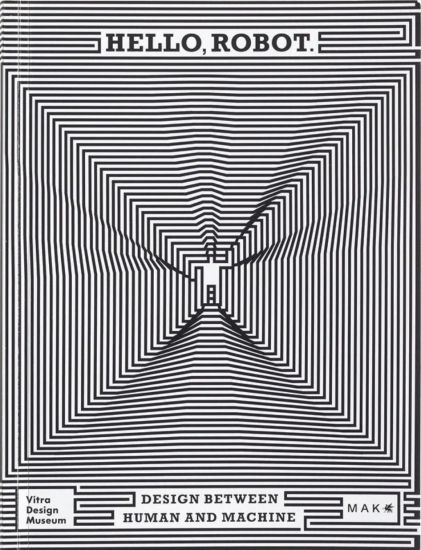
Hello, Robot. Design Between Human and Machine investigates how robotics is becoming part of our everyday lives. The exhibitions shows that design in its traditional function as a mediator is indispensable if robots are to become a visible reality and not just remain hidden in washing machines, cars and cash machines. The volume clarifies where we already encounter these intelligent machines and where we may come across them in the near future: in industry, in the military and in everyday settings; at nurseries and retirement homes; in our bodies and in the cloud; when shopping and having sex; in video games and, of course, in film and literature. In a series of in-depth essays and interviews, experts such as the science fiction author Bruce Sterling and the design duo Dunne & Raby explore the question of how we deal with our environment becoming increasingly digital, smarter and more autonomous. They highlight our often ambivalent relationship to new technologies and discuss the opportunities and challenges that are posed to us as individuals and as a society in this context. In this regard, Hello, Robot. broadens the scope of the discussion to the ethical and political questions with which we are faced today in the light of technological advances in robotics, whilst confronting us with the contradictions that are often found in the answers to these questions.
Para salvarse de la c rcel, Thomas Belger debe dilucidar el enigma de las muertes que acechan a un poblado perdido en el tiempo. Pero antes, debe lidiar con una joven enigm tica, un grupo de jovenzuelos inadaptados, y por supuesto, la mente asesina que se esconde bajo una leyenda de brujer a. Esta historia de misterio y desesperanza nos conducir a la ignota regi n llamada "Allasneda", una genial ambientaci n alternativa de las m gicas tierras del Sur de Chile, donde fantasmas y brujas, junto a la ciencia ficci n de la era Victoriana, recrean sendas f bulas protagonizadas por hombres intr pidos enfrentados a un mundo de prejuicios.