Kirjojen hintavertailu. Mukana 11 244 527 kirjaa ja 12 kauppaa.

Kirjahaku

Etsi kirjoja tekijän nimen, kirjan nimen tai ISBN:n perusteella.

1000 tulosta hakusanalla Thomas Cranmer

Thomas Cranmer

Thomas Cranmer

Diarmaid MacCulloch

Yale University Press
2016
pokkari
Thomas Cranmer, the architect of the Anglican Book of Common Prayer, was the archbishop of Canterbury who guided England through the early Reformation—and Henry VIII through the minefields of divorce. This is the first major biography of him for more than three decades, and the first for a century to exploit rich new manuscript sources in Britain and elsewhere.Diarmaid MacCulloch, one of the foremost scholars of the English Reformation, traces Cranmer from his east-Midland roots through his twenty-year career as a conventionally conservative Cambridge don. He shows how Cranmer was recruited to the coterie around Henry VIII that was trying to annul the royal marriage to Catherine, and how new connections led him to embrace the evangelical faith of the European Reformation and, ultimately, to become archbishop of Canterbury. By then a major English statesman, living the life of a medieval prince-bishop, Cranmer guided the church through the king's vacillations and finalized two successive versions of the English prayer book.MacCulloch skillfully reconstructs the crises Cranmer negotiated, from his compromising association with three of Henry's divorces, the plot by religious conservatives to oust him, and his role in the attempt to establish Lady Jane Grey as queen to the vengeance of the Catholic Mary Tudor. In jail after Mary's accession, Cranmer nearly repudiated his achievements, but he found the courage to turn the day of his death into a dramatic demonstration of his Protestant faith.From this vivid account Cranmer emerges a more sharply focused figure than before, more conservative early in his career than admirers have allowed, more evangelical than Anglicanism would later find comfortable. A hesitant hero with a tangled life story, his imperishable legacy is his contribution in the prayer book to the shape and structure of English speech and through this to the molding of an international language and the theology it expressed.
Thomas Cranmer

Thomas Cranmer

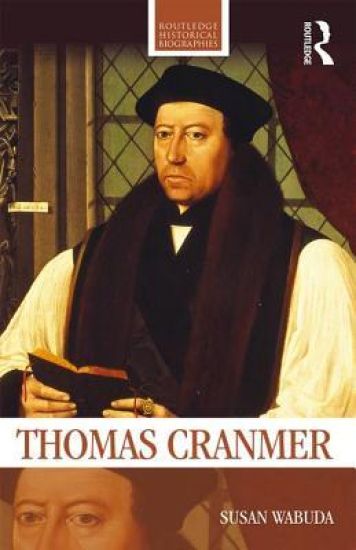
Susan Wabuda

Routledge
2017
sidottu
Thomas Cranmer’s place in English history is firmly established, yet the complexities of his character have remained obscure and he continues to be one of the most problematic figures of the Tudor period. Susan Wabuda’s biography sheds fresh light not only on the private Cranmer, but also on the qualities that enabled him to master a shifting political landscape and to build a new English Church. Athletic by nature, Cranmer enjoyed hunting and he was a keen collector of books. He was blessed with several lifelong friendships and twice risked his career by marrying the women he loved. A skilled debater and a deft politician, Cranmer sought to balance his long-term plans for the Church against the immediate demands of survival at court. Obedient at all times, yet never entirely trustworthy, he had to reconcile the will of his God with the will of the monarch he served. For too long, Cranmer’s legacy has overshadowed the life of the man himself, but this new biography enriches and extends our understanding of both. Accessible and informative, it will be essential reading for students and scholars of the English Reformation and the Tudor age.
Thomas Cranmer

Thomas Cranmer

Susan Wabuda

Routledge
2017
nidottu
Thomas Cranmer’s place in English history is firmly established, yet the complexities of his character have remained obscure and he continues to be one of the most problematic figures of the Tudor period. Susan Wabuda’s biography sheds fresh light not only on the private Cranmer, but also on the qualities that enabled him to master a shifting political landscape and to build a new English Church. Athletic by nature, Cranmer enjoyed hunting and he was a keen collector of books. He was blessed with several lifelong friendships and twice risked his career by marrying the women he loved. A skilled debater and a deft politician, Cranmer sought to balance his long-term plans for the Church against the immediate demands of survival at court. Obedient at all times, yet never entirely trustworthy, he had to reconcile the will of his God with the will of the monarch he served. For too long, Cranmer’s legacy has overshadowed the life of the man himself, but this new biography enriches and extends our understanding of both. Accessible and informative, it will be essential reading for students and scholars of the English Reformation and the Tudor age.
Thomas Cranmer's Doctrine of Repentance

Thomas Cranmer's Doctrine of Repentance

Ashley Null

Oxford University Press
2001
sidottu
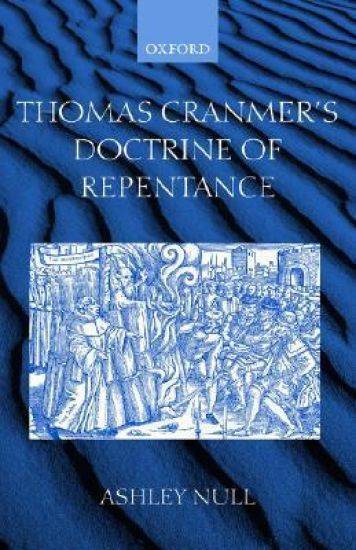
Self-serving lacky, self-deceiving puppet, Swiss Protestant partisan, or sensible Erasmian humanist: which, if any, was Thomas Cranmer? For centuries historians have offered often bitterly contradictory answers. Although Cranmer was a key participant in the changes to English life brought about by the Reformation, his reticent nature and lack of extensive personal writings have left a vacuum that in the past has too often been filled by scholarly prejudice or presumption. For the first time, however, this book examines in-depth little used manuscript sources to reconstruct Cranmer's theological development on the crucial Protestant doctrine of justification. The author explores Cranmer's cultural heritage, why he would have been attracted to Luther's thought, and then provides convincing evidence for the Reformed Protestant Augustinianism which Cranmer enshrined in the formularies of the Church of England. For Cranmer the glory of God was his love for the unworthy; the heart of theology was proclaiming this truth through word and sacrament. Hence, the focus of both was on the life of on-going repentance, remembering God's gracious love inspired grateful human love.
Thomas Cranmer's Doctrine of Repentance

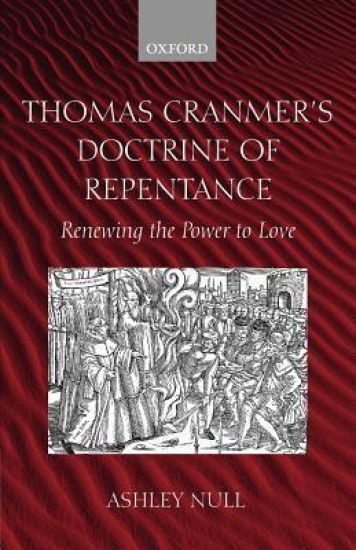
Thomas Cranmer's Doctrine of Repentance

Ashley Null

Oxford University Press
2006
nidottu
Self-serving lackey, self-deceiving puppet, Swiss Protestant partisan, or sensible Erasmian humanist: which, if any, was Thomas Cranmer? For centuries historians have offered often bitterly contradictory answers. Although Cranmer was a key participant in the changes to English life brought about by the Reformation, his reticent nature and lack of extensive personal writings have left a vacuum that in the past has too often been filled by scholarly prejudice or presumption. For the first time, however, this book examines in-depth little used manuscript sources to reconstruct Cranmer's theological development on the crucial Protestant doctrine of justification. The author explores Cranmer's cultural heritage, why he would have been attracted to Luther's thought, and then provides convincing evidence for the Reformed Protestant Augustinianism which Cranmer enshrined in the formularies of the Church of England. For Cranmer the glory of God was his love for the unworthy; the heart of theology was proclaiming this truth through word and sacrament. Hence, the focus of both was on the life of on-going repentance, remembering God's gracious love inspired grateful human love.
Thomas Cranmer, Theologian

Thomas Cranmer, Theologian

G.W. Bromiley

JAMES CLARKE CO LTD
2023
nidottu
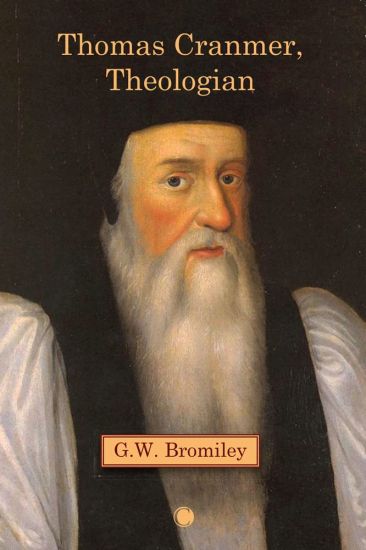
In his important evaluation of the theological leader of the English Reformation, G.W. Bromiley charts Cranmer's doctrinal views, scriptural interpretation and liturgical composition. His nuanced position on various controversial issues of the day, not least baptism, is articulated with clarity and care, and his ecumenical sensitivity is foregrounded. While arguably more adept as a scholar than as a creative theologian in his own right, Cranmer's writing nevertheless formed the cornerstone of future Anglican theology. Through his Articles of Religion (42, later reduced to 39) and the Book of Common Prayer, he set the parameters within which the Church of England was to operate. Perhaps most significantly, as Bromiley shows, his extensive citation of patristic sources established a precedent for his successors that continues today. Written by one of the great ecclesiastical historians of the twentieth century, Thomas Cranmer, Theologian is the essential starting point for understanding Cranmer's influence and legacy in the Anglican church.
Thomas Cranmer, Theologian

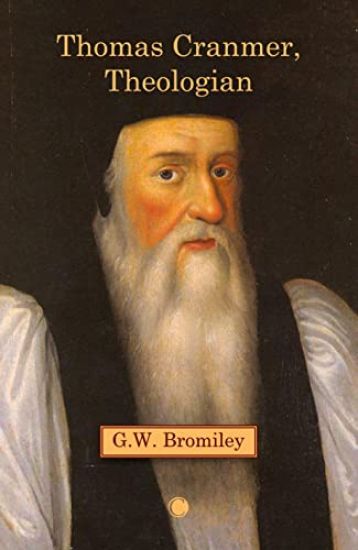
Thomas Cranmer, Theologian

G.W. Bromiley

JAMES CLARKE CO LTD
2023
sidottu
In his important evaluation of the theological leader of the English Reformation, G.W. Bromiley charts Cranmer's doctrinal views, scriptural interpretation and liturgical composition. His nuanced position on various controversial issues of the day, not least baptism, is articulated with clarity and care, and his ecumenical sensitivity is foregrounded. While arguably more adept as a scholar than as a creative theologian in his own right, Cranmer's writing nevertheless formed the cornerstone of future Anglican theology. Through his Articles of Religion (42, later reduced to 39) and the Book of Common Prayer, he set the parameters within which the Church of England was to operate. Perhaps most significantly, as Bromiley shows, his extensive citation of patristic sources established a precedent for his successors that continues today. Written by one of the great ecclesiastical historians of the twentieth century, Thomas Cranmer, Theologian is the essential starting point for understanding Cranmer's influence and legacy in the Anglican church.
Thomas Cranmer's Doctrine of the Eucharist

Thomas Cranmer's Doctrine of the Eucharist

Peter Newman Brooks

Palgrave Macmillan
1992
sidottu
'...essential reading for all students of the English Church.' Patrick Collinson Thomas Cranmer (1489-1556) is arguably the most controversial figure of the English Reformation. The sixteenth century was a period of fierce theological controversy and no doctrine concerned contemporaries more than the vexed issue of the Eucharist. Scholars have always found it notoriously difficult to determine Cranmer's conviction on this central matter of the Christian faith. This and many other questions that have long troubled Cranmer scholars receive fair and full treatment in this absorbing study. This book re-establishes itself as the definitive exposition of Cranmer's doctrine of the Eucharist.
Thomas Cranmer and the English Reformation 1489-1556
Published in 1965: It has been maintained by an eminent scholar recently dead that the chief content of modern history is the emancipation of conscience from the control of authority. From that point of view the student of Tudor times will not be exclusive in his choice of heroes. He will find room in his calendar of saints for More as well as for Cranmer. Both had grave imperfections, and both took their share in enforcing the claims of authority over those of conscience. Nor perhaps is it true to say that they died in order that we might be free; but they died for conscience' sake, and unless they and others had died conscience would still be in chains. That was Cranmer's service in the cause of humanity his Church owes him no less, for in the Book of Common Prayer he gave it the most effective of all its possessions.
Thomas Cranmer and the English Reformation 1489-1556
Published in 1965: It has been maintained by an eminent scholar recently dead that the chief content of modern history is the emancipation of conscience from the control of authority. From that point of view the student of Tudor times will not be exclusive in his choice of heroes. He will find room in his calendar of saints for More as well as for Cranmer. Both had grave imperfections, and both took their share in enforcing the claims of authority over those of conscience. Nor perhaps is it true to say that they died in order that we might be free; but they died for conscience' sake, and unless they and others had died conscience would still be in chains. That was Cranmer's service in the cause of humanity his Church owes him no less, for in the Book of Common Prayer he gave it the most effective of all its possessions.