"O'Boyle has researched and written a monumental book that should be mandatory reading for all CEOs and anyone concerned with business ethics." --The Philadelphia Inquirer"Superb . . . a spirited study of General Electric, and of its sometimes brilliant, sometimes bungling, but always ruthless boss, Jack Welch." --Chicago Sun-TimesWith convincing passion and meticulous research, Thomas F. O'Boyle explores the forces behind General Electric's rise to the top of Wall Street, questioning if GE, with chief executive officer Jack Welch at the helm, is still "bringing good things to life." Welch--explosive, profit-hungry, and pragmatic--catapulted GE's stocks to the top, up 1,155 percent from 1982 to 1997. O'Boyle argues that these astounding results have come only with the heavy price of employees' lives, blighted under the tyranny of "Neutron Jack" Welch, so named for his bomb-like ability to eliminate staff without disturbing surrounding operations. During Welch's reign, hard-nosed success tactics--unblinking downsizing, ruthless acquisition negotiations, and the virtual abandonment of manufacturing in favor of the more glamorous entertainment and financial services industries--coexist with scandals like price-fixing, pollution, and defense contract fraud. Sure to spark controversy, this gripping, comprehensive account begs the greater question: Is Jack Welch's GE a model company for business in the next century, or is it time to change the way the world does business? "Smoothly written and thoroughly researched." --USA Today"This book makes a valuable contribution to our understanding of corporate America. . . . Thomas F. O'Boyle persuades you that GE--Jack Welch's GE--brings bad things to life. In abundance." --Washington Monthly
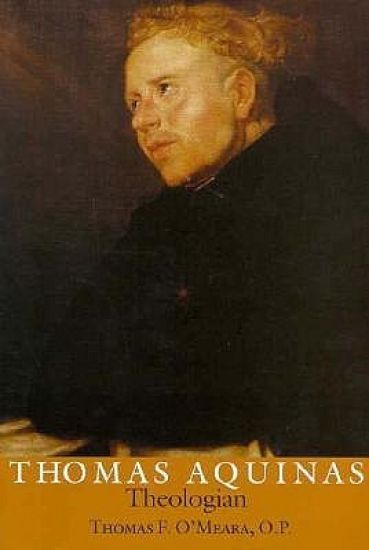
In Thomas Aquinas, Theologian Thomas O'Meara considers Aquinas the theologian and his influence, past and present. O'Meara focuses on Aquinas as teacher and preacher, and theology as the subject of his thought and most of his writings. Studying the Summa Theologiae as well as providing an overview of six centures of interpretation, O'Meara shows how few have understood the structure and intent of Aquinas' theology.
Erich Przywara, S.J. (1889–1972), is one of the important Catholic intellectuals of the twentieth century. Yet, in the English-speaking world Przywara remains largely unknown. Few of his sixty books or six hundred articles have been translated. In this engaging new book, Thomas O'Meara offers a comprehensive study of the German Jesuit Erich Przywara and his philosophical theology. Przywara's scholarly contributions were remarkable. He was one of three theologians who introduced the writings of John Henry Cardinal Newman into Germany. From his position at the Jesuit journal in Munich, Stimmen der Zeit, he offered an open and broad Catholic perspective on the cultural, philosophical, and theological currents of his time. As one of the first Catholic intellectuals to employ the phenomenologies of Edmund Husserl and Max Scheler, he was also responsible for giving an influential, more theological interpretation of the Spiritual Exercises of Ignatius Loyola. Przywara was also deeply engaged in the ideas and authors of his times. He was the first Catholic dialogue partner of Karl Barth and Paul Tillich. Edmund Husserl was counted among Przywara's friends, and Edith Stein was a close personal and intellectual friend. Through his interactions with important figures of his age and his writings, ranging from speculative systems to liturgical hymns, Przywara was of marked importance in furthering a varied dialogue between German Catholicism and modern culture. Following a foreword by Michael A. Fahey, S.J., O'Meara presents a chapter on Pryzwara's life and a chronology of his writings. O'Meara then discusses Pryzwara's philosophical theology, his lecture-courses at German universities on Augustine and Aquinas, his philosophy of religion, and his influence on important intellectual contemporaries. O'Meara concludes with an in-depth analysis of Pryzwara's theology—focusing particularly on his Catholic views on person, liturgy, and church.
Foreword:- It is surprising that we had to wait so long for a new book that gives a comprehensive treatment of chlor-alkali manufacturing technology. Technologists are largely still making do with the classical book edited by Sconce, but that is more than thirty years old. At the time of its publication, metal anodes were just beginning to appear, and ion-exchange membrane technology was confined to laboratories. The various encyclopedias of industrial technology have more up-to-date information, but they are necessarily limited in their scope. Schmittinger recently provided an excellent shorter treatment of the broad field of chlorine technology and applications. After discussing electrolysis and the principal types of cell, this, too, gives rather brief coverage to brine and product processing. It then follows on with descriptions of the major derivatives and direct uses of chlorine and a discussion of environmental issues. The last feature named above has relieved the authors of this work of the obligation to cover applications in any detail. Instead, they provide a concentrated treatment of all aspects of technology and handling directly related to the products of electrolysis. It covers the field from a history of the industry, through the fundamentals of thermodynamics and electrochemistry, to the treatment and disposal of the waste products of manufacture. Membrane cells are considered the state of the art, but the book does not ignore mercury and diaphragm cells. They are considered both from a historical perspective and as examples of current technology that is still evolving and improving. Dear to the heart of a director of Euro Chlor, the book also pays special attention to safe handling of the products, the obligations of Responsible Care®, and process safety management. Other major topics include corrosion, membranes, electrolyzer design, brine preparation and treatment, and the design and operation ofprocessing facilities. Perhaps uniquely, the book also includes a chapter on plant commissioning. The coverage of membranes is both fundamental and applied. The underlying transport processes and practical experience with existing types of membrane both are covered. The same is true of electrolyzer design. The book explores the basic electrode processes and the fundamentals of current distribution in electrolyzers as well as the characteristics of the leading cell designs. The authors have chosen to treat the critical subject of brine treatment in two separate chapters. The chapter on brine production and treatment first covers the sources of salt and the techniques used to prepare brine. It then explains the mechanisms by which brine impurities affect cell performance and outlines the processes by which they can be removed or controlled. While pointing out the lack of fundamental science in much of the process, it describes the various unit operations phenomenologically and discusses methods for sizing equipment and choosing materials of construction. The chapter on processing and handling of products is similarly comprehensive. Again, it is good to see that the authors have included a lengthy discussion of safe methods and facilities for the handling of the products, particularly liquid chlorine. While the discussion of the various processing steps includes the topic of process control, there is also a separate chapter on instrumentation which is more hardware-oriented. Other chapters deal with utility systems, cell room design and arrangement (with an emphasis on direct current supply), alternative processes for the production of either chlorine or caustic without the other, the production of hypochlorite, industrial hygiene, and speculations on future developments in technology. There is an Appendix with selected physical property data. The authors individually have extensive experience in chlor-alkali technology but with diverse backgrounds and fields of specialization. This allows them to achieve both the breadth and the depth which are offered here. The work is divided into five volumes, successively treating fundamentals, brine preparation and treatment, production technology, support systems such as utilities and instrumentation, and ancillary topics. Anyone with interest in the large field of chlor-alkali manufacture and distribution, and indeed in industrial electrochemistry in general, will find something useful here. The work is recommended to students; chlor-alkali technologists; electrochemists; engineers; and producers, shippers, packagers, distributors, and consumers of chlorine, caustic soda, and caustic potash. This book is thoroughly up to date and should become the standard reference in its field. Barrie S. Gilliatt, Executive Director, Euro Chlor
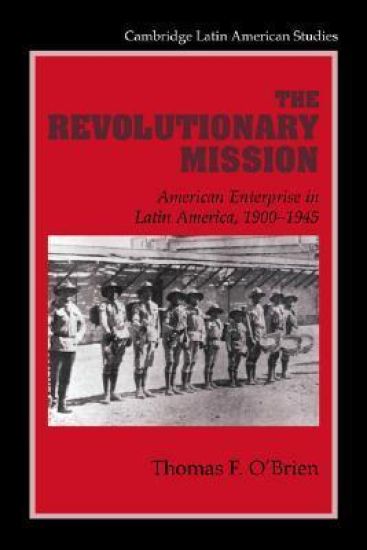
During the twentieth century, American corporations have spread American material productivity and American values such as consumerism and competitiveness around the globe. People in other nations have accepted some aspects of American corporate culture while vehemently rejecting others. The Revolutionary Mission explores this complex process as it unfolded in Latin America in the decades before World War II. Professor O’Brien examines Latin American responses to that culture which conveyed the promises of material betterment and individual freedom while also emphasizing the cult of the individual, unquestioning acceptance of disparities created by unremitting competition, and values legitimized by functionality rather than historical precedent.
Toward a Cosmic Theology considers topics and areas from Christian revelation as they draw on forces and worlds, insights and developments, now unfolded by science. It explores such topics as: the vastness of the universe of nature; implications for what God might be like; relationships of the Trinity to being and evolution; divine presence and the world of the universe and of the subatomic realm; extraterrestrials; time, the future, and change and transformation; the personal and religious world as a society of planets and their cultures. The author draws on the theologies of earlier theologians like Origen, Thomas Aquinas, and more recent ones such as Yves Congar, Karl Rahner, Douglas Vakoch, John Haught, and Jacques Arnould. Thomas F. O'Meara, OP, is the author of over a dozen books in theology, including Theology of Ministry and God in the World. He taught at Aquinas Institute of Theology and served as the Warren Professor of Theology at the University of Notre Dame; he has served as visiting professor at Weston Jesuit School of Theology, Wartburg Lutheran Seminary, and the Dominican Institute of Theology, Ibadan, Nigeria. He is a past president of the Catholic Theological Society of America. †
This book addresses two issues basic to understanding modern Latin America: the role of American-owned businesses in the region and, of equal importance, the reaction of Latin Americans to foreign investment. Throughout the nineteenth century and up to the 1930s, American corporations stridently resisted local opposition as they secured what they wanted in Latin America, cheap labor, plentiful raw materials, and favorable business conditions. After World War II, Latin American nationalism and revolutions forced American-owned enterprises to redefine their business model throughout the region. U.S. businesses integrated themselves into local societies through direct investment in manufacturing and the creation of broad-based consumer societies eager to buy everything from Coca-Cola to Chevrolets. As a new century dawns, multinational corporations aided by NAFTA ensure computers and cellular phones are as sought after as soft drinks and cars were in earlier eras.The first book on U.S. business activity in Latin America intended specifically for student readers, this account offers a balanced and insightful understanding of the nature of capitalism abroad. In assessing how U.S.-Latin American relations have been shaped by foreign investment, O'Brien argues that over the course of the twentieth century U.S. businesses and their government have forged a close working alliance to promote American interests in Latin America.
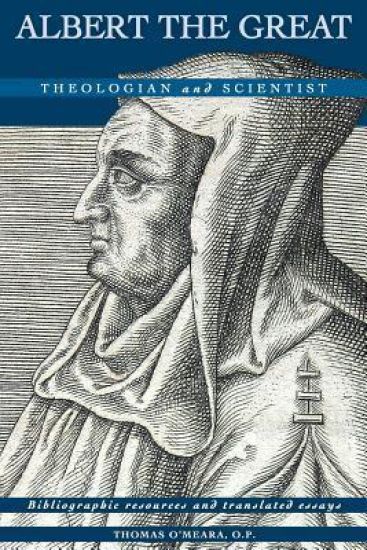
These essays are an important resource for American medievalists. They show that St. Albert was not only a scientist and philosopher, but a theologian and a political mediator as well.They range from Cardinal Lehmann's overview of St. Albert's conception of theology to a comparison of Albert's and Thomas' commentaries on the Gospel of Matthew by Ulrich Horst, to Erhard Schlieter's discussion of artistic portrayals of St. Albert in art. While St. Albert is the subject of a great deal of scholarly research in his homeland, he is less well known in the United States. Fr. O'Meara's translations and study guide will help bring the life and thought of this remarkable medieval scholar, who was considered to be an "astonishing wonder" by his contemporaries, to an American audience.This volume is being published by New Priory Press to celebrate the 75th Anniversary of the Dominican Province of St. Albert the Great which is based in Chicago.
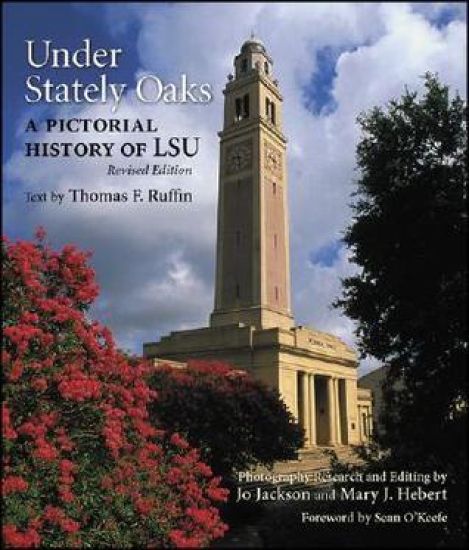
In a captivating blend of photographs and text, Under Stately Oaks showcases over 150 years of Louisiana State University's past, following the evolution of the tiny Seminary of Learning of the State of Louisiana, founded near Pineville in 1853, into a university of well over 30,000 students for the twenty-first century. Thomas F. Ruffin has written an affectionate history of LSU, but it is also an honest one. The notorious scandals of 1939, the university's desegregation struggles, and free-speech alley confrontations during the civil rights movement and the Vietnam War, as well as the football team's 2003 NCAA championship and the university's pivotal role in relief efforts following Hurricane Katrina -- all are chronicled here.From the red pantile roofs and honey-colored stucco of its Italian Renaissance architecture to the ""stately oaks and broad magnolias"" hailed in the alma mater, the distinct beauty of the LSU campus is unrivaled. The history of the state's flagship university is as colorful as the azaleas that adorn its landscape every spring. Its first superintendent, William Tecumseh Sherman, later opposed its first faculty member and future president, David F. Boyd, in war. Yet both also fought for an LSU curriculum that embraced a liberal education with a classical component. When LSU lost its state funding during the 1870s, it was Boyd who maneuvered a merger with Louisiana A&M College, a move that ensured LSU's survival and preserved its identity. In the 1930s, Huey Long demanded the best for LSU on many fronts, and by the mid-twentieth century the institution was not only the state's premier university but also nationally recognized for its prestigious faculty and cutting-edge research. This newly updated edition features a foreword by Chancellor Sean O'Keefe and a final chapter entitled ""The 21st Century and Beyond,"" which details the concrete steps LSU has taken towards fulfilling its goal of becoming a nationally competitive flagship institution. The last chapter also portrays, in text and striking photographs, the central role LSU played in emergency relief efforts following Hurricane Katrina, and examines how the university is faring in the post-Katrina world. Under Stately Oaks captures the spirit of the university as never before. Though the book shows that much has changed over the years, it is primarily a celebration of the timeless aspects of the LSU experience and a compelling testimony to the university's ongoing commitment to progress.