Kirjojen hintavertailu. Mukana 11 244 527 kirjaa ja 12 kauppaa.

Kirjahaku

Etsi kirjoja tekijän nimen, kirjan nimen tai ISBN:n perusteella.

1000 tulosta hakusanalla Thomas G. Mahnken

Technology and the American Way of War Since 1945

Technology and the American Way of War Since 1945

Thomas G. Mahnken

Columbia University Press
2008
sidottu
No nation in recent history has placed greater emphasis on the role of technology in planning and waging war than the United States. In World War II the wholesale mobilization of American science and technology culminated in the detonation of the atomic bomb. Competition with the Soviet Union during the Cold War, combined with the U.S. Navy's culture of distributed command and the rapid growth of information technology, spawned the concept of network-centric warfare. And America's post-Cold War conflicts in Iraq, the former Yugoslavia, and Afghanistan have highlighted America's edge. From the atom bomb to the spy satellites of the Cold War, the strategic limitations of the Vietnam War, and the technological triumphs of the Gulf war, Thomas G. Mahnken follows the development and integration of new technologies into the military and emphasizes their influence on the organization, mission, and culture of the armed services. In some cases, advancements in technology have forced different branches of the military to develop competing or superior weaponry, but more often than not the armed services have molded technology to suit their own purposes, remaining resilient in the face of technological challenges. Mahnken concludes with an examination of the reemergence of the traditional American way of war, which uses massive force to engage the enemy. Tying together six decades of debate concerning U.S. military affairs, he discusses how the armed forces might exploit the unique opportunities of the information revolution in the future.
Technology and the American Way of War Since 1945

Technology and the American Way of War Since 1945

Thomas G. Mahnken

Columbia University Press
2010
pokkari
No nation in recent history has placed greater emphasis on the role of technology in planning and waging war than the United States. In World War II the wholesale mobilization of American science and technology culminated in the detonation of the atomic bomb. Competition with the Soviet Union during the Cold War, combined with the U.S. Navy's culture of distributed command and the rapid growth of information technology, spawned the concept of network-centric warfare. And America's post-Cold War conflicts in Iraq, the former Yugoslavia, and Afghanistan have highlighted America's edge. From the atom bomb to the spy satellites of the Cold War, the strategic limitations of the Vietnam War, and the technological triumphs of the Gulf war, Thomas G. Mahnken follows the development and integration of new technologies into the military and emphasizes their influence on the organization, mission, and culture of the armed services. In some cases, advancements in technology have forced different branches of the military to develop competing or superior weaponry, but more often than not the armed services have molded technology to suit their own purposes, remaining resilient in the face of technological challenges. Mahnken concludes with an examination of the reemergence of the traditional American way of war, which uses massive force to engage the enemy. Tying together six decades of debate concerning U.S. military affairs, he discusses how the armed forces might exploit the unique opportunities of the information revolution in the future.

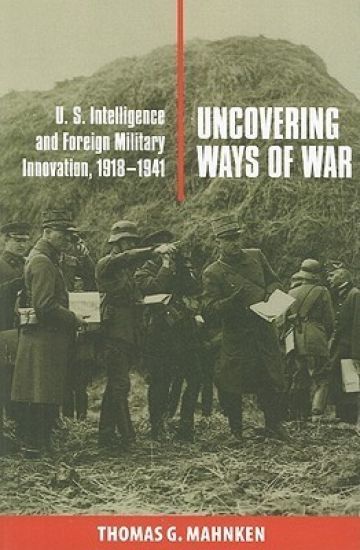
Uncovering Ways of War

Uncovering Ways of War

Thomas G. Mahnken

Cornell University Press
2002
sidottu
Intelligence operations face the challenging task of predicting the shape of future wars. This task is hindered by their limited ability to warn of peacetime foreign military innovation. Using formerly classified sources—in particular, the reports of military attachés and other diplomat-officers—Thomas G. Mahnken sheds light on the shadowy world of U.S. intelligence-gathering, tracing how America learned of military developments in Japan, Germany, and Great Britain in the period between the two world wars.The interwar period witnessed both a considerable shift in the balance of power in Europe and Asia and the emergence of new ways of war, such as carrier aviation, amphibious operations, and combined-arms armored warfare. American attempts to follow these developments, Mahnken says, illustrate the problems that intelligence organizations face in their efforts to bridge the gulf between prewar expectations and wartime reality. He finds three reasons for intelligence's relative lack of success: intelligence agencies are more inclined to monitor established weapons systems than to search for new ones; their attention is more likely to focus on technology and doctrine already demonstrated in combat; and they have more success identifying innovation in areas their own country is testing.Uncovering Ways of War substantially revises the perception of how American intelligence performed prior to World War II. Mahnken challenges the assumption that intelligence regarding foreign militaries had little influence on the development of U.S. weapons and doctrine. Finally, he explains the obstacles these agencies must still negotiate as they seek to understand foreign efforts to exploit the information revolution.
Uncovering Ways of War

Uncovering Ways of War

Thomas G. Mahnken

Cornell University Press
2009
pokkari
Intelligence operations face the challenging task of predicting the shape of future wars. This task is hindered by their limited ability to warn of peacetime foreign military innovation. Using formerly classified sources—in particular, the reports of military attachés and other diplomat-officers—Thomas G. Mahnken sheds light on the shadowy world of U.S. intelligence-gathering, tracing how America learned of military developments in Japan, Germany, and Great Britain in the period between the two world wars.The interwar period witnessed both a considerable shift in the balance of power in Europe and Asia and the emergence of new ways of war, such as carrier aviation, amphibious operations, and combined-arms armored warfare. American attempts to follow these developments, Mahnken says, illustrate the problems that intelligence organizations face in their efforts to bridge the gulf between prewar expectations and wartime reality. He finds three reasons for intelligence's relative lack of success: intelligence agencies are more inclined to monitor established weapons systems than to search for new ones; their attention is more likely to focus on technology and doctrine already demonstrated in combat; and they have more success identifying innovation in areas their own country is testing.Uncovering Ways of War substantially revises the perception of how American intelligence performed prior to World War II. Mahnken challenges the assumption that intelligence regarding foreign militaries had little influence on the development of U.S. weapons and doctrine. Finally, he explains the obstacles these agencies must still negotiate as they seek to understand foreign efforts to exploit the information revolution.
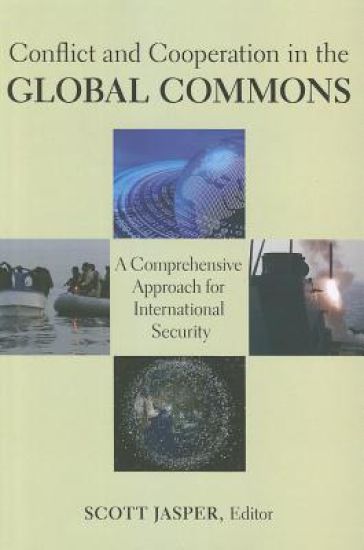
Conflict and Cooperation in the Global Commons

Conflict and Cooperation in the Global Commons

Thomas G. Mahnken

Georgetown University Press
2012
pokkari
More than ever, international security and economic prosperity depend upon safe access to the shared domains that make up the global commons: maritime, air, space, and cyberspace. Together these domains serve as essential conduits through which international commerce, communication, and governance prosper. However, the global commons are congested, contested, and competitive. In the January 2012 defense strategic guidance, the United States confirmed its commitment "to continue to lead global efforts with capable allies and partners to assure access to and use of the global commons, both by strengthening international norms of responsible behavior and by maintaining relevant and interoperable military capabilities". In the face of persistent threats, some hybrid in nature, and their consequences, "Conflict and Cooperation in the Global Commons" provides a forum where contributors identify ways to strengthen and maintain responsible use of the global commons. The result is a comprehensive approach that will enhance, align, and unify commercial industry, civil agency, and military perspectives and actions.
Conflict and Cooperation in the Global Commons

Conflict and Cooperation in the Global Commons

Thomas G. Mahnken

Georgetown University Press
2012
sidottu
More than ever, international security and economic prosperity depend upon safe access to the shared domains that make up the global commons: maritime, air, space, and cyberspace. Together these domains serve as essential conduits through which international commerce, communication, and governance prosper. However, the global commons are congested, contested, and competitive. In the January 2012 defense strategic guidance, the United States confirmed its commitment "to continue to lead global efforts with capable allies and partners to assure access to and use of the global commons, both by strengthening international norms of responsible behavior and by maintaining relevant and interoperable military capabilities". In the face of persistent threats, some hybrid in nature, and their consequences, "Conflict and Cooperation in the Global Commons" provides a forum where contributors identify ways to strengthen and maintain responsible use of the global commons. The result is a comprehensive approach that will enhance, align, and unify commercial industry, civil agency, and military perspectives and actions.
Twenty Years With James G. Blaine; Reminiscences by His Private Secretary, Thomas G. Sherman
This work has been selected by scholars as being culturally important and is part of the knowledge base of civilization as we know it.This work is in the public domain in the United States of America, and possibly other nations. Within the United States, you may freely copy and distribute this work, as no entity (individual or corporate) has a copyright on the body of the work.Scholars believe, and we concur, that this work is important enough to be preserved, reproduced, and made generally available to the public. To ensure a quality reading experience, this work has been proofread and republished using a format that seamlessly blends the original graphical elements with text in an easy-to-read typeface.We appreciate your support of the preservation process, and thank you for being an important part of keeping this knowledge alive and relevant.
The Cherry Orchard translated by Thomas G. Jewusiak
This is a translation, adaption and closely edited and annotated interpretation of Anton Chekhov's masterpiece, The Cherry Orchard."This is a brilliant adaptation of Chekhov's masterpiece. Jewusiak captures the essence of the original while adding his own insights and humor. The annotations are very helpful, thorough, and informative. A must-read for anyone who loves Chekhov or wants to discover him." Krakow"It's as if Chekhov came back, mastered English, just in order to 'set the record straight'. A daunting accomplished."Reginald Polavi