Kirjojen hintavertailu. Mukana 11 244 527 kirjaa ja 12 kauppaa.

Kirjahaku

Etsi kirjoja tekijän nimen, kirjan nimen tai ISBN:n perusteella.

1000 tulosta hakusanalla Thomas H. McCall

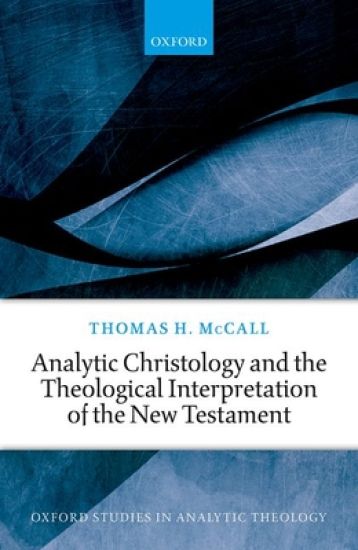
Analytic Christology and the Theological Interpretation of the New Testament
This study draws upon the resources of both contemporary analytic theology and the theological interpretation of the New Testament in order to investigate a set of important issues in Christology. It is the first work in analytic Christology to draw upon both recent scholarship in biblical studies and recent contributions to analytic philosophy and theology. Thomas H. McCall explores the themes of union with Christ and the faith of Christ as these are developed by the "apocalyptic" and "New Perspective" interpreters of Pauline theology. The volume offers a careful analysis of recent dogmatic proposals about the identity of Christ and the doctrine of election, and provides an examination of debates over the subordination of the Son in Hebrews. It also probes the relationship of the incarnate Son to his Father in Johannine theology. McCall presents an exegetically-grounded theological engagement with recent work on the place of logic in the doctrine of the incarnation.
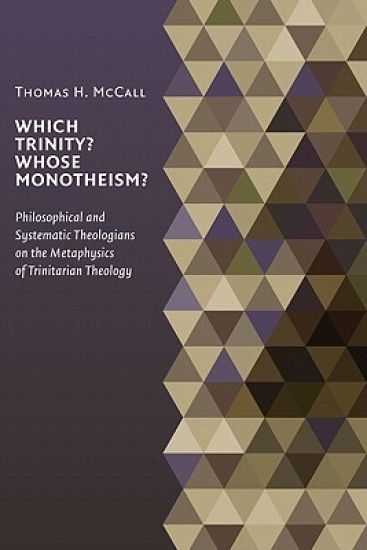
Which Trinity? Whose Monotheism?

Which Trinity? Whose Monotheism?

Thomas H. McCall

William B Eerdmans Publishing Co
2010
nidottu
This book breaks new ground in bringing together the work of some significant systematic and philosophical theologians on the doctrine of the Trinity. Theologians and analytic philosophers of religion have both done substantive work on the Trinity -- but have done so in isolation from one another. In Which Trinity? Whose Monotheism? Thomas H. McCall creatively engages such philosophers of religion as Richard Swinburne and Brian Leftow and such influential theologians as Jurgen Moltmann, Robert Jenson, and John Zizioulas. Among all the currently available books on the doctrine of the Trinity, no other book brings analytic philosophers of religion into such direct conversation with mainstream theologians on this score.
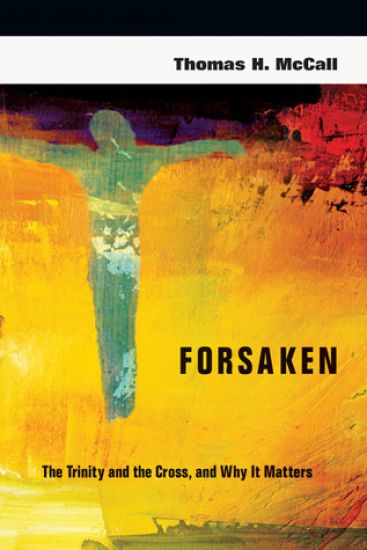
Forsaken – The Trinity and the Cross, and Why It Matters
"My God, My God, why have you forsaken me?" How should a Christian interpret this passage? What implications does the cross have for the trinitarian theology? Did the Father kill the Son? Theologian Thomas McCall presents a trinitarian reading of Christ's darkest moment--the moment of his prayer to his heavenly Father from the cross. McCall revisits the biblical texts and surveys the various interpretations of Jesus? cry, ranging from early church theologians to the Reformation to contemporary theologians. Along the way, he explains the terms of the scholarly debate and clearly marks out what he believes to be the historically orthodox point of view. By approaching the Son's cry to the Father as an event in the life of the Triune God, Forsaken seeks to recover the true poignancy of the orthodox perspective on the cross.
An Invitation to Analytic Christian Theology

An Invitation to Analytic Christian Theology

Thomas H. McCall

Inter-Varsity Press,US
2015
nidottu
In recent decades a new movement has arisen, bringing the conceptual tools of analytic philosophy to bear on theological reflection. Called analytic theology, it seeks to bring a clarity of thought and a disciplined use of logic to the work of constructive Christian theology. In this introduction to analytic theology for specialists and nonspecialists alike, Thomas McCall lays out what it is and what it isn't. The goal of this growing and energetic field is not the removal of all mystery in theology. At the same time, it insists that mystery must not be confused with logical incoherence. McCall explains the connections of analytic theology to Scripture, Christian tradition and culture, using case studies to illuminate his discussion. Beyond mere description, McCall calls the discipline to a deeper engagement with the traditional resources of the theological task.
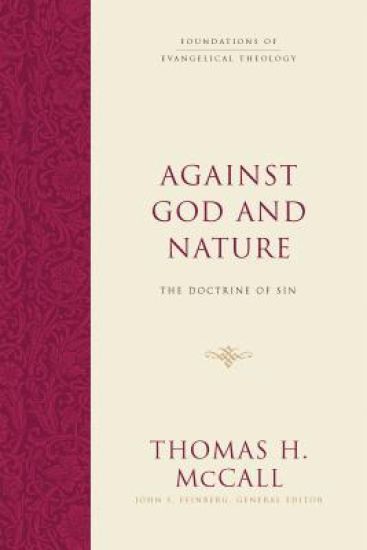
Against God and Nature

Against God and Nature

Thomas H. McCall

Crossway Books
2019
sidottu
Without a proper understanding of sin, there can never be a proper understanding of the gospel. Sin is opposed both to God’s will and to nature, leaving us in need of God’s grace and redemption. This comprehensive exploration of the doctrine of sin looks at what the Bible teaches about sin's origin, nature, and consequences, engaging with historical and contemporary movements. Dealing with difficult issues such as original sin, angelic sin, corporate sin, greater and lesser sins, and more, this book ends with a discussion on divine grace, which is the only hope for the problem of sin.
After Arminius

After Arminius

Thomas H. McCall; Keith D. Stanglin

Oxford University Press Inc
2020
sidottu
Inspired by the ideas of the Dutch theologian Jacob Arminius, Arminianism was the subject of important theological controversies in the seventeenth and eighteenth centuries, and still today remains an important position within Protestant thought. What became known as Arminian theology was held by people across a wide swath of geographical and ecclesial positions. This theological movement was in part a reaction to the Reformed doctrine of predestination and was founded on the assertion that God's sovereignty and human free will are compatible. More broadly, it was an attempt to articulate a holistic view of God and salvation that is grounded in Scripture and Christian tradition as well as adequate to the challenges of life. First developed in European, British, and American contexts, the movement engaged with a wide range of intellectual challenges. While standing together in their common rejection of several key planks of Reformed theology, supporters of Arminianism took varying positions on other matters. Some were broadly committed to catholic and creedal theology, while others were more open to theological revision. Some were concerned primarily with practical matters, while others were engaged in system-building as they sought to articulate and defend an over-arching vision of God and the world. The story of Arminian development is complex, yet essential for a proper understanding of the history of Protestant theology. The historical development of Arminian theology, however, is not well known. In After Arminius, Thomas H. McCall and Keith D. Stanglin offer a thorough historical introduction to Arminian theology, providing an account that will be useful to scholars and students of ecclesiastical history and modern Christian thought.
After Arminius

After Arminius

Thomas H. McCall; Keith D. Stanglin

Oxford University Press Inc
2021
nidottu
Inspired by the ideas of the Dutch theologian Jacob Arminius, Arminianism was the subject of important theological controversies in the seventeenth and eighteenth centuries, and still today remains an important position within Protestant thought. What became known as Arminian theology was held by people across a wide swath of geographical and ecclesial positions. This theological movement was in part a reaction to the Reformed doctrine of predestination and was founded on the assertion that God's sovereignty and human free will are compatible. More broadly, it was an attempt to articulate a holistic view of God and salvation that is grounded in Scripture and Christian tradition as well as adequate to the challenges of life. First developed in European, British, and American contexts, the movement engaged with a wide range of intellectual challenges. While standing together in their common rejection of several key planks of Reformed theology, supporters of Arminianism took varying positions on other matters. Some were broadly committed to catholic and creedal theology, while others were more open to theological revision. Some were concerned primarily with practical matters, while others were engaged in system-building as they sought to articulate and defend an over-arching vision of God and the world. The story of Arminian development is complex, yet essential for a proper understanding of the history of Protestant theology. The historical development of Arminian theology, however, is not well known. In After Arminius, Thomas H. McCall and Keith D. Stanglin offer a thorough historical introduction to Arminian theology, providing an account that will be useful to scholars and students of ecclesiastical history and modern Christian thought.
The Doctrine of Good Works – Reclaiming a Neglected Protestant Teaching

The Doctrine of Good Works – Reclaiming a Neglected Protestant Teaching

Thomas H. Mccall; Caleb T. Friedeman; Matt T. Friedeman

BAKER PUBLISHING GROUP
2023
nidottu
Christianity Today 2024 Book Award (Academic Theology)In Titus, Paul says Christ redeemed a people "zealous for good works." Despite this declaration and others like it, the doctrine of good works has fallen on hard times in contemporary Protestant theology and practice. At best, it's neglected--as in most systematic theologies and in too much church teaching. At worst, it's viewed with suspicion--as a threat to salvation by grace alone through faith alone.In this important work addressing a significant gap in current theological literature, the authors argue that by jettisoning a doctrine of good works, the contemporary church contradicts historical Protestantism and, more importantly, biblical teaching. They combine their areas of expertise--exegesis, systematic and historical theology, and practical theology--to help readers recover and embrace a positive doctrine of good works. They survey historical Protestant teaching to show the importance of the doctrine to our forebears, engage the scriptural testimony on the role of good works, formulate a theology of salvation and good works, and explore pastoral applications.
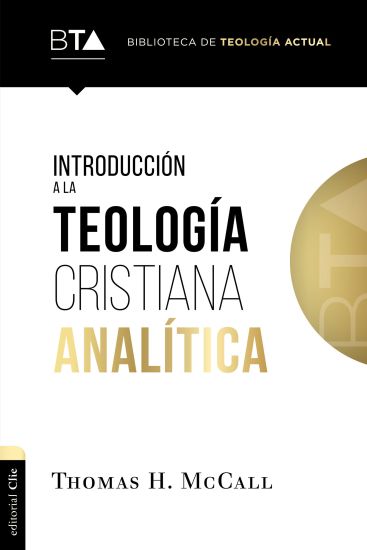
Introducción a la Teología Cristiana Analítica
Introducci n a la Teolog a Cristiana Anal tica responde a cuestiones como Qu es la Teolog a Anal tica? Cu les son sus caracter sticas "accidentales" y cu les sus atributos "esenciales"? A d nde se dirige? Tomar -o deber tomar- alguna direcci n previsible? Esta introducci n inicia a quienes no son especialistas en la teolog a anal tica dejando claro tanto lo que no es como lo que s es. El objetivo de la teolog a anal tica no es la eliminaci n de todo misterio, no podemos confundir misterio con la incoherencia l gica. McCall explica la conexi n entre la teolog a anal tica y las Escrituras, entre tradici n cristiana y cultura. Sin duda un libro que interesar a todo creyente apasionado por el estudio de las escrituras. Este libro te ayudar a: Profundizar en el estudio de la teolog a.Identificar qu es lo que hace que la teolog a anal tica sea anal tica. Comprender qu hace que la teolog a anal tica sea realmente teolog a.Aprender las bases de la teolog a anal tica.Encontrar las conexiones de la teolog a anal tica con las Escrituras, la tradici n cristiana y la cultura.Fortalecer su crecimiento personal, intelectual y espiritual.An Invitation to Analytic Christian TheologyAn Invitation to Analytical Christian Theology answers questions such as What is Analytical Theology? What are its "accidental" characteristics and What are its "essential" attributes? Where is it headed? Will it take - or should it take - some foreseeable direction? This introduction initiates those who are not specialists in analytic theology by making clear both what is not and what it is. The goal of analytic theology is not the elimination of all mystery, we cannot confuse mystery with logical incoherence. McCall explains the connection between analytical theology and Scripture, between Christian tradition and culture. Without a doubt, this is a book that will be of interest to every believer passionate about the study of the scriptures. This book will help you to: Deepen the study of theology.Identify what makes analytic theology analytical.Understand what makes analytic theology real theology.Learn the basics of analytical theology.Find the connections of analytical theology with Scripture, Christian tradition, and culture.Strengthen your personal, intellectual, and spiritual growth.
Outpouring

Outpouring

Jason E Vickers; Thomas H McCall

Cascade Books
2023
pokkari
Outpouring is a theological exploration of religious revivals and awakenings. The authors reflect on God's pursuit of human persons in the light of Scripture and classical Christian doctrine. They also take seriously eyewitness testimonies to God's presence and power in events like the Great Awakenings and the Asbury Outpouring of 2023, allowing such events to raise fresh questions and to enliven theology. Inspired by their participation in the Asbury Outpouring, they bear witness to the ancient conviction that theology, prayer, and praise belong together.
Outpouring

Outpouring

Jason E Vickers; Thomas H McCall

Cascade Books
2023
sidottu
Outpouring is a theological exploration of religious revivals and awakenings. The authors reflect on God's pursuit of human persons in the light of Scripture and classical Christian doctrine. They also take seriously eyewitness testimonies to God's presence and power in events like the Great Awakenings and the Asbury Outpouring of 2023, allowing such events to raise fresh questions and to enliven theology. Inspired by their participation in the Asbury Outpouring, they bear witness to the ancient conviction that theology, prayer, and praise belong together.
Jacob Arminius

Jacob Arminius

Keith D. Stanglin; Thomas H. McCall

Oxford University Press Inc
2012
sidottu
Jacob Arminius (1559-1609) is one of the few theologians in the history of Christianity who has lent his name to a significant theological movement. The dissemination of his thought throughout Europe, Great Britain, and North America, along with the appeal of his ideas in current Protestant evangelical spheres (whether rightly understood or misunderstood), continue to attract both scholarly and popular attention. Keith Stanglin and Thomas McCall's Jacob Arminius offers a constructive synthesis of the current state of Arminius studies. There is a chasm separating technical, scholarly discussions of Arminius and popular-level appeals to his thought. The authors seek to bridge the scholarly and general discussions, providing an account based on interaction with all the primary sources and latest secondary research that will be helpful to the scholar as well as comprehensible and relevant to the undergraduate student. The authors describe key elements of Arminius' theology with careful attention to its proper context; they also explore the broader theological implications of his views.
Jacob Arminius

Jacob Arminius

Keith D. Stanglin; Thomas H. McCall

Oxford University Press Inc
2012
nidottu
Jacob Arminius (1559-1609) is one of the few theologians in the history of Christianity who has lent his name to a significant theological movement. The dissemination of his thought throughout Europe, Great Britain, and North America, along with the appeal of his ideas in current Protestant evangelical spheres (whether rightly understood or misunderstood), continue to attract both scholarly and popular attention. Keith Stanglin and Thomas McCall's Jacob Arminius offers a constructive synthesis of the current state of Arminius studies. There is a chasm separating technical, scholarly discussions of Arminius and popular-level appeals to his thought. The authors seek to bridge the scholarly and general discussions, providing an account based on interaction with all the primary sources and latest secondary research that will be helpful to the scholar as well as comprehensible and relevant to the undergraduate student. The authors describe key elements of Arminius' theology with careful attention to its proper context; they also explore the broader theological implications of his views.
Two Views on the Doctrine of the Trinity

Two Views on the Doctrine of the Trinity

Stephen R. Holmes; Paul D. Molnar; Thomas H. McCall; Paul Fiddes

Zondervan
2014
nidottu
Christians have always believed in the triune God, but they haven't always understood or used the doctrine of the Trinity consistently.In order to form a coherent view of trinitarian theology, it's important for Christians to have a working knowledge of the two legitimate models for explaining this doctrine: Classical – presenting a traditional view of the Trinity, represented by the Baptist theologian Stephen R. Holmes and the Roman Catholic theologian Paul D. Molnar.Relational – presenting the promise and potential hazards of a relational doctrine, represented by the evangelical theologian Thomas H. McCall and the Baptist philosopher Paul S. Fiddes.In this volume of the Counterpoints series, leading contributors establish their models and approaches to the doctrine of the Trinity (or, the relationship between the threeness and oneness of the divine life). Each expert highlights the strengths of his view in order to argue how it best reflects the orthodox perspective. In order to facilitate a genuine debate and to make sure that the key issues are revealed, each contributor addresses the same questions regarding their trinitarian methodology, doctrine, and its implications.
Applied Mathematical Programming For Business And Economics

Applied Mathematical Programming For Business And Economics

Man-keun Kim; Thomas H Spreen; Bruce A Mccarl; Chengcheng Fei

WORLD SCIENTIFIC PUBLISHING CO PTE LTD
2026
sidottu
This introductory/intermediate level textbook focuses on mathematical programming and its applications. It introduces basic linear programming — the easiest form of mathematical programming with emphasis on economic interpretation of the model solution. Well-known applications of linear programming to problems in business and agriculture are presented.The text then extends into more advanced forms of mathematical programming including quadratic and integer programming. These models include the introduction of risk and uncertainty into decision-making and a class of models known as price endogenous models in which market equilibrium analyses can be modelled. Integer programming includes conditional decision-making model, machinery selection, and a class of models known as supply chain models.Supplements are provided to assist solution of the models using either GAMS or Excel, the two most widely used software packages for solution of mathematical programming models.
Applied Mathematical Programming For Business And Economics

Applied Mathematical Programming For Business And Economics

Man-keun Kim; Thomas H Spreen; Bruce A Mccarl; Chengcheng Fei

WORLD SCIENTIFIC PUBLISHING CO PTE LTD
2026
nidottu
This introductory/intermediate level textbook focuses on mathematical programming and its applications. It introduces basic linear programming — the easiest form of mathematical programming with emphasis on economic interpretation of the model solution. Well-known applications of linear programming to problems in business and agriculture are presented.The text then extends into more advanced forms of mathematical programming including quadratic and integer programming. These models include the introduction of risk and uncertainty into decision-making and a class of models known as price endogenous models in which market equilibrium analyses can be modelled. Integer programming includes conditional decision-making model, machinery selection, and a class of models known as supply chain models.Supplements are provided to assist solution of the models using either GAMS or Excel, the two most widely used software packages for solution of mathematical programming models.
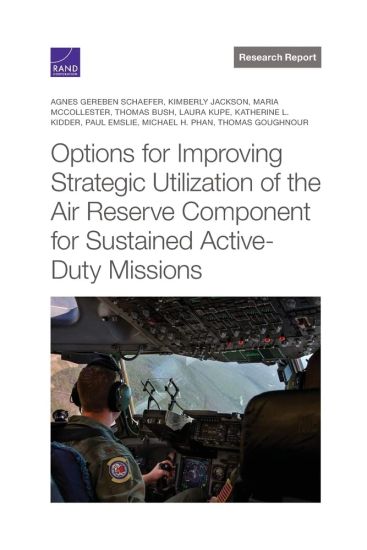
Options for Improving Strategic Utilization of the Air Reserve Component for Sustained Active-Duty Missions

Options for Improving Strategic Utilization of the Air Reserve Component for Sustained Active-Duty Missions

Agnes Gereben Schaefer; Kimberly Jackson; Maria McCollester; Thomas Bush; Laura Kupe; Katherine L Kidder; Paul Emslie; Michael H Phan; Thomas Goughnour

RAND Corporation
2022
pokkari
The authors analyze how statutes, personnel policies, and resource policies constrain how Air Reserve Component (ARC) personnel are utilized to perform frequent or long-term active component operational requirements; suggest potential changes that would make accessing the ARC more efficient; and suggest specific strategic solutions for an operational ARC.