Kirjahaku
Etsi kirjoja tekijän nimen, kirjan nimen tai ISBN:n perusteella.
1000 tulosta hakusanalla Thomas Hope; Edward Cresy



Stories by English Authors: England
Amelia Ann Blanford Edwards; Thomas Hardy; Anthony Hope
Createspace Independent Publishing Platform
2017
nidottu

Stories by English Authors: England
Amelia Ann Blanford Edwards; Thomas Hardy; Anthony Hope
Createspace Independent Publishing Platform
2017
nidottu
STORIES BY ENGLISH AUTHORS: ENGLAND by Wilkie Collins et al The Box Tunnel by Charles Reade Minions of the Moon by F W Robinson The Four-Fifteen Express by Amelia Edwards The Wrong Black Bag by Angelo Lewis The Three Strangers by Thomas Hardy Mr Lismore and the Widow by Wilkie Collins The Philosopher in the Apple Orchard by Anthony Hope

Twenty-Four Letters Of Sir Thomas Hope, Of Craighall
Thomas Hope
KESSINGER PUBLISHING, LLC
2009
pokkari

Catalogue Of A Collection Of Early Newspapers And Essayists, Formed By The Late John Thomas Hope (1865)
Frederick William Hope
KESSINGER PUBLISHING, LLC
2008
nidottu

Catalogue Of A Collection Of Early Newspapers And Essayists, Formed By The Late John Thomas Hope (1865)
Frederick William Hope
KESSINGER PUBLISHING, LLC
2008
sidottu


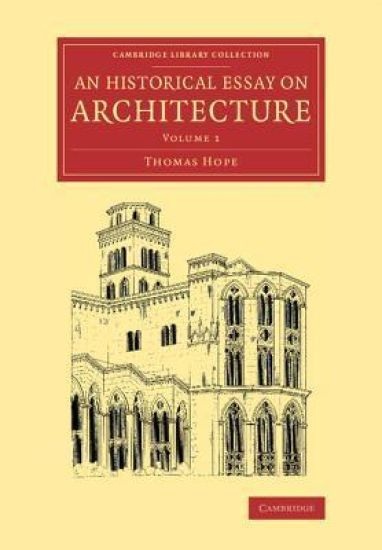
With a fondness for classical antiquities and neoclassical design, the connoisseur Thomas Hope (1769–1831) sought to influence Georgian taste by promoting informed interior decoration, displaying his own considerable art collection, and writing with insight on aesthetic topics. This two-volume work, originally published posthumously in 1835, traces the evolution of Western architecture since antiquity. Hope was a keen traveller, and the examples he cites are drawn from buildings that he studied on journeys through Europe and beyond, notably in those countries bordering the Mediterranean. Reissued here in the third edition that appeared in 1840, Volume 1 examines how religions, climates, landscapes and prevailing mores shaped the architectural preferences of civilisations from ancient Egypt to the Gothic revival, as well as how different cultures adapted foreign or ancient architectural innovations for their own ends.
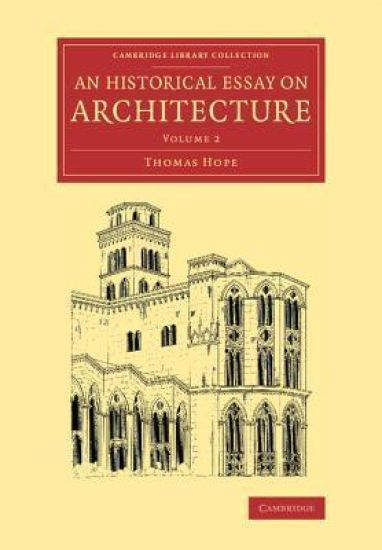
With a fondness for classical antiquities and neoclassical design, the connoisseur Thomas Hope (1769–1831) sought to influence Georgian taste by promoting informed interior decoration, displaying his own considerable art collection, and writing with insight on aesthetic topics. This two-volume work, originally published posthumously in 1835, traces the evolution of Western architecture since antiquity. Hope was a keen traveller, and the examples he cites are drawn from buildings that he studied on journeys through Europe and beyond, notably in those countries bordering the Mediterranean. Volume 2 contains the precise line drawings that accompanied the first edition, showcasing many western European and ecclesiastical buildings and details. The work's analytical index, which appeared in 1836, is illustrated with wood engravings of features mentioned in the text and has been incorporated in this reissue.



""Costumes of the Greeks and Romans"" by Thomas Hope is a comprehensive guide to the clothing worn by ancient Greeks and Romans. The book is divided into two parts, with the first section focusing on Greek attire and the second on Roman attire. In the first section, the author describes the various garments worn by Greeks, including the chiton, himation, and peplos. He also discusses the different styles of clothing worn by men and women, as well as the use of jewelry and accessories. The second section of the book covers Roman clothing, including the toga, stola, and tunica. The author also discusses the different types of clothing worn by men and women, as well as the use of hairstyles and cosmetics. Throughout the book, the author provides detailed illustrations and descriptions of each garment and accessory, making it an invaluable resource for anyone interested in ancient history or fashion. Additionally, the book includes a glossary of terms and a bibliography for further reading. Overall, ""Costumes of the Greeks and Romans"" is an informative and engaging guide to the clothing of these two influential civilizations.This scarce antiquarian book is a facsimile reprint of the old original and may contain some imperfections such as library marks and notations. Because we believe this work is culturally important, we have made it available as part of our commitment for protecting, preserving, and promoting the world's literature in affordable, high quality, modern editions, that are true to their original work.