Originally published in 1947, this book presents the text of a journal kept by Thomas Hughes from 1778–9. It includes an account of his experiences as a British officer during the American War of Independence, including a period in captivity. The manuscript of the journal, which had been in possession of his family, was previously unprinted at the time of publication. Detailed notes are incorporated throughout. This book will be of value to anyone with an interest in the American War of Independence and eighteenth-century history.
Tom Brown at Oxford is a novel by Thomas Hughes, first published in serial form in Macmillan Magazine in 1859. It was published in two volumes in book form in 1861.It is a sequel to the better-known Tom Brown's School Days. The story follows the character of Tom Brown to St Ambrose's College, Oxford. The novel offers a vivid impression of university life in the mid nineteenth centuryThe book was out of print for many years but is available in Britain from Wordsworth Classics with 'Tom Brown's Schooldays' and as the copyright on the text has expired is now available on the Project Gutenberg ebook site. Editions of the serialized form are available at from the Hathi Trust. The illustrator Sydney Prior Hall (1842-1922), portrait painter and illustrator, was one of the leading reportage artists of the later Victorian period........ Thomas Hughes QC (20 October 1822 - 22 March 1896) was an English lawyer, judge, politician and author. He is most famous for his novel Tom Brown's School Days (1857), a semi-autobiographical work set at Rugby School, which Hughes had attended. It had a lesser-known sequel, Tom Brown at Oxford (1861). Hughes had numerous other interests, in particular as a Member of Parliament, in the British co-operative movement, and in a settlement in Tennessee reflecting his values. Early life Hughes was the second son of John Hughes, editor of the Boscobel Tracts (1830) and was born in Uffington, Berkshire (now Oxfordshire). He had six brothers, and one sister, Jane Senior who later became Britain's first female civil servant. At the age of eight he was sent to Twyford School, a preparatory public school near Winchester, where he remained until the age of eleven. In February 1834 he went to Rugby School, which was then under the celebrated Thomas Arnold, a contemporary of his father at Oriel College, Oxford. Hughes excelled at sports rather than in scholarship, and his school career culminated in a cricket match at Lord's Cricket Ground. In 1842 he went on to Oriel College, and graduated B.A. in 1845. At Oxford, he played cricket for the university team in the annual University Match against Cambridge University, also at Lord's, and a match that is still now regarded as first-class cricket. Legal career Hughes was called to the bar in 1848, became Queen's Counsel in 1869 and a bencher in 1870. He was appointed to a county court judgeship in the Chester district in July 1882. Works While living at Wimbledon, Hughes wrote his famous story Tom Brown's School Days, which was published in April 1857. He is associated with the novelists of the "muscular school", a loose classification but centred on the fiction of the Crimean War period.Although Hughes had never been a member of the sixth form at Rugby, his impressions of the headmaster Thomas Arnold were reverent. Hughes also wrote The Scouring of the White Horse (1859), Tom Brown at Oxford (1861), Religio Laici (1868), Life of Alfred the Great (1869) and the Memoir of a Brother. His brother, George Hughes, was the model for the Tom Brown character...........
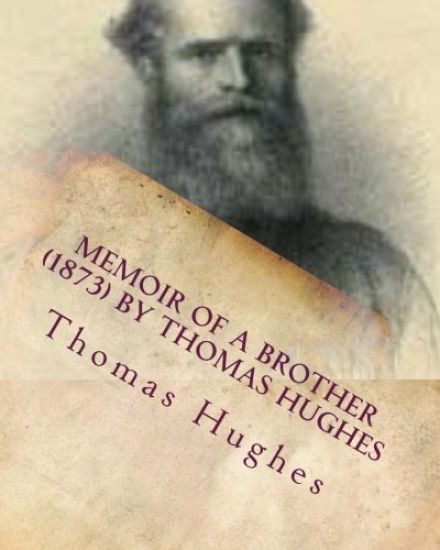
Thomas Hughes QC (20 October 1822 - 22 March 1896) was an English lawyer, judge, politician and author. He is most famous for his novel Tom Brown's School Days (1857), a semi-autobiographical work set at Rugby School, which Hughes had attended. It had a lesser-known sequel, Tom Brown at Oxford (1861). Hughes had numerous other interests, in particular as a Member of Parliament, in the British co-operative movement, and in a settlement in Tennessee reflecting his values. Early life Hughes was the second son of John Hughes, editor of the Boscobel Tracts (1830) and was born in Uffington, Berkshire (now Oxfordshire). He had six brothers, and one sister, Jane Senior who later became Britain's first female civil servant. At the age of eight he was sent to Twyford School, a preparatory public school near Winchester, where he remained until the age of eleven. In February 1834 he went to Rugby School, which was then under the celebrated Thomas Arnold, a contemporary of his father at Oriel College, Oxford. Hughes excelled at sports rather than in scholarship, and his school career culminated in a cricket match at Lord's Cricket Ground. In 1842 he went on to Oriel College, and graduated B.A. in 1845. At Oxford, he played cricket for the university team in the annual University Match against Cambridge University, also at Lord's, and a match that is still now regarded as first-class cricket. Legal career Hughes was called to the bar in 1848, became Queen's Counsel in 1869 and a bencher in 1870. He was appointed to a county court judgeship in the Chester district in July 1882. Works While living at Wimbledon, Hughes wrote his famous story Tom Brown's School Days, which was published in April 1857. He is associated with the novelists of the "muscular school", a loose classification but centred on the fiction of the Crimean War period.Although Hughes had never been a member of the sixth form at Rugby, his impressions of the headmaster Thomas Arnold were reverent. Hughes also wrote The Scouring of the White Horse (1859), Tom Brown at Oxford (1861), Religio Laici (1868), Life of Alfred the Great (1869) and the Memoir of a Brother. His brother, George Hughes, was the model for the Tom Brown character. While living at Wimbledon, Hughes wrote his famous story Tom Brown's School Days, which was published in April 1857. He is associated with the novelists of the "muscular school", a loose classification but centred on the fiction of the Crimean War period.Although Hughes had never been a member of the sixth form at Rugby, his impressions of the headmaster Thomas Arnold were reverent.Hughes also wrote The Scouring of the White Horse (1859), Tom Brown at Oxford (1861), Religio Laici (1868), Life of Alfred the Great (1869) and the Memoir of a Brother. His brother, George Hughes, was the model for the Tom Brown character.................
Thomas Hughes QC (20 October 1822 - 22 March 1896) was an English lawyer, judge, politician and author. He is most famous for his novel Tom Brown's School Days (1857), a semi-autobiographical work set at Rugby School, which Hughes had attended. It had a lesser-known sequel, Tom Brown at Oxford (1861). Hughes had numerous other interests, in particular as a Member of Parliament, in the British co-operative movement, and in a settlement in Tennessee reflecting his values. Early life Hughes was the second son of John Hughes, editor of the Boscobel Tracts (1830) and was born in Uffington, Berkshire (now Oxfordshire). He had six brothers, and one sister, Jane Senior who later became Britain's first female civil servant. At the age of eight he was sent to Twyford School, a preparatory public school near Winchester, where he remained until the age of eleven. In February 1834 he went to Rugby School, which was then under the celebrated Thomas Arnold, a contemporary of his father at Oriel College, Oxford. Hughes excelled at sports rather than in scholarship, and his school career culminated in a cricket match at Lord's Cricket Ground. In 1842 he went on to Oriel College, and graduated B.A. in 1845. At Oxford, he played cricket for the university team in the annual University Match against Cambridge University, also at Lord's, and a match that is still now regarded as first-class cricket. Legal career Hughes was called to the bar in 1848, became Queen's Counsel in 1869 and a bencher in 1870. He was appointed to a county court judgeship in the Chester district in July 1882. Works While living at Wimbledon, Hughes wrote his famous story Tom Brown's School Days, which was published in April 1857. He is associated with the novelists of the "muscular school", a loose classification but centred on the fiction of the Crimean War period.Although Hughes had never been a member of the sixth form at Rugby, his impressions of the headmaster Thomas Arnold were reverent. Hughes also wrote The Scouring of the White Horse (1859), Tom Brown at Oxford (1861), Religio Laici (1868), Life of Alfred the Great (1869) and the Memoir of a Brother. His brother, George Hughes, was the model for the Tom Brown character............
Thomas Hughes QC (20 October 1822 - 22 March 1896) was an English lawyer, judge, politician and author. He is most famous for his novel Tom Brown's School Days (1857), a semi-autobiographical work set at Rugby School, which Hughes had attended. It had a lesser-known sequel, Tom Brown at Oxford (1861). Hughes had numerous other interests, in particular as a Member of Parliament, in the British co-operative movement, and in a settlement in Tennessee reflecting his values. Early life Hughes was the second son of John Hughes, editor of the Boscobel Tracts (1830) and was born in Uffington, Berkshire (now Oxfordshire). He had six brothers, and one sister, Jane Senior who later became Britain's first female civil servant. At the age of eight he was sent to Twyford School, a preparatory public school near Winchester, where he remained until the age of eleven. In February 1834 he went to Rugby School, which was then under the celebrated Thomas Arnold, a contemporary of his father at Oriel College, Oxford. Hughes excelled at sports rather than in scholarship, and his school career culminated in a cricket match at Lord's Cricket Ground. In 1842 he went on to Oriel College, and graduated B.A. in 1845. At Oxford, he played cricket for the university team in the annual University Match against Cambridge University, also at Lord's, and a match that is still now regarded as first-class cricket. Legal career Hughes was called to the bar in 1848, became Queen's Counsel in 1869 and a bencher in 1870. He was appointed to a county court judgeship in the Chester district in July 1882. Works While living at Wimbledon, Hughes wrote his famous story Tom Brown's School Days, which was published in April 1857. He is associated with the novelists of the "muscular school", a loose classification but centred on the fiction of the Crimean War period.Although Hughes had never been a member of the sixth form at Rugby, his impressions of the headmaster Thomas Arnold were reverent. Hughes also wrote The Scouring of the White Horse (1859), Tom Brown at Oxford (1861), Religio Laici (1868), Life of Alfred the Great (1869) and the Memoir of a Brother. His brother, George Hughes, was the model for the Tom Brown character...............
Daniel MacMillan (Scottish Gaelic: D mhnall MacMhaolain; 13 September 1813 - 27 June 1857) was a Scottish publisher from the Isle of Arran, Scotland. Life: Daniel MacMillan was born on 13 September 1813, in the Isle of Arran to a crofting family. Moving to London, he founded Macmillan Publishers, with his brother Alexander. In 1833, he came to London to work for a Cambridge bookseller. In 1844, he decided to expand into the publishing business. Macmillan, with the recommendation of his brother Alexander, sent George Edward Brett to open the first American office in New York. He died at Cambridge on 27 June 1857. He is buried in the Mill Road cemetery, Cambridge. Family He married, on 4 September 1850, Frances, daughter of a Mr Orridge, a chemist in Cambridge. They had two sons, Frederick (born 1851) and Maurice Crawford Macmillan (1853-1936). Maurice married Helen (Nellie) Artie Tarleton Belles (1856-1937), and their son Maurice Harold Macmillan became Prime Minister........... Thomas Hughes QC (20 October 1822 - 22 March 1896) was an English lawyer, judge, politician and author. He is most famous for his novel Tom Brown's School Days (1857), a semi-autobiographical work set at Rugby School, which Hughes had attended. It had a lesser-known sequel, Tom Brown at Oxford (1861). Hughes had numerous other interests, in particular as a Member of Parliament, in the British co-operative movement, and in a settlement in Tennessee reflecting his values. Early life Hughes was the second son of John Hughes, editor of the Boscobel Tracts (1830) and was born in Uffington, Berkshire (now Oxfordshire). He had six brothers, and one sister, Jane Senior who later became Britain's first female civil servant. At the age of eight he was sent to Twyford School, a preparatory public school near Winchester, where he remained until the age of eleven. In February 1834 he went to Rugby School, which was then under the celebrated Thomas Arnold, a contemporary of his father at Oriel College, Oxford. Hughes excelled at sports rather than in scholarship, and his school career culminated in a cricket match at Lord's Cricket Ground. In 1842 he went on to Oriel College, and graduated B.A. in 1845. At Oxford, he played cricket for the university team in the annual University Match against Cambridge University, also at Lord's, and a match that is still now regarded as first-class cricket. Legal career Hughes was called to the bar in 1848, became Queen's Counsel in 1869 and a bencher in 1870. He was appointed to a county court judgeship in the Chester district in July 1882. Works While living at Wimbledon, Hughes wrote his famous story Tom Brown's School Days, which was published in April 1857. He is associated with the novelists of the "muscular school", a loose classification but centred on the fiction of the Crimean War period.Although Hughes had never been a member of the sixth form at Rugby, his impressions of the headmaster Thomas Arnold were reverent. Hughes also wrote The Scouring of the White Horse (1859), Tom Brown at Oxford (1861), Religio Laici (1868), Life of Alfred the Great (1869) and the Memoir of a Brother. His brother, George Hughes, was the model for the Tom Brown character..............
Thomas Hughes QC (20 October 1822 - 22 March 1896) was an English lawyer, judge, politician and author. He is most famous for his novel Tom Brown's School Days (1857), a semi-autobiographical work set at Rugby School, which Hughes had attended. It had a lesser-known sequel, Tom Brown at Oxford (1861). Hughes had numerous other interests, in particular as a Member of Parliament, in the British co-operative movement, and in a settlement in Tennessee reflecting his values. Early life Hughes was the second son of John Hughes, editor of the Boscobel Tracts (1830) and was born in Uffington, Berkshire (now Oxfordshire). He had six brothers, and one sister, Jane Senior who later became Britain's first female civil servant. At the age of eight he was sent to Twyford School, a preparatory public school near Winchester, where he remained until the age of eleven. In February 1834 he went to Rugby School, which was then under the celebrated Thomas Arnold, a contemporary of his father at Oriel College, Oxford. Hughes excelled at sports rather than in scholarship, and his school career culminated in a cricket match at Lord's Cricket Ground. In 1842 he went on to Oriel College, and graduated B.A. in 1845. At Oxford, he played cricket for the university team in the annual University Match against Cambridge University, also at Lord's, and a match that is still now regarded as first-class cricket. Legal career Hughes was called to the bar in 1848, became Queen's Counsel in 1869 and a bencher in 1870. He was appointed to a county court judgeship in the Chester district in July 1882. Works While living at Wimbledon, Hughes wrote his famous story Tom Brown's School Days, which was published in April 1857. He is associated with the novelists of the "muscular school", a loose classification but centred on the fiction of the Crimean War period.Although Hughes had never been a member of the sixth form at Rugby, his impressions of the headmaster Thomas Arnold were reverent. Hughes also wrote The Scouring of the White Horse (1859), Tom Brown at Oxford (1861), Religio Laici (1868), Life of Alfred the Great (1869) and the Memoir of a Brother. His brother, George Hughes, was the model for the Tom Brown character.............
Birthdate: January 31, 1872 (69) Birthplace: Lambeth, London, Greater London, England, United Kingdom Death: December 2, 1941 (69) East London, Amatole, Eastern Cape, South Africa Occupation: messenger, interpreter... Thomas Hughes QC (20 October 1822 - 22 March 1896) was an English lawyer, judge, politician and author. He is most famous for his novel Tom Brown's School Days (1857), a semi-autobiographical work set at Rugby School, which Hughes had attended. It had a lesser-known sequel, Tom Brown at Oxford (1861). Hughes had numerous other interests, in particular as a Member of Parliament, in the British co-operative movement, and in a settlement in Tennessee reflecting his values. Early life Hughes was the second son of John Hughes, editor of the Boscobel Tracts (1830) and was born in Uffington, Berkshire (now Oxfordshire). He had six brothers, and one sister, Jane Senior who later became Britain's first female civil servant. At the age of eight he was sent to Twyford School, a preparatory public school near Winchester, where he remained until the age of eleven. In February 1834 he went to Rugby School, which was then under the celebrated Thomas Arnold, a contemporary of his father at Oriel College, Oxford. Hughes excelled at sports rather than in scholarship, and his school career culminated in a cricket match at Lord's Cricket Ground. In 1842 he went on to Oriel College, and graduated B.A. in 1845. At Oxford, he played cricket for the university team in the annual University Match against Cambridge University, also at Lord's, and a match that is still now regarded as first-class cricket. Legal career Hughes was called to the bar in 1848, became Queen's Counsel in 1869 and a bencher in 1870. He was appointed to a county court judgeship in the Chester district in July 1882. Works While living at Wimbledon, Hughes wrote his famous story Tom Brown's School Days, which was published in April 1857. He is associated with the novelists of the "muscular school", a loose classification but centred on the fiction of the Crimean War period.Although Hughes had never been a member of the sixth form at Rugby, his impressions of the headmaster Thomas Arnold were reverent. Hughes also wrote The Scouring of the White Horse (1859), Tom Brown at Oxford (1861), Religio Laici (1868), Life of Alfred the Great (1869) and the Memoir of a Brother. His brother, George Hughes, was the model for the Tom Brown character............
The story is set in the 1830s at Rugby School, a public school for boys. Hughes attended Rugby School from 1834 to 1842. The novel was originally published as being "by an Old Boy of Rugby", and much of it is based on the author's experiences. Tom Brown is largely based on the author's brother George Hughes. George Arthur, another of the book's main characters, is generally believed to be based on Arthur Penrhyn Stanley. The fictional Tom's life also resembles the author's, in that the culminating event of his school career was a cricket match. 3] The novel also features Dr Thomas Arnold (1795-1842), who was the actual headmaster of Rugby School from 1828 to 1841. Tom Brown's School Days has been the source for several film and television adaptations. It also influenced the genre of British school novels, which began in the nineteenth century, and led to fictional depictions of schools such as Billy Bunter's Greyfriars School, Mr Chips' Brookfield, St. Trinian's, and Harry Potter's Hogwarts. A sequel, Tom Brown at Oxford, was published in 1861.Tom Brown is energetic, stubborn, kind-hearted and athletic, rather than intellectual. He follows his feelings and the unwritten rules of the boys. The early chapters of the novel deal with his childhood at his home in the Vale of White Horse. Much of the scene setting in the first chapter is deeply revealing of Victorian England's attitudes towards society and class, and contains a comparison of so-called Saxon and Norman influences on England. This part of the book, when young Tom wanders the valleys freely on his pony, serves as a contrast with the hellish experiences in his first years at school. His first school year is at a local school. His second year starts at a private school, but due to an epidemic of fever in the area, all the school's boys are sent home, and Tom is transferred mid-term to Rugby School. On his arrival, the eleven-year-old Tom Brown is looked after by a more experienced classmate, Harry "Scud" East. Tom's nemesis at Rugby is the bully Flashman. The intensity of the bullying increases, and, after refusing to hand over a sweepstake ticket for the favourite in a horse race, Tom is deliberately burned in front of a fire. Tom and East defeat Flashman with the help of Diggs, a kind, comical, older boy. In their triumph they become unruly........ Edmund Joseph Sullivan (1869-1933), usually known as E. J. Sullivan, was a British book illustrator who worked in a style which merged the British tradition of illustration from the 1860s with aspects of Art Nouveau. Louis John Rhead (November 6, 1857 - July 29, 1926) was an English-born American artist, illustrator, author and angler who was born in Etruria, Staffordshire, England. He emigrated to the United States at the age of twenty-four. William Dean Howells ( March 1, 1837 - May 11, 1920) was an American realist novelist, literary critic, and playwright, nicknamed "The Dean of American Letters". He was particularly known for his tenure as editor of The Atlantic Monthly, as well as for his own prolific writings, including the Christmas story "Christmas Every Day" and the novels The Rise of Silas Lapham and A Traveler from Altruria.... Thomas Hughes QC (20 October 1822 - 22 March 1896) was an English lawyer, judge, politician and author. He is most famous for his novel Tom Brown's School Days (1857), a semi-autobiographical work set at Rugby School, which Hughes had attended. It had a lesser-known sequel, Tom Brown at Oxford (1861). Hughes had numerous other interests, in particular as a Member of Parliament, in the British co-operative movement, and in a settlement in Tennessee reflecting his values.....
Title: Tom Brown's School Days. By an Old Boy i.e. Thomas Hughes]. Third edition.Publisher: British Library, Historical Print EditionsThe British Library is the national library of the United Kingdom. It is one of the world's largest research libraries holding over 150 million items in all known languages and formats: books, journals, newspapers, sound recordings, patents, maps, stamps, prints and much more. Its collections include around 14 million books, along with substantial additional collections of manuscripts and historical items dating back as far as 300 BC.The FICTION & PROSE LITERATURE collection includes books from the British Library digitised by Microsoft. The collection provides readers with a perspective of the world from some of the 18th and 19th century's most talented writers. Written for a range of audiences, these works are a treasure for any curious reader looking to see the world through the eyes of ages past. Beyond the main body of works the collection also includes song-books, comedy, and works of satire. ++++The below data was compiled from various identification fields in the bibliographic record of this title. This data is provided as an additional tool in helping to insure edition identification: ++++ British Library Brown, Tom; Hall, Sydney Prior; 1869 1868]. xx. 374 p.; 8 . 12618.d.11.
A classic of Victorian literature, and one of the earliest books written specifically for boys, Tom Brown's Schooldays has long had an influence well beyond the middle-class, public school world that it describes. An active social reformer, Hughes wrote with a freshness, a lack of cant, and a kind, relaxed tolerance which keeps this novel refreshingly distinct from other schoolboy adventures. This edition is the only one available, and comes with the outstanding 1869 illustrations by Arthur Hughes. ABOUT THE SERIES: For over 100 years Oxford World's Classics has made available the widest range of literature from around the globe. Each affordable volume reflects Oxford's commitment to scholarship, providing the most accurate text plus a wealth of other valuable features, including expert introductions by leading authorities, helpful notes to clarify the text, up-to-date bibliographies for further study, and much more.



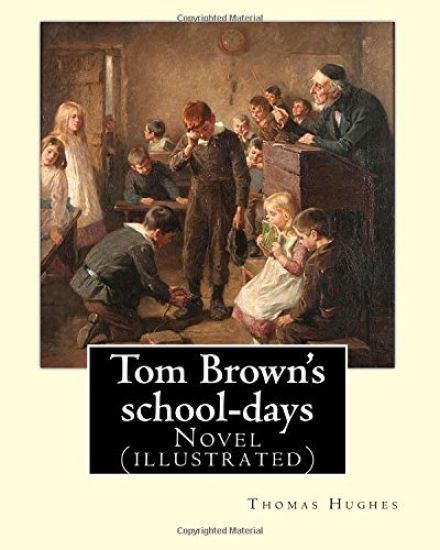
![Tom Brown's School Days. by an Old Boy [I.E. Thomas Hughes]. Third Edition.](/covers/9781241207380.jpg)
![Tom Brown's School Days. by an Old Boy [I.E. Thomas Hughes]. Third Edition.](/covers/9781241371319.jpg)
