Kirjojen hintavertailu. Mukana 12 390 323 kirjaa ja 12 kauppaa.

Kirjahaku

Etsi kirjoja tekijän nimen, kirjan nimen tai ISBN:n perusteella.

1000 tulosta hakusanalla Thomas J Morrissey

Mission to a Suffering People

Mission to a Suffering People

Thomas J Morrissey

Messenger Publications
2021
nidottu
In 16th and 17th century Ireland religion and nationality fused together in a people’s struggle to survive. In that struggle the country’s links with Europe provided a life line. Members of religious orders, with their international roots, played an important role. Among them were the Irish Jesuits, who adapted to a variety of situations – from quiet work in Irish towns to serving as an emissary for Hugh O’Neill in the south of Ireland and in the courts of Rome and Spain, and then founding seminary colleges in Spain and Portugal from which young Irishmen returned to keep faith and hope alive. In the seventeenth century persecution was more haphazard. There were opportunities for preaching and teaching and, at time, especially during the Confederation of Kilkenny in the 1640s, for the open celebration of one’s religion. This freedom gave way to the savage persecution under Cromwell, which resulted in the killing of some Jesuits and others being forced to find shelter in caves, sepulchres, and bogs, the Jesuit superior dying alone in a shepherd’s hut on an island off Galway. There followed a time of more relaxed laws during which Irish Jesuits publicly ran schools in New Ross and, for Oliver Plunkett, in Drogheda, but persecution soon resumed and Oliver Plunkett was arrested and martyred. At the end of the century, as the forces of King James II were finally defeated, some Jesuits lived and worked through the sieges of Limerick and then nerved themselves to face the Penal Laws in the new century.
Judge John O'Hagan 1825-1890

Judge John O'Hagan 1825-1890

Thomas J Morrissey

Messenger Publications
2022
nidottu
Born in Newry, educated at a Jesuit school in Dublin, John O’Hagan studied Law and Arts at Dublin University. There he became friendly with Thomas Davis, Gavan Duffy, and other Young Irelanders. He wrote for the Nation newspaper and was the author of some of its best known ballads. He toured Munster with Duffy and the poet Denis Florence McCarthy, and Ulster with Duffy and John Mitchel, and published accounts of both adventures, which cast light on the country side and people during the 1840s. After the 1848 revolution, O’Hagan worked as a lawyer on the Munster Circuit. Subsequently, he became friendly with John Henry Newman and lectured in Law, Literature and the Arts in Newman’s Catholic University. He stayed in touch with Newman after the latter had returned to England. In the 1860s, O’Hagan was appointed a Commissioner for National Education, a post and subject of great interest to him up to his death. In that decade also he married Frances O’Hagan, who was much younger than him. They had a happy marriage and their house on the hill of Howth was a welcome centre for poets such as Gerard Manley Hopkins and Aubrey de Vere, and a range of friends, writers, educationists, lawyers, and clergy. John O’Hagan prospered in a career in equity law, and he was appointed in turn chairman of the court of quarter sessions in Leitrim and in Clare. While in Clare, the title was raised to that of Judge. In 1880 he was appointed to take charge of the land commission arising from Mr Gladstone’s Land Act of 1881. He died in 1890 widely mourned and praised as a man of integrity who, in the words of The Spectator magazine, was ‘known to all not only as a most learned and experienced lawyer with a serene temper and a judgement of rare balance, but as a scholar of wide and liberal culture, a man beloved and respected by all who knew him’.
The Ireland of Edward Cahill SJ 1868-1941

The Ireland of Edward Cahill SJ 1868-1941

Thomas J Morrissey

Messenger Publications
2016
nidottu
Edward Cahill SJ was a well-known and influential figure in Ireland during the early decades of the new Irish state. As Professor of Ecclesiastical History and Sociology at the Jesuit House of Studies in Dublin, his research led him to view liberalism as the great enemy of the faith and spiritual values of the majority of the Irish people. He identified with liberalism the exclusion of God from public life and a strong emphasis on secularism, and also the excesses of laissez-faire capitalism. He sought to counter this by teaching a Christian sociology based on the papal social encyclicals. Cahill gathered around him a lay organisation of men and women drawn from all walks of life, known as An Ríoghacht, which became influential in the 1930s. Mr and Mrs de Valera were good friends of Cahill and shared many of his views. His magnum opus, widely read at the time, was entitled The Framework of a Christian State.
Robert St Leger SJ (1788-1856)

Robert St Leger SJ (1788-1856)

Thomas J Morrissey

Messenger Publications
2026
nidottu
Robert St Leger SJ lived and worked in the first half of the nineteenth century. Born in Ireland, he was educated at the Jesuit college at Stonyhurst, England, where he experienced God’s call to become a Jesuit. Even by the standards of the day, his wide-ranging skills and acquired experience during the course of his life and mission were impressive. However, like many Irish Catholics in the 18th and 19th centuries, he left very little in the way of personal documents. Fellow Jesuit Thomas J Morrissey SJ, author of several books on historical Jesuits of note, has gathered information from religious institutions and government organisations to compile a chronology of St Leger’s life and activities. In doing so, he documents the depth of St Leger’s vocation and the extent of his hard work and brings a little-known but impactful spiritual guide, educationist and administrator out from the shadows of history.
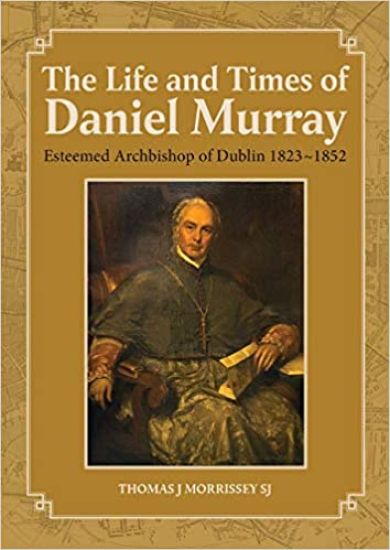
The Life and Times of Daniel Murray

The Life and Times of Daniel Murray

Thomas J. Morrissey

Messenger Publications
2018
sidottu
Daniel Murray was undoubtedly the outstanding Irish Catholic archbishop of the nineteenth century. He was a man of elegance and charm, ready to listen to others and to find good in them. To the redoubtable Bishop Doyle of Kildare and Leighlin, the archbishop was `an angel of a man’.His concern for the education of the poor led to the founding of the Irish Sisters of Charity and the invitation to Dublin of the Sisters of Mercy and the Irish Christian Brothers. His interest in the education of the middle class was manifested in the foundation of the Sisters of Loreto and in his support for the schools of the Jesuits and the Vincentians. A man of great pastoral energy, he built numerous churches and readily encouraged lay involvement in the work of the diocese. He was actively involved in assisting the Holy See in the appointment of priests and bishops around the world and his efforts to provide aid to the needy during the Great Famine, and the veneration and respect he inspired in his clergy, further contributed to the high esteem in which he was held. And yet, he is a virtually forgotten figure in Irish history.This neglect is related to the stance he took on some issues of the day – his support for certain government initiatives, his opposition to his clergy’s involvement in politics, and his caution about openly supporting Repeal.
Pinocchio Goes Postmodern

Pinocchio Goes Postmodern

Richard Wunderlich; Thomas J. Morrissey

Routledge
2008
nidottu
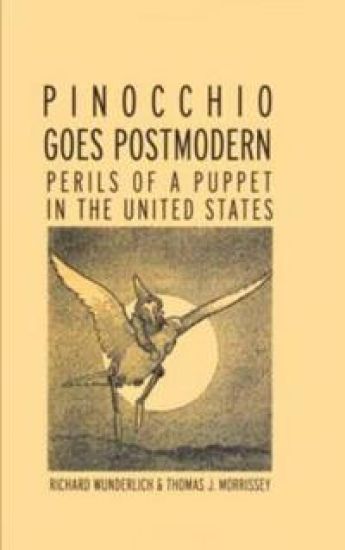
In the first full-length study in English of Carlo Collodi's The Adventures of Pinocchio, the authors show how the checkered history of the puppet illuminates social change from the pre World War One era to the present. The authors argue that most Americans know a trivialized, diluted version of the tale, one such source is Disney's perennial classic. The authors also discover that when adults are introduced to the 'real' story, they often deem it as unsuitable for children. Placing the puppet in a variety of contexts, the authors chart the progression of this childhood tale that has frequently undergone dramatic revisions to suit America's idea of children's literature.
Pinocchio Goes Postmodern

Pinocchio Goes Postmodern

Richard Wunderlich; Thomas J. Morrissey

CRC Press Inc
2002
sidottu
In the first full-length study in English of Carlo Collodi's The Adventures of Pinocchio, the authors show how the checkered history of the puppet illuminates social change from the pre World War One era to the present. The authors argue that most Americans know a trivialized, diluted version of the tale, one such source is Disney's perennial classic. The authors also discover that when adults are introduced to the 'real' story, they often deem it as unsuitable for children. Placing the puppet in a variety of contexts, the authors chart the progression of this childhood tale that has frequently undergone dramatic revisions to suit America's idea of children's literature.
Historical Industrial Buildings and their Real Estate Utilisation

Historical Industrial Buildings and their Real Estate Utilisation

Robin Groer; Patrick J. Morrissey; Thomas Glatte

Springer Fachmedien Wiesbaden
2025
nidottu
Both Germany and the United Kingdom have economically vital cities and peripheral locations that contain historic industrial structures or districts. This prompts the question of how to manage historic industrial buildings, and how they can be preserved to maintain their value while simultaneously benefiting future generations. This book focuses on the potential and redevelopment opportunities of historical industrial buildings. While on the one hand, these historical industrial buildings reflect culturally significant buildings and sites deserving of appreciation and hence preservation, on the other hand, they are frequently situated in promising and fascinating locations that could represent significant possibilities for urban development and neighborhood planning. This publication is part of the series Studien zum nachhaltigen Bauen und Wirtschaften.
Thomas J. Wise

Thomas J. Wise

University of Texas Press
1960
pokkari
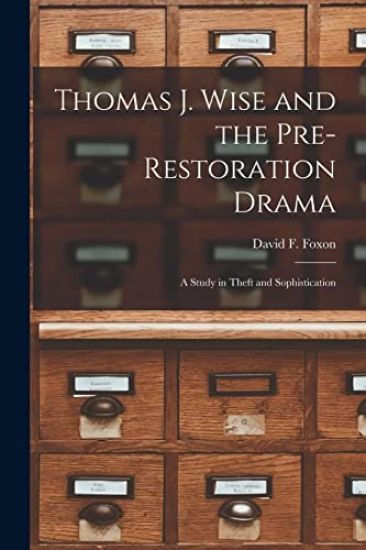
Thomas James Wise (1859–1937), though destined to receive in his own lifetime practically every honor the world of letters could bestow, is remembered today as perhaps the greatest malefactor in all of literary history. From 1934 to 1957 various enquiries have implicated him first in the manufacture of more than fifty predated "original" editions of eminent Victorian authors, then in seven additional forgeries, later in countless piracies of other nineteenth-century work, and finally in repeated acts of vandalism upon forty-one seventeenth-century plays. It is fitting that Wise himself appears as a contributor to this volume. Included are his original introduction to the Browning Library, his letters to bookseller J. E. Cornish, his extraordinary letter to Sir Edmund Gosse, and a note to H. Buxton Forman. These Centenary Studies review the course of research over twenty-five years, designate topics requiring further investigation, and assess new evidence of Wise's villainies. One more forgery is identified, the provenance of others reexamined, the forger's method of purveying his wares closely appraised, his association with H. Buxton Forman and Sir Edmund Gosse more precisely defined, and the range of his activities summarized in an annotated handlist. The record includes at least 400 printings directly attributed to Wise, as well as 23 suppressed or abortive issues, and 29 others in which he seems to be somewhat involved. Through these perspectives the culprit appears even more contemptible and, possibly for this very reason, ever more intriguing as a cause célèbre in literary scholarship. The illustration on the cover of this book reproduces, through a magnifying glass, the peculiar question mark appearing in certain forgeries printed for Wise by the firm of Richard Clay & Sons. The mark may also implicate Wise in other irregular printings, including The Death of Balder.
Thomas J. Wood

Thomas J. Wood

Dan Lee

McFarland Co Inc
2012
pokkari
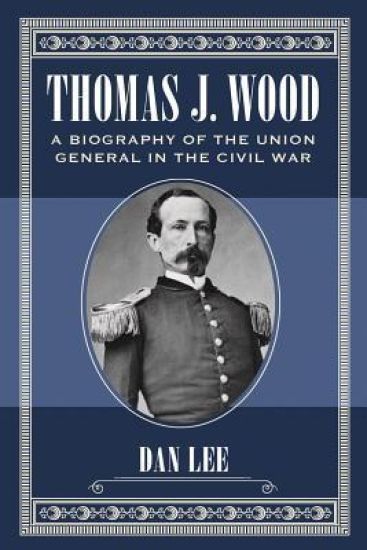
Thomas J. Wood, Kentuckian, graduated fifth in his West Point class in 1846 and joined the staff of General Zachary Taylor. The Mexican War was just beginning and Wood fought in several battles after which he served under General Winfield Scott in Mexico City. In 1861, Wood became a brigadier general of volunteers and began his Civil War service with the Army of the Cumberland, with whom he fought in every campaign and most of its major battles. Wood has never before been the subject of a full length biography but is well known for a notorious lapse of judgment resulting in a Confederate breakthrough at Chickamauga that shattered the Union right flank and threatened the survival of the Army of the Cumberland. It is a moment in the war still argued about. Wood learned from his mistake, became a better general from that time on (notably at Missionary Ridge and Nashville), and redeemed himself in the eyes of his fellow officers and his civilian superiors.
Two Soldiers: The Campaign Diaries of Thomas J. Key, and Robert J. Campbell

Two Soldiers: The Campaign Diaries of Thomas J. Key, and Robert J. Campbell

Thomas J. Key; Robert J. Campbell; Wirt Armistead Cate

Literary Licensing, LLC
2011
sidottu
""Two Soldiers: The Campaign Diaries of Thomas J. Key and Robert J. Campbell"" is a historical book that provides a firsthand account of the American Civil War. The book is a compilation of the personal diaries of two soldiers - Thomas J. Key and Robert J. Campbell - who fought on opposite sides of the war. Key was a Confederate soldier from Virginia, while Campbell was a Union soldier from Ohio.The diaries cover the period from 1861 to 1865 and provide an intimate look at the daily lives of soldiers during the war. The entries detail the harsh conditions of camp life, the brutality of battle, and the toll that the war took on both the soldiers and their families.Through their diaries, Key and Campbell provide unique perspectives on the war and its impact on the nation. Their accounts offer insights into the motivations and experiences of soldiers on both sides of the conflict, and shed light on the complex political and social issues that led to the war.Overall, ""Two Soldiers"" is a fascinating and informative book that provides a valuable window into one of the most significant events in American history.The Campaign Diaries Of Thomas J. Key, December 7, 1863 To May 17, 1865 And Robert J. Campbell January 1, 1864 To July 21, 1864.This scarce antiquarian book is a facsimile reprint of the old original and may contain some imperfections such as library marks and notations. Because we believe this work is culturally important, we have made it available as part of our commitment for protecting, preserving, and promoting the world's literature in affordable, high quality, modern editions, that are true to their original work.
Thomas J. J. Altizer, America's 20th Century Religious Heretic
Thomas J. J. Altizer, America’s 20th Century Religious Heretic: An Analytic Bibliography of the Writings of Altizer and the Death of God Theme is a 50-year-plus analytical English-language bibliography covering: 1) all the published works by Thomas Altizer and 2) writings of others that have explored the "death of God" theme. The bibliography (including books, journal and magazine articles, newspaper stories, sermons, book reviews, and letters) is arranged chronologically by year. The first introductory essay addresses questions and concerns about Altizer and his writings; the second introductory essay provides a guide to the structure of the bibliography. Four extensive indexes covering persons named, essay titles, book titles, and periodical titles are included.