
Kirjahaku
Etsi kirjoja tekijän nimen, kirjan nimen tai ISBN:n perusteella.
1000 tulosta hakusanalla Thomas J. Brown


![Controversial Letters, in Rhyme, Between Two Country Schoolmasters in the County of Meath [P. Lowth and T. J. Browne].](/covers/9781241146177.jpg)
Controversial Letters, in Rhyme, Between Two Country Schoolmasters in the County of Meath [P. Lowth and T. J. Browne].
Patrick Lowth; Thomas J Browne
British Library, Historical Print Editions
2011
pokkari

The men of the U.S. Navy's brown-water force played a vital but often overlooked role in the Vietnam War. Known for their black berets and limitless courage, they maneuvered their aging, makeshift craft along shallow coastal waters and twisting inland waterways to search out the enemy. In this moving tribute to their contributions and sacrifices, Tom Cutler records their dramatic story as only a participant could. His own Vietnam experience enables him to add a striking human dimension to the account. The terror of firefights along the jungle-lined rivers, the rigors of camp life, and the sudden perils of guerrilla warfare are conveyed with authenticity. At the same time, the author's training as a historian allows him to objectively describe the scope of the navy's operations and evaluate their effectiveness.Winner of the Navy League's Alfred Thayer Mahan Award for Literary Achievement in 1988 when the book was first published, Cutler is credited with having written the definitive history of the brown-water sailors, an effort that has helped readers better understand the nature of U.S. involvement in the war.
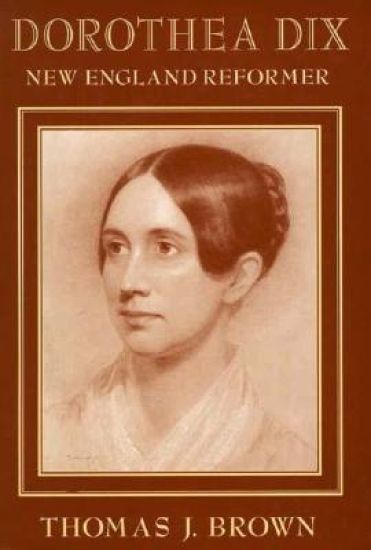
Dorothea Dix was the most politically engaged woman of her generation, which was itself a remarkable tapestry of activists. An influential lobbyist as well as a paragon of the doctrine of female benevolence, she vividly illustrated the complexities of the "separate spheres" of politics and femininity. Her greatest legislative initiative, a campaign for federal land grants to endow state mental hospitals, assumed a central role in the public land controversies that intertwined with the slavery issues in Congress following the Mexican War. The passage of this legislation in 1854, and its subsequent veto by President Pierce, touched off the most protracted effort to override a veto that had yet taken place.An activist who disdained the women's rights and antislavery movements, Dix, an old-line Whig, sought to promote national harmony and became the only New England social reformer to work successfully in the lower South right up to the eve of secession. When war broke out, she sought to achieve as Superintendent of Women Nurses the sort of cultural authority she had seen Florence Nightingale win in the same role during the Crimean War. The disastrous failure of one of the most widely admired heroines in the nation provides a dramatic measure of the transformations of northern values during the war.
To find more information on Rowman & Littlefield titles, please visit us at www.rowmanlittlefield.com.

In this compelling new study, Carol E. Harrison and Thomas J. Brown chart the rise and fall of the Zouave military uniform, the nineteenth century's most important fashion fad for men and women on both sides of the Atlantic. Originating in French colonial Algeria, the uniform was characterized by an open, collarless jacket, baggy trousers, and a fez. As Harrison and Brown demonstrate, the Zouaves embraced ethnic, racial, and gender crossing, liberating themselves from the strictures of bourgeois society. Some served as soldiers in Papal Rome, the United States, the British West Indies, and Brazil, while others acted in theatrical performances that combined drag and drill. Zouave Theaters analyzes the interaction of the stage and the military, and reveals that the Zouave persona influenced visual artists from painters and photographers to illustrators and filmmakers.

This book has been considered by academicians and scholars of great significance and value to literature. This forms a part of the knowledge base for future generations. We have represented this book in the same form as it was first published. Hence any marks seen are left intentionally to preserve its true nature.


Questions On Subjects Connected With The Marine Steam Engine, And Examination Papers
Thomas J. Main; Thomas Brown
KESSINGER PUBLISHING CO
2008
pokkari
Intricately shaped and amazingly sensitive, ears are the organs of hearing and balance. When something goes wrong with the ears-whether infection or cancer, eardrum perforation or hearing loss-our overall well-being is generally disturbed. In The Ear Book, Drs. Thomas J. Balkany and Kevin D. Brown, recognized experts on ears and hearing, explain how the anatomy of the ear facilitates hearing and balance and then examine the causes, symptoms, and treatment of common problems of the outer, middle, and inner ear. Their explanations take the mystery out of hearing aids, the proper care of ears, and how the pressurized conditions of scuba diving and air travel affect the ears. And they debunk ear-related myths-from the notion that exposure to loud noise strengthens the ear to the idea that tinnitus can be cured with nutrients-and urge readers to stop using ear candling or Q-tips to get rid of wax. Drs. Balkany and Brown address such common questions as: Can dizziness be cured? How loud is too loud? Why do my ears ring? Do cochlear implants work for nerve deafness? What promise do innovations in gene therapy and stem cell therapy hold for the future? Fully illustrated and including helpful tables, hearing preservation tips, a glossary of terms, lists of ear medications and resources, and suggestions for further reading, The Ear Book is sure to be a welcome family guide.

Intricately shaped and amazingly sensitive, ears are the organs of hearing and balance. When something goes wrong with the ears-whether infection or cancer, eardrum perforation or hearing loss-our overall well-being is generally disturbed. In The Ear Book, Drs. Thomas J. Balkany and Kevin D. Brown, recognized experts on ears and hearing, explain how the anatomy of the ear facilitates hearing and balance and then examine the causes, symptoms, and treatment of common problems of the outer, middle, and inner ear. Their explanations take the mystery out of hearing aids, the proper care of ears, and how the pressurized conditions of scuba diving and air travel affect the ears. And they debunk ear-related myths-from the notion that exposure to loud noise strengthens the ear to the idea that tinnitus can be cured with nutrients-and urge readers to stop using ear candling or Q-tips to get rid of wax. Drs. Balkany and Brown address such common questions as: Can dizziness be cured? How loud is too loud? Why do my ears ring? Do cochlear implants work for nerve deafness? What promise do innovations in gene therapy and stem cell therapy hold for the future? Fully illustrated and including helpful tables, hearing preservation tips, a glossary of terms, lists of ear medications and resources, and suggestions for further reading, The Ear Book is sure to be a welcome family guide.
In this expansive history of South Carolina's commemoration of the Civil War era, Thomas Brown uses the lens of place to examine the ways that landmarks of Confederate memory have helped white southerners negotiate their shifting political, social, and economic positions. By looking at prominent sites such as Fort Sumter, Charleston's Magnolia Cemetery, and the South Carolina statehouse, Brown reveals a dynamic pattern of contestation and change. He highlights transformations of gender norms and establishes a fresh perspective on race in Civil War remembrance by emphasizing the fluidity of racial identity within the politics of white supremacy.Despite the conservative ideology that connects these sites, Brown argues that the Confederate canon of memory has adapted to address varied challenges of modernity from the war's end to the present, when enthusiasts turn to fantasy to renew a faded myth while children of the civil rights era look for a usable Confederate past. In surveying a rich, controversial, and sometimes even comical cultural landscape, Brown illuminates the workings of collective memory sustained by engagement with the particularity of place.
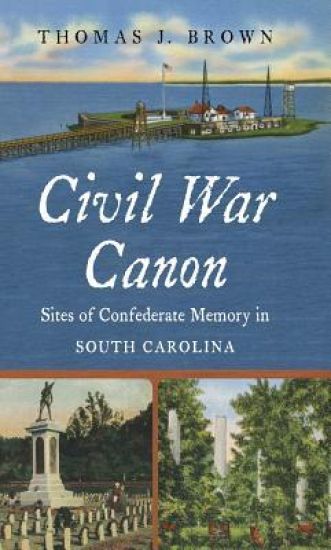
In this expansive history of South Carolina's commemoration of the Civil War era, Thomas Brown uses the lens of place to examine the ways that landmarks of Confederate memory have helped white southerners negotiate their shifting political, social, and economic positions. By looking at prominent sites such as Fort Sumter, Charleston's Magnolia Cemetery, and the South Carolina statehouse, Brown reveals a dynamic pattern of contestation and change. He highlights transformations of gender norms and establishes a fresh perspective on race in Civil War remembrance by emphasizing the fluidity of racial identity within the politics of white supremacy.Despite the conservative ideology that connects these sites, Brown argues that the Confederate canon of memory has adapted to address varied challenges of modernity from the war's end to the present, when enthusiasts turn to fantasy to renew a faded myth while children of the civil rights era look for a usable Confederate past. In surveying a rich, controversial, and sometimes even comical cultural landscape, Brown illuminates the workings of collective memory sustained by engagement with the particularity of place.
Civil War Monuments and the Militarization of America
Brown Thomas J.
The University of North Carolina Press
2019
sidottu
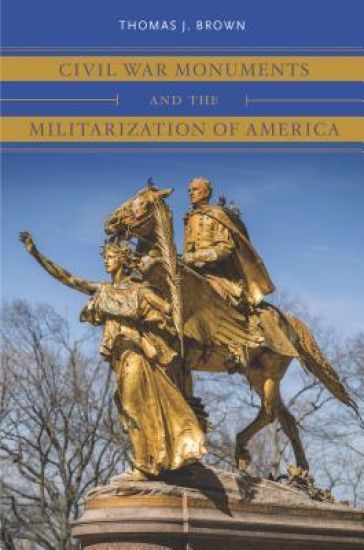
This sweeping new assessment of Civil War monuments unveiled in the United States between the 1860s and 1930s argues that they were pivotal to a national embrace of military values. Americans' wariness of standing armies limited construction of war memorials in the early republic, Thomas J. Brown explains, and continued to influence commemoration after the Civil War. As large cities and small towns across the North and South installed an astonishing range of statues, memorial halls, and other sculptural and architectural tributes to Civil War heroes, communities debated the relationship of military service to civilian life through fund-raising campaigns, artistic designs, oratory, and ceremonial practices. Brown shows that distrust of standing armies gave way to broader enthusiasm for soldiers in the Gilded Age. Some important projects challenged the trend, but many Civil War monuments proposed new norms of discipline and vigor that lifted veterans to a favored political status and modeled racial and class hierarchies. A half century of Civil War commemoration reshaped remembrance of the American Revolution and guided American responses to World War I. Brown provides the most comprehensive overview of the American war memorial as a cultural form and reframes the national debate over Civil War monuments that remain potent presences on the civic landscape.
Civil War Monuments and the Militarization of America
Brown Thomas J.
The University of North Carolina Press
2019
nidottu
This sweeping new assessment of Civil War monuments unveiled in the United States between the 1860s and 1930s argues that they were pivotal to a national embrace of military values. Americans' wariness of standing armies limited construction of war memorials in the early republic, Thomas J. Brown explains, and continued to influence commemoration after the Civil War. As large cities and small towns across the North and South installed an astonishing range of statues, memorial halls, and other sculptural and architectural tributes to Civil War heroes, communities debated the relationship of military service to civilian life through fund-raising campaigns, artistic designs, oratory, and ceremonial practices. Brown shows that distrust of standing armies gave way to broader enthusiasm for soldiers in the Gilded Age. Some important projects challenged the trend, but many Civil War monuments proposed new norms of discipline and vigor that lifted veterans to a favored political status and modeled racial and class hierarchies. A half century of Civil War commemoration reshaped remembrance of the American Revolution and guided American responses to World War I. Brown provides the most comprehensive overview of the American war memorial as a cultural form and reframes the national debate over Civil War monuments that remain potent presences on the civic landscape.