

Kirjahaku
Etsi kirjoja tekijän nimen, kirjan nimen tai ISBN:n perusteella.
1000 tulosta hakusanalla Thomas L. Friedman

La Tierra es plana de Thomas L. Friedman (Análisis de la obra)
50Minutos.es
2017
pokkari

Summary: That Used to Be Us: Review and Analysis of Thomas L. Friedman and Michael Mandelbaum's Book
Businessnews Publishing
Political Book Summaries
2017
nidottu

Summary: The World Is Flat: Review and Analysis of Thomas L. Friedman's Book
Businessnews Publishing
Political Book Summaries
2017
nidottu
The must-read summary of Thomas L. Friedman's book: "The World is Flat: The Globalized World in the Twenty-First Century". This complete summary of "The World is Flat" by Thomas L. Friedman, a Pulitzer Prize-winning writer and columnist, presents his analysis of how advances in technology will lead to a 'flattening' of the world as people are increasingly connected and knowledge is now widespread. He questions if the world has become too flat for us to adjust and he compares the benefits and disadvantages of these developments. The book is a revealing investigation into technology and the impact it has on our world, and is sure to leave the reader thinking. Added-value of this summary: - Save time- Understand how technology and connectivity impact our lives and our politics- Expand your knowledge of global politics and economics To learn more, read "The World is Flat" and discover what technological advances really mean for the future of our societies.

Die Welt ist flach. Zusammenfassung & Analyse des Bestsellers von Thomas L. Friedman
50Minuten.de
2019
pokkari
Pr gnante Zusammenfassung und kritische Analyse zu Thomas L. Friedmans Die Welt ist flach: Eine kurze Geschichte des 21. JahrhundertsFriedman kam die Idee zu seinem Buch ber Globalisierung bei einer Reise durch Indiens IT-Zentren. Der mehrfache Pulitzer-Preistr ger vertritt die Meinung, dass die Welt umso flacher wird, je st rker die Menschen miteinander vernetzt sind. Er f hrt dabei zehn Faktoren an, alles Ereignisse und Tendenzen, die seit der Digitalen Revolution zur Verflachung der Welt f hrten. F r Friedman ist Globalisierung ein absolut positiver Prozess, von dem alle profitieren, wenn sie ihn richtig angehen und in die Zukunft - insbesondere Bildung - investieren. Die Welt ist flach wurde zu einem weltweiten Bestseller, erfuhr aber insbesondere bei Gegnern des Liberalismus auch Kritik. Nach 50 Minuten kennen Sie: - Thomas L. Friedmans 3 Phasen des Globalisierungsprozesses- Thomas L. Friedmans 10 Kr fte, die die Welt einebneten - Thomas L. Friedmans L sungsvorschl ge f r die Globalisierungsrisiken Eine neue Perspektive in nur 50 Minuten - Bestseller auf den Punkt gebracht ber 50MINUTEN.DE NON-FICTION KOMPAKTDie Serie Non-Fiction kompakt der Reihe 50Minuten eignet sich f r Leserinnen und Leser, die von Experten lernen m chten, ohne dabei viele Stunden in die Lekt re zu investieren. Pr gnante Zusammenfassungen vermitteln kompakt die wichtigsten Inhalte bedeutender Bestseller, inklusive spannender Zusatzinformationen zu Kontext und Autoren. Kritische Analysen beleuchten au erdem unterschiedliche Perspektiven zu den dargestellten Konzepten, deren Schw chen, St rken und weitere Ankn pfungspunkte. Und all das in nur 50 Minuten Die B cher sind sowohl im Papierformat als auch digital erh ltlich.

Longitudes and Attitudes brings together reportage and reflections by one of the world's most admired journalists about the state of the world leading up to and after September 11, 2001 - the most momentous news story of our time. Travelling throughout the Middle East and Europe, Friedman talks to men and women in bazaars, schools and alleyways, as well as the world's leading political figures, developing and refining his unique perspective on the new kind of war the West finds itself fighting.
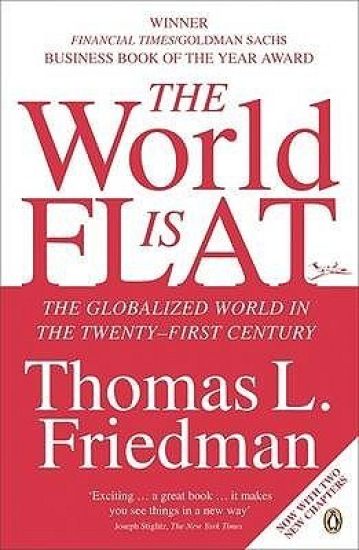
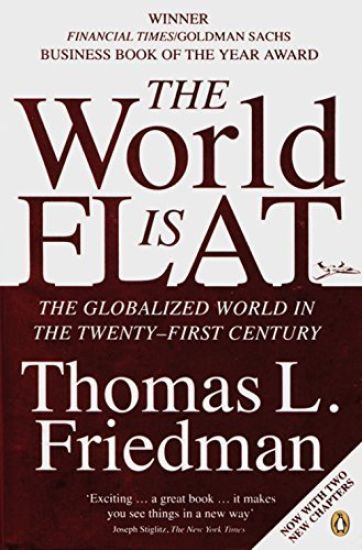
The beginning of the twenty-first century will be remembered, Friedman argues, not for military conflicts or political events, but for a whole new age of globalization – a ‘flattening’ of the world. The explosion of advanced technologies now means that suddenly knowledge pools and resources have connected all over the planet, levelling the playing field as never before, so that each of us is potentially an equal – and competitor – of the other. The rules of the game have changed forever – but does this ‘death of distance’, which requires us all to run faster in order to stay in the same place, mean the world has got too small and too flat too fast for us to adjust? Friedman brilliantly demystifies the exciting, often bewildering, global scene unfolding before our eyes, one which we sense but barely yet understand. The World is Flat is the most timely and essential update on globalization, its successes and its discontents, powerfully illuminated by a world-class writer. In his new chapters: 'If It's Not Happening, It's Because You're Not Doing It' and 'What Happens When We All Have Dog's Hearing?' the author explores both the benefits and disadvantages of the very latest developments in global communication. The emergent popularity of blogging, pod-casting, YouTube and MySpace enable the modern world citizen to broadcast their views to a potential audience of billions, and the proliferation of Internet access to even the poorest communities gives everyone who wants to the tools to address issues of social injustice and inequality. On the other hand the technology that seems to improve communication on a global scale causes it to deteriorate on a local scale. Identifying ours as 'The Age of Interruption', Friedman discusses the annoyance and dangers of BlackBerrys in meeting rooms, hands-free kits in conversation and using a phone or iPod whilst driving. In an age when we are always 'connected' via email or mobile phone how can we hope to concentrate on one thing without interruption? As expected the author has revitalised this new edition of The World Is Flat with timely insights into the nature of our flat world.

Thomas Friedman's phenomenal The World is Flat helped millions of people see globalization in a new way. Now he takes a fresh, provocative look at the biggest challenge facing us today - our hot, flat and crowded world.Climate change and rapid population growth mean that it's no longer possible for businesses, or the rest of us, to keep doing things the same old way. Things are going to have to change - and fast. Here Friedman provides a bold strategy for clean fuel, energy efficiency and conservation that he calls 'Code Green'. It will change everything, from what we put into our cars and see on our electricity bills to how we live our lives. Hot, Flat and Crowded is fearless, forward-looking and rich in common sense about the challenge - and the promise - of the future.
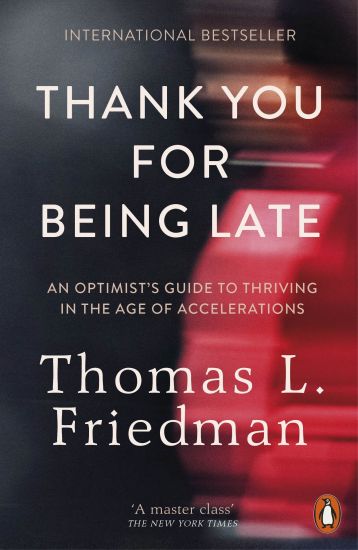
THE NEW INTERNATIONAL BESTSELLER FROM THE AUTHOR OF THE WORLD IS FLATWe all sense it: something big is going on. Life is speeding up, and it is dizzying. Here Thomas L. Friedman reveals the tectonic movements that are reshaping our world, how to adapt to this new age and why, sometimes, we all need to be late.'A master class ... As a guide for perplexed Westerners, this book is very hard to beat ... an honest, cohesive explanation for why the world is the way it is, without miracle cures or scapegoats' John Micklethwait, The New York Times Book Review'Wonderful ... admirably honest ... injects a badly needed dose of optimism into the modern debate' Gillian Tett, Financial Times'His main piece of advice for individuals, corporations, and countries is clear: Take a deep breath and adapt. This world isn't going to wait for you' Fortune'A humane and empathetic book' David Henkin, The Washington Post
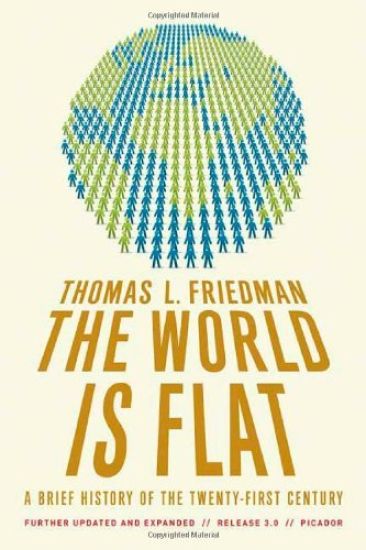
The World Is Flat 3.0: A Brief History of the Twenty-First Century (Further Updated and Expanded)
Thomas L. Friedman
Picador USA
2007
nidottu
A New Edition of the Phenomenal #1 Bestseller "One mark of a great book is that it makes you see things in a new way, and Mr. Friedman certainly succeeds in that goal," the Nobel laureate Joseph E. Stiglitz wrote in The New York Times reviewing The World Is Flat in 2005. In this new edition, Thomas L. Friedman includes fresh stories and insights to help us understand the flattening of the world. Weaving new information into his overall thesis, and answering the questions he has been most frequently asked by parents across the country, this third edition also includes two new chapters--on how to be a political activist and social entrepreneur in a flat world; and on the more troubling question of how to manage our reputations and privacy in a world where we are all becoming publishers and public figures. The World Is Flat 3.0 is an essential update on globalization, its opportunities for individual empowerment, its achievements at lifting millions out of poverty, and its drawbacks--environmental, social, and political, powerfully illuminated by the Pulitzer Prize--winning author of The Lexus and the Olive Tree.
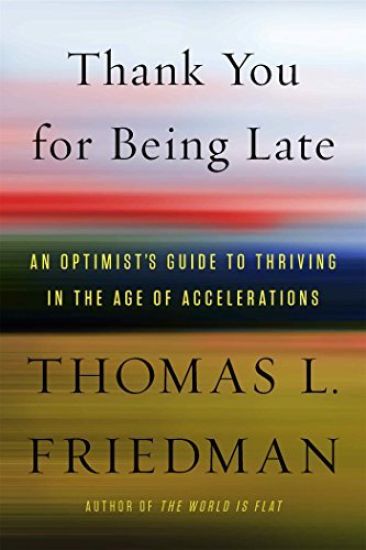
Thank You for Being Late: An Optimist's Guide to Thriving in the Age of Accelerations
Thomas L. Friedman
Farrar, Straus and Giroux
2016
sidottu
#1 New York Times Bestseller - Los Angeles Times Bestseller One of The Wall Street Journal's 10 Books to Read Now - One of Kirkus Reviews's Best Nonfiction Books of the Year - One of Publishers Weekly's Most Anticipated Books of the YearShortlisted for the OWL Business Book Award and Longlisted for the Financial Times and McKinsey Business Book of the Year Award Version 2.0, Updated and Expanded, with a New AfterwordWe all sense it--something big is going on. You feel it in your workplace. You feel it when you talk to your kids. You can't miss it when you read the newspapers or watch the news. Our lives are being transformed in so many realms all at once--and it is dizzying. In Thank You for Being Late, version 2.0, with a new afterword, Thomas L. Friedman exposes the tectonic movements that are reshaping the world today and explains how to get the most out of them and cushion their worst impacts. His thesis: to understand the twenty-first century, you need to understand that the planet's three largest forces--Moore's law (technology), the Market (globalization), and Mother Nature (climate change and biodiversity loss)--are accelerating all at once. These accelerations are transforming five key realms: the workplace, politics, geopolitics, ethics, and community. The year 2007 was the major inflection point: the release of the iPhone, together with advances in silicon chips, software, storage, sensors, and networking, created a new technology platform that is reshaping everything from how we hail a taxi to the fate of nations to our most intimate relationships. It is providing vast new opportunities for individuals and small groups to save the world--or to destroy it. With his trademark vitality, wit, and optimism, Friedman shows that we can overcome the multiple stresses of an age of accelerations--if we slow down, if we dare to be late and use the time to reimagine work, politics, and community. Thank You for Being Late is an essential guide to the present and the future.
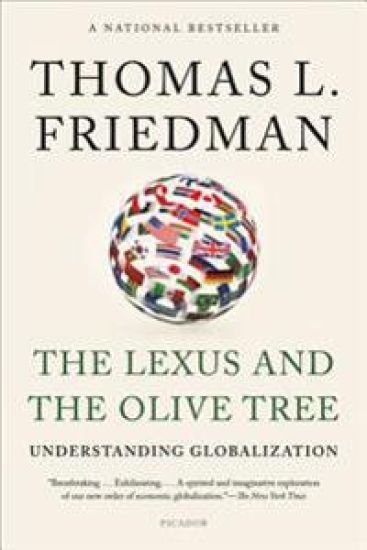
"A brilliant guide for the here and now."---The New York Times Book Review In this vivid portrait of the new business world, Thomas L. Friedman shows how technology, capital, and information are transforming the global marketplace, leveling old geographic and geopolitical boundaries. With bold reporting and acute analysis, Friedman dramatizes the conflict between globalizing forces and local cultures, and he shows why a balance between progress and the preservation of ancient traditions will ensure a better future for all. The Lexus and the Olive Tree is an indispensable look at power and big change in the age of globalization.
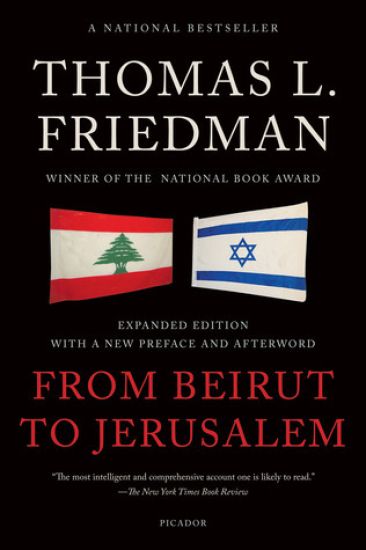
"If you're only going to read one book on the Middle East, this is it."---Seymour M. Hersh One of the most thought-provoking books ever written about the Middle East, From Beirut to Jerusalem remains vital to our understanding of this complex and volatile region of the world. Three-time Pulitzer Prize winner Thomas L. Friedman drew upon his ten years of experience reporting from Lebanon and Israel to write this now-classic work of journalism. In a new afterword, he updates his journey with a fresh discussion of the Arab Awakenings and how they are transforming the area, and a new look at relations between Israelis and Palestinians, and Israelis and Israelis. Rich with anecdote, history, analysis, and autobiography, From Beirut to Jerusalem will continue to shape how we see the Middle East for many years to come.
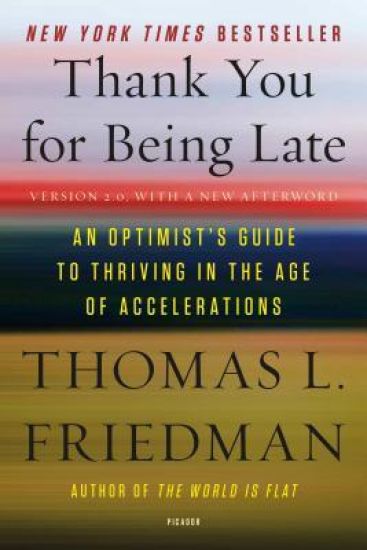
Thank You for Being Late: An Optimist's Guide to Thriving in the Age of Accelerations (Version 2.0, with a New Afterword)
Thomas L. Friedman
Picador USA
2017
nidottu
#1 New York Times Bestseller - Los Angeles Times Bestseller One of The Wall Street Journal's 10 Books to Read Now - One of Kirkus Reviews's Best Nonfiction Books of the Year - One of Publishers Weekly's Most Anticipated Books of the YearShortlisted for the OWL Business Book Award and Longlisted for the Financial Times and McKinsey Business Book of the Year Award Version 2.0, Updated and Expanded, with a New AfterwordWe all sense it--something big is going on. You feel it in your workplace. You feel it when you talk to your kids. You can't miss it when you read the newspapers or watch the news. Our lives are being transformed in so many realms all at once--and it is dizzying. In Thank You for Being Late, version 2.0, with a new afterword, Thomas L. Friedman exposes the tectonic movements that are reshaping the world today and explains how to get the most out of them and cushion their worst impacts. His thesis: to understand the twenty-first century, you need to understand that the planet's three largest forces--Moore's law (technology), the Market (globalization), and Mother Nature (climate change and biodiversity loss)--are accelerating all at once. These accelerations are transforming five key realms: the workplace, politics, geopolitics, ethics, and community. The year 2007 was the major inflection point: the release of the iPhone, together with advances in silicon chips, software, storage, sensors, and networking, created a new technology platform that is reshaping everything from how we hail a taxi to the fate of nations to our most intimate relationships. It is providing vast new opportunities for individuals and small groups to save the world--or to destroy it. With his trademark vitality, wit, and optimism, Friedman shows that we can overcome the multiple stresses of an age of accelerations--if we slow down, if we dare to be late and use the time to reimagine work, politics, and community. Thank You for Being Late is an essential guide to the present and the future.
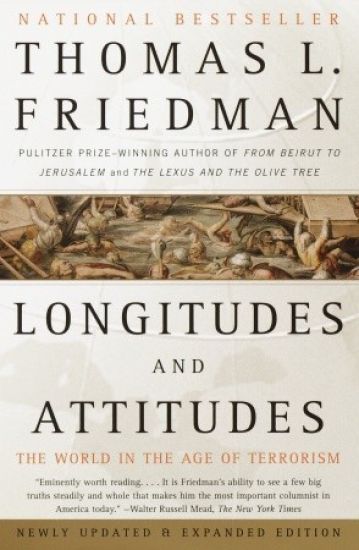
Longitudes and Attitudes: The World in the Age of Terrorism
Thomas L. Friedman
ANCHOR BOOKS
2003
nidottu
Collects the twice-weekly columns by the Pulitzer Prize-winning foreign affairs writer for the New York Times as published since September 11 to document the nation's emotional and analytical responses of the attacks and their aftermath. Reprint. 200,000 first printing.
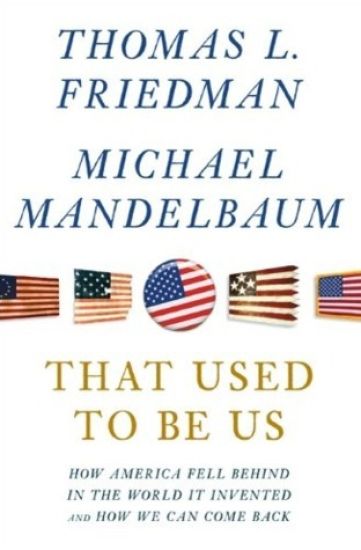
That Used to Be Us: How America Fell Behind in the World It Invented and How We Can Come Back
Thomas L. Friedman; Michael Mandelbaum
Picador USA
2012
nidottu
A New York Times Book Review Editors' ChoiceA Los Angeles Times Best Book of 2011 In That Used to Be Us, Thomas L. Friedman and Michael Mandelbaum analyze the four major challenges we face as a country---globalization, the revolution in information technology, chronic deficits, and our pattern of energy consumption---and spell out what we need to do now to preserve American power in the world. The end of the Cold War blinded the nation to the need to address these issues seriously, and China's educational successes, industrial might, and technological prowess in many ways remind us of a time when "that used to be us." But Friedman and Mandelbaum show how America's history, when properly understood, offers a five-part formula for prosperity that will enable us to cope successfully with the challenges we face. That Used to Be Us is both a searching exploration of the American condition today and a rousing manifesto for American renewal.

As Israelis and Palestinians negotiate separation and division of their land, Meron Benvenisti, former Deputy Mayor of Jerusalem, maintains that any expectations for 'peaceful partition' are doomed. In his brave and controversial new book, he raises the possibility of a confederation of Israel/Palestine, the only solution that he feels will bring lasting peace. The seven million people in the territory between Jordan and the Mediterranean are mutually dependent regarding employment, water, land use, ecology, transportation, and all other spheres of human activity. Each side, Benvenisti says, must accept the reality that two national entities are living within one geopolitical entity - their conflict is inter communal and will not be resolved by population transfers or land partition. A geographer and historian by training, a man passionately rooted in his homeland, Benvenisti skillfully conveys the perspective of both Israeli and Palestinian communities. He recognizes the great political and ideological resistance to a confederation, but argues that there are Israeli Jews and Palestinians who can envision an undivided land, where attachment to a common homeland is stronger than militant tribalism and segregation in national ghettos. Acknowledging that equal coexistence between Israeli and Palestinian may yet be an impossible dream, he insists that such a dream deserves a place in the current negotiations. 'Meron Benvenisti is the Middle East expert to whom Middle East experts go for advice...the most oft-quoted and oft-damned analyst in Israel' - from the Foreword by Thomas L. Friedman.

The Adaptation Advantage
Heather E. McGowan; Chris Shipley; Thomas L. Friedman
John Wiley Sons Inc
2020
nidottu
A guide for individuals and organizations navigating the complex and ambiguous Future of Work Foreword by New York Times columnist and best-selling author Thomas L. Friedman Technology is changing work as we know it. Cultural norms are undergoing tectonic shifts. A global pandemic proves that we are inextricably connected whether we choose to be or not. So much change, so quickly, is disorienting. It's undermining our sense of identity and challenging our ability to adapt. But where so many see these changes as threatening, Heather McGowan and Chris Shipley see the opportunity to open the flood gates of human potential—if we can change the way we think about work and leadership. They have dedicated the last 5 years to understanding how technical, business, and cultural shifts affecting the workplace have brought us to this crossroads, The result is a powerful and practical guide to the future of work for leaders and employees. The future can be better, but only if we let go of our attachment to our traditional (and disappearing) ideas about careers, and what a "good job" looks like. Blending wisdom from interviews with hundreds of executives, The Adaptation Advantage explains the profound changes happening in the world of work and posits the solution: new ways to think about careers that detach our sense of pride and personal identity from our job title, and connect it to our sense of purpose. Activating purpose, the authors suggest, will inherently motivate learning, engagement, empowerment, and lead to new forms of pride and identity throughout the workforce. Only when we let go of our rigid career identities can we embrace and appreciate the joys of learning and adapting to new realities—and help our organizations do the same. Of course, making this transition is hard. It requires leaders who can attract and motivate cognitively diverse teams fueled by a strong sense of purpose in an environment of psychological safety—despite fierce competition and external pressures. Adapting to the future of work has always called for strong leadership. Now, as a pandemic disrupts so many aspects of work, adapting is a leadership imperative. The Adaptation Advantage is an essential guide to help leaders meet that challenge.

An Early Evaluation of the My Career Advancement Account Scholarship for Military Spouses
Laura L Miller; David Knapp; Katharina Ley Best; Esther M Friedman; Gabriella C Gonzalez; Mark E Totten; Jennie W Wenger; Thomas E Trail; Marek N Posard; Ernesto F L Amaral
RAND
2019
nidottu