Kirjojen hintavertailu. Mukana 11 244 527 kirjaa ja 12 kauppaa.

Kirjahaku

Etsi kirjoja tekijän nimen, kirjan nimen tai ISBN:n perusteella.

1000 tulosta hakusanalla Thomas More; Ralph Robinson

Utopia

Utopia

Thomas More; Ralph Robinson

Hansebooks
2016
pokkari
Utopia - Originally printed in Latin, 1516 is an unchanged, high-quality reprint of the original edition of 1869. Hansebooks is editor of the literature on different topic areas such as research and science, travel and expeditions, cooking and nutrition, medicine, and other genres. As a publisher we focus on the preservation of historical literature. Many works of historical writers and scientists are available today as antiques only. Hansebooks newly publishes these books and contributes to the preservation of literature which has become rare and historical knowledge for the future.
Thomas More

Thomas More

Peter Marshall

Oxford University Press
2026
nidottu
Very Short Introductions: Brilliant, Sharp, Inspiring Thomas More is an enduringly fascinating and profoundly controversial figure. A brilliant scholar, his Utopia of 1516 dared to imagine how society might be completely reordered. At the same time, his hatred of the Reformation caused him to advocate, and seek to implement, the death penalty for heretics. A friend and advisor to Henry VIII, More's refusal to support Henry's break with Rome led to his execution in 1535, and the start of a long argument about his legacy. This Very Short Introduction assesses More's life, writings and achievements, and examines changing views of his character, in both historical interpretation and various works of fiction. ABOUT THE SERIES: The Very Short Introductions series from Oxford University Press contains hundreds of titles in almost every subject area. These pocket-sized books are the perfect way to get ahead in a new subject quickly. Our expert authors combine facts, analysis, perspective, new ideas, and enthusiasm to make interesting and challenging topics highly readable.
Thomas More

Thomas More

John Guy

SPCK Publishing
2019
pokkari
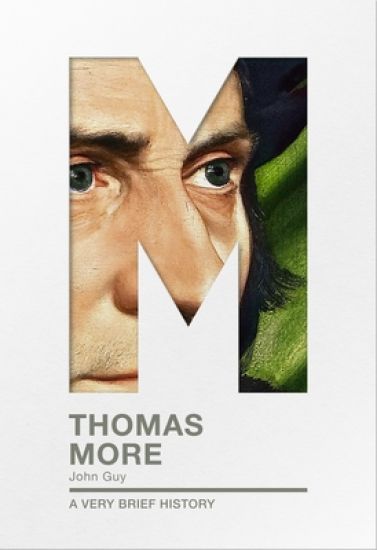
'If the English people were to be set a test to justify their history and civilization by the example of one man, then it is Sir Thomas More whom they would perhaps choose.' So commented The Times in 1978 on the 500th anniversary of More's birth. Twenty-two years later, Pope John Paul II proclaimed Thomas More the patron saint of politicians and people in public life, on the basis of his 'constant fidelity to legitimate authority and ... his intention to serve not power but the supreme ideal of justice'. In this fresh assessment of More's life and legacy, John Guy considers the factors that have given rise to such claims concerning More's significance. Who was the real Thomas More? Was he the saintly, self-possessed hero of conscience of Robert Bolt's A Man for All Seasons or was he the fanatical, heretic-hunting torturer of Hilary Mantel's Wolf Hall? Which of these images of More has the greater historical veracity? And why does this man continue to fascinate, inspire and provoke us today?
Thomas More

Thomas More

John Guy

SPCK Publishing
2017
sidottu
'If the English people were to be set a test to justify their history and civilization by the example of one man, then it is Sir Thomas More whom they would perhaps choose.' So commented The Times in 1978 on the 500th anniversary of More's birth. Twenty-two years later, Pope John Paul II proclaimed Thomas More the patron saint of politicians and people in public life, on the basis of his 'constant fidelity to legitimate authority and ... his intention to serve not power but the supreme ideal of justice'. In this fresh assessment of More's life and legacy, John Guy considers the factors that have given rise to such claims concerning More's significance. Who was the real Thomas More? Was he the saintly, self-possessed hero of conscience of Robert Bolt's A Man for All Seasons or was he the fanatical, heretic-hunting torturer of Hilary Mantel's Wolf Hall? Which of these images of More has the greater historical veracity? And why does this man continue to fascinate, inspire and provoke us today?
The Yale Edition of The Complete Works of St. Thomas More
More's Latin reply to Bugenhagen (1526), given here with a facing English translation, is a comparatively brief but intense rebuttal of the principal points of Lutheran teaching concerning scripture ant tradition, faith and works, grace and free will, clerical celibacy, and the sacraments. It presents arguments elaborated at much greater length in More's other polemical works. Supplication of Souls (1529) refutes A Supplication for the Beggars, an anticlerical pamphlet by Simon Fish which Henry VIII seems to have regarded with some favor. More places his response in the mouths of the souls in purgatory. In the first book, he contemptuously demolished Fish's loose railery with accurate statistics and historical analysis. In the second, he defends the traditional doctrine of purgatory with brief arguments drawn from reason and a detailed analysis of scriptural passages. Letter against Frith (1532) answers John Frith's Zwinglian arguments against the physical presence of Christ in the more. Written to an unknown correspondent, it is the briefest and mildest of More's polemical works and anticipates arguments presented moer elaborately in More's The Answer to a Poisoned Book (1533). Besides full introductions and commentaries, a glossary, and an index, this volume contains seven appendices giving the works to which More is replying and other thematic, historical, and bibliographical matter closely related to the three works by More.
Thomas More

Thomas More

Louis L. Martz

Yale University Press
1992
pokkari
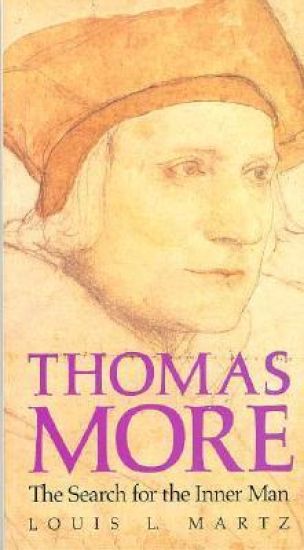
Recent writings about Thomas More have questioned his integrity and motivation and have challenged the long-held view of him as a humane, wise, and heroic "man for all seasons." This new book responds to these revisionist studies by closely and persuasively analyzing More's writings as well as Holbein's portraits of More and his family. "Martz cuts down the revived charge of More as a bloodthirsty hunter of heretics, a furious, sexually repressed, and frustrated man. . . . This penetrating rebuttal of the revisionists deserves high commendation."—Choice "Martz draws a compelling picture of More's attempts during his lonely imprisonment to adjust to his human fear of death and to see his own plight in the perspective of the universal human condition. In these essays More's voice and personality speak to us from his own literate and humorous prose."—M. Edmund Hussey, Antioch Review "In his gracefully written Thomas More: The Search for the Inner Man, Louis L. Martz provides a sharply different account of the 'dark side' of More. . . . [He] lays out the case for a more complex, ironic construction of More's texts."—Stanley Stewart, Studies in English Literature "This . . . book is a gemstone."—Terence R. Murphy, History: Reviews of New Books "Correcting the view of Thomas More as a cold-blooded prosecutor of heresy, Martz here considers the gentle, affectionate, yet upright man pictured in Holbein's family portraits and implicit in More's prose."—Judith Fair, Theological Studies
The Essential Works of Thomas More

The Essential Works of Thomas More

Thomas More

Yale University Press
2020
sidottu
The first comprehensive one-volume collection of St. Thomas More’s writing “[A] tremendous scholarly undertaking. . . . Accessible and transparent to both scholars and the general audience.”—Renaissance and Reformation In this book, Gerard B. Wegemer and Stephen W. Smith assemble, for the first time in a single volume, the most important English and Latin works of Thomas More (1478–1535). This collection reveals the breadth of More’s writing—key works on theology, political philosophy, and law, as well as his poetry and prose—and includes a rich selection of illustrations and artwork. The book provides the most complete picture of More’s work available, serving as a major resource for early modern scholars, teachers, students, and the general reader.
Thomas More

Thomas More

Albert J. Geritz

Greenwood Press
1998
sidottu
Few people have had as enduring an influence as Thomas More (1478-1535), who—along with Erasmus, with whom he corresponded—was the quintessential Renaissance Humanist. More had a deep understanding of the classics. He wrote poems in Latin and prepared Latin translations of Lucian's Greek dialogues. Like so many thinkers of his day, he had a strong interest in the philosophy of education. Trained as a lawyer, he was also a leading political figure of his time. He became a member of Parliament in 1504, speaker of the House of Commons in 1523, Chancellor of the Duchy of Lancaster in 1525, and Lord Chancellor in 1529. But most importantly, he was a theologian and religious leader and had once contemplated pursuing a religious vocation. He challenged the influence of Lutheranism; debated Christopher St. German about the limits of ecclesiastical jurisdiction in England; and wrote theological treatises on the sufferings of Christ, the nature of heresies, and other religious topics. Though he saw himself as the king's servant, he refused to acknowledge the authority of Henry VIII as spiritual head of England. For his defiance, he was executed; for his martyrdom, he was canonized. Many of his views are reflected in what is perhaps his most famous work, Utopia, in which he offers a fictional portrait of an ideal society.Research on More has flourished in the centuries after his death, particularly since his canonization. This bibliography includes more than 1600 annotated entries for major works on his life and writings not only written in English, but also in French, German, Dutch, Italian, Spanish, and Portuguese. It contains entries for books, chapters, journal articles, and numerous unpublished dissertations. The opening chapters cover reference works, editions, and editorial concerns. A chapter on biography precedes sections on general critical studies; More's reception, reputation, and influence; the religious and philosophical background of his works; and his language, style, and use of classical and Christian sources. Individual chapters then treat particular major works, such as his History of King Richard III, or clusters of his shorter writings, such as his English and Latin poems. Entries include cross-references, and the volume closes with a detailed index.
Saint Thomas More

Saint Thomas More

Thomas More

Random House USA Inc
2003
pokkari
Thomas More is perhaps most familiar to us from his courageous struggle with Henry VIII, unforgettably portrayed in Robert Bolt's classic, A Man for All Seasons. But that final struggle, which ended in his execution for treason, was only the crowning act in a life that he had devoted to God long before. In the first selection in decades made for the general reader from his collected works, this volume traces More's journey of moral conviction in his own words and writings. Drawing on a variety of More's late writings-the extraordinary "Tower Works," written in prison, his poignant last letters to his daughter Margaret, and his poems, private prayers and devotional works-this collection will provide even readers lacking a background in Renaissance humanism or history with a rich introduction to a startlingly modern man of spiritual principle. Also included is the famous "Life of Sir Thomas More," written by his son-in-law, William Roper. In the annals of spirituality certain books stand out both for their historical importance and for their continued relevance. The Vintage Spiritual Classics series offers the greatest of these works in authoritative new editions, with specially commissioned essays by noted contemporary commentators. Filled with eloquence and fresh insight, encouragement and solace, Vintage Spiritual Classics are incomparable resources for all readers who seek a more substantive understanding of mankind's relation to the divine.
Thomas More

Thomas More

Richard Marius

Harvard University Press
1999
nidottu
Over the centuries, biographers of Thomas More have frequently praised him and made him an example for their own times. He was a man for all seasons. This tudor prelate and Lord Chancellor of England shared human qualities identifiable in all ages - pride, love, ambition, generosity, hypocrisy and greed. He was less thancommon because he was witty and a great storyteller - possibly the best between Chaucer and Shakespeare. He was a true Renaissance man with the contradictions such praise imposes on a towering figure. In this biography, Sir Thomas More, the martyr and brilliant public figure, is a lesson for our time.
Thomas More

Thomas More

Joanne Paul

Polity Press
2016
sidottu
Thomas More remains one of the most enigmatic thinkers in history, due in large part to the enduring mysteries surrounding his best-known work, Utopia. He has been variously thought of as a reformer and a conservative, a civic humanist and a devout Christian, a proto-communist and a monarchical absolutist. His work spans contemporary disciplines from history to politics to literature, and his ideas have variously been taken up by seventeenth-century reformers and nineteenth-century communists. Through a comprehensive treatment of More's writing, from his earliest poetry to his reflections on suffering in the Tower of London, Joanne Paul engages with both the rich variety and some of the fundamental consistencies that run throughout More's works. In particular, Paul highlights More's concern with the destruction of what is held 'in common', whether it be in the commonwealth or in the body of the church. In so doing, she re-establishes More's place in the history of political thought, tracing the reception of his ideas to the present day. Paul's book serves as an essential foundation for any student encountering More's writing for the first time, as well as providing an innovative reconsideration of the place of his works in the history of ideas.
Thomas More

Thomas More

Joanne Paul

Polity Press
2016
nidottu
Thomas More remains one of the most enigmatic thinkers in history, due in large part to the enduring mysteries surrounding his best-known work, Utopia. He has been variously thought of as a reformer and a conservative, a civic humanist and a devout Christian, a proto-communist and a monarchical absolutist. His work spans contemporary disciplines from history to politics to literature, and his ideas have variously been taken up by seventeenth-century reformers and nineteenth-century communists. Through a comprehensive treatment of More's writing, from his earliest poetry to his reflections on suffering in the Tower of London, Joanne Paul engages with both the rich variety and some of the fundamental consistencies that run throughout More's works. In particular, Paul highlights More's concern with the destruction of what is held 'in common', whether it be in the commonwealth or in the body of the church. In so doing, she re-establishes More's place in the history of political thought, tracing the reception of his ideas to the present day. Paul's book serves as an essential foundation for any student encountering More's writing for the first time, as well as providing an innovative reconsideration of the place of his works in the history of ideas.
Thomas More

Thomas More

Barbara Yoffie

Liguori Publications,U.S.
2014
nidottu
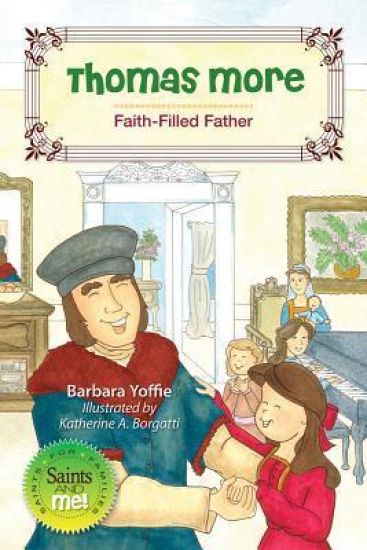
Saints are real-life heroes and heroines of faith who inspire us by their virtues to become more like Christ. In this series of beautifully illustrated early reader books, these real stories come to life and connect with a today's children, ages 4 to 9. St. Thomas More was the father of a happy and holy family. They prayed and read scripture together. He believed in living his faith and teaching by example. Loyalty to God was first and foremost in his life. A man of great integrity, he would not compromise his moral values. He shared his strong beliefs until his martyrdom in 1535. He is the patron saint of lawyers and public servants. His feast day is June 22. THEME: SHARE