Kirjahaku
Etsi kirjoja tekijän nimen, kirjan nimen tai ISBN:n perusteella.
1000 tulosta hakusanalla Thomas Philip
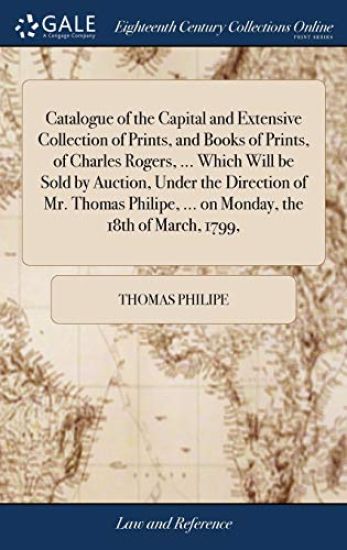
Catalogue of the Capital and Extensive Collection of Prints, and Books of Prints, of Charles Rogers, ... Which Will be Sold by Auction, Under the Direction of Mr. Thomas Philipe, ... on Monday, the 18th of March, 1799,
Thomas Philipe
Gale Ecco, Print Editions
2018
sidottu
The 18th century was a wealth of knowledge, exploration and rapidly growing technology and expanding record-keeping made possible by advances in the printing press. In its determination to preserve the century of revolution, Gale initiated a revolution of its own: digitization of epic proportions to preserve these invaluable works in the largest archive of its kind. Now for the first time these high-quality digital copies of original 18th century manuscripts are available in print, making them highly accessible to libraries, undergraduate students, and independent scholars.This collection reveals the history of English common law and Empire law in a vastly changing world of British expansion. Dominating the legal field is the Commentaries of the Law of England by Sir William Blackstone, which first appeared in 1765. Reference works such as almanacs and catalogues continue to educate us by revealing the day-to-day workings of society.]+++The below data was compiled from various identification fields in the bibliographic record of this title. This data is provided as an additional tool in helping to insure edition identification: ++++British LibraryT062847London: printed by G. Hayden, 1799]. 2], iv, 2],148p.; 8
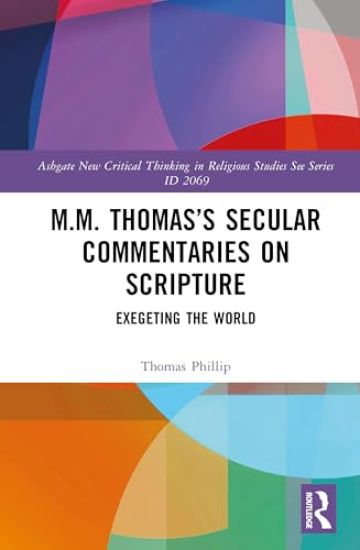
This book investigates M.M. Thomas’s biblical commentaries and their unique position at the intersection of religion and society. It explores how Thomas, inspired in part by Bonhoeffer’s “religionless Christianity,” adapted Western theological ideas and transformed them to reflect the social, political, and religious complexities of his own pluralistic context.By examining these commentaries, the book offers a fresh perspective on how Thomas engaged with the dynamic relationship between faith and society. It also contributes a new dimension to the study of Indian Christianity, marking the first in-depth study of Thomas’s secular biblical commentaries. This book provides a pioneering contribution to the field of the study of Indian Christianity and the study of non-Western contextual theologies. It enriches the growing literature on biblical hermeneutics by offering new insights into how scripture can be interpreted in diverse cultural and political contexts. By focusing on Thomas’s unique theological approach, this work not only enhances our understanding of Indian Christian thought but also broadens the scope of contemporary theological studies, particularly within the global South. It invites readers to consider how the intersection of theology and society shapes religious thought in pluralistic settings.This book is intended for scholars, graduate students, and those involved in church studies, as well as anyone interested in contextual theology and hermeneutics. It is especially relevant for readers keen on understanding Indian Christianity and exploring how theology interacts with the social and political issues present in non-Western contexts. The book will appeal to those looking to deepen their understanding of how faith adapts to and engages with the complexities of modern society.

Characteristics of the Duke of Wellington, Apart from His Military Talents
Thomas Philip De Grey
Trieste Publishing
2018
nidottu
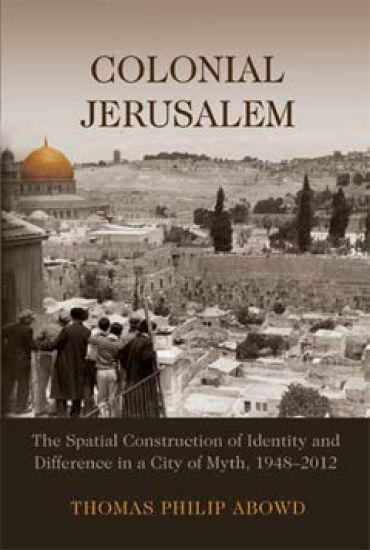
In one of the few anthropological works focusing on a contemporary Middle Eastern city, Colonial Jerusalem explores a vibrant urban center at the core of the decades-long Palestinian-Israeli conflict. This book shows how colonialism, far from being simply a fixture of the past as is often suggested, remains a crucial component of Palestinian and Israeli realities today. Abowd deftly illuminates everyday life under Israel’s long military occupation as it is defined by processes and conditions of ""apartness"" and separation as Palestinians are increasingly regulated and controlled. Abowd examines how both national communities are progressively divided by walls, checkpoints, and separate road networks in one of the most segregated cities in the world. Drawing upon recent theories on racial politics, colonialism, and urban spatial dynamics, Colonial Jerusalem analyzes the politics of myth, history, and memory across an urban landscape integral to the national cosmologies of both Palestinians and Israelis and meaningful to all communities.
Colonial Jerusalem explores a vibrant urban center at the core of the decades-long Palestinian-Israeli conflict and shows how colonialism, far from being simply a fixture of the past, remains a crucial component of Palestinian and Israeli realities today.
Characteristics of the Duke of Wellington, Apart from His Military Talents
Thomas Philip De Grey
Kessinger Pub
2009
pokkari
Characteristics of the Duke of Wellington, Apart from His Military Talents
Thomas Philip De Grey
Kessinger Pub
2009
sidottu

A Short Account of the Edwards' College, Built at South Cerney
Thomas Philip Baily Publisher
Kessinger Pub
2009
pokkari
A Short Account Of The Edwards' College, Built At South Cerney (1840)
Thomas Philip Baily Publisher
KESSINGER PUBLISHING, LLC
2010
sidottu
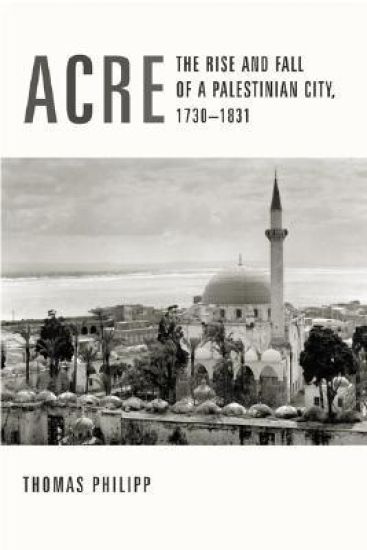
Thomas Philipp's study of Acre combines the most extensive use to date of local Arabic sources with commercial records in Europe to shed light on a region and power center many identify as the beginning of modern Palestinian history. The third largest city in eighteenth-century Syria-after Aleppo and Damascus-Acre was the capital of a politically and economically unique region on the Mediterranean coast that included what is today northern Israel and southern Lebanon. In the eighteenth century, Acre grew dramatically from a small fishing village to a fortified city of some 25,000 inhabitants. Cash crops (first cotton, then grain) made Acre the center of trade and political power and linked it inextricably to the world economy. Acre was markedly different from other cities in the region: its urban society consisted almost exclusively of immigrants seeking their fortune. The rise and fall of Acre in the eighteenth and nineteenth centuries, Thomas Philipp argues, must be seen against the background of the decay of central power in the Ottoman empire. Destabilization of imperial authority allowed for the resurfacing of long-submerged traditional power centers and the integration of Arab regions into European and world economies. This larger imperial context proves the key to addressing many questions about the local history of Acre and its peripheries. How were the new sources of wealth and patterns of commerce that remade Acre reconciled with traditional forms of political power and social organization? Were these forms really traditional? Or did entirely new classes develop under the circumstances of an immigrant society and new commercial needs? And why did Acre, after such propitious beginnings as a center of export trade and political and military power strong enough to defy Napoleon, give way to the dazzling rise of Beirut in the nineteenth century? For centuries the object of the Crusader's fury and the trader's envy, Acre is here restored to its full significance at a crucial moment in Middle Eastern history.
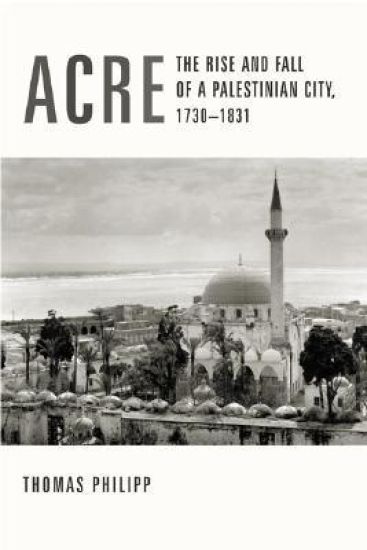
Thomas Philipp's study of Acre combines the most extensive use to date of local Arabic sources with commercial records in Europe to shed light on a region and power center many identify as the beginning of modern Palestinian history. The third largest city in eighteenth-century Syria-after Aleppo and Damascus-Acre was the capital of a politically and economically unique region on the Mediterranean coast that included what is today northern Israel and southern Lebanon. In the eighteenth century, Acre grew dramatically from a small fishing village to a fortified city of some 25,000 inhabitants. Cash crops (first cotton, then grain) made Acre the center of trade and political power and linked it inextricably to the world economy. Acre was markedly different from other cities in the region: its urban society consisted almost exclusively of immigrants seeking their fortune. The rise and fall of Acre in the eighteenth and nineteenth centuries, Thomas Philipp argues, must be seen against the background of the decay of central power in the Ottoman empire. Destabilization of imperial authority allowed for the resurfacing of long-submerged traditional power centers and the integration of Arab regions into European and world economies. This larger imperial context proves the key to addressing many questions about the local history of Acre and its peripheries. How were the new sources of wealth and patterns of commerce that remade Acre reconciled with traditional forms of political power and social organization? Were these forms really traditional? Or did entirely new classes develop under the circumstances of an immigrant society and new commercial needs? And why did Acre, after such propitious beginnings as a center of export trade and political and military power strong enough to defy Napoleon, give way to the dazzling rise of Beirut in the nineteenth century? For centuries the object of the Crusader's fury and the trader's envy, Acre is here restored to its full significance at a crucial moment in Middle Eastern history.

A Financial Times Book of the YearA ProMarket Book of the Year“Superbly argued and important…Donald Trump is in so many ways a product of the defective capitalism described in The Great Reversal. What the U.S. needs, instead, is another Teddy Roosevelt and his energetic trust-busting. Is that still imaginable? All believers in the virtues of competitive capitalism must hope so.”—Martin Wolf, Financial Times“In one industry after another…a few companies have grown so large that they have the power to keep prices high and wages low. It’s great for those corporations—and bad for almost everyone else.”—David Leonhardt, New York Times“Argues that the United States has much to gain by reforming how domestic markets work but also much to regain—a vitality that has been lost since the Reagan years…His analysis points to one way of making America great again: restoring our free-market competitiveness.”—Arthur Herman, Wall Street JournalWhy are cell-phone plans so much more expensive in the United States than in Europe? It seems a simple question, but the search for an answer took one of the world’s leading economists on an unexpected journey through some of the most hotly debated issues in his field. He reached a surprising conclusion: American markets, once a model for the world, are giving up on healthy competition.In the age of Silicon Valley start-ups and millennial millionaires, he hardly expected this. But the data from his cutting-edge research proved undeniable. In this compelling tale of economic detective work, we follow Thomas Philippon as he works out the facts and consequences of industry concentration, shows how lobbying and campaign contributions have defanged antitrust regulators, and considers what all this means. Philippon argues that many key problems of the American economy are due not to the flaws of capitalism or globalization but to the concentration of corporate power. By lobbying against competition, the biggest firms drive profits higher while depressing wages and limiting opportunities for investment, innovation, and growth. For the sake of ordinary Americans, he concludes, government needs to get back to what it once did best: keeping the playing field level for competition. It’s time to make American markets great—and free—again.
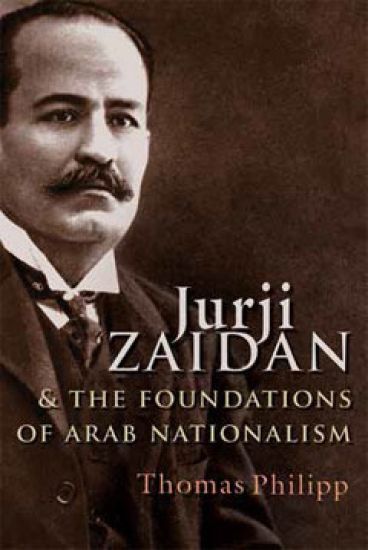
Jurji Zaidan and the Foundations of Arab Nationalism
Thomas Philipp
Syracuse University Press
2014
sidottu
The creation of a modern Arabic print language and the secular interpretation of Arab history were among the greatest achievements of the Nahda, the Arab cultural revival of the late nineteenth and early twentieth centuries. The language became an instrument as well as a symbol for the construction of national identity. In contrast to the traditional perception of Arab history as intrinsically part of Islamic history, the Nahda introduced a new vision of Arab history predating and outlasting Islamic civilization. Jurji Zaidan was one of the leading thinkers of the Arab Nahda. Through his historical novels, his widely read journal al-Hilal, which is still published today, and his scholarly works, he forged a new cultural Arab identity. In this book, Philipp shows how Zaidan popularized the idea of society that was based on science and reason, and invoked its accessibility to all who aspired to progress and modernity. In the first section, Philipp traces the arc of Zaidan’s career, placing his writings within the political and cultural contexts of the day and analysing his impact on the emerging Arab nationalist movement. The second part consists of a wide selection of Zaidan’s articles and book excerpts translated into English. These pieces cover such fields as religion and science, society and ethics, and nationalism. With the addition of a comprehensive bibliography, this volume will be recognized as the authoritative source on Zaidan, as well as an essential contribution to the study of Arabic cultural history.
Reform der Leasingbilanzierung durch IFRS
Thomas Philippen
Bachelor + Master Publishing
2012
pokkari



Erënnerung - Poopst Franziskus zu Lëtzebuerg / Souvenirs - Le Pape François au Luxembourg / Erinnerung - Papst Franziskus in Luxemburg
Thomas Philipp Reiter
Fink Kunstverlag Josef
2025
sidottu