Kirjojen hintavertailu. Mukana 11 244 527 kirjaa ja 12 kauppaa.

Kirjahaku

Etsi kirjoja tekijän nimen, kirjan nimen tai ISBN:n perusteella.

1000 tulosta hakusanalla Thomas Pogge

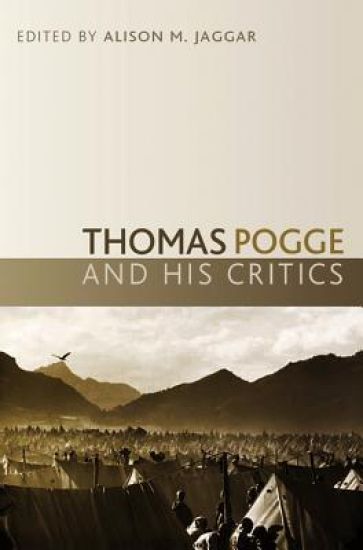
Thomas Pogge and his Critics

Thomas Pogge and his Critics

Alison Jaggar

Polity Press
2010
sidottu
The massive disparity between the relative wealth of most citizens in affluent countries and the profound poverty of billions of people struggling elsewhere for survival is morally jolting. But why exactly is this disparity so outrageous and how should the citizens of affluent countries respond? Political philosopher, Thomas Pogge, has emerged as one of the world’s most ardent critics of global injustice which, he argues, is caused directly by the operation of a global institutional order that not only systematically disadvantages poor countries but is imposed on them by precisely those wealthy, powerful countries that benefit the most from the order’s injustice. In allowing their governments to perpetrate this injustice, Pogge contends that citizens of the wealthy countries collude in a monumental crime against humanity. In this book Pogge’s challenging and controversial ideas are debated by leading political philosophers from a range of philosophical viewpoints. With a clear and informative introduction by Alison Jaggar, and original contributions from Neera Chandhoke, Jiwei Ci, Joshua Cohen, Erin Kelly, Lionel McPherson, Charles W. Mills, Kok-Chor Tan, and Leif Wenar, this volume deepens and expands the debate over global justice and moral responsibility in the world today.
Thomas Pogge and his Critics

Thomas Pogge and his Critics

Alison Jaggar

Polity Press
2010
nidottu
The massive disparity between the relative wealth of most citizens in affluent countries and the profound poverty of billions of people struggling elsewhere for survival is morally jolting. But why exactly is this disparity so outrageous and how should the citizens of affluent countries respond? Political philosopher, Thomas Pogge, has emerged as one of the world’s most ardent critics of global injustice which, he argues, is caused directly by the operation of a global institutional order that not only systematically disadvantages poor countries but is imposed on them by precisely those wealthy, powerful countries that benefit the most from the order’s injustice. In allowing their governments to perpetrate this injustice, Pogge contends that citizens of the wealthy countries collude in a monumental crime against humanity. In this book Pogge’s challenging and controversial ideas are debated by leading political philosophers from a range of philosophical viewpoints. With a clear and informative introduction by Alison Jaggar, and original contributions from Neera Chandhoke, Jiwei Ci, Joshua Cohen, Erin Kelly, Lionel McPherson, Charles W. Mills, Kok-Chor Tan, and Leif Wenar, this volume deepens and expands the debate over global justice and moral responsibility in the world today.
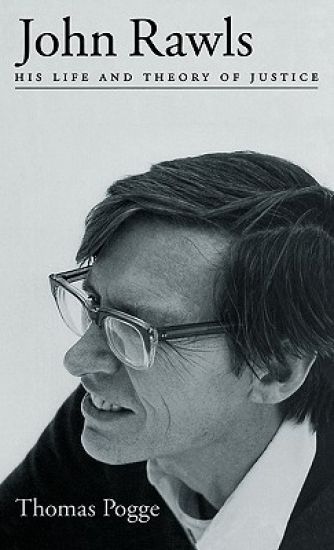
John Rawls

John Rawls

Thomas Pogge

Oxford University Press Inc
2007
sidottu
John Rawls was one of the most important political philosophers of our time, and promises to be an enduring figure over the coming decades. His Theory of Justice (1971) has had a profound impact across philosophy, politics, law, and economics. Nonetheless Rawlsian theory is not easy to understand, particularly for beginners, and his writing can be dense and forbidding. Thomas Pogge's short introduction (originally published in German) gives a thorough and concise presentation of the main outlines of Rawls's theory, introduces biographical information when necessary, and draws links between the Rawlsian enterprise and other important positions in moral and political philosophy.
John Rawls

John Rawls

Thomas Pogge

Oxford University Press Inc
2007
nidottu
John Rawls was one of the most important political philosophers of our time, and promises to be an enduring figure over the coming decades. His Theory of Justice (1971) has had a profound impact across philosophy, politics, law, and economics. Nonetheless Rawlsian theory is not easy to understand, particularly for beginners, and his writing can be dense and forbidding. Thomas Pogge's short introduction (originally published in German) gives a thorough and concise presentation of the main outlines of Rawls's theory, introduces biographical information when necessary, and draws links between the Rawlsian enterprise and other important positions in moral and political philosophy.
Health Rights

Health Rights

Thomas Pogge

Ashgate Publishing Limited
2010
sidottu
Health Rights is a multidisciplinary collection of seminal papers examining ethical, legal, and empirical questions regarding the human right to health or health care. The volume discusses what obligations health rights entail for governments and other actors, how they relate to and potentially conflict with other rights and values, and how cultural diversity bears on the formulation and implementation of health rights. The paramount importance of such questions is illustrated, among other things, by the catastrophic health situation in developing countries and current debates about the TRIPS Agreement and health care reform in the United States. The volume is divided into five main parts which focus on philosophical questions about the bases for the right to health or health care; links between health and human rights; global bioethics and public health ethics; intellectual property rights in pharmaceuticals; and finally health rights issues arising in specific contexts such as HIV/AIDS, tuberculosis, and gender.
Weltarmut und Menschenrechte

Weltarmut und Menschenrechte

Thomas Pogge

De Gruyter
2011
isokokoinen pokkari
Thomas Pogge's book seeks to explain how the belief of the affluent that they are disconnected from massive poverty abroad and have no moral responsibility towards the poor is sustained. The book was originally published in English.
Absolute Poverty and Global Justice

Absolute Poverty and Global Justice

Michael Schramm; Thomas Pogge

Ashgate Publishing Limited
2009
sidottu
Absolute poverty causes about one third of all human deaths, some 18 million annually, and blights billions of lives with hunger and disease. Developing universalizable norms aimed at tackling absolute poverty and the complex and multilayered problems associated with it, this book considers the levels, trends and determinants of absolute poverty and global inequality. Examining whether much faster progress against absolute poverty is possible through reductions in national and global inequalities that produce economic growth for poor countries and households, this book suggests that diverse moral views imply that international agencies as well as the citizens, corporations and governments of affluent countries bear a moral responsibility to reduce absolute poverty. In considering strategies of eradication through specific policies and structural reforms it is argued that because of its moral importance and requirement for only modest efforts and resources, the goal of overcoming absolute poverty must be given much higher political priority by international agencies and governments of affluent countries. Suggesting that these agencies should be encouraged to facilitate and promote new initiatives, this book concludes with a discussion of how such initiatives might be realized.
Absolute Poverty and Global Justice

Absolute Poverty and Global Justice

Michael Schramm; Thomas Pogge

Routledge
2016
nidottu
Absolute poverty causes about one third of all human deaths, some 18 million annually, and blights billions of lives with hunger and disease. Developing universalizable norms aimed at tackling absolute poverty and the complex and multilayered problems associated with it, this book considers the levels, trends and determinants of absolute poverty and global inequality. Examining whether much faster progress against absolute poverty is possible through reductions in national and global inequalities that produce economic growth for poor countries and households, this book suggests that diverse moral views imply that international agencies as well as the citizens, corporations and governments of affluent countries bear a moral responsibility to reduce absolute poverty. In considering strategies of eradication through specific policies and structural reforms it is argued that because of its moral importance and requirement for only modest efforts and resources, the goal of overcoming absolute poverty must be given much higher political priority by international agencies and governments of affluent countries. Suggesting that these agencies should be encouraged to facilitate and promote new initiatives, this book concludes with a discussion of how such initiatives might be realized.
Politics as Usual

Politics as Usual

Thomas W. Pogge

Polity Press
2010
sidottu
Worldwide, human lives are rapidly improving. Education, health-care, technology, and political participation are becoming ever more universal, empowering human beings everywhere to enjoy security, economic sufficiency, equal citizenship, and a life in dignity. To be sure, there are some specially difficult areas disfavoured by climate, geography, local diseases, unenlightened cultures or political tyranny. Here progress is slow, and there may be set-backs. But the affluent states and many international organizations are working steadily to extend the blessings of modernity through trade and generous development assistance, and it won't be long until the last pockets of severe oppression and poverty are gone. Heavily promoted by Western governments and media, this comforting view of the world is widely shared, at least among the affluent. Pogge's new book presents an alternative view: Poverty and oppression persist on a massive scale; political and economic inequalities are rising dramatically both intra-nationally and globally. The affluent states and the international organizations they control knowingly contribute greatly to these evils - selfishly promoting rules and policies harmful to the poor while hypocritically pretending to set and promote ambitious development goals. Pogge's case studies include the $1/day poverty measurement exercise, the cosmetic statistics behind the first Millennium Development Goal, the War on Terror, and the proposed relaxation of the constraints on humanitarian intervention. A powerful moral analysis that shows what Western states would do if they really cared about the values they profess.
Politics as Usual

Politics as Usual

Thomas W. Pogge

Polity Press
2010
nidottu
Worldwide, human lives are rapidly improving. Education, health-care, technology, and political participation are becoming ever more universal, empowering human beings everywhere to enjoy security, economic sufficiency, equal citizenship, and a life in dignity. To be sure, there are some specially difficult areas disfavoured by climate, geography, local diseases, unenlightened cultures or political tyranny. Here progress is slow, and there may be set-backs. But the affluent states and many international organizations are working steadily to extend the blessings of modernity through trade and generous development assistance, and it won't be long until the last pockets of severe oppression and poverty are gone. Heavily promoted by Western governments and media, this comforting view of the world is widely shared, at least among the affluent. Pogge's new book presents an alternative view: Poverty and oppression persist on a massive scale; political and economic inequalities are rising dramatically both intra-nationally and globally. The affluent states and the international organizations they control knowingly contribute greatly to these evils - selfishly promoting rules and policies harmful to the poor while hypocritically pretending to set and promote ambitious development goals. Pogge's case studies include the $1/day poverty measurement exercise, the cosmetic statistics behind the first Millennium Development Goal, the War on Terror, and the proposed relaxation of the constraints on humanitarian intervention. A powerful moral analysis that shows what Western states would do if they really cared about the values they profess.
World Poverty and Human Rights

World Poverty and Human Rights

Thomas W. Pogge

Polity Press
2008
sidottu
Some 2.5 billion human beings live in severe poverty, deprived of such essentials as adequate nutrition, safe drinking water, basic sanitation, adequate shelter, literacy, and basic health care. One third of all human deaths are from poverty-related causes: 18 million annually, including over 10 million children under five. However huge in human terms, the world poverty problem is tiny economically. Just 1 percent of the national incomes of the high-income countries would suffice to end severe poverty worldwide. Yet, these countries, unwilling to bear an opportunity cost of this magnitude, continue to impose a grievously unjust global institutional order that foreseeably and avoidably perpetuates the catastrophe. Most citizens of affluent countries believe that we are doing nothing wrong. Thomas Pogge seeks to explain how this belief is sustained. He analyses how our moral and economic theorizing and our global economic order have adapted to make us appear disconnected from massive poverty abroad. Dispelling the illusion, he also offers a modest, widely sharable standard of global economic justice and makes detailed, realistic proposals toward fulfilling it. Thoroughly updated, the second edition of this classic book incorporates responses to critics and a new chapter introducing Pogge's current work on pharmaceutical patent reform.
World Poverty and Human Rights

World Poverty and Human Rights

Thomas W. Pogge

Polity Press
2007
nidottu
Some 2.5 billion human beings live in severe poverty, deprived of such essentials as adequate nutrition, safe drinking water, basic sanitation, adequate shelter, literacy, and basic health care. One third of all human deaths are from poverty-related causes: 18 million annually, including over 10 million children under five. However huge in human terms, the world poverty problem is tiny economically. Just 1 percent of the national incomes of the high-income countries would suffice to end severe poverty worldwide. Yet, these countries, unwilling to bear an opportunity cost of this magnitude, continue to impose a grievously unjust global institutional order that foreseeably and avoidably perpetuates the catastrophe. Most citizens of affluent countries believe that we are doing nothing wrong. Thomas Pogge seeks to explain how this belief is sustained. He analyses how our moral and economic theorizing and our global economic order have adapted to make us appear disconnected from massive poverty abroad. Dispelling the illusion, he also offers a modest, widely sharable standard of global economic justice and makes detailed, realistic proposals toward fulfilling it. Thoroughly updated, the second edition of this classic book incorporates responses to critics and a new chapter introducing Pogge's current work on pharmaceutical patent reform.