Kirjojen hintavertailu. Mukana 11 244 527 kirjaa ja 12 kauppaa.

Kirjahaku

Etsi kirjoja tekijän nimen, kirjan nimen tai ISBN:n perusteella.

1000 tulosta hakusanalla Thomas Seifrid

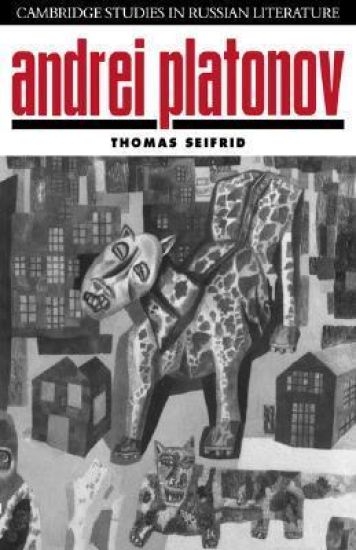
Andrei Platonov

Andrei Platonov

Thomas Seifrid

Cambridge University Press
2006
pokkari
The Soviet writer Andrei Platonov (1899–1951) belongs to a Russian philosophical tradition that includes such figures as Vladimir Solov'ev, Mikhail Bakhtin and Boris Pasternak. This 1992 study investigates the interrelation of themes, imagery and the use of language in his prose. Thomas Seifrid shows how Platonov was particularly influenced by Russian utopian thought of the late nineteenth and early twentieth centuries, and how his world view was also shaped by its implicit dialogue with the 'official' Soviet philosophy of Marxism-Leninism, and later with Stalinist utopianism. He discusses how in Platonov's masterpieces of the late 1920s and early 1930s linguistic parody comes together with existential angst and dystopian doubts about the course of Soviet history. The study concludes with consideration of the works Platonov wrote from 1934 to 1951, in the age of socialist realism. In these, he manoeuvred to preserve some of the essentials of his earlier world view and verbal manner while fusing them to the literary formulae that were expected of him.
Andrei Platonov

Andrei Platonov

Thomas Seifrid

Cambridge University Press
1992
sidottu
The Soviet writer Andrei Platonov (1899–1951) belongs to a Russian philosophical tradition that includes such figures as Vladimir Solov'ev, Mikhail Bakhtin and Boris Pasternak. This 1992 study investigates the interrelation of themes, imagery and the use of language in his prose. Thomas Seifrid shows how Platonov was particularly influenced by Russian utopian thought of the late nineteenth and early twentieth centuries, and how his world view was also shaped by its implicit dialogue with the 'official' Soviet philosophy of Marxism-Leninism, and later with Stalinist utopianism. He discusses how in Platonov's masterpieces of the late 1920s and early 1930s linguistic parody comes together with existential angst and dystopian doubts about the course of Soviet history. The study concludes with consideration of the works Platonov wrote from 1934 to 1951, in the age of socialist realism. In these, he manoeuvred to preserve some of the essentials of his earlier world view and verbal manner while fusing them to the literary formulae that were expected of him.
Staging the Absolute

Staging the Absolute

Thomas Seifrid

UNIVERSITY OF TORONTO PRESS
2023
sidottu
Staging the Absolute argues that an array of practices and beliefs came together to define an essential aspect of Russian and Soviet culture in the twentieth century: the persistent desire to interrupt – or disrupt – history. Drawing on sources that define the nature of public rituals, the book reveals the pervasive presence of the impulse to impede history in Russia’s modern era and the realization of the idea in the form of the Stalinist show trials of the 1930s. Thomas Seifrid analyses Soviet festivals, public displays of agitational propaganda, and urban planning, together with such modernist precursors as fin-de-siècle and early twentieth-century projects for reviving the theatre, modernist adaptations of puppet theatre, the Faust legend and its vogue in early twentieth-century Russia, and the nineteenth-century panorama. The book reveals that what binds these otherwise disparate phenomena together is a shared impatience with history and a corresponding desire to appropriate urban space. Illuminating the deeper meanings in these revived archaic forms, Staging the Absolute shows how pervasive the interest in disrupting history was in the Russian modern era.
A Companion to Andrei Platonov's The Foundation Pit

A Companion to Andrei Platonov's The Foundation Pit

Thomas Seifrid

Academic Studies Press
2009
sidottu
Written at the height of Stalin's first 'five-year plan' for the industrialisation of Soviet Russia and the parallel campaign to collectivise Soviet agriculture, Andrei Platonov's 'The Foundation Pit' registers a dissonant mixture of utopian longings and despair. Furthermore, it provides essential background to Platonov's parody of the mainstream Soviet 'production' novel, which is widely recognised as one of the masterpieces of twentieth-century Russian prose. In addition to an overview of the work's key themes, it discusses their place within Platonov's oeuvre as a whole, his troubled relations with literary officialdom, the work's ideological and political background, and key critical responses since the work's first publication in the West in 1973.
A Companion to Andrei Platonov's The Foundation Pit

A Companion to Andrei Platonov's The Foundation Pit

Thomas Seifrid

Academic Studies Press
2009
nidottu
Written at the height of Stalin's first 'five-year plan' for the industrialisation of Soviet Russia and the parallel campaign to collectivise Soviet agriculture, Andrei Platonov's "The Foundation Pit" registers a dissonant mixture of utopian longings and despair. Furthermore, it provides essential background to Platonov's parody of the mainstream Soviet 'production' novel, which is widely recognised as one of the masterpieces of twentieth-century Russian prose. In addition to an overview of the work's key themes, it discusses their place within Platonov's oeuvre as a whole, his troubled relations with literary officialdom, the work's ideological and political background, and key critical responses since the work's first publication in the West in 1973.
The Word Made Self

The Word Made Self

Thomas J. Seifrid

Cornell University Press
2005
sidottu
When Osip Mandelstam wrote that the Russian word was "sentient and breathing flesh," he voiced one of the most powerful themes in his culture. In The Word Made Self, Thomas Seifrid explores this Russian fascination with the power of the word as expressed in the work of philosophers, theologians, and artists of the Silver Age and early Soviet period. He shows that their diverse works (poems, novels, philosophical and religious tracts) share an attempt to articulate "a model of selfhood within the phenomenon of language." The thinkers included in this book—among them Pavel Florenskii, Roman Jakobson, Aleksei Losev, and Gustav Shpet—frequently responded to the work of contemporary European philosophers even as they drew upon and revitalized powerful elements of early Russian religious thought. On Seifrid's view, this highly original body of writing about language was the essential context for the development of Russian Futurism, Formalism, and the work of Mikhail Bakhtin and the Soviet structuralists—movements and ideas whose influence has extended far beyond Russia and long past their years of efflorescence. This book will have a lasting impact among readers who will be fascinated to discover the richness of this long-suppressed chapter in the history of Russian culture.
Thomas

Thomas

Rwg

Rwg Publishing
2019
pokkari
College rule (also known as medium ruled paper) is the most common lined paper in use in the United States. It is generally used in middle school through to college and is also popular with adults. This is a good choice for teen or adult notebooks and composition books (known as exercise books outside the US).