Kirjojen hintavertailu. Mukana 11 244 527 kirjaa ja 12 kauppaa.

Kirjahaku

Etsi kirjoja tekijän nimen, kirjan nimen tai ISBN:n perusteella.

1000 tulosta hakusanalla Thomas Weber

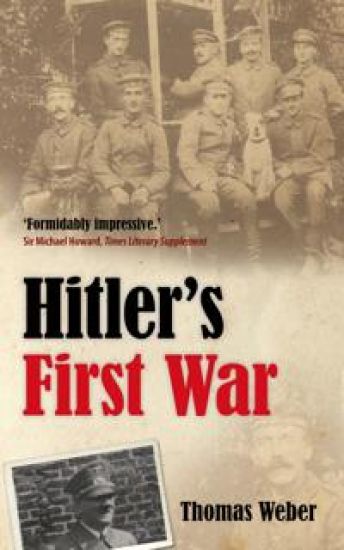
Hitler's First War

Hitler's First War

Thomas Weber

Oxford University Press
2011
nidottu
Hitler claimed that his years as a soldier in the First World War were the most formative years of his life. However, for the six decades since his death in the ruins of Berlin, Hitler's time as a soldier on the Western Front has, remarkably, remained a blank spot. Until now, all that we knew about Hitler's life in these years and the regiment in which he served came from his own account in Mein Kampf and the equally mythical accounts of his comrades. Hitler's First War for the first time looks at what really happened to Private Hitler and the men of the Bavarian List Regiment of which he was a member. It is a radical revision of the period of Hitler's life that is said to have made him. Looking at the stories of his fellow regimental veterans - an officer who became Hitler's personal adjutant in the 1930s but then offered himself to British intelligence, a soldier-turned-Concentration Camp Commander, Jewish veterans who fell victim to the Holocaust, and others who simply returned to their lives in Bavaria - Thomas Weber presents a Private Hitler very different from the one portrayed in his own self-mythologizing account. Instead, we find a man who was shunned by the frontline soldiers of his regiment as a 'rear area pig' and who was still unsure of his political ideology even at the end of the war in 1918. In looking at the post-war lives of Hitler's fellow veterans back in Bavaria, Thomas Weber also challenges the commonly accepted notion that the First World War was somehow a 'seminal catastrophe' in twentieth century German history - and even questions just how deep-seated Nazi ideology really was in its home state.
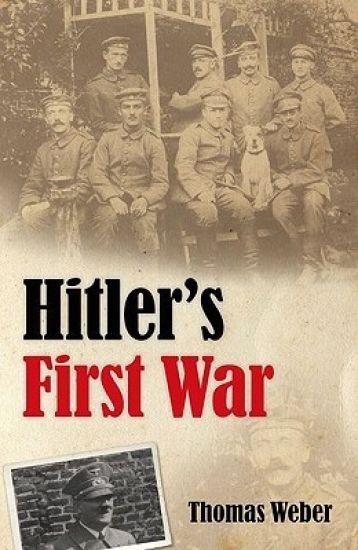
Hitler's First War

Hitler's First War

Thomas Weber

Oxford University Press
2010
sidottu
Hitler claimed that his years as a soldier in the First World War were the most formative years of his life. However, for the six decades since his death in the ruins of Berlin, Hitler's time as a soldier on the Western Front has, remarkably, remained a blank spot. Until now, all that we knew about Hitler's life in these years and the regiment in which he served came from his own account in Mein Kampf and the equally mythical accounts of his comrades. Hitler's First War for the first time looks at what really happened to Private Hitler and the men of the Bavarian List Regiment of which he was a member. It is a radical revision of the period of Hitler's life that is said to have made him. Through the stories of the veterans of the regiment - an officer who became Hitler's personal adjutant in the 1930s but then offered himself to British intelligence, a soldier-turned-Concentration Camp Commander, Jewish veterans who fell victim to the Holocaust, or of veterans who simply returned to their lives in Bavaria - Thomas Weber presents a Private Hitler very different from the one portrayed in his own mythical account. Instead, we find a Hitler who was shunned by the frontline soldiers of his regiment as a 'rear area pig' and who was still unsure of his political ideology even at the end of the war in 1918. In looking at the post-war lives of Hitler's fellow veterans back in Bavaria, Thomas Weber also challenges the commonly accepted notion that the First World War was somehow a 'seminal catastrophe' in twentieth century German history and even questions just how deep-seated Nazi ideology really was in its home state.
Becoming Hitler: The Making of a Nazi

Becoming Hitler: The Making of a Nazi

Thomas Weber

Oxford University Press
2017
sidottu
The story of the making of Adolf Hitler that we are all familiar with is the one Hitler himself wove in his 1924 trial, and then expanded upon in Mein Kampf. It tells of his rapid emergence as National Socialist leader in 1919, and of how he successfully rallied most of Munich and the majority of Bavaria's establishment to support the famous beer-hall putsch of 1923. It is an account which has largely been taken at face value for over ninety years. Yet, on closer examination, Hitler's account of his experiences in the years immediately following the First World War turns out to be every bit as unreliable as his account of his experiences as a soldier during the war itself. In Becoming Hitler, Thomas Weber continues from where he left off in his previous book, Hitler's First War, stripping away the layers of myth and fabrication in Hitler's own tale to tell the real story of Hitler's politicization and radicalization in post-First World War Munich. It is the gripping account of how an awkward and unemployed loner with virtually no recognizable leadership qualities and fluctuating political ideas turned into the charismatic, self-assured, virulently anti-Semitic leader with an all-or-nothing approach to politics with whom the world was soon to become tragically familiar. As Weber clearly shows, far from the picture of a fully-formed political leader which Hitler wanted to portray in Mein Kampf, his ideas and priorities were still very uncertain and largely undefined in early 1919 -- and they continued to shift until 1923. It was the failed Ludendorff putsch of November 1923 - and the subsequent Ludendorff trial -- which was to prove the making of Hitler. And he was not slow to spot the opportunity that it offered. As the movers and shakers of Munich's political scene tried to blame everything on him in the course of the trial, Hitler was presented with a golden opportunity to place himself at the centre of attention, turning what had been the 'Ludendorff trial' into the 'Hitler trial'. Henceforth, he would no longer be merely a local Bavarian political leader. From now on, he would present himself as a potential 'national saviour'. In the months after the trial, Hitler cemented this myth by writing Mein Kampf from his comfortable prison cell. His years of metamorphosis were now behind him. His years as Führer were soon to come.
Becoming Hitler

Becoming Hitler

Thomas Weber

Oxford University Press
2021
nidottu
The fateful story of Adolf Hitler's transformation from awkward, feckless loner to lethal, charismatic demagogue. The story of the making of Adolf Hitler that we are all familiar with is the one Hitler himself wove in his 1924 trial, and then expanded upon in Mein Kampf. It tells of his rapid emergence as National Socialist leader in 1919, and of how he successfully rallied most of Munich and the majority of Bavaria's establishment to support the famous beer-hall putsch of 1923. It is an account which has largely been taken at face value for over ninety years. Yet, on closer examination, Hitler's account of his experiences in the years immediately following the First World War turns out to be every bit as unreliable as his account of his experiences as a soldier during the war itself. In Becoming Hitler, Thomas Weber continues from where he left off in his previous book, Hitler's First War, stripping away the layers of myth and fabrication in Hitler's own tale to tell the real story of Hitler's politicization and radicalization in post-First World War Munich. It is the gripping account of how an awkward and unemployed loner with virtually no recognizable leadership qualities and fluctuating political ideas turned into the charismatic, self-assured, virulently anti-Semitic leader with an all-or-nothing approach to politics with whom the world was soon to become tragically familiar. As Weber clearly shows, far from the picture of a fully-formed political leader which Hitler wanted to portray in Mein Kampf, his ideas and priorities were still very uncertain and largely undefined in early 1919 — and they continued to shift until 1923. It was the failed Ludendorff putsch of November 1923 - and the subsequent Ludendorff trial — which was to prove the making of Hitler. And he was not slow to spot the opportunity that it offered. As the movers and shakers of Munich's political scene tried to blame everything on him in the course of the trial, Hitler was presented with a golden opportunity to place himself at the centre of attention, turning what had been the 'Ludendorff trial' into the 'Hitler trial'. Henceforth, he would no longer be merely a local Bavarian political leader. From now on, he would present himself as a potential 'national saviour'. In the months after the trial, Hitler cemented this myth by writing Mein Kampf from his comfortable prison cell. His years of metamorphosis were now behind him. His years as Führer were soon to come.
The Northern Railroads in the Civil War, 1861-1865

The Northern Railroads in the Civil War, 1861-1865

Thomas Weber

Indiana University Press
1999
pokkari
Time has been very good to Thomas Weber's Northern Railroads in the Civil War, 1861-1865. First published by Columbia University Press in 1952, it has been out of print since the 1970s, but never out of demand. It has emerged as the premier account of the impact of the railroads on the American Civil War and vice versa. Not only did the railroads materially help the north to victory through movement of troops and materiel, but the war materially changed the way railroads were built, run, financed, and organized in the crucial years following the war. We are still waiting (9/1/98) for the reviews to come from the author's files. "Thomas Weber's study of northern railroads during the Civil War remains the obvious treatment of an important topic. His analysis rests on solid research and leaves no doubt that the North's excellent use of railroads contributed significantly to Union victory." —Gary W. Gallagher (shortened) "Thomas Weber's . . . analysis rests on solid research and leaves no doubt that the North's excellent use of railroads contributed significantly to Union victory." —Gary W. Gallagher
Becoming Hitler: The Making of a Nazi
An award-winning historian charts Hitler's radical transformation after World War I from a directionless loner into a powerful National Socialist leader In Becoming Hitler, award-winning historian Thomas Weber examines Adolf Hitler's time in Munich between 1918 and 1926, the years when Hitler shed his awkward, feckless persona and transformed himself into a savvy opportunistic political operator who saw himself as Germany's messiah. The story of Hitler's transformation is one of a fateful match between man and city. After opportunistically fluctuating between the ideas of the left and the right, Hitler emerged as an astonishingly flexible leader of Munich's right-wing movement. The tragedy for Germany and the world was that Hitler found himself in Munich; had he not been in Bavaria in the wake of the war and the revolution, his transformation into a National Socialist may never have occurred. In Becoming Hitler, Weber brilliantly charts this tragic metamorphosis, dramatically expanding our knowledge of how Hitler became a lethal demagogue.
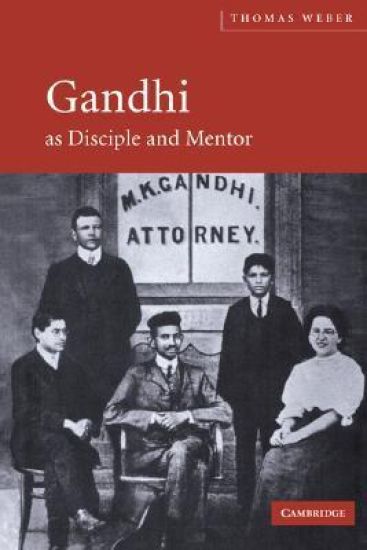
Gandhi as Disciple and Mentor

Gandhi as Disciple and Mentor

Thomas Weber

Cambridge University Press
2011
pokkari
Thomas Weber's book comprises a series of biographical reflections about people who influenced Gandhi, and those who were, in turn, influenced by him. Whilst previous literature tended to focus on Gandhi's political legacy, Weber's book explores the spiritual, social and philosophical resonances of these relationships, and it is with these aspects of the Mahatma's life in mind, that the author selects his central protagonists. These include friends such as Henry Polak and Hermann Kallenbach, who are not as well known as those usually cited, but who left a deep impression nevertheless, and motivated some of Gandhi's major life changes. Conversely, the work of luminaries such as E. F. Schumacher and Gene Sharp reveal the Mahatma's influence in arenas which are not traditionally associated with his thinking. Weber's book offers intriguing insights into the life and thought of one of the most significant figures of the twentieth century.
Gandhi as Disciple and Mentor

Gandhi as Disciple and Mentor

Thomas Weber

Cambridge University Press
2004
sidottu
Thomas Weber’s book comprises a series of biographical reflections about people who influenced Gandhi, and those who were, in turn, influenced by him. While the previous literature has tended to focus on Gandhi’s political legacy, Weber’s book explores the spiritual, social and philosophical resonances of these relationships, and it is with these aspects of the Mahatma’s life in mind, that the author selects his central protagonists. These include friends such as Henry Polak and Hermann Kallenbach, who are not as well known as those usually cited, but who left a deep impression nevertheless, and motivated some of Gandhi’s major life changes. Conversely, the work of luminaries such as E.F. Schumacher and Gene Sharp reveal the Mahatma’s influence in arenas which are not traditionally associated with his thinking. Weber’s book offers new and intriguing insights into the life and thought of one of the most significant figures of the twentieth century.
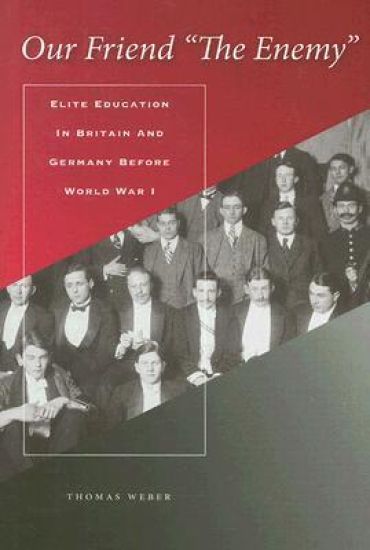
Our Friend "the Enemy"

Our Friend "the Enemy"

Thomas Weber

STANFORD UNIVERSITY PRESS
2007
sidottu
Winner of the 2008 Duke d'Arenberg History Prize for the best book of a general nature, intended for a wide public, on the history and culture of the European continent. At once a book about Oxford and Heidelberg universities and about the character of European society on the eve of World War I, Our Friend "The Enemy" challenges the idea that pre-1914 Europe was bound to collapse. Weber brings Britain and Germany's preeminent universities and playgrounds for political and social elites back to life to reconsider whether any truth is left in the old contrast between British liberalism and German illiberalism. Contesting the idea that fundamental Anglo-German differences existed, he also questions new interpretations that use a cultural history brush to paint pre-1914 Britain in just as gloomy a light as Imperial Germany. Rather, he argues that militarist nationalism and European transnationalism were not mutually exclusive concepts, that reform usually triumphed over stasis, and that prewar Europe was more stable than commonly argued. Finally, he demonstrates that the belief that Europeans were eagerly awaiting a cataclysmic remaking of the world they were inhabiting is a result of a tendency to read pre-1914 history backwards as the prehistory of the two world wars.
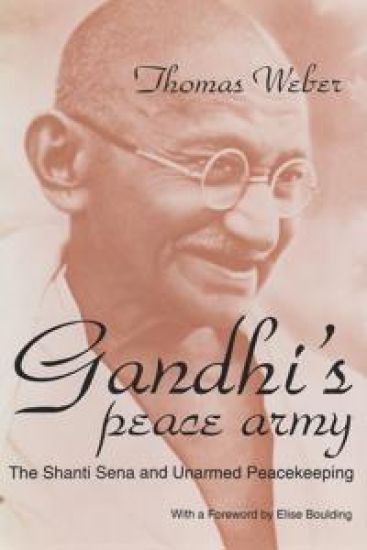
Gandhi's Peace Army

Gandhi's Peace Army

Thomas Weber

Syracuse University Press
1996
sidottu
A study of unarmed peacekeeping, focusing on Gandhi's ""Shanti Sena"", which was active during the period 1957 to 1975. It is based on interviews with key participants and analysts of the peace army and archival documents. It draws parallels with the complex situation in today's UN.
The Northern Railroads in the Civil War, 1861-1865

The Northern Railroads in the Civil War, 1861-1865

Thomas Weber

Literary Licensing, LLC
2011
sidottu
The Northern Railroads In The Civil War, 1861-1865 is a comprehensive historical account of the role that railroads played in the American Civil War. Written by Thomas Weber, the book explores the vital importance of rail transportation in the North during the conflict, and how it enabled the Union to mobilize troops, supplies, and equipment more quickly and efficiently than the Confederacy.Weber covers a wide range of topics related to the Northern railroads, including their construction and expansion prior to the war, their strategic importance during military campaigns, and the challenges that railroads faced in maintaining operations amidst the chaos of battle. He also examines the impact of the war on the railroads themselves, and how they adapted to changing circumstances and technological innovations in order to meet the demands of the conflict.Throughout the book, Weber draws on a wealth of primary sources, including government records, personal accounts, and contemporary newspaper articles, to provide a detailed and engaging narrative of the Northern railroads during the Civil War. The result is a fascinating and informative study that sheds new light on the critical role that rail transportation played in shaping the outcome of the war.This scarce antiquarian book is a facsimile reprint of the old original and may contain some imperfections such as library marks and notations. Because we believe this work is culturally important, we have made it available as part of our commitment for protecting, preserving, and promoting the world's literature in affordable, high quality, modern editions, that are true to their original work.
The Northern Railroads in the Civil War, 1861-1865

The Northern Railroads in the Civil War, 1861-1865

Thomas Weber

Literary Licensing, LLC
2011
nidottu
Time has been very good to Thomas Weber's Northern Railroads in the CivilWar, 1861-1865. First published by Columbia University Press in 1952, it has beenout of print since the 1970s, but never out of demand. It has emerged as the premieraccount of the impact of the railroads on the American Civil War and vice versa. Notonly did the railroads materially help the north to victory through movement oftroops and materiel, but the war materially changed the way railroads were built, run, financed, and organized in the crucial years following thewar.We are still waiting (9/1/98) for the reviews to come fromthe author's files."Thomas Weber's study of northern railroadsduring the Civil War remains the obvious treatment of an important topic. Hisanalysis rests on solid research and leaves no doubt that the North's excellent useof railroads contributed significantly to Union victory." -- Gary W.Gallagher(shortened)"Thomas Weber's... analysis restson solid research and leaves no doubt that the North's excellent use of railroadscontributed significantly to Union victory." -- Gary W.Gallagher
Die Ordnung der Rechtsberatung in Deutschland nach 1945
Im Jahr 2007 fand ein außergewöhnlich bedeutendes rechtspolitisches Gesetzgebungsvorhaben seinen Abschluss: die Reform des Rechtsberatungsrechts. Es hat nach den Worten der damaligen Bundesjustizministerin, Brigitte Zypries, wie kaum ein anderes "im Mittelpunkt des kritischen Interesses der Öffentlichkeit gestanden". Thomas Weber untersucht die Entstehungsgeschichte des 2008 in Kraft getretenen Rechtsdienstleistungsgesetzes und die vorangegangene Reformdiskussion. Zudem analysiert er, weshalb das Rechtsberatungsmissbrauchsgesetz, das seit 1935 die Rechtsberatung in Deutschland regelte und antisemitische Ziele verfolgte, nach 1945 nicht aufgehoben wurde und wie es - zwischenzeitlich in Rechtsberatungsgesetz umbenannt - bis zu seinem Außerkrafttreten im Jahr 2008 angewandt wurde.
Ein Beitrag zur Planungssystematik für die automatisierte flexible Blechteilefertigung

Ein Beitrag zur Planungssystematik für die automatisierte flexible Blechteilefertigung

Thomas Weber

Springer-Verlag Berlin and Heidelberg GmbH Co. K
1987
nidottu
Im vorliegendem Band wird eine dreistufige Planungssystematik vorgestellt, die - ausgehend vom Werkstuckspektrum - eine ganzheitlich systematische Planung der automatisierten flexiblen Blechteilefertigung sowie aller erforderlichen neuen Teilkomponenten ermoeglicht. Aufbauend auf einer Istzustands- und Schwachstellenanalyse wird ein geeignetes technisch-organisatorisches Gesamtkonzept fur die flexible Blechteilefertigung hergeleitet. Alle anwenderspezifischen Fragestellungen, die sich auf die Auslegung flexibler Blechteile-Fertigungszellen beziehen, sind Gegenstand des zweiten Planungshauptschrittes. Hierzu werden Hilfsmittel zur Kapazitatsdimensionierung und Komponentenauswahl vorgestellt. Ziel des dritten Planungshauptschrittes ist es, die einzelnen Fertigungszellen in ein flexibles Blechteile-Fertigungssystem zu integrieren. Die hierzu entwickelten Hilfsmittel beziehen sich auf die Problemstellungen zur Lager-, Verkettungs- und Layoutplanung sowie auf die Systemauswahl unter Berucksichtigung technisch-wirtschaftlicher Kriterien.
Der Einfluß des Betreuungsgesetzes auf die freiheitsentziehende Unterbringung

Der Einfluß des Betreuungsgesetzes auf die freiheitsentziehende Unterbringung

Thomas Weber

Springer-Verlag Berlin and Heidelberg GmbH Co. K
1995
nidottu
Fur die freiheitsentziehende Unterbringung Volljahriger hat der Gesetzgeber mit x 1906 eine eigenstandige Rechtsgrundlage im Zivilrecht geschaffen. Integraler Bestandteil des Betreuungsrechts ist ausserdem eine vollstandige Neuregelung des Unterbringungsverfahrensrechts (xx 70 ff. FGG), die uber den Anwendungsbereich der materiellrechtlichen Anderung hinausgeht. Im Mittelpunkt steht gleichsam die Auslegung des Begriffs der freiheitsentziehenden Unterbringung und die neue Genehmigungspflichtigkeit der sog. "unterbringungsahnlichen Massnahmen". Dabei hat der Autor stets die in der Praxis aktuellen Situationen und Problemfelder im Auge.
Wettbewerbsvorteil Durch Personalcomputer - Ein Konzept Fuer Den Strategischen PC-Einsatz in Kleinbetrieben
Kleinere Betriebe setzen Computer und andere Instrumente der Informationstechnologie, wenn uberhaupt, meist nur zu Rationalisierungszwecken ein. Die Anwendung von Informatik zur Erringung von Wettbewerbsvorteilen ist dagegen nur wenig verbreitet. Voraussetzungen fur einen strategischen Computereinsatz sind die Kenntnis der unternehmensspezifischen Erfolgsfaktoren einerseits sowie moglicher Computeranwendungen andererseits. Das vorliegende Buch entwickelt in diesem Sinne ein Konzept, das den Entscheidungstrager bei der Bestimmung der Erfolgsfaktoren seines Betriebes sowie bei der Auswahl und Einfuhrung von geeigneten Computeranwendungen unterstutzt."
Wissensmanagement - Instrumente, Methoden und Erfahrungen
Diplomarbeit aus dem Jahr 2007 im Fachbereich Wirtschaft - Personal und Organisation, Note: 1,0, Fachhochschule Worms , 140 Quellen im Literaturverzeichnis, Sprache: Deutsch, Abstract: Unternehmen werden immer mehr einem globalen Wettlauf mit Konkurrenten um Märkte, Kunden und Produkte ausgesetzt. Ein zunehmender Kosten- und Wettbewerbsdruck, dynamische Umweltentwicklungen sowie technologische Erfindungen, die diesen Wandel noch beschleunigen, stellen Wirtschaft und Gesellschaft permanent vor neue Herausforderungen, bieten aber auch eine Vielfalt an Chancen und Möglichkeiten. Die Globalisierung verändert traditionelle Strukturen und stellt bisher geltende Regeln und Normen in Frage. Damit Unternehmen in solch einem dynamischen Umfeld bestehen können, sind Generierung, Erwerb, Nutzung sowie Erhalt wirtschaftlich relevanten Wissens zu den bestimmenden Wettbewerbsfaktoren geworden. Durch die Schaffung und Anwendung neuen Wissens müssen Unternehmen versuchen, stets innovative und einzigartige Produkte sowie Leistungen anzubieten um sich von der Konkurrenz absetzen zu können. Der Anteil von Wissen nimmt entlang der Wertschöpfungskette immer mehr zu und ist in vielen Wirtschaftszweigen mittlerweile nicht mehr wegzudenken. In der Unternehmenspraxis wird auf breiter Basis anerkannt, dass das Wissen der Mitarbeiter dabei als nachhaltiger Wettbewerbsvorteil angesehen werden kann und es daher von essentieller Bedeutung ist, nicht nur neues Wissen zu schaffen, sondern dieses auch weiterzugeben und zu konservieren. Als problematisch gilt jedoch die Tatsache, dass oft enorme Wissenspotentiale von Mitarbeitern bzw. innerhalb der Organisation aufgrund unsachgemäßer Anwendung bzw. mangelnder Anwendbarkeit verloren gehen. In diesem Zusammenhang ist auch die Abwanderung von Mitarbeitern mit einem breiten Fach- und Spezialwissen zu nennen. An dieser Stelle setzt nun Wissensmanagement an, um die Ressource Wissen besser nutzbar zu machen und für das Unternehmen zu erhalten. Wie Wissensmanagement im Einzelnen verstanden und gestaltet werden kann, wird im Rahmen dieser Arbeit untersucht und diskutiert. Dabei lassen sich unterschiedliche Methoden, Instrumente und Gestaltungsansätze unterscheiden, die zur Erschließung und Bewirtschaftung der Ressource Wissen geeignet sind.