Kirjojen hintavertailu. Mukana 11 235 027 kirjaa ja 12 kauppaa.

Kirjahaku

Etsi kirjoja tekijän nimen, kirjan nimen tai ISBN:n perusteella.

1000 tulosta hakusanalla Thomas Wolfe

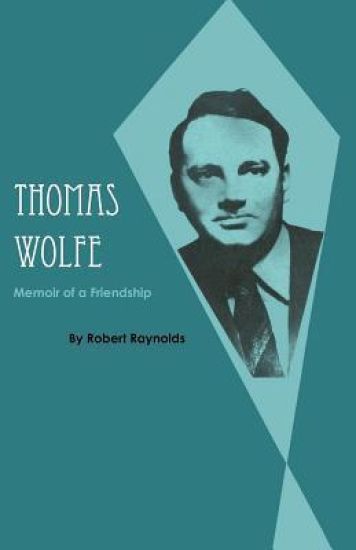
Thomas Wolfe

Thomas Wolfe

Robert Raynolds

University of Texas Press
1965
nidottu
This is a story that no one else could tell. It tells how Thomas Wolfe and Robert Raynolds happened to meet, how they became friends, and how their friendship grew, survived a crisis, and continued until the death of Thomas Wolfe. "We met in the city," says Raynolds, "but Tom and I were both mountain-born and small-town bred; we were more at home with cows and rattlesnakes than with subways and city slickers, and we were very much at home with one another." The story is told with understanding, with humor, and with compassion. Robert Raynolds began writing it in 1942—four years after the death of his friend and companion novelist—and finished it twenty-three years later, in 1965. It is a responsible and considered memoir in honor of human friendship, and it brings the vivid character of Thomas Wolfe directly into the presence of the reader. The story is full of daily portraits of Thomas Wolfe. What did he look like in his room, pacing the floor, or writing? How did he appear on the streets of Brooklyn or Manhattan, day or night? Or walking in the morning in a pine forest, or running his hand gently over a block of marble in an abandoned quarry, or tramping fields of snow after midnight? What was it like to eat with him at night in New York, or at noon in a Vermont farmhouse, or at breakfast in a home made lively by the laughter and play of children? He was shy. "Why don't you find me a nice little wife?" he would ask Mrs. Raynolds. He was emotional, often speaking in the style of his writing: "And the whistle-wail of the great train. . ." He was profound, brooding after his break with his first publishers: could a man who had left a friend as he had left Maxwell Perkins ever be a "righteous man" again? This is a story of the plain and real Thomas Wolfe, of his human goodness, his bone-deep weariness in labor, his sudden joy in being understood and loved by a fellow man. And this is the story of how Robert Raynolds honored the grace of being a friend of Thomas Wolfe.
Thomas Wolfe's Civil War

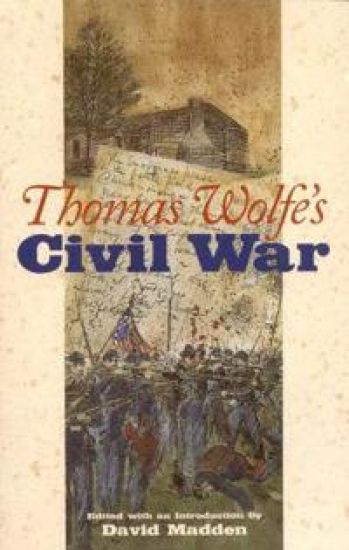
Thomas Wolfe's Civil War

Thomas Wolfe

The University of Alabama Press
2004
nidottu
This collection of Thomas Wolfe's writings demonstrates the centrality of the Civil War to Wolfe's literary concerns and identity. From Look Homeward, Angel to The Hills Beyond and The Web and the Rock, Wolfe perpetually returned to the themes of loss, dissolution, sorrow, and romance engendered in the minds of many southerners by the Civil War and its lingering aftermath. His characters reflect time and again on Civil War heroes and dwell on ghostlike memories handed down by their mothers, fathers, and grandfathers. Wolfe and his protagonists compare their contemporary southern landscape to visions they have conjured of its appearance before and during the war, thereby merging the past with the present in an intense way. Ultimately, Wolfe's prose style - incantatory and rhapsodic - is designed to evoke the national tragedy on an emotional level. Selections of Wolfe's writings in this collection include short stories (""Chickamauga,"" ""Four Lost Men,"" ""The Plumed Knight""), excerpts from his novels (O Lost, the restored version of Look Homeward, Angel, The Hills Beyond, and Of Time and the River) and a play, Mannerhouse, edited and introduced by David Madden. Madden, who makes the provocative claim that everything a southern writer writes derives from the Civil War experience, also highlights many issues essential to understanding Wolfe's absorption with the Civil War.
Thomas Wolfe

Thomas Wolfe

Ted Mitchell

The University of North Carolina Press
1999
nidottu
The first novelist from North Carolina to become an influential voice in American literature, Thomas Wolfe was an imaginative and persuasive fictional writer. Hailing from Asheville, North Carolina, Thomas Wolfe is best known for his vivid portrayal of life in the mountains during the twentieth century. Published in 1999, Thomas Wolfe: A Writer's Life explores Wolfe's life and career spanning from 1900 until his early death in 1938. The author, Ted Mitchell, was a historic site interpreter at the Thomas Wolfe Memorial State Historic Site in Asheville. An earlier edition of this work was published by the Thomas Wolfe Memorial State Historic Site without the interpretation of Mitchell.
Thomas Wolfe

Thomas Wolfe

Joanne Mauldin

University of Tennessee Press
2007
sidottu
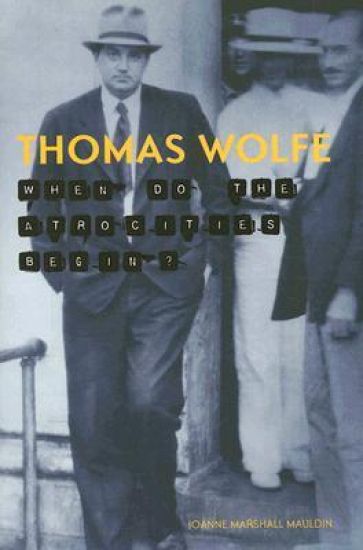
In 1937, after years of living alone in New York City, a manic-depressive Thomas Wolfe returned to his family and his native Asheville, North Carolina, a city he had both ridiculed and brought notoriety to through his novel, Look Homeward, Angel, eight years earlier. Concerned about lingering resentment from the community over the literary work and his tenuous relationship with his family members, Wolfe returned to his hometown with caution, but also with the need to both rejuvenate and compile material for his next novel. It is this visit that sparks Wolfe's trademark conclusion, “You can't go home again.” During 1937 and 1938, Thomas Wolfe experienced extreme highs and lows as he labored furiously to produce his next work. Joanne Marshall Mauldin provides an in-depth look at those final two years in the life of the brilliant, yet troubled writer in Thomas Wolfe: When Do the Atrocities Begin?By adding new information and insight, Mauldin challenges much of the existing biographical material on the writer and offers a fresh view on the final years of his life. Through the utilization of primary and secondary sources including letters, interviews, recordings, and newspaper clippings, Mauldin offers a candid account of the life of Thomas Wolfe from the time of his visit to North Carolina in 1937 until his untimely death in 1938. Mauldin chronicles details of Wolfe's shocking change in publishers and his complex relationships with his editors, family, friends, and his mistress. This examination goes beyond Wolfe's life and extends into the period after his death, revealing details about the reaction of family and friends to the passing of this literary legend, as well as the cavalier publishing practices of his posthumous editors.Mauldin's narrative is unique from other biographical accounts of Thomas Wolfe in that it focuses solely on the final years in the life of the author. Her unbiased approach enables the reader to draw his or her own conclusions about Wolfe and his actions and state of mind during these last two years of his life.
Thomas Wolfe

Thomas Wolfe

Joanne Marshall Mauldin

University of Tennessee Press
2017
nidottu
In 1937, after years of living alone in New York City, a manic-depressive Thomas Wolfe returned to his family and his native Asheville, North Carolina, a city he had both ridiculed and brought notoriety to through his novel, Look Homeward, Angel, eight years earlier. Concerned about lingering resentment from the community over the literary work and his tenuous relationship with his family members, Wolfe returned to his hometown with caution, but also with the need to both rejuvenate and compile material for his next novel. It is this visit that sparks Wolfe's trademark conclusion, ""You can't go home again."" During 1937 and 1938, Thomas Wolfe experienced extreme highs and lows as he labored furiously to produce his next work. Joanne Marshall Mauldin provides an in-depth look at those final two years in the life of the brilliant, yet troubled writer in Thomas Wolfe: When Do the Atrocities Begin?By adding new information and insight, Mauldin challenges much of the existing biographical material on the writer and offers a fresh view on the final years of his life. Through the utilization of primary and secondary sources including letters, interviews, recordings, and newspaper clippings, Mauldin offers a candid account of the life of Thomas Wolfe from the time of his visit to North Carolina in 1937 until his untimely death in 1938. Mauldin chronicles details of Wolfe's shocking change in publishers and his complex relationships with his editors, family, friends, and his mistress. This examination goes beyond Wolfe's life and extends into the period after his death, revealing details about the reaction of family and friends to the passing of this literary legend, as well as the cavalier publishing practices of his posthumous editors.Mauldin's narrative is unique from other biographical accounts of Thomas Wolfe in that it focuses solely on the final years in the life of the author. Her unbiased approach enables the reader to draw his or her own conclusions about Wolfe and his actions and state of mind during these last two years of his life.
The Thomas Wolfe Reader

The Thomas Wolfe Reader

Thomas Wolfe

Must Have Books
2023
pokkari
Wolfe wrote four lengthy novels, plus many short stories, dramatic works and novellas. He is known for mixing highly original, poetic, rhapsodic, and impressionistic prose with autobiographical writing. His books, written and published from the 1920s to the 1940s, vividly reflect on American culture and the mores of that period, filtered through Wolfe's sensitive, sophisticated and hyper-analytical perspective. He became widely known during his own lifetime.This is a large collection of Wolfe's novels and short stories. It has selections from "Look Homeward, Angel", "Of Time and the River" and a lot more.
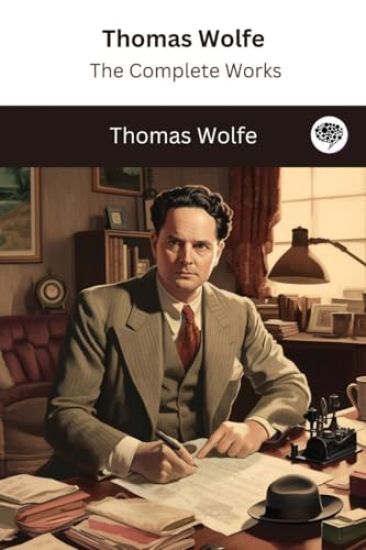
Thomas Wolfe: The Complete Works

Thomas Wolfe: The Complete Works

Thomas Wolfe

REVELATION PRESS
2024
sidottu
Thomas Wolfe: The Complete Works is a literary treasure trove that unveils the extraordinary talent of one of America's greatest novelists. This comprehensive collection immerses readers in Wolfe's rich and sprawling universe, where characters come alive with vivid detail, emotions surge like tidal waves, and the human experience is explored with unflinching honesty. Wolfe's works resonate with profound insight into the complexities of love, identity, and the relentless passage of time. Through his unparalleled prose, he captures the essence of a nation in flux, weaving together unforgettable narratives that etch themselves deep into the reader's soul. The Complete Works of Thomas Wolfe is an invitation to embark on a literary journey through the vast landscapes of the human heart and mind, a voyage that leaves an indelible mark on all who dare to traverse its pages.
Thomas Wolfe: The Complete Works

Thomas Wolfe: The Complete Works

Thomas Wolfe

REVELATION PRESS
2024
nidottu
Thomas Wolfe: The Complete Works is a literary treasure trove that unveils the extraordinary talent of one of America's greatest novelists. This comprehensive collection immerses readers in Wolfe's rich and sprawling universe, where characters come alive with vivid detail, emotions surge like tidal waves, and the human experience is explored with unflinching honesty. Wolfe's works resonate with profound insight into the complexities of love, identity, and the relentless passage of time. Through his unparalleled prose, he captures the essence of a nation in flux, weaving together unforgettable narratives that etch themselves deep into the reader's soul. The Complete Works of Thomas Wolfe is an invitation to embark on a literary journey through the vast landscapes of the human heart and mind, a voyage that leaves an indelible mark on all who dare to traverse its pages.
Thomas Wolfe Interviewed, 1929-1938

Thomas Wolfe Interviewed, 1929-1938

Louisiana State University Press
2002
nidottu
In Thomas Wolfe Interviewed, 1929-1938, Aldo P. Magi and Richard Walser have brought together twenty-five accounts of Thomas Wolfe talking to the press, ranging from the first interview he gave, a conversation with a student journalist for New York University's Daily News, to the last, an interview with the Portland Sunday Oregonian in July 1938, only a few months before his death.These encounters with the working press have an appealing intimacy rarely found in biographies or scholarly studies. Wolfe, always happy to meet with journalists, was ever ready to talk about the writing of Look Homeward, Angel, about Scribner's acceptance of the manuscript, and about the book's popular reception. ""As my book began to grow before me, a wild sense of exultation and joyous elation seized me,"" he told an interviewer for the Rocky Mountain News. Walking along New York's Fifth Avenue with another interviewer just after Look Homeward, Angel's appearance, Wolfe spotted a copy prominently displayed in a bookstore window and proudly pointed it out. ""His eyes came away from the window unwillingly,"" the reporter noted. Nor did Wolfe shy away from addressing the outrage his first novel occasioned in his hometown. ""If they think I have intended to case reflections on my old home and my own people they have gone far wrong,"" he told an interviewer for the Asheville Times.Wolfe talked about his southern upbringing, his education, his frequent trips to Europe, and his life in New York. He enjoyed discussing his favourite authors and books, as well as what he himself planned to write in the future. Wolfe had tremendous faith in America's ability to produce a great national literature.Headnotes and afterwords place each interview in perspective, heightening the reader's grasp of the varied situations in which Wolfe met with reporters. In some instances, the interviewers themselves reflect on their meetings with Wolfe. For these interviews the journalists had no tape recorders and did not conduct the sort of length, in-depth interviews that have now become common. The interviews are, instead, often the products of several hours of questioning, put together from jotted down notes and from the reporters' memories. Since most of these interviews have been buried in newspaper archives for decades, even veteran Wolfe scholars will find much here that is fresh and useful.
Thomas Wolfe - American Writers 6

Thomas Wolfe - American Writers 6

C. Hugh Holman

UNIVERSITY OF MINNESOTA PRESS
1960
nidottu
Thomas Wolfe - American Writers 6 was first published in 1960. Minnesota Archive Editions uses digital technology to make long-unavailable books once again accessible, and are published unaltered from the original University of Minnesota Press editions.
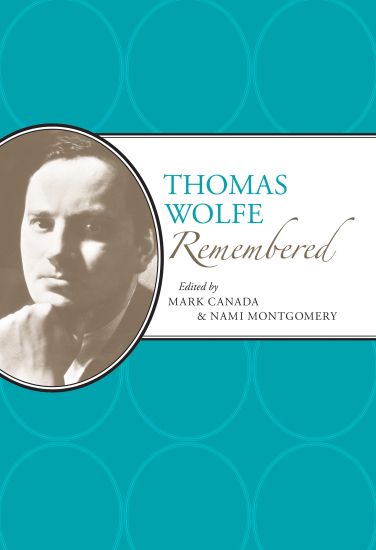
Thomas Wolfe Remembered

Thomas Wolfe Remembered

The University of Alabama Press
2018
sidottu
A collection of reminiscences captures the private life of a great American writer. Thomas Wolfe’s life may seem to be an open book. A life that, after all, was the source for his best-known works, including the novels Look Homeward, Angel and Of Time and the River, as well as his numerous short stories and dramas. Since his death in 1938, scholars and admirers of Wolfe have relied largely on these texts to understand the man himself. Thomas Wolfe Remembered provides something new: a rich, multifaceted portrait painted by those who knew him (casually or intimately), loved him (or didn’t), and saw, heard, and experienced the literary (and literal) giant. This volume gathers in one place for the first time dozens of reminiscences by friends, family members, colleagues, and casual acquaintances, adding color and fine details to the self-portrait the author created in his novels. Wolfe found plenty to challenge and frustrate him throughout his life, from his boyhood in Asheville, North Carolina, to his education at the University of North Carolina and Harvard University, through his time in New York and Europe, his travels through the American West, and his death in Baltimore. He experienced two distracted parents in a loveless marriage, the premature death of a beloved brother, a minor stutter, and the difficulties of controlling a mercurial temper. Yet Wolfe’s exuberance, perceptiveness, memory, and compulsion to record virtually all that he experienced made for an extravagance of material that sometimes angered the people whose lives he used as source material. Editors Mark Canada and Nami Montgomery have collected dozens of remembrances, many unpublished or long forgotten, including pieces from Julia Wolfe, Margaret Roberts, Frederick Koch, Maxwell Perkins, Elizabeth Nowell, Edward Aswell, and Martha Dodd. Some are endearing, others are disturbing, and many are comical. All provide glimpses into the vibrant, haunted, boyish, paranoid, disheveled, courteous, captivating, infuriating, and altogether fascinating giant who was Thomas Wolfe.
Thomas Wolfe and the Politics of Modernism

Thomas Wolfe and the Politics of Modernism

Shawn Holliday

Peter Lang Publishing Inc
2001
sidottu
Once one of the most popular fiction writers in all of American literature, Thomas Wolfe now stands in a tenuous position in the American literary canon. This book combats the academic and critical inertia that currently surrounds Wolfe by exploring his complex relationship to modernism. The experimental nature of Wolfe's fiction, his troubling associations with other writers and artists, his complicated publishing practices, and the development of his late political conscience are analyzed to reestablish his importance to this historically avant-garde literary movement and to twentieth-century American literature.
Thomas Wolfe at Washington Square

Thomas Wolfe at Washington Square

Thomas Clark 1902- Ed Pollock; Oscar 1898-1972 Cargill

Hassell Street Press
2021
sidottu
This work has been selected by scholars as being culturally important and is part of the knowledge base of civilization as we know it.This work is in the public domain in the United States of America, and possibly other nations. Within the United States, you may freely copy and distribute this work, as no entity (individual or corporate) has a copyright on the body of the work.Scholars believe, and we concur, that this work is important enough to be preserved, reproduced, and made generally available to the public. To ensure a quality reading experience, this work has been proofread and republished using a format that seamlessly blends the original graphical elements with text in an easy-to-read typeface.We appreciate your support of the preservation process, and thank you for being an important part of keeping this knowledge alive and relevant.