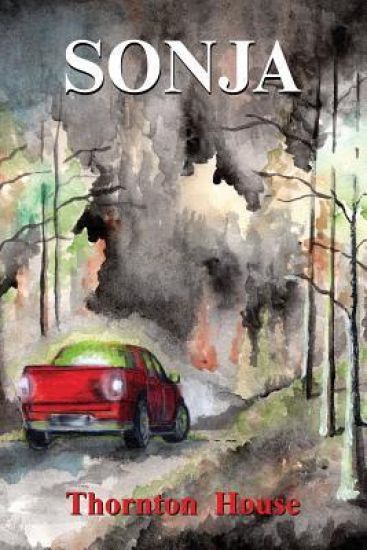
FBI Agent Carina Rivera's life is about to change dramatically when she apprehends Chad Lowry a triple murder suspect. Less than thirty minute after catching him, Rivera watches in horror as her SUV is blown up before her eyes by heavily armed men in a helicopter. She and Lowry barely escape the encounter only to run into another band of men trying to kill them. She asks Lowry what he has stolen to have so many people trying to kill him. "I haven't stolen anything from anybody but I have something they want," Lowry replies.
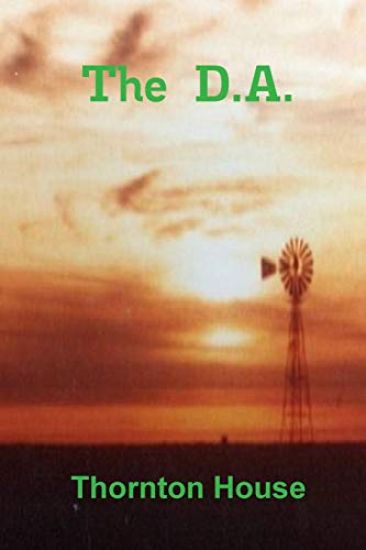
Becky Simone is a beautiful intelligent woman who likes to be in control. When her heart is broken for the first time, Becky is devastated and decides it's time for a change. She returns to school to obtain a law degree and becomes a prosecutor for the District Attorney of Phoenix. She gains everyone's respect after convicting a brutal gang leader of murder. When rumors surface that there is a contract out on Becky's life, her boss sends her to Wichita, Kansas to get her out of town. Becky then decides to drive back to Phoenix and the plan is going fine until her rental car suddenly dies in the midst of an unexpected blizzard. She is sitting alone on a dark road close to freezing to death until a stranger arrives on a horse and carries her to safety. The next morning Becky is on her way back to Phoenix with a man she barely knows. They are completely unaware of the SUV following discreetly behind them. The next couple of days will be Becky's worst nightmare as she escapes one plot on her life for another.
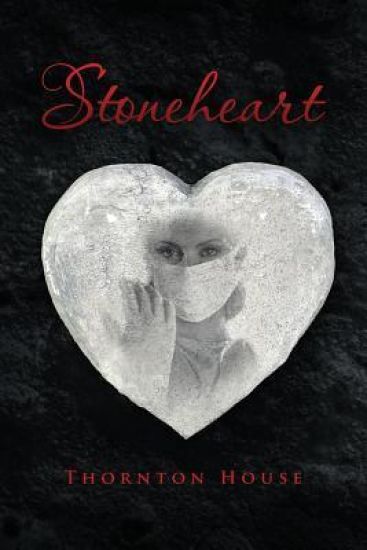
Doctor Cher Stone is a highly respected Cardiovascular Surgeon at Memorial Hospital-highly respected but not especially liked. The doctors and interns call her Stoneheart behind her back because of her cold rigid attitude and bad temperament. Suzie Becker is Cher's head nurse and her only friend. Even Suzie is unaware of the dark secret that is consuming Cher making her the way she is. Wolf Harrison's book has been the number one best seller for over a year. He has been hired to create a character for a soap opera in hopes of increasing the shows rating. When Suzie and Cher meet Wolf at a party, Suzie is delighted being a big fan of his book. She quickly comes to love his quick wit and offbeat sense of humor. Cher on the other hand doesn't like anything about the man which comes as no surprise to Suzie. Cher hasn't shown an interest in anybody since Suzie met her. Cher makes it perfectly clear to Wolf by stating, You are definitely not my type! His reply makes Suzie think Cher may have met her match.
In "A House of Stories," the walls whisper tales of love, loss, and longing, inviting readers to step inside and explore the heart's many rooms. Each poem serves as a window, offering glimpses into diverse lives intertwined by dreams and memories, from the joy of childhood to the bittersweet embrace of nostalgia. Through evocative imagery and lyrical grace, this collection weaves together the threads of human experience, celebrating the beauty of resilience and the power of storytelling. Each page turns like a familiar door, revealing a new narrative that resonates with our own truths. Join the journey through this poetic abode, where the essence of shared moments lingers in the air, reminding us that every story, no matter how small, adds to the rich tapestry of life. Welcome to "A House of Stories"-where every poem invites you to linger a little longer.
In "The House We Make Together," the poet invites readers into a warm sanctuary built from shared experiences, emotions, and the bonds we forge throughout our lives. Each poem serves as a brick in the walls of this metaphorical home, exploring themes of love, community, and resilience in an ever-changing world. With lyrical precision and heartfelt imagery, the collection weaves through memories of joy and sorrow, highlighting the interconnectedness of human existence. From the laughter that fills the rooms to the quiet moments of reflection, this book captures the essence of togetherness, illustrating how we construct meaning and strength through our relationships. In this intimate journey, readers will find solace and inspiration, a reminder that while life may bring storms, it is the house we build together that provides shelter and hope.
An adaptation of Henrik Ibsen's most notable play about a waning marriage, and the social constructs between a husband and wife.Thornton Wilder's acting version of A Doll's House premiered on Broadway at the Morsco Theatre in December 1937, under the direction of Jed Harris.
Russell Thornton has the rare ability to be both keenly observant of the minute details of his environment and intensely introspective. His poetry is full of startling images that will stay with you long after turning the final page.In "House Built of Rain," Thornton takes his readers on a dizzying journey of human experience - from the yearning of a young child to the sorrow of an adult losing a loved one to Alzheimer's. He covers a lot of ground along the way, witnessing prostitutes "counting out their smiles, / and hiding in their pupils" or hiking to the mouth of the Capilano River where "the gulls know how the waters of this place can run two ways at once."Thornton writes about extremes: the moment of conception and the moment of death, tranquil forests and smoky urban bars, abuse and tenderness. Concerned but never pessimistic, fierce but compassionate, narrative but lyrical, "House Built of Rain" is a balanced collection of work that reveals Thornton's considerable talents as a wordsmith. Though his poems are often dark and edgy, he shows us beauty in a scream, ecstasy in violence and, in a dying breath, the universe.
Virtually all scholars acknowledge the presence of opponents in 1 and 2 Timothy, but there is considerable disagreement over the identity of these opponents and the author's way of handling them. In this volume, Thornton provides a critique of a number of extant theories, including "Gnostic," Jewish, and proto-Montanist identifications, and develops a rigorous methodology for unmasking the opponents who appear in these letters. He argues that the opponents came from within the Christian community in Ephesus and that their teaching is best described as an erroneous eschatological position that derived from the complexity of Paul's views. He also argues that the author of the books of Timothy engaged with the false teachers in significant ways throughout the letters, and draws attention to a number of literary and theological maneuvers that were intended to counteract the opponents' influence and/or to bolster the faithful community's confidence as it struggled against the opponents. Thornton's meticulous investigation sheds new light on the hostility that plays such a large part in 1 and 2 Timothy.
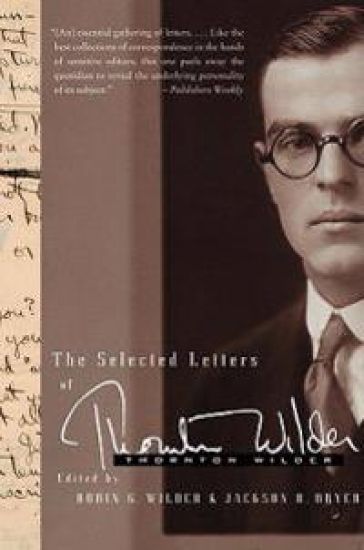
Spanning his entire life, The Selected Letters of Thornton Wilder is a comprehensive and fascinating collection of the great American writer's correspondence. The author of such classics as Our Town and The Bridge of San Luis Rey, Thornton Wilder was a born storyteller and dramatist--rare talents on glorious display in this volume of more than three hundred letters he penned to a vast array of famous friends and beloved relatives. Through Wilder's correspondence, readers can eavesdrop on his conversations with Ernest Hemingway, F. Scott Fitzgerald, Gertrude Stein, No l Coward, Gene Tunney, Laurence Olivier, Aaron Copland, Paul Hindemith, Leonard Bernstein, Edward Albee, and Mia Farrow. Equally absorbing are Wilder's intimate letters to his family. Wilder tells of roller-skating with Walt Disney, remembers an inaugural reception for FDR at the White House, describes his life as a soldier in two World Wars, and recalls dining out with Montgomery Clift and Elizabeth Taylor. In these pages, Thornton Wilder speaks for himself in his own unique, enduring voice--informing, encouraging, instructing, and entertaining with his characteristic wit, heart, and exuberance.
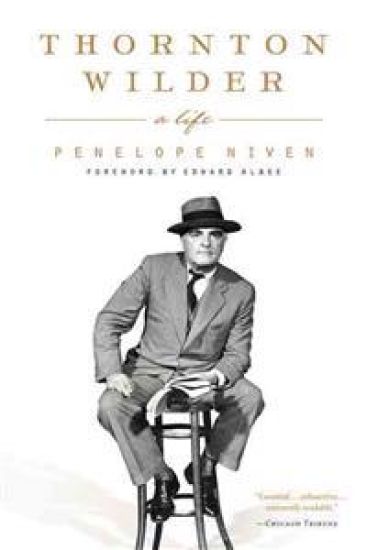
"Thornton Wilder: A Life brings readers face to face with the extraordinary man who made words come alive around the world, on the stage and on the page." --James Earl Jones, actor"Comprehensive and wisely fashioned....A splendid and long needed work." --Edward Albee, playwrightThornton Wilder--three-time Pulitzer Prize winner, creator of such enduring stage works as Our Town and The Skin of Our Teeth, and beloved novels like Bridge of San Luis Ray and Theophilus North--was much more than a pivotal figure in twentieth century American theater and literature. He was a world-traveler, a student, a teacher, a soldier, an actor, a son, a brother, and a complex, intensely private man who kept his personal life a secret. In Thornton Wilder: A Life, author Penelope Niven pulls back the curtain to present a fascinating, three-dimensional portrait one of America's greatest playwrights, novelists, and literary icons.
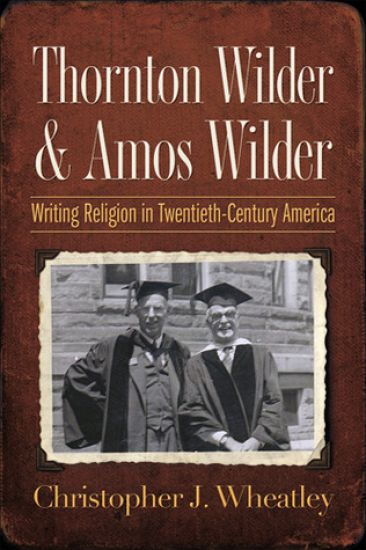
Thornton Wilder, the only author to have won the Pulitzer Prize for both drama and fiction, frequently portrays characters struggling with religious and theological issues. His work has been examined by critics in connection with American Puritanism, existentialism, and Vedantic literature, but little attention has been paid to the works of Thornton's brother Amos, an ordained minister, poet, biblical scholar, literary critic, and professor at Harvard. Thornton Wilder and Amos Wilder: Writing Religion in Twentieth-Century America is the first book to explore the relationship between Thornton's work and his brother Amos's scholarship. Previous critics of Thornton's works have claimed that they describe timeless human values. Christopher Wheatley, on the contrary, argues that Wilder is primarily interested in the historical context of ideas, the ways in which they are a product of their time. He demonstrates how this parallels elements in Amos's biblical scholarship. For the most part scholars have also treated Wilder's works as if his ideas were static throughout his career. Wheatley contends that Wilder's early works of fiction and drama examine religion in times of historical crisis, whereas his later works demonstrate a deep concern about the intellectual, social, economic, and spiritual currents of contemporary America, as well as the influences of existentialism and postwar skepticism on his evolving religious ideas. Drawing on extensive archival research in the papers of both brothers, Thornton Wilder and Amos Wilder: Writing Religion in Twentieth-Century America is essential reading for anyone interested in the Wilders, religion and literature, or American literature and drama.
The first Architect of the Capitol, William Thornton, was raised in England and studied medicine at the University of Edinburgh in Scotland.Dr. Thornton traveled extensively on a study tour in Europe before briefly practicing medicine in Philadelphia (1786-1790) where he met and married Anna Maria Brodeau. His descendants can now be found across the United States, including Virginia, Pennsylvania, Georgia, Tennessee, Ohio, Illinois and Florida.Originally from Yorkshire, England the name Thornton means "thorn hill."
This anthology by Pulitzer Prize-winning playwright Thornton Wilder is acollection of twenty-two very short plays, three of which are published herefor the very first time. These snapshots of the creative spirit at play explorea variety of complex characters that range from the ordinary to the biblical, the haunted to the mystical. From the tale of a conflicted composer with astrangely familiar tune stuck in his head (The Song of Maria Bentedos) to apair of newlyweds who find themselves bizarrely affected by the color of theirhotel's tea room (Flamingo Red: A Comedy in Danger), all these tales - manytold with great wit and humor - ask the thought-provoking questions ofmortality, morality and faith that Thornton Wilder is famous for asking.Most of the plays run about four minutes in length, and can be presented withthree actors. The entire collection can be presented with a cast ranging fromsix to thirty-two actors.