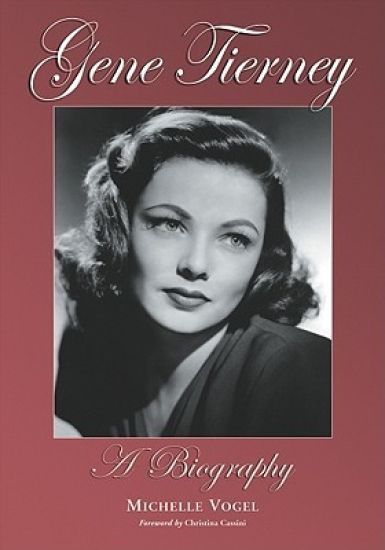
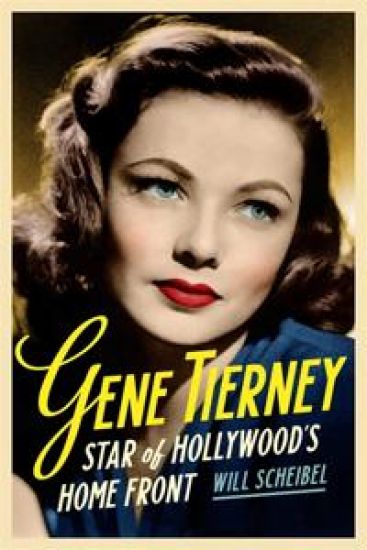
Called the most beautiful woman in movie history, Gene Tierney starred in such 1940s classics as Laura, Leave Her to Heaven and The Ghost and Mrs. Muir. Her on-screen presence and ability to transform into a variety of characters made her a film legend. Her personal life was a whirlwind of romance (she married a count, was engaged to a prince, and was courted by a future president) and tragedy (her ?rst daughter was born with severe retardation and Tierney herself struggled with mental illness). After years of treatment, including electroshock therapy that erased portions of her life from her memory, she triumphantly returned in one of the biggest comebacks in Hollywood history. This ?rst complete biography since the actress's death includes a foreword by her daughter, Christina Cassini, an extensive ?lmography, and many rare photographs.
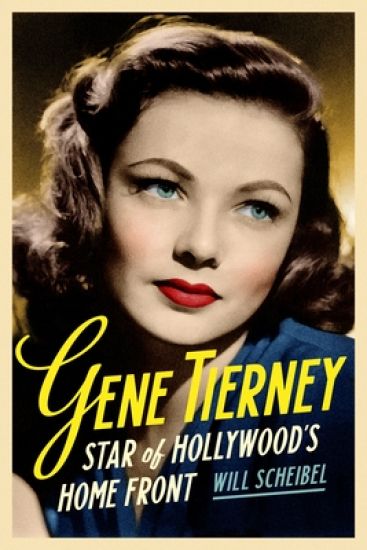
Gene Tierney may be one of the most recognizable faces of studio-era Hollywood: she starred in numerous classics, including Leave Her to Heaven, The Ghost and Mrs. Muir, and Laura, with the latter featuring her most iconic role. While Tierney was considered one of the most beautiful women in Hollywood, she personified "ordinariness" both on- and off-screen. Tierney portrayed roles such as a pinup type, a wartime worker, a wife, a mother, and, finally, a psychiatric patient—the last of which may have hit close to home for her, as she would soon leave Hollywood to pursue treatment for mental illness and later attempted suicide in the 1950s. After her release from psychiatric clinics, Tierney sought a comeback as one of the first stars whose treatment for mental illness became public knowledge. In this book, Will Scheibel not only examines her promotion, publicity, and reception as a star but also offers an alternative history of the United States wartime efforts demonstrated through the arc of Tierney's career as a star working on the home front. Scheibel's analysis aims to showcase that Tierney was more than just "the most beautiful woman in movie history," as stated by the head of production at Twentieth Century Fox in the 1940s and 1950s. He does this through an examination of her making, unmaking, and remaking at Twentieth Century Fox, rediscovering what she means as a movie legend both in past and up to the present. Film studies scholars, film students, and those interested in Hollywood history and the legacy of Gene Tierney will be delighted by this read.
Gene Tierney may be one of the most recognizable faces of studio-era Hollywood: she starred in numerous classics, including Leave Her to Heaven, The Ghost and Mrs. Muir, and Laura, with the latter featuring her most iconic role. While Tierney was considered one of the most beautiful women in Hollywood, she personified "ordinariness" both on- and off-screen. Tierney portrayed roles such as a pinup type, a wartime worker, a wife, a mother, and, finally, a psychiatric patient—the last of which may have hit close to home for her, as she would soon leave Hollywood to pursue treatment for mental illness and later attempted suicide in the 1950s. After her release from psychiatric clinics, Tierney sought a comeback as one of the first stars whose treatment for mental illness became public knowledge. In this book, Will Scheibel not only examines her promotion, publicity, and reception as a star but also offers an alternative history of the United States wartime efforts demonstrated through the arc of Tierney's career as a star working on the home front. Scheibel's analysis aims to showcase that Tierney was more than just "the most beautiful woman in movie history," as stated by the head of production at Twentieth Century Fox in the 1940s and 1950s. He does this through an examination of her making, unmaking, and remaking at Twentieth Century Fox, rediscovering what she means as a movie legend both in past and up to the present. Film studies scholars, film students, and those interested in Hollywood history and the legacy of Gene Tierney will be delighted by this read.
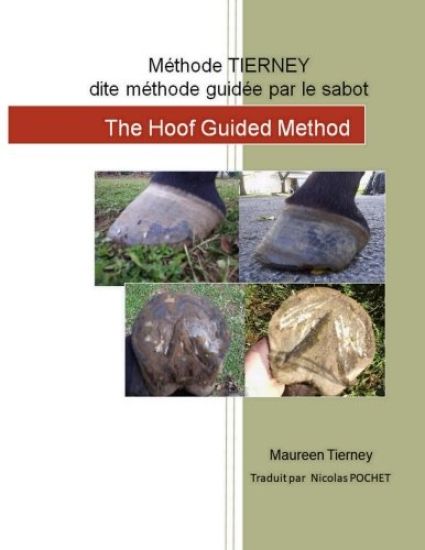
Parage naturel pour pieds nus; la Hoof Guided Method propose une m thode unique de parage naturel pour pieds nus, bas e sur la lecture du sabot. Apprenez ce qu'il faut parer ou ne pas toucher, afin permettre la nature de transformer le sabot rapidement. La Hoof Guided Method est r ellement une m thode moins fait d'avantage bas e sur la th orie qu'un parage pour pieds nus devrait mimer (ou simuler) l'action du sol sur le sabot et que le v ritable but du parage est de stimuler le sabot pour pousser sainement. Simuler et stimuler. Apprenez ne plus micro-g rer le sabot et travaillez avec la nature au lieu d'essayer d'imposer au sabot des id aux humains. Le sabot r agit tout ce qu'il exp rience, et ceci inclut le parage. En parant que ce qui est indiqu puis en attendant que le sabot r agisse, on permet au pied de se transformer. Et il le fera. La d finition d' insanit c'est r p ter la m me chose encore et encore en esp rant des r sultats diff rents. La Hoof Guided Method vous montre comment lire le sabot et obtenir de r els r sultats en peu de temps.
This book provides the definitive account of the Roper-Logan-Tierney model of nursing, including in-depth discussion of its conceptual development, its place within the wider body of nursing theory and a critique of its application in practice. The book will conclude with a wider discussion of the place of this model for nursing in the face of ongoing challenges in both nursing and health care throughout the world.Authoritative and complete account of the most influential nursing model in the UK and one of the most influential in the world. Thorough exploration of aspects of theory which go beyond textbook explorations to dateAuthorsown assessment of the models use in practice and its place in future nursing development a unique set of insights.
The Roper-Logan-Tierney Model of Nursing (RLT model) supports nurses in taking a holistic approach to care by considering how an illness or injury affects an individual’s psychological, social, economic and spiritual life. The RLT model has become synonymous with nursing practice and education and is widely used in health care worldwide. This important textbook supports students in applying the RLT model in real life. It covers how to assess the 12 Activities of Living that impact patients’ lives and health, and then plan, implement and evaluate appropriate care according to the latest evidence and within the current health care context. This new fourth edition has been comprehensively updated to align with NMC standards and is packed full of learning activities that will appeal to student nurses, nurse associates and nurse educators alike. Comprehensively updated to reflect latest evidence and emerging health issues Explains the theory underpinning the RLT Model and how to apply this in practice ‘Many books in one’ - explores and explains aspects of the unique model from physiology to social policy to genetics and cultural issues Aligned to the requirements of the NMC proficiencies for nurses Addresses the needs of nurse associate students Learning is supported by case studies in each chapter plus a range of learning activities including reflection, reading and critical analysis Links to government policies and reports for students to extend their knowledge Important issues of nursing and health care are placed in the context of wider issues that impact health Online resources include a range of images Introduces and links the topic of nursology A stronger focus on the role of supervisors and assessors as qualified nurses in supporting student learning to care for patients in practice Introduces graduate skills and expectations for those obtaining their degree level award alongside their professional award of RN Support for student nurse associates in their journey in completing their proficiencies All evidence and references updated New content reflects global issues such as the health impact of climate change, the ageing population and COVID 19 New appendices for learning and teaching to support practice supervisors
New edition of a successful textbook which demonstrates the theory and practice of one of the most popular models of nursing. Karen Holland, Jane Jenkins and their colleagues carefully explain and explore how the Roper-Logan-Tierney Model can help today's student learn how to care for patients in a variety of health care contexts and use it as a framework for their nursing practice. Rich with 'real-life' case studies and thought provoking exercises, this book has a helpful problem solving approach which strongly encourages further learning and reflection. New edition of a successful textbook which explains the theory and practice of one of the most popular models of nursing Structured approach to a core range of 'activities of living' clearly illustrate how they interconnect and may be promoted, or compromised, by health and illness, and influenced by external factors Explains the theory to show how it can be applied in practice to assess, plan, deliver and evaluate individualised nursing care A helpful case study approach enables readers see how the model works in 'real life' Written by experts who actively encourage a problem-solving approach to nursing care and practice Additional exercises are designed to encourage further learning and reflective practice, as well as develop skills in literature searching and evidence-based care Helpful appendices include a range of reference material such as the Care Plan Documentation and Audit Tool, Laboratory Reference Values, the Roper-Logan Tierney Assessment Schedule and other commonly used nursing documentation Ideal for use in a variety of contemporary health care delivery environments including the acute and community-based settings Presents the latest evidence-base for safe and effective nursing practice Ideal for use in a variety of contemporary Health Care Delivery settings, both in the UK and overseas
This work has been selected by scholars as being culturally important and is part of the knowledge base of civilization as we know it.This work is in the public domain in the United States of America, and possibly other nations. Within the United States, you may freely copy and distribute this work, as no entity (individual or corporate) has a copyright on the body of the work.Scholars believe, and we concur, that this work is important enough to be preserved, reproduced, and made generally available to the public. To ensure a quality reading experience, this work has been proofread and republished using a format that seamlessly blends the original graphical elements with text in an easy-to-read typeface.We appreciate your support of the preservation process, and thank you for being an important part of keeping this knowledge alive and relevant.
This work has been selected by scholars as being culturally important and is part of the knowledge base of civilization as we know it.This work is in the public domain in the United States of America, and possibly other nations. Within the United States, you may freely copy and distribute this work, as no entity (individual or corporate) has a copyright on the body of the work.Scholars believe, and we concur, that this work is important enough to be preserved, reproduced, and made generally available to the public. To ensure a quality reading experience, this work has been proofread and republished using a format that seamlessly blends the original graphical elements with text in an easy-to-read typeface.We appreciate your support of the preservation process, and thank you for being an important part of keeping this knowledge alive and relevant.
"Scream and you're dead." The voice was male, a mix between a growl and a whisper, and whoever it was could definitely have used a breath mint. He tightened his grip, leaning into her, and Satine winced as she was forced to her tiptoes to avoid being strangled. "Who--" she croaked then skipped ahead to avoid the pain. "What do you want?" The man sneered with a, "Mmmm..." that sent a shudder down her spine. As if that wasn't bad enough, he leaned forward to inhale against her neck. His hot breath slithered over her skin when he said, "I didn't believe it. Not until now." It was too dark to see his face, but his excited energy was quickly filling the room. He'd found what he was looking for and he wasn't about to let it go anytime soon. "Be--lieve... what?" she gasped, forced to hang onto his arm to keep her balance. He let out a low laugh and leaned forward to nuzzle her neck again. "That you existed." ***** Caught up in a mad dash around the world where everything she never believed in is out to get her, Satine Tierney would give anything to go back to her hated aristocratic life once she's thrown into a world she knows absolutely nothing about with four mysterious men she's just met. Men who seem convinced that the bad guys are after her because of something that happened before she was even born. Something in her blood...
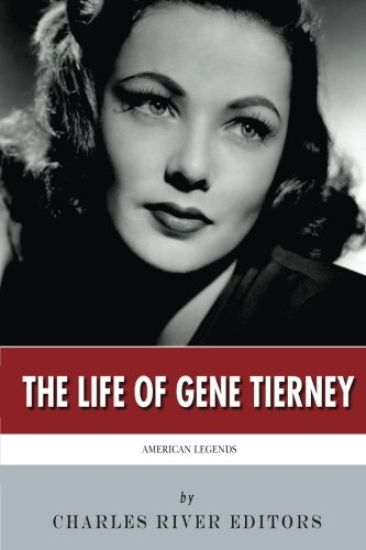
*Includes pictures *Includes Tierney's own quotes about her life and career *Includes a bibliography for further reading "I ask myself: Would I have been any worse off if I had stayed home or lived on a farm instead of shock treatments and medication?" - Gene Tierney "I was fine when it came to cheering up others, not so fine with myself." - Gene Tierney A lot of ink has been spilled covering the lives of history's most influential figures, but how much of the forest is lost for the trees? In Charles River Editors' American Legends series, readers can get caught up to speed on the lives of America's most important men and women in the time it takes to finish a commute, while learning interesting facts long forgotten or never known. When people are asked to list the pros and cons of a star in Hollywood, there's a good chance that Gene Tierney lived all of the highs and lows they would come up with. In many ways, Tierney had the prototypical career of an actress who experienced the best that Hollywood had to offer and got caught up with some of its most notorious pitfalls. With beauty queen looks, Tierney was almost immediately marked for success as an actress once she was discovered, and after just a year on Broadway, she was making her film debut around her 20th birthday. But once she seemed to be on the road to instant fame, her early career faltered, and all the while, she felt the stress and pressure to look her best, including adhering to a strict diet to maintain weight. She also became a heavy smoker in an attempt to lower her voice, which she complained made her sound too much like "an angry Minnie Mouse." Tierney was a major star in her 20s, was one of World War II's most notable pinups, and she was also nominated for an Academy Award for Best Actress by the age of 25, but life off the screen continued to cause her problems. By the time she was in her 30s, Tierney was struggling with severe bouts of depression, which led to her being institutionalized and even receiving electroshock therapy. Tierney hated the shock therapy and complained that it led to memory loss, and she once bitterly remarked, "I existed in a world that never is - the prison of the mind." On top of that, she suffered at least one miscarriage and gave birth to a premature baby that had mental handicaps in part because Tierney had contracted rubella, possibly from a fan who came into close contact with her. Struggling to cope with it all, Tierney attempted suicide, and after being committed yet again, her acting career was almost over. Tierney attempted a comeback of sorts in the 1960s, but after just a few projects, she was all but through with acting, making just one more appearance in a TV miniseries in 1980. In one final blow brought about in part due to her acting career, Tierney died of emphysema when she was 70, a disease caused by the smoking habit she had taken up in order to further herself in Hollywood. American Legends: The Life of Red Skelton chronicles the life and career of one of America's most famous actresses. Along with pictures of important people, places, and events, you will learn about Gene Tierney like never before, in no time at all.