Kirjojen hintavertailu. Mukana 11 244 527 kirjaa ja 12 kauppaa.

Kirjahaku

Etsi kirjoja tekijän nimen, kirjan nimen tai ISBN:n perusteella.

1000 tulosta hakusanalla Timothy B. Malchow

Günter Grass and the Genders of German Memory

Günter Grass and the Genders of German Memory

Timothy B. Malchow

Camden House Inc
2021
sidottu
The first book to examine the connection between gender and memory in Grass's oeuvre, which is especially timely in light of current concerns about male privilege. Günter Grass (1927-2015) was a fixture at the heart of German cultural life, a self-styled spokesman of the Kulturnation (cultural nation) who imagined it linking him to canonical male literary figures and their authority. He was also the object of valid feminist criticism: a rigid conception of gender permeates his works, belying his professed skepticism toward ideologies. A heterosexual male, Grass lent his representative persona a natural veneer by appropriating his era's gendered discursive constructs, including Heimat, the Bildungsroman, and narratives about German wartime victims and perpetrators. Such appropriation elevated his remembering artist's masculinity above that of the status quo's defenders and exploiters of memory. This book is the first to evaluate the connection between gender and memory in Grass's oeuvre and its legacy in light of current concerns about male privilege. It highlights his breakthrough novel The Tin Drum (1959) and his memoir Peeling the Onion (2006). The former establishes the gendered persona that Grass would develop in subsequent decades to relate contemporary issues to Nazi-era memories. The latter reclaims the novel's autobiographical material but fails to account for his decades-long silence about having served in the Nazi Waffen-SS. Instead, it foregrounds his mourning for his mother, allowing for a more personal reading of his oeuvre and its gendered imagery.

Timothy B. Dyk

Timothy B. Dyk

Timothy B. Dyk

Anthem Press
2022
sidottu
This book closely recounts Judge Dyk’s life and experiences in connection with some of the most significant times in modern American law, ranging from his time at the Warren Court, through a private career in First Amendment and other high profile practice, to his current role in the US Court of Appeals. Based on his own account of his long career and supplemented with documentary evidence from archives, media sources and scholarship, the book not only details Dyk’s experiences but also offers a significant contribution to our understanding of the seismic changes in US law since the 1960s.
Timothy B. Dyk

Timothy B. Dyk

Timothy B. Dyk

ANTHEM PRESS
2022
nidottu
This book closely recounts Judge Dyk’s life and experiences in connection with some of the most significant times in modern American law, ranging from his time at the Warren Court, through a private career in First Amendment and other high profile practice, to his current role in the US Court of Appeals. Based on his own account of his long career and supplemented with documentary evidence from archives, media sources and scholarship, the book not only details Dyk’s experiences but also offers a significant contribution to our understanding of the seismic changes in US law since the 1960s.
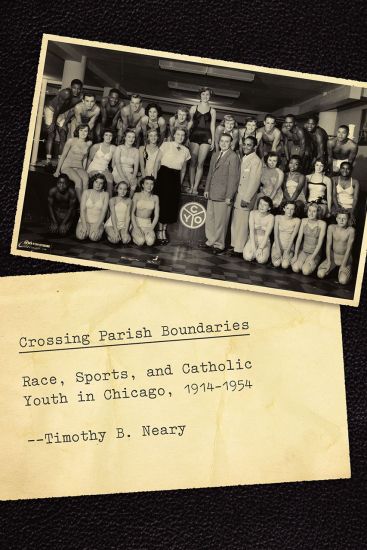
Crossing Parish Boundaries

Crossing Parish Boundaries

Timothy B. Neary

University of Chicago Press
2016
sidottu
Controversy erupted in spring 2001 when Chicago's mostly white Southside Catholic Conference youth sports league rejected the application of the predominantly black St. Sabina grade school. Fifty years after Brown v. Board of Education, interracialism seemed stubbornly unattainable, and the national spotlight once again turned to the history of racial conflict in Catholic parishes. It's widely understood that midcentury, working class, white ethnic Catholics were among the most virulent racists, but, as Crossing Parish Boundaries shows, that's not the whole story. In this book, Timothy B. Neary reveals the history of Bishop Bernard Sheil's Catholic Youth Organization (CYO), which brought together thousands of young people of all races and religions from Chicago's racially segregated neighborhoods to take part in sports and educational programming. Tens of thousands of boys and girls participated in basketball, track and field, and, the most popular sport of all, boxing, which regularly filled Chicago Stadium with roaring crowds. The history of Bishop Sheil and the CYO shows a cosmopolitan version of American Catholicism, one that is usually overshadowed by accounts of white ethnic Catholics aggressively resisting the racial integration of their working-class neighborhoods. By telling the story of Catholic-sponsored interracial cooperation within Chicago, Crossing Parish Boundaries complicates our understanding of northern urban race relations in the mid-twentieth century.
Crossing Parish Boundaries

Crossing Parish Boundaries

Timothy B. Neary

University of Chicago Press
2018
pokkari
Controversy erupted in spring 2001 when Chicago's mostly white Southside Catholic Conference youth sports league rejected the application of the predominantly black St. Sabina grade school. Fifty years after Brown v. Board of Education, interracialism seemed stubbornly unattainable, and the national spotlight once again turned to the history of racial conflict in Catholic parishes. It's widely understood that midcentury, working class, white ethnic Catholics were among the most virulent racists, but, as Crossing Parish Boundaries shows, that's not the whole story. In this book, Timothy B. Neary reveals the history of Bishop Bernard Sheil's Catholic Youth Organization (CYO), which brought together thousands of young people of all races and religions from Chicago's racially segregated neighborhoods to take part in sports and educational programming. Tens of thousands of boys and girls participated in basketball, track and field, and the most popular sport of all, boxing, which regularly filled Chicago Stadium with roaring crowds. The history of Bishop Sheil and the CYO shows a cosmopolitan version of American Catholicism, one that is usually overshadowed by accounts of white ethnic Catholics aggressively resisting the racial integration of their working-class neighborhoods. By telling the story of Catholic-sponsored interracial cooperation within Chicago, Crossing Parish Boundaries complicates our understanding of northern urban race relations in the mid-twentieth century.
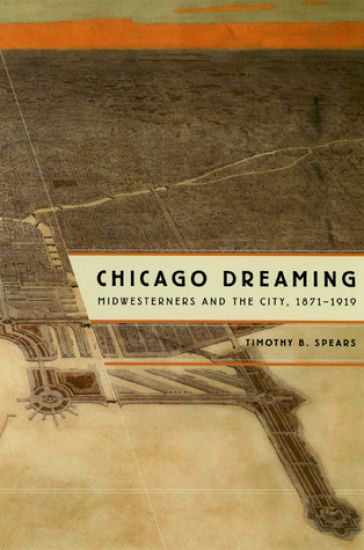
Chicago Dreaming

Chicago Dreaming

Timothy B. Spears

University of Chicago Press
2005
sidottu
During the late nineteenth century, Chicago's population grew at an astonishing rate, with an estimated growth of 900,000 people between 1860 and 1890. Drawn to the opportunities generated by an expansive economy, hinterland migrants from the rural Midwest flocked to the city, their visions of prosperity creating a thriving modern urban culture. The hopes of these newcomers are the subject of Timothy B. Spears's book Chicago Dreaming - the story of Chicago's growth and the transplanted Midwesterners who so decisively shaped the young city's identity. Through innovative readings of Theodore Dreiser, Willa Cather, and Richard Wright, Spears argues that the migratory perspective was crucial to the rise of Chicago's emerging literary culture. In following the paths of several well-known migrants, including Jane Addams, cartoonist John T. McCutcheon, and businessman John Glessner, Spears also shows how the view from the hinterland permeated urban culture and informed the development of key Chicago institutions. Further exploring the notion of dreaming, he brings to light the internal desires that lured Midwestern migrants to the city as well as the nostalgia that led them to dream of the homes they left behind. With this fascinating new take on the rise of Chicago, Chicago Dreaming blurs the line between country and city to reveal the provincial character of modern urban culture.
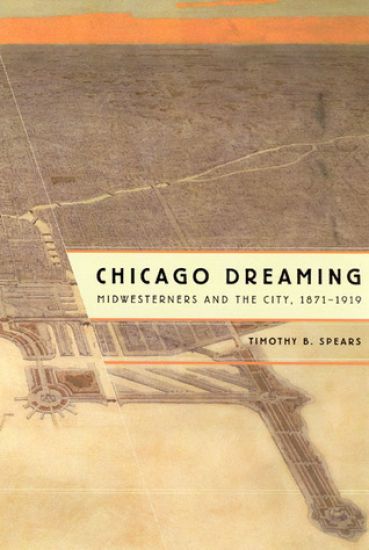
Chicago Dreaming

Chicago Dreaming

Timothy B. Spears

University of Chicago Press
2005
nidottu
During the late nineteenth century, Chicago's population grew at an astonishing rate, with an estimated growth of 900,000 people between 1860 and 1890. Drawn to the opportunities generated by an expansive economy, hinterland migrants from the rural Midwest flocked to the city, their visions of prosperity creating a thriving modern urban culture. The hopes of these newcomers are the subject of Timothy B. Spears's book Chicago Dreaming - the story of Chicago's growth and the transplanted Midwesterners who so decisively shaped the young city's identity. Through innovative readings of Theodore Dreiser, Willa Cather, and Richard Wright, Spears argues that the migratory perspective was crucial to the rise of Chicago's emerging literary culture. In following the paths of several well-known migrants, including Jane Addams, cartoonist John T. McCutcheon, and businessman John Glessner, Spears also shows how the view from the hinterland permeated urban culture and informed the development of key Chicago institutions. Further exploring the notion of dreaming, he brings to light the internal desires that lured Midwestern migrants to the city as well as the nostalgia that led them to dream of the homes they left behind. With this fascinating new take on the rise of Chicago, Chicago Dreaming blurs the line between country and city to reveal the provincial character of modern urban culture.
Assessment and Treatment of Addictive Disorders

Assessment and Treatment of Addictive Disorders

Timothy B. Baker; Dale S. Cannon

Praeger Publishers Inc
1988
sidottu
This volume analyzes selected state-of-the-art addiction research presently being conducted by leaders in the field. It critically evaluates the assessment and treatment strategies that are used in addiction research. The contributors to Part I address the assessment of addictive disorders, covering issues such as self-monitoring; social/family interaction patterns, self-efficacy and relapse determinants, and drinking patterns over time. In Part II, the treatment section, they examine aversion therapy for both cigarette smokers and alcoholics, coping-response counseling, the effectiveness of relapse prevention, and a job-training program for heroin addicts.
100 Years on the Road

100 Years on the Road

Timothy B. Spears

Yale University Press
1997
pokkari
"Kiss the children and sister Minnie for me. And tell her whatever she does, never to marry a traveling man, they are the most unhappy men on earth."—E. Barton Martin to his wife, Julia, April 6, 1877"I have maid plenty of money since I've bin off the farm & don't have to work half so hard. . . . Come out and see the World."—William Hutton to his brother Lineus, October 11, 1884Even today, in Death of a Salesman and The Music Man, the traveling salesman is an intriguing, almost mythic figure. This lively and vividly illustrated account—the first in-depth study of the traveling salesman, or "drummer"—investigates his role in American culture during his heyday, between 1830 and 1920. Drawing on such sources as diaries, advice manuals, autobiographies, and trade journals, Timothy Spears shows how traveling salesmen shaped the customs of life on the road, established the foundations of "scientific salesmanship," and helped to develop modern consumer culture. Spears reconstructs the cultural history of face-to-face sales during this period, describing the nature of traveling life, the development of strategies for selling to the trade rather than door-to-door, and the problematic relationship of the salesman to society—first as the agent of an emergent, intrusive market and later as a target for critics of "vulgar" commercialism. Throughout, Spears offers original and persuasive readings of works by Arthur Miller, Stephen Crane, Theodore Dreiser, Sherwood Anderson, Sinclair Lewis, and Eudora Welty and illuminates other cultural representations of the traveling salesman.
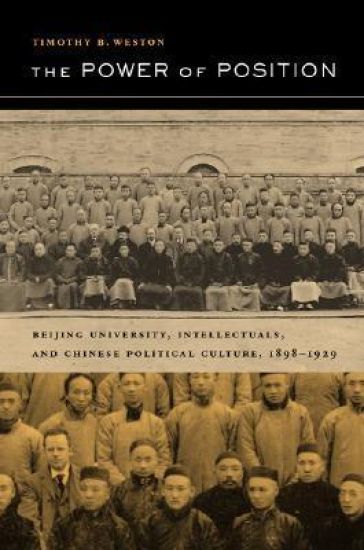
The Power of Position

The Power of Position

Timothy B. Weston

University of California Press
2004
sidottu
Throughout the twentieth century, Beijing University (or Beida) has been at the center of China's greatest political and cultural upheavals--from the May Fourth Movement of 1919 to the Cultural Revolution of the 1960s to the tragic events in Tiananmen Square in 1989. Why this should be--how Beida's historical importance has come to transcend that of a mere institution of higher learning--is a question at the heart of this book. A study of intellectuals and political culture during the past century's tumultuous early decades, The Power of Position is the first to focus on Beida, China's oldest and best-known national university. Timothy B. Weston portrays the university as a key locus used by intellectuals to increase their influence in society. Weston analyzes the links between intellectuals' political and cultural commitments and their specific manner of living. He also compares Beijing's intellectual culture with that of the rising metropolis of Shanghai. What emerges is a remarkably nuanced and complex picture of life at China's leading university, especially in the decades leading up to the May Fourth Movement.
Power through Weakness

Power through Weakness

Timothy B. Savage

Cambridge University Press
1995
sidottu
Dr Savage seeks to understand the apostle Paul’s apparently contradictory description of his ministry in 2 Corinthians as one in which power is manifested through weakness: ‘When I am weak, then I am strong!’ This paradox becomes intelligible when it is understood that Paul’s critics were influenced by a perspective which was the exact opposite of his: they imbibed the self-exalting outlook of their contemporary world, while he embraced the self-emptying gospel of Christ. Drawing from archaeological data on first-century Corinth, this study is unique in establishing both the secular underpinnings of Paul’s paradoxical language and the devastating critique which that language offers on the general outlook of the first century. Paul emerges as a radical foil to the spirit of the age.
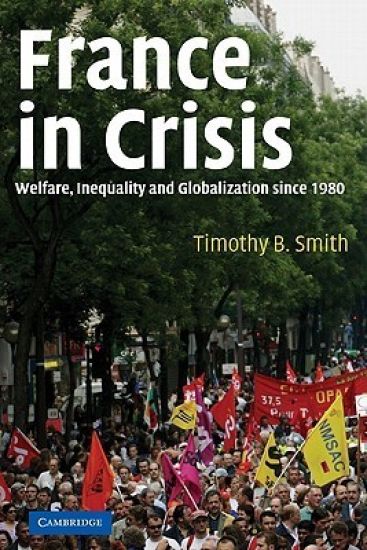
France in Crisis

France in Crisis

Timothy B. Smith

Cambridge University Press
2004
pokkari
France is in crisis. In this provocative account, Timothy Smith argues that the French economic and social model is collapsing inward on itself, the result of good intentions, bad policies, and vested interests who employ the rhetoric of ‘solidarity’ to prevent change. French social policy is not redistributive; indeed, Smith argues, the majority of ‘social’ spending serves to strengthen existing inequalities. He shows how politicians, intellectuals and labor leaders have invoked the specter of ‘globalization’ to explain homegrown problems and delay reform. Professor Smith makes frequent comparisons with the USA, UK, Canada, Scandinavia, Germany and the Netherlands and argues that change need not follow the inegalitarian US or British paths but instead can lead to a more equal society. Written in a lively style, this is an unusual blend of history, policy analysis, economics and political commentary and will be indispensable reading for anyone seeking to understand France’s current malaise.
Power through Weakness

Power through Weakness

Timothy B. Savage

Cambridge University Press
2004
pokkari
Dr Savage seeks to understand the apostle Paul’s apparently contradictory description of his ministry in 2 Corinthians as one in which power is manifested through weakness: ‘When I am weak, then I am strong!’ This paradox becomes intelligible when it is understood that Paul’s critics were influenced by a perspective which was the exact opposite of his: they imbibed the self-exalting outlook of their contemporary world, while he embraced the self-emptying gospel of Christ. Drawing from archaeological data on first-century Corinth, this study is unique in establishing both the secular underpinnings of Paul’s paradoxical language and the devastating critique which that language offers on the general outlook of the first century. Paul emerges as a radical foil to the spirit of the age.
France in Crisis

France in Crisis

Timothy B. Smith

Cambridge University Press
2004
sidottu
France is in crisis. In this provocative account, Timothy Smith argues that the French economic and social model is collapsing inward on itself, the result of good intentions, bad policies, and vested interests who employ the rhetoric of ‘solidarity’ to prevent change. French social policy is not redistributive; indeed, Smith argues, the majority of ‘social’ spending serves to strengthen existing inequalities. He shows how politicians, intellectuals and labor leaders have invoked the specter of ‘globalization’ to explain homegrown problems and delay reform. Professor Smith makes frequent comparisons with the USA, UK, Canada, Scandinavia, Germany and the Netherlands and argues that change need not follow the inegalitarian US or British paths but instead can lead to a more equal society. Written in a lively style, this is an unusual blend of history, policy analysis, economics and political commentary and will be indispensable reading for anyone seeking to understand France’s current malaise.
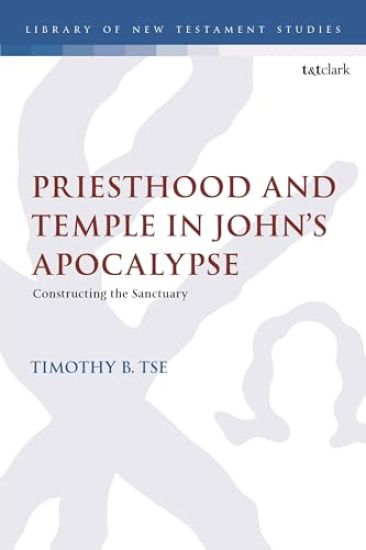
Priesthood and Temple in John’s Apocalypse

Priesthood and Temple in John’s Apocalypse

Timothy B. Tse

BLOOMSBURY PUBLISHING PLC
2024
sidottu
Timothy B. Tse argues that, while John uses language drawn from the Hebrew Bible’s descriptions of YHWH’s dwelling place, scholarship has overlooked the importance of his spatial transformation of that language. Tse thus uses theories relating to Relevance, Resistance Theory, Critical Space Theory, and Conceptual Metaphor, to demonstrate that a significant part of John’s apocalyptic strategy of resistance is to re-present his vision to his audience spatially, so that they can experience a divinely ordained alternative to the world in which they live.Tse first demonstrates John's attempts to relegate his audience’s experience of space to his own revelation; John’s description of the visionary world creates the metaphors “the earth is a Sanctuary” and “the Saints are its priests.” Tse argues that, under this view, life on earth must be evaluated according to the concerns of the Sanctuary, which by definition requires the removal of everything impure, and the Saints (namely all Christians in both the historic and visionary worlds) must take priestly responsibility for the earth. John therefore portrays the Saints joining in the removal of all impurity upon the earth by fighting, as priests, in God and the Lamb’s war against Satan, Babylon, and all her impurities. Tse concludes that overall, John means to realign the church’s experience of space, so that they understand themselves as priests of the Sanctuary, and live according to that reality.
Priesthood and Temple in John's Apocalypse: Constructing the Sanctuary
Timothy B. Tse argues that, while John uses language drawn from the Hebrew Bible's descriptions of YHWH's dwelling place, scholarship has overlooked the importance of his spatial transformation of that language. Tse thus uses theories relating to Relevance, Resistance Theory, Critical Space Theory, and Conceptual Metaphor, to demonstrate that a significant part of John's apocalyptic strategy of resistance is to re-present his vision to his audience spatially, so that they can experience a divinely ordained alternative to the world in which they live. Tse first demonstrates John's attempts to relegate his audience's experience of space to his own revelation; John's description of the visionary world creates the metaphors "the earth is a Sanctuary" and "the Saints are its priests." Tse argues that, under this view, life on earth must be evaluated according to the concerns of the Sanctuary, which by definition requires the removal of everything impure, and the Saints (namely all Christians in both the historic and visionary worlds) must take priestly responsibility for the earth. John therefore portrays the Saints joining in the removal of all impurity upon the earth by fighting, as priests, in God and the Lamb's war against Satan, Babylon, and all her impurities. Tse concludes that overall, John means to realign the church's experience of space, so that they understand themselves as priests of the Sanctuary, and live according to that reality.