Kirjojen hintavertailu. Mukana 11 244 527 kirjaa ja 12 kauppaa.

Kirjahaku

Etsi kirjoja tekijän nimen, kirjan nimen tai ISBN:n perusteella.

1000 tulosta hakusanalla Timothy C. Winegard

The Horse: A Galloping History of Humanity
THE NATIONAL BESTSELLER High Plains International Book Award Finalist Shortlisted for the Reading the West Book Award One of The Economist's Best Books of the Year An Amazon Best Book of the Month A Next Big Idea Club Must-Read Book From New York Times bestselling author of The Mosquito, the incredible story of how the horse shaped human history Timothy C. Winegard's The Horse is an epic history unlike any other. Its story begins more than 5,500 years ago on the windswept grasslands of the Eurasian Steppe; when one human tamed one horse, an unbreakable bond was forged and the future of humanity was instantly rewritten, placing the reins of destiny firmly in human hands. Since that pivotal day, the horse has carried the history of civilizations on its powerful back. For millennia it was the primary mode of transportation, an essential farming machine, a steadfast companion, and a formidable weapon of war. Possessing a unique combination of size, speed, strength, and stamina, the horse dominated every facet of human life and shaped the very scope of human ambition. And we still live among its galloping shadows. Horses revolutionized the way we hunted, traded, traveled, farmed, fought, worshipped, and interacted. They fundamentally reshaped the human genome and the world's linguistic map. They determined international borders, molded cultures, fueled economies, and built global superpowers. They decided the destinies of conquerors and empires. And they were vectors of lethal disease and contributed to lifesaving medical innovations. Horses even inspired architecture, invention, furniture, and fashion. From the thundering cavalry charges of Alexander the Great to the streets of New York during the Great Manure Crisis of 1894 and beyond, horses have shaped both the grand arc of history and our everyday lives. Driven by fascinating revelations and fast-paced storytelling, The Horse is a riveting narrative of this noble animal's unrivaled and enduring reign across human history. To know the horse is to understand the world.
For King and Kanata

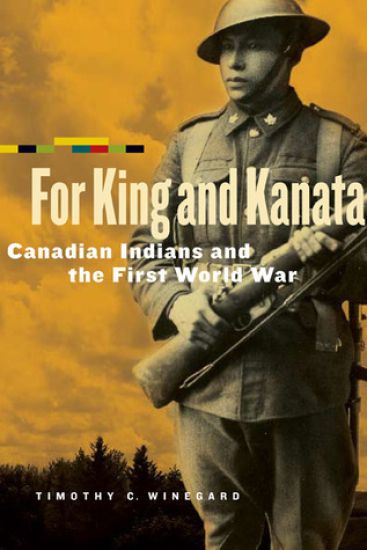
For King and Kanata

Timothy C. Winegard

University of Manitoba Press
2012
nidottu
The first comprehensive history of the Aboriginal First World War experience on the battlefield and the home front. When the call to arms was heard at the outbreak of the First World War, Canada's First Nations pledged their men and money to the Crown to honour their long-standing tradition of forming military alliances with Europeans during times of war, and as a means of resisting cultural assimilation and attaining equality through shared service and sacrifice.Initially, the Canadian government rejected these offers based on the belief that status Indians were unsuited to modern, civilized warfare. But in 1915, Britain intervened and demanded Canada actively recruit Indian soldiers to meet the incessant need for manpower. Thus began the complicated relationships between the Imperial Colonial and War Offices, the Department of Indian Affairs, and the Ministry of Militia that would affect every aspect of the war experience for Canada's Aboriginal soldiers. In his groundbreaking new book, For King and Kanata, Timothy C. Winegard reveals how national and international forces directly influenced the more than 4,000 status Indians who voluntarily served in the Canadian Expeditionary Force between 1914 and 1919 - a per capita percentage equal to that of Euro-Canadians - and how subsequent administrative policies profoundly affected their experiences at home, on the battlefield, and as returning veterans.
Indigenous Peoples of the British Dominions and the First World War

Indigenous Peoples of the British Dominions and the First World War

Timothy C. Winegard

Cambridge University Press
2011
sidottu
This pioneering comparative history of the participation of indigenous peoples of the British Empire in the First World War is based upon archival research in four continents. It provides the first comprehensive examination and comparison of how indigenous peoples of Canada, Australia, Newfoundland, New Zealand and South Africa experienced the Great War. The participation of indigenes was an extension of their ongoing effort to shape and alter their social and political realities, their resistance to cultural assimilation or segregation and their desire to attain equality through service and sacrifice. While the dominions discouraged indigenous participation at the outbreak of war, by late 1915 the imperial government demanded their inclusion to meet the pragmatic need for military manpower. Indigenous peoples responded with patriotism and enthusiasm both on the battlefield and the home front and shared equally in the horrors and burdens of the First World War.
Indigenous Peoples of the British Dominions and the First World War

Indigenous Peoples of the British Dominions and the First World War

Timothy C. Winegard

Cambridge University Press
2014
pokkari
This pioneering comparative history of the participation of indigenous peoples of the British Empire in the First World War is based upon archival research in four continents. It provides the first comprehensive examination and comparison of how indigenous peoples of Canada, Australia, Newfoundland, New Zealand and South Africa experienced the Great War. The participation of indigenes was an extension of their ongoing effort to shape and alter their social and political realities, their resistance to cultural assimilation or segregation and their desire to attain equality through service and sacrifice. While the dominions discouraged indigenous participation at the outbreak of war, by late 1915 the imperial government demanded their inclusion to meet the pragmatic need for military manpower. Indigenous peoples responded with patriotism and enthusiasm both on the battlefield and the home front and shared equally in the horrors and burdens of the First World War.
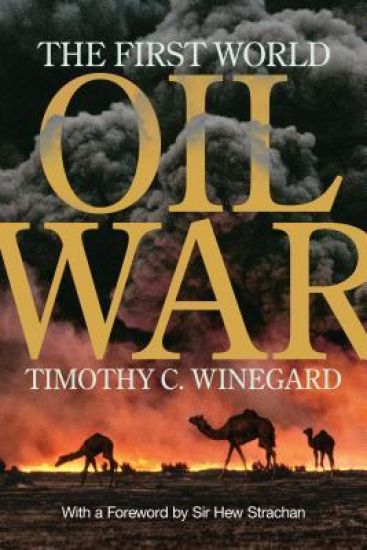
The First World Oil War

The First World Oil War

Timothy C. Winegard; Sir Hew Strachan

University of Toronto Press
2016
sidottu
Oil is the source of wealth and economic opportunity. Oil is also the root source of global conflict, toxicity and economic disparity. When did oil become such a powerful commodity-during, and in the immediate aftermath of, the First World War. In his groundbreaking book The First World Oil War, Timothy C. Winegard argues that beginning with the First World War, oil became the preeminent commodity to safeguard national security and promote domestic prosperity. For the first time in history, territory was specifically conquered to possess oil fields and resources; vital cogs in the continuation of the industrialized warfare of the Twentieth Century. This original and pioneering study analyzes the evolution of oil as a catalyst for both war and diplomacy, and connects the events of the First World War to contemporary petroleum geo-politics and international aggression.
The Brusilov Offensive

The Brusilov Offensive

Timothy C. Dowling

Indiana University Press
2008
sidottu
In the summer of 1915, the Central Powers launched an offensive on the Eastern Front that they hoped would decide the war. It did not, of course. In June 1916, an Allied army under the command of Aleksei A. Brusilov decimated the Central Powers' gains of 1915. Brusilov's success brought Romania into the war, extinguished the offensive ability of the Habsburg armies, and forced Austria-Hungary into military dependence on and political subservience to Germany. The results were astonishing in military terms, but the political consequences were perhaps even more significant. More than any other action, the Brusilov Offensive brought the Habsburg Empire to the brink of a separate peace, while creating conditions for revolution within the Russian Imperial Army. Timothy C. Dowling tells the story of this important but little-known battle in the military and political history of the Eastern Front.
For the Body

For the Body

Timothy C. Tennent; Ajith Fernando

Zondervan
2020
sidottu
An in-depth look at what it means to be created in the image of God and how our bodies serve as icons that illuminate God's purposes instead of ours.The human body is an amazing gift, yet today, many people downplay its importance and fail to understand what Christianity teaches about our bodies and their God-given purposes. Many people misunderstand how the body was designed, its role in relating to others; and we lack awareness of the dangers of objectifying the body, divorcing it from its intended purpose.Timothy Tennent covers topics like marriage, family, singleness, and friendship, and he looks at how the human body has been objectified in art and media today. For the Body offers a biblical framework for discipling people today in a Christian theology of the body.Tennent—theologian and president of Asbury Theological Seminary—explores the contours of a robust Christian vision of the body, human sexuality, and the variety of different ways we are called into relationships with others. This book will reveal a theological vision that:Informs our self-understanding of our own bodies.Examines how we treat others.Reevaluates how we engage today's controversial and difficult discussions on human sexuality with grace, wisdom, and confidence.For the Body is a call to a deeper understanding of our bodies and an invitation to recapture the wonder of this amazing gift.
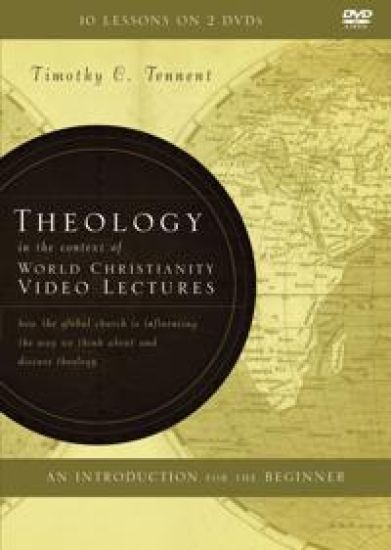
Theology in the Context of World Christianity
Thinking more globally about the formation of theology enriches our understanding of what it means to be a Christian. It's no secret that the center of Christianity has shifted from the West to the global South and East. While the truths of the Christian faith are universal, different contexts and cultures illuminate new questions, understandings, and expressions. What does this mean for theology, as Western theologians understand it?Timothy Tennent argues that the Christian faith is culturally and theologically translatable. Theology in the Context of World Christianity is written to expand our "ecclesiastical cartography" by highlighting—within each of the major themes of systematic theology—studies that are engaging the global church, such as:Anthropology (with studies drawn from the different views of human identity between Eastern and Western cultures).Christology (with a focus on the emphases that African Christians place on the characteristics of Christ).Pneumatology (by looking at the role of the Holy Spirit in Latin American Pentecostalism).Eschatology (by focusing on how this branch of theology shapes world missions and evangelism).Each of the ten chapters examines traditional theological categories in conversation with theologians from across the globe, making this volume valuable for students, pastors, missionaries, and theologians alike.Theological reflection is active and exciting in the majority world church, and Tennent invites you to your own reflection and celebration of Christ's global church. These are perspectives that should be heard, considered, and brought into conversation with Western theologians. Global theology can make us aware of our own blind spots and biases and has much to offer toward the revitalization of Western Christianity.
Statistics in Plain English

Statistics in Plain English

Timothy C. Urdan

Routledge
2022
sidottu
Statistics in Plain English is a straightforward, conversational introduction to statistics that delivers exactly what its title promises. Each chapter begins with a brief overview of a statistic (or set of statistics) that describes what the statistic does and when to use it, followed by a detailed step-by-step explanation of how the statistic works and exactly what information it provides. Chapters also include an example of the statistic (or statistics) used in real-world research, "Worked Examples," "Writing It Up" sections that demonstrate how to write about each statistic, "Wrapping Up and Looking Forward" sections, and practice work problems.Thoroughly updated throughout, this edition features several key additions and changes. First, a new chapter on person-centered analyses, including cluster analysis and latent class analysis (LCA) has been added, providing an important alternative to the more commonly used variable-centered analyses (e.g., t tests, ANOVA, regression). Next, the chapter on non-parametric statistics has been enhanced with in-depth descriptions of Mann-Whitney U, Kruskal-Wallis, and Wilcoxon Signed-Rank analyses, in addition to the detailed discussion of the Chi-square statistic found in the previous edition. These nonparametric statistics are widely used when dealing with nonnormally distributed data. This edition also includes more information about the assumptions of various statistics, including a detailed explanation of the assumptions and consequences of violating the assumptions of regression, as well as more coverage of the normal distribution in statistics. Finally, the book features a multitude of real-world examples throughout to aid student understanding and provides them with a solid understanding of how several statistics techniques commonly used by researchers in the social sciences work.Statistics in Plain English is suitable for a wide range of readers, including students taking their first statistics course, professionals who want to refresh their statistical memory, and undergraduate or graduate students who need a concise companion to a more complicated text used in their class. The text works as a standalone or as a supplement and covers a range of statistical concepts from descriptive statistics to factor analysis and person-centered analyses.
Statistics in Plain English

Statistics in Plain English

Timothy C. Urdan

Routledge
2022
nidottu
Statistics in Plain English is a straightforward, conversational introduction to statistics that delivers exactly what its title promises. Each chapter begins with a brief overview of a statistic (or set of statistics) that describes what the statistic does and when to use it, followed by a detailed step-by-step explanation of how the statistic works and exactly what information it provides. Chapters also include an example of the statistic (or statistics) used in real-world research, "Worked Examples," "Writing It Up" sections that demonstrate how to write about each statistic, "Wrapping Up and Looking Forward" sections, and practice work problems.Thoroughly updated throughout, this edition features several key additions and changes. First, a new chapter on person-centered analyses, including cluster analysis and latent class analysis (LCA) has been added, providing an important alternative to the more commonly used variable-centered analyses (e.g., t tests, ANOVA, regression). Next, the chapter on non-parametric statistics has been enhanced with in-depth descriptions of Mann-Whitney U, Kruskal-Wallis, and Wilcoxon Signed-Rank analyses, in addition to the detailed discussion of the Chi-square statistic found in the previous edition. These nonparametric statistics are widely used when dealing with nonnormally distributed data. This edition also includes more information about the assumptions of various statistics, including a detailed explanation of the assumptions and consequences of violating the assumptions of regression, as well as more coverage of the normal distribution in statistics. Finally, the book features a multitude of real-world examples throughout to aid student understanding and provides them with a solid understanding of how several statistics techniques commonly used by researchers in the social sciences work.Statistics in Plain English is suitable for a wide range of readers, including students taking their first statistics course, professionals who want to refresh their statistical memory, and undergraduate or graduate students who need a concise companion to a more complicated text used in their class. The text works as a standalone or as a supplement and covers a range of statistical concepts from descriptive statistics to factor analysis and person-centered analyses.
Improving Natural Resource Management

Improving Natural Resource Management

Timothy C. Haas

John Wiley Sons Inc
2011
sidottu
The decision to implement environmental protection options is a political one. These, and other political and social decisions affect the balance of the ecosystem and how the point of equilibrium desired is to be reached. This book develops a stochastic, temporal model of how political processes influence and are influenced by ecosystem processes and looks at how to find the most politically feasible plan for managing an at-risk ecosystem. Finding such a plan is accomplished by first fitting a mechanistic political and ecological model to a data set composed of observations on both political actions that impact an ecosystem and variables that describe the ecosystem. The parameters of this fitted model are perturbed just enough to cause human behaviour to change so that desired ecosystem states occur. This perturbed model gives the ecosystem management plan needed to reach desired ecosystem states. To construct such a set of interacting models, topics from political science, ecology, probability, and statistics are developed and explored. Key features: Explores politically feasible ways to manage at-risk ecosystems.Gives agent-based models of how social groups affect ecosystems through time.Demonstrates how to fit models of population dynamics to mixtures of wildlife data.Presents statistical methods for fitting models of group behaviour to political action data.Supported by an accompanying website featuring datasets and JAVA code. This book will be useful to managers and analysts working in organizations charged with finding practical ways to sustain biodiversity or the physical environment. Furthermore this book also provides a political roadmap to help lawmakers and administrators improve institutional environmental management decision making.
Beyond the River, Under the Eye of Rome

Beyond the River, Under the Eye of Rome

Timothy C Hart

THE UNIVERSITY OF MICHIGAN PRESS
2024
sidottu
Beyond the River, Under the Eye of Rome presents the Danube frontier of the Roman empire as the central stage for many of the most important political and military events of Roman history, from Trajan’s invasion of Dacia and the Marcomannic Wars, to the humbling of the Roman state power at the hands of the Goths and Huns. Hart delves into the cultural and political impacts of Rome’s interactions with Transdanubian peoples, emphasizing the Sarmatians of the Hungarian Plain, whose long encounter with the Roman Empire, he argues, created a problematic template for later dealings with Goths and Huns based on misapplied ethnographic and ecological tropes. Beyond the River, Under the Eye of Rome explores how Roman stereotypical perceptions of specific Danubian peoples directly influenced some of the most politically significant events of Roman antiquity. Drawing on textual, inscriptional, and archaeological evidence, Hart illustrates how Roman ethnic and ecological stereotypes were employed in the Danubian borderland to support the imperial frontier edifice fundamentally at odds with the region’s natural topography. Distorted Roman perceptions of these Danubian neighbors resulted in disastrous mismanagement of border wars and migrant crises throughout the first five centuries CE. Beyond the River demonstrates how state-supported stereotypes, when coupled with Roman military and economic power, exerted strong influences on the social structures and evolving group identities of the peoples dwelling in the borderland.
Structures and Categories for the Representation of Meaning

Structures and Categories for the Representation of Meaning

Timothy C. Potts

Cambridge University Press
1994
sidottu
This 1994 book develops a way of representing the meanings of linguistic expressions which is independent of any particular language, allowing the expressions to be manipulated in accordance with rules related to their meanings which could be implemented on a computer. It begins with a survey of the contributions of linguistics, logic and computer science to the problem of representation, linking each with a particular type of formal grammar. A system of graphs is then presented, organized by scope relations in which linguistic constituents are sub-graphs whose configuration is determined by their categories. In developing this system, the author extends the notion of scope and argues that anaphoric and relative pronouns are structural signs not linguistic constituents. Certain count nouns are made the basis of this system and an account of proper names relating the count nouns, is given.
We Volunteered.

We Volunteered.

Timothy C Ruse

Timothy Charles Ruse
2010
pokkari
"We Volunteered." is the story of Carl Robert Ruse, suvivor of the Bataan Death March, and a prisoner of the Japanese Imperial Army through the end of World War II. As a POW, he endured horrific conditions at prison camps such as Camp O'Donnell, Cabanatuan, and Davao Penal Colony. He also survived two months of time in the hold of a crowded Japanese "Hell Ship" for a two-month voyage to Japan where he was forced to work in the Japanese industrial city of Yokkaichi until the end of the war. At the time of his liberation, he weighed eighty pounds.
Campus Hate Speech on Trial

Campus Hate Speech on Trial

Timothy C. Shiell

University Press of Kansas
2009
sidottu
Ten years after publication of the first edition of Timothy Shiell's path breaking study, restrictions on faculty and student speech on college campuses continue to be hotly contested in the mainstream media, on the internet, in the journals of academic disciplines, in courtrooms, classrooms, and chat rooms. This revised edition adds substantial new material that updates cases and conflicts during the past decade, expands the original's coverage of the relevant literature, and dramatically reinforces Shiell's original argument. In the first edition Shiell noted that, despite commitments to free speech and the open exchange of ideas, American colleges and universities had increasingly ignored such principles by implementing numerous hate speech codes designed to protect students from racial, sexual, and other forms of harassment. Taking their cue from Title VII of the Civil Rights Act, which guarantees the right to a non hostile workplace environment, those regulations had posed seemingly unresolvable conflicts between the ideals of free speech and equal protection. Shiell explored both sides of the fiery debate over campus hate speech codes to bring out their philosophical and legal underpinnings, clarifying classic free speech arguments as well as the ideas of harm and hostile environment, and analyzing numerous case histories. Pointing out that Title VII wasn't meant to apply to academia, Shiell also encouraged readers to consider the role of the courts in eliminating prejudice in this setting and presented a strong argument for the form the codes themselves should ideally take. The new edition adds substantial new material on developments concerning the Deterrence Argument, the hostile environment approach, new judicial decisions, and the International Argument. It also updates the comprehensive bibliography and list of legal decisions, significantly increasing the value of both for scholars and policymakers alike. Shiell eloquently makes the case that campus speech codes - no matter how well grounded in history, law, or philosophy - have tended to be overbroad, arbitrarily enforced, and used selectively to protect only certain groups at the expense of others. For that reason especially, his book will continue to challenge academics and general readers to reconsider how we deal with this important issue.