

Kirjahaku
Etsi kirjoja tekijän nimen, kirjan nimen tai ISBN:n perusteella.
1000 tulosta hakusanalla Timothy D Eckert




High-Resolution NMR Techniques in Organic Chemistry
Timothy D.W. Claridge
Elsevier Science Ltd
2008
sidottu
High-Resolution NMR Techniques in Organic Chemistry describes the most important high-resolution NMR techniques that find use in the structure elucidation of organic molecules and the investigation of their behavior in solution. The techniques are presented and explained using pictorial formats wherever possible, limiting the number of mathematical descriptions. The emphasis is on the more recently developed methods of solution-state NMR spectroscopy with a considerable amount of information on implementation and on the setting of critical parameters for anyone wishing to exploit these methods.

High-Resolution NMR Techniques in Organic Chemistry
Timothy D.W. Claridge
Elsevier Science Ltd
2016
nidottu
High-Resolution NMR Techniques in Organic Chemistry, Third Edition describes the most important NMR spectroscopy techniques for the structure elucidation of organic molecules and the investigation of their behaviour in solution. Appropriate for advanced undergraduate and graduate students, research chemists and NMR facility managers, this thorough revision covers practical aspects of NMR techniques and instrumentation, data collection, and spectrum interpretation. It describes all major classes of one- and two-dimensional NMR experiments including homonuclear and heteronuclear correlations, the nuclear Overhauser effect, diffusion measurements, and techniques for studying protein–ligand interactions. A trusted authority on this critical expertise, High-Resolution NMR Techniques in Organic Chemistry, Third Edition is an essential resource for every chemist and NMR spectroscopist.

Insect Ecology: An Ecosystem Approach, Fourth Edition, follows a hierarchical organization that begins with relatively easy-to-understand chapters on adaptive responses of insect populations to various environmental changes, disturbances, and anthropogenic activities, how insects find food and habitat resources, and how insects allocate available energy and nutrients. Chapters build on fundamental information to show how insect populations respond to changing environmental conditions, including spatial and temporal distribution of food and habitat. The next section integrates populations of interacting species within communities and how these interactions determine structure of communities over time and space. Other works in insect ecology stop there, essentially limiting presentation of insect ecology to evolutionary responses of insects to their environment, including the activities of other species. The unique aspect of this book is its four chapters on ecosystem structure and function, and how herbivores, pollinators, seed predators, and detritivores drive ecosystem dynamics and contribute to ecosystem stability.

A Practical Guide to Structure Determination in Organic Chemistry
Timothy D. W. Claridge; Andrew N. Boa; James S. O. McCullagh
Oxford University Press
2025
nidottu
A Practical Guide to Structure Determination in Organic Chemistry offers a highly accessible and hands-on introduction to identifying the molecular structure of organic compounds from spectroscopic data. It sets out a systematic approach to using and integrating spectroscopic data in a way that helps the reader to develop their skills in interpreting MS, NMR, and IR spectra in order to solve structure determination problems. In-depth discussions of worked examples show how to effectively gather and evaluate clues from different types of spectra, and a set of practice problems allows students to apply these principles themselves to deepen their understanding. The book also offers insights into how more advanced NMR and MS techniques, including two-dimensional NMR and tandem mass spectral methods, are used and can provide clues for finalizing the assignment of molecular structure in challenging cases. Key features - Introduces a systematic approach for determining the molecular structure of organic compounds by drawing on data from different spectroscopic techniques - Exemplifies strategies for determining structures by working through detailed worked examples step-by-step - Provides more than 15 practice problems that increase in difficulty and allow the reader to build their skills in structural analysis - Includes a handy checklist of information that can be derived from different types of spectra and practical tips for interpreting real-world samples Digital formats and resources A Practical Guide to Structure Determination in Organic Chemistry is available for students and institutions to purchase in a variety of formats. The e-book and Science Trove offer a mobile experience and convenient access, along with functionality tools and navigation features: www.oxfordtextbooks.co.uk/ebooks
From the early days of radio through the rise of television after World War II to the present, music has been used more and more to sell goods and establish brand identities. And since the 1920s, songs originally written for commercials have become popular songs, and songs written for a popular audience have become irrevocably associated with specific brands and products. Today, musicians move flexibly between the music and advertising worlds, while the line between commercial messages and popular music has become increasingly blurred. Timothy D. Taylor tracks the use of music in American advertising for nearly a century, from variety shows like The Clicquot Club Eskimos to the rise of the jingle, the postwar upsurge in consumerism, and the more complete fusion of popular music and consumption in the 1980s and after. The Sounds of Capitalism is the first book to tell truly the history of music used in advertising in the United States and is an original contribution to this little-studied part of our cultural history.
iTunes. Spotify. Pandora. With these brief words one can map the landscape of music today, but these aren't musicians, songs, or anything else actually musical-they are products and brands. In this book, Timothy D. Taylor explores just how pervasively capitalism has shaped music over the last few decades. Examining changes in the production, distribution, and consumption of music, he offers an incisive critique of the music industry's shift in focus from creativity to profits, as well as stories of those who are laboring to find and make musical meaning in the shadows of the mainstream cultural industries. Taylor explores everything from the branding of musicians to the globalization of music to the emergence of digital technologies in music production and consumption. Drawing on interviews with industry insiders, musicians, and indie label workers, he traces both the constricting forces of bottom-line economics and the revolutionary emergence of the affordable home studio, the global internet, and the mp3 that have shaped music in different ways. A sophisticated analysis of how music is made, repurposed, advertised, sold, pirated, and consumed, Music and Capitalism is a must read for anyone who cares about what they are listening to, how, and why.

In music studies, Timothy D. Taylor is known for his insightful essays on music, globalization, and capitalism. Music and the World is a collection of some of Taylor's most recent writings essays concerned with questions about music in capitalist cultures, covering a historical span that begins in the late nineteenth and early twentieth centuries and continues to the present. These essays look at shifts in the production, dissemination, advertising, and consumption of music from the industrial capitalism of the nineteenth century to the globalized neoliberal capitalism of the past few decades. In addition to chapters on music, capitalism, and globalization, Music and the World includes previously unpublished essays on the continuing utility of the culture of concept in the study of music, a historicization of treatments of affect, and an essay on value and music. Taken together, Taylor's essays chart the changes in different kinds of music in twentieth- and twenty-first-century music and culture from a variety of theoretical perspectives.

In music studies, Timothy D. Taylor is known for his insightful essays on music, globalization, and capitalism. Music and the World is a collection of some of Taylor's most recent writings essays concerned with questions about music in capitalist cultures, covering a historical span that begins in the late nineteenth and early twentieth centuries and continues to the present. These essays look at shifts in the production, dissemination, advertising, and consumption of music from the industrial capitalism of the nineteenth century to the globalized neoliberal capitalism of the past few decades. In addition to chapters on music, capitalism, and globalization, Music and the World includes previously unpublished essays on the continuing utility of the culture of concept in the study of music, a historicization of treatments of affect, and an essay on value and music. Taken together, Taylor's essays chart the changes in different kinds of music in twentieth- and twenty-first-century music and culture from a variety of theoretical perspectives.

Foodborne illness is a big problem. Wash those chicken breasts, and you're likely to spread Salmonella to your countertops, kitchen towels, and other foods nearby. Even salad greens can become biohazards when toxic strains of E. coli inhabit the water used to irrigate crops. All told, contaminated food causes 48 million illnesses, 128,000 hospitalizations, and 3,000 deaths each year in the United States. With Outbreak, Timothy D. Lytton provides an up-to-date history and analysis of the US food safety system. He pays particular attention to important but frequently overlooked elements of the system, including private audits and liability insurance. Lytton chronicles efforts dating back to the 1800s to combat widespread contamination by pathogens such as E. coli and salmonella that have become frighteningly familiar to consumers. Over time, deadly foodborne illness outbreaks caused by infected milk, poison hamburgers, and tainted spinach have spurred steady scientific and technological advances in food safety. Nevertheless, problems persist. Inadequate agency budgets restrict the reach of government regulation. Pressure from consumers to keep prices down constrains industry investments in safety. The limits of scientific knowledge leave experts unable to assess policies' effectiveness and whether measures designed to reduce contamination have actually improved public health. Outbreak offers practical reforms that will strengthen the food safety system's capacity to learn from its mistakes and identify cost-effective food safety efforts capable of producing measurable public health benefits.
From the early days of radio through the rise of television after World War II to the present, music has been used more and more often to sell goods and establish brand identities. And since at least the 1920s, songs originally written for commercials have become popular songs, and songs written for a popular audience have become irrevocably associated with specific brands and products. Today, musicians move flexibly between the music and advertising worlds, while the line between commercial messages and popular music has become increasingly blurred. "The Sounds of Capitalism" is the untold story of this infectious part of our musical culture. Here, Timothy D. Taylor tracks the use of music in American advertising for nearly a century, from variety shows like "The Clicquot Club Eskimos" to the rise of the jingle, from the postwar growth of consumerism, to the more complete fusion of popular music and consumption in the 1980s and after. Taylor contends that today there is no longer a meaningful distinction to be made between music in advertising and advertising music. To make his case, he draws on rare archival materials, the extensive trade press, and hours of interviews with musicians ranging from Barry Manilow to unknown but unforgettable jingle singers. "The Sounds of Capitalism" is the first book to truly tell the history of music used in advertising in the United States, and an original contribution to this little-studied part of our cultural history.

Can we afford to chase beauty in a world that emphasizes distraction and naked ambition over a lifestyle of wonder and spiritual restfulness?The everyday road of life is littered with the pains of growing up, loving and failing to love, of peace and discord. What is God saying through all the muck of life? God speaks to us through beauty. But to hear his words, we must slow down and listen with our hearts.What would happen if we slowed down and looked at the world and our lives with new eyes? The Beauty Chasers shows us a secret passageway that leads beyond the utility mindset that banished beauty from our hearts. Author Tim Willard gives us a guidebook for discovering how to see the world with fresh eyes and let beauty guide us in life and our relationship with God.The Beauty Chasers will...inspire you to live life as a participant instead of a spectator.guide you toward a life of presence rather than distraction.give you permission to slow down and drink from the well of spiritual rest.refresh your perspective on the "wonder-full" ways of God. help you live like beauty matters.Are you ready to live life to a different cadence? Do you find yourself longing to recapture the wonder in your spiritual journey? Are you willing to walk the path less traveled? If so, then read on, friend.

What if there were a magic pill that could make you happier, turn you into a better parent, solve a number of your teenager's behavior problems, reduce racial prejudice, and close the achievement gap in education? There is no such pill, but story editing -- the scientifically based approach described in Redirect -- can accomplish all of this. The world-renowned psychologist Timothy Wilson shows us how to redirect the stories we tell about ourselves and the world around us, with subtle prompts, in ways that lead to lasting change. Fascinating, groundbreaking, and practical, Redirect demonstrates the remarkable power small changes can have on the ways we see ourselves and our environment, and how we can use this in our everyday lives. "There are few academics who write with as much grace and wisdom as Timothy Wilson. Redirect is a masterpiece." -- Malcolm Gladwell
Controversies in the Management of STEMI, An Issue of the Interventional Cardiology Clinics
Timothy D. Henry
Elsevier - Health Sciences Division
2016
sidottu
This issue of Interventional Cardiology Clinics, guest edited by Dr. Timothy Henry, will cover controversies in the management of STEMI. Topics discussed in this issue include: Systems of care; false positive activation; time to treatment; in hospital STEMI; optimal antiplatelet; advanced cardiogenic shock; out of hospital cardiac arrest; and global challenges, among other topics.
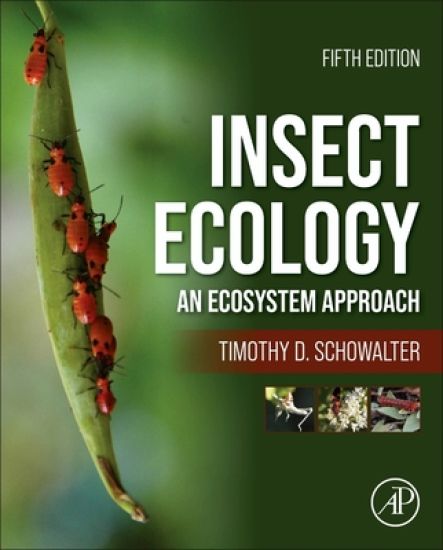
Insect Ecology: An Ecosystem Approach, Fifth Edition provides the most updated and comprehensive knowledge of the diversity of insect responses to environmental changes and their effects on ecosystem properties and services. Written by an expert in the field, this book addresses ways in which insect morphology, physiology and behavior tailor their adaptation to particular environmental conditions, how those adaptations affect their responses to environmental changes, and how their responses affect ecosystem properties and the ecosystem services on which humans depend for survival. This edition also addresses recent reports of global declines in insect abundance and how these declines could affect human interests. Insect Ecology: An Ecosystem Approach, Fifth Edition is an important resource for researchers, entomologists, ecologists, pest managers and conservationists who want to understand insect ecology and to manage insects in ways that sustain the delivery of ecosystem services. Graduate and advanced undergraduate students may also find this as a useful resource for entomology and specifically insect ecology courses.

As human pressures on land intensify, land-use decisions in response to the new demands become increasingly critical. Thus, the fate of the little-known Running Creek Watershed assumes a broad importance. Running Creek Watershed is a 150-kilometer strip of land lying just east of the rapidly expanding urban corridor of Colorado's front range. The land in the watershed is devoted primarily to the production of food, and includes pasture, dry crop, and irrigated crop operations. Two sources of demand suggest dramatic future changes in this land-use pattern: advancing urbanization, and energy demands for the coal available in a large deposit 25 kilometers east of Denver. In this volume Timothy Tregarthen presents a synthesis of discussions and papers presented at a 1976 conference that focused on the trade-offs implicit in the land-use alternatives of food production, urbanization, and energy development. Sponsored by the Wright-Ingraham Institute, the conference brought together a wide range of scientists, humanists, public officials, representatives of industrial and agricultural organizations, and interested citizens concerned not only about this important regional problem, but about the broader implications of competing land-use needs. Conference participants examined factors important to changes in land use, giving particular attention to the natural, economic, political, and value systems at work on the watershed in terms of how these systems affect and will be affected by changing land-use patterns.
Making Technology Work in Schools
Timothy D. Green; Loretta C. Donovan; Jody Peerless Green
Routledge
2020
sidottu
Making Technology Work in Schools is an easy-to-use guide for transforming your school into a learner-centered, tech-rich environment. School systems are increasingly adopting ambitious new educational technologies, but how do you make sure they are yielding effective teaching and learning experiences? The authors’ proven, intuitive practices speak directly to academic coaches, school technology leads, district technology directors, and teachers on special assignment who are responsible for introducing new tools and programs. After reading this book, you will be able to better prepare the educators you serve to empower their learners, whether digitally savvy or not, to be engaged, collaborative, and better prepared for college and careers.