The 18th century was a wealth of knowledge, exploration and rapidly growing technology and expanding record-keeping made possible by advances in the printing press. In its determination to preserve the century of revolution, Gale initiated a revolution of its own: digitization of epic proportions to preserve these invaluable works in the largest archive of its kind. Now for the first time these high-quality digital copies of original 18th century manuscripts are available in print, making them highly accessible to libraries, undergraduate students, and independent scholars.Delve into what it was like to live during the eighteenth century by reading the first-hand accounts of everyday people, including city dwellers and farmers, businessmen and bankers, artisans and merchants, artists and their patrons, politicians and their constituents. Original texts make the American, French, and Industrial revolutions vividly contemporary.++++The below data was compiled from various identification fields in the bibliographic record of this title. This data is provided as an additional tool in helping to insure edition identification: ++++British LibraryW020260Half-title: President Dwight's discourse, on the 4th. of July, 1798.New-Haven: Printed by Thomas and Samuel Green, 1798. 32 p.; 8
The 18th century was a wealth of knowledge, exploration and rapidly growing technology and expanding record-keeping made possible by advances in the printing press. In its determination to preserve the century of revolution, Gale initiated a revolution of its own: digitization of epic proportions to preserve these invaluable works in the largest archive of its kind. Now for the first time these high-quality digital copies of original 18th century manuscripts are available in print, making them highly accessible to libraries, undergraduate students, and independent scholars.The Age of Enlightenment profoundly enriched religious and philosophical understanding and continues to influence present-day thinking. Works collected here include masterpieces by David Hume, Immanuel Kant, and Jean-Jacques Rousseau, as well as religious sermons and moral debates on the issues of the day, such as the slave trade. The Age of Reason saw conflict between Protestantism and Catholicism transformed into one between faith and logic -- a debate that continues in the twenty-first century.++++The below data was compiled from various identification fields in the bibliographic record of this title. This data is provided as an additional tool in helping to insure edition identification: ++++British LibraryW020260Half-title: President Dwight's discourse, on the 4th. of July, 1798.New-Haven: Printed by Thomas and Samuel Green, 1798. 32 p.; 8
The 18th century was a wealth of knowledge, exploration and rapidly growing technology and expanding record-keeping made possible by advances in the printing press. In its determination to preserve the century of revolution, Gale initiated a revolution of its own: digitization of epic proportions to preserve these invaluable works in the largest archive of its kind. Now for the first time these high-quality digital copies of original 18th century manuscripts are available in print, making them highly accessible to libraries, undergraduate students, and independent scholars.The Age of Enlightenment profoundly enriched religious and philosophical understanding and continues to influence present-day thinking. Works collected here include masterpieces by David Hume, Immanuel Kant, and Jean-Jacques Rousseau, as well as religious sermons and moral debates on the issues of the day, such as the slave trade. The Age of Reason saw conflict between Protestantism and Catholicism transformed into one between faith and logic -- a debate that continues in the twenty-first century.++++The below data was compiled from various identification fields in the bibliographic record of this title. This data is provided as an additional tool in helping to insure edition identification: ++++British LibraryT108043 Bristol]: New-Haven: printed by George Bruce. Bristol: re-printed and sold by R. Edwards; sold also by Hurst, Button, and Chapman, in London, 1799. 89, 1]p.; 8
""Timothy Dwight, 1752-1817: A Biography"" by Charles E. Cuningham is a comprehensive account of the life and legacy of Timothy Dwight, an influential figure in American history. Born in 1752, Dwight was a prominent theologian, educator, and poet who played a significant role in shaping the intellectual and cultural landscape of the early United States.The book traces Dwight's life from his childhood in Connecticut to his tenure as president of Yale University, where he made significant contributions to the development of the American educational system. It also explores his political and social views, which were shaped by his experiences during the Revolutionary War and his deep commitment to the ideals of the American Revolution.Through extensive research and analysis, Cuningham provides a nuanced portrait of Dwight as both a complex individual and a key figure in American history. He examines Dwight's relationships with his family, friends, and colleagues, as well as his contributions to the fields of theology, education, and literature.Overall, ""Timothy Dwight, 1752-1817: A Biography"" offers a fascinating glimpse into the life of one of America's most influential thinkers, and sheds new light on the intellectual and cultural developments of the early United States.This scarce antiquarian book is a facsimile reprint of the old original and may contain some imperfections such as library marks and notations. Because we believe this work is culturally important, we have made it available as part of our commitment for protecting, preserving, and promoting the world's literature in affordable, high quality, modern editions, that are true to their original work.
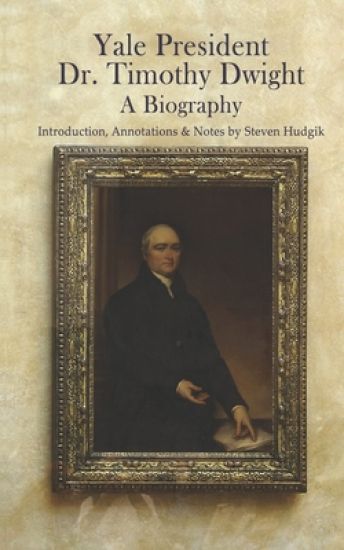
Timothy Dwight, Father to New EnglandSometimes the good man, by the uncommon powers of his mind, by peculiar incidents in his life, by having exerted a commanding influence on the interests of the public, or by having acquired an unusual share in their affections; presents the most attractive subject of biography. That good man is Timothy Dwight.The grandson of Jonathan Edwards. Although for most of his life he was without sight, unable to see well enough to read or write, he was a major force for change in American history. Blind for most of his life, Timothy Dwight will doubtless be ranked among the first men in the history of our country. In the acquisition of knowledge, we have seen that the earliest efforts of his mind, even in infancy, were singular and extraordinary; and that his talents were as strongly marked at this early stage of his existence, as perhaps at any subsequent period of his life. He learned the alphabet in a single lesson; and before he was four years old he was reading the Bible with ease, favoring the historical books. He was admitted as a student at Yale at 13 years of age. At 19 he was teaching at Yale. What was most extraordinary was that when he started as president at Yale, the school was in decline and students were rebellious and embracing sin. A few short years later enrollment had more than doubled and attendance at the College Church increased from three students to over 50% of the students. Timothy Dwight was a teacher, pastor, and father to the students, and by the time of his death was known as the father to New England. The following description is from the memoir of Timothy Dwight: "Timothy Dwight was truly an extraordinary man.He was, indeed, a father to New England and her moral legislator. His life is an era in her history, To the churches of his persuasion in that country, he was a guardian, a friend, a counselor. In the hour of trial, they found support in his firmness, assistance in his wisdom, and encouragement in his prayers. As a peacemaker, he was eminently blessed; for his advice was asked, and given in the spirit of Christian humility and justice.""As a minister and preacher of the gospel, it is not easy to convey an adequate idea of his characteristic excellence. Having been compelled, from the weakness of his eyes, to adopt the plan of preaching without notes; his sermons, except those designed for extraordinary occasions, were for the first twenty years chiefly unwritten. Usually, he barely noted the general divisions, and some of the most important and leading ideas. There is no doubt, that this mode had its peculiar advantages; nor that his style and manner, as an extemporaneous preacher, were more popular and captivating, than at a later period, when his discourses were written at length.""When unconfined by notes, the whole field of thought was before him. Into that field he entered; conscious where his subject lay, and by what metes and bounds it was limited; and enjoying also that calm self-possession and confidence of success, which trial alone can give, and which every successive effort had only served to increase.""When we add, that these were accompanied by the utmost fluency and force of language, a piercing eye, a countenance deeply marked with intellect, a strong emphasis, a voice singular for its compass and melody, an enunciation remarkably clear and distinct, a person dignified and commanding, and gestures graceful and happy; we need not inform the reader, that his pulpit efforts, at this period, possessed every characteristic of animated and powerful eloquence."Timothy Dwight was an extraordinary man, and this book tells his story.
The Life and Times of Timothy Dwight Hobart, 1855-1935: Colonization of West Texas by Lester Fields Sheffy is a biographical account of the life and achievements of Timothy Dwight Hobart. Hobart was a prominent figure in the colonization of West Texas in the late 19th and early 20th century. The book covers Hobart's early life, education, and career as a lawyer before delving into his involvement in the colonization of West Texas.The author provides a detailed account of Hobart's role in the establishment of the town of Sweetwater, Texas, and his efforts to attract settlers to the area. Sheffy also explores Hobart's involvement in various business ventures, including the development of the Texas and Pacific Railway and the establishment of the Hobart-Chatfield Power Company.In addition to chronicling Hobart's achievements, the book also provides insight into the social and economic conditions of West Texas during this period. Sheffy examines the challenges faced by early settlers and the impact of the rapid expansion of the region.Overall, The Life and Times of Timothy Dwight Hobart, 1855-1935: Colonization of West Texas is a comprehensive and engaging account of a key figure in the history of West Texas. It offers valuable insights into the challenges and opportunities faced by early settlers and the role of individuals like Hobart in shaping the region's development.This scarce antiquarian book is a facsimile reprint of the old original and may contain some imperfections such as library marks and notations. Because we believe this work is culturally important, we have made it available as part of our commitment for protecting, preserving, and promoting the world's literature in affordable, high quality, modern editions, that are true to their original work.