Kirjojen hintavertailu. Mukana 11 244 527 kirjaa ja 12 kauppaa.

Kirjahaku

Etsi kirjoja tekijän nimen, kirjan nimen tai ISBN:n perusteella.

1000 tulosta hakusanalla Timothy H. Hiebert

Parallel Importation in U.S. Trademark Law

Parallel Importation in U.S. Trademark Law

Timothy H. Hiebert

Praeger Publishers Inc
1994
sidottu
Over much of the past century, the law governing third-party importation of non-counterfeit, genuine goods has been obscured by conceptual uncertainty. In recent years, the debate over the gray market has centered on the fundamental reasons for trademark protection, and has raised the possibility of conflict between the two traditionally recognized purposes of trademark law--protecting consumers from deception and protecting trademark owners from lost sales.Hiebert discusses the evolution of the universality and territoriality principles of trademark law, and develops a new understanding of the role of goodwill in resolving trademark infringement issues. Beginning with a review of the earliest days of trademark law, Hiebert traces the development of the twofold purpose and territoriality doctrines in the United States, and examines in detail the cases, statutes, and regulations governing parallel imports. Unlike other recent treatments of the subject, this work benefits from the availability of important archival materials, and devotes considerable attention to the nineteenth-century antecedents of modern parallel importation doctrine, and to the evolution of trademark doctrine within the broader context of American legal realism.

Immunohematology, Transfusion Medicine, Hemostasis, and Cellular Therapy

Immunohematology, Transfusion Medicine, Hemostasis, and Cellular Therapy

Mark T. Friedman; Kamille A. West; Peyman Bizargity; Kyle Annen; H. Deniz Gur; Timothy Hilbert

Springer International Publishing AG
2023
nidottu
The latest edition of this volume features an extensively revised and expanded collection of immunohematology and transfusion medicine case studies, comprised of clinical vignettes and antibody panels with questions following each case. Arranged in a workbook format, the text presents cases based on real patient problems and covers a number of common issues and challenging problems in blood banking and transfusion practice. Discussion and resolution of each case is provided in a separate answer section, including up-to-date information on pertinent advances in the field. This third edition updates information on existing case chapters and references and adds a variety of new case chapters. The enhanced title of this edition reflects upon the wider array of covered topics, including in-depth case studies of hemostasis and a second section with blood donation and cellular therapy topics. New features include a key to covered topics for each case and a case-difficulty rating scale. Written by experts in the field, Immunohematology, Transfusion Medicine, Hemostasis, and Cellular Therapy: A Case Study Approach, Third Edition is an interactive tool that makes blood banking and transfusion medicine memorable, practical, and relevant to residents, fellows, laboratory technologists, and anyone interested in gaining and updating their knowledge in the field
Timothy H. O'Sullivan

Timothy H. O'Sullivan

Keith F. Davis; Jane L. Aspinwall

Yale University Press
2011
sidottu
Clarence King's Survey, undertaken between 1867 and 1872, covered a vast swath of terrain, from the border of California eastward to the edge of the Great Plains. It was the first survey to include a full-time photographer—Timothy O'Sullivan—who produced about 450 finished photographs in large-format and smaller-format stereographs. O'Sullivan's images convey a distinct individual quality of perception, at once direct and laconic, as well as a perfect union of objective fact and personal interpretation. As such, O'Sullivan remains the most admired, studied, and debated photographer who worked on the great western surveys of the 19th century. This handsome and enlightening book aims to enrich and enlarge our understanding of O'Sullivan's pivotal body of western photographs by emphasizing the idea of context. This ambition encompasses several frames of reference: O'Sullivan's best-known images in relation to his larger body of survey work; the function his photographs served in relation to the survey's overall goals and methodologies; and the King Survey itself as a logical part of a complex and prolonged expeditionary endeavor. The volume also includes an essential catalogue raisonné of O'Sullivan's King Survey work. Distributed for The Nelson-Atkins Museum of Art Exhibition Schedule: Art Institute of Chicago(10/22/11-01/15/12) Nelson-Atkins Museum of Art(04/14/12-08/26/12)
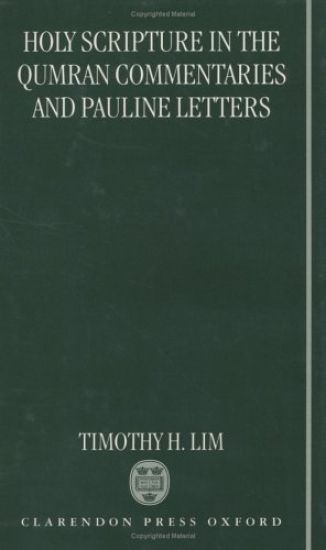
Holy Scripture in the Qumran Commentaries and Pauline Letters
What was the ancient exegetes' attitude to the biblical texts? Did they consider them `sacred' in the sense that the words were the inviolable utterances of God? Or did they when necessary modify and adapt holy writ for their own purposes? This book examines the question of exegetical modifications from the post-Qumran perspective of textual pluriformity of literalism that runs through ancient exegeses and translations. The Qumran Commentators and Paul complemented their fulfilment-exegeses by paying close attention to the verbal formations of the biblical texts. The hermeneutical principles underlying their exegeses involved a multiplex of competing forces that at the same time sought to make scripture relevant while guarding it from changes. In so far as the label 'post-biblical exegesis' describes a clear separation between the written, authoritative texts and its interpretation, the distinction is overdrawn, for the ancients were not merely commentators, but also in some sense authors of the biblical texts.
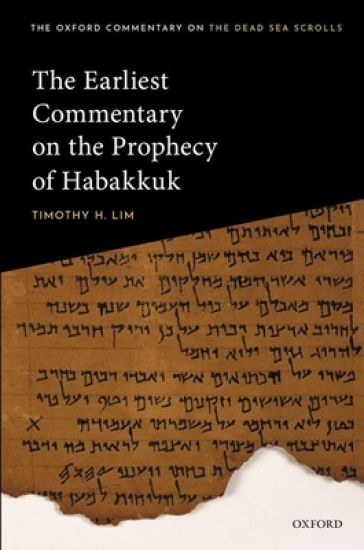
The Earliest Commentary on the Prophecy of Habakkuk

The Earliest Commentary on the Prophecy of Habakkuk

Timothy H. Lim

Oxford University Press
2020
sidottu
This is the first major commentary in English on Pesher Habakkuk for forty years. It elucidates the nature of 1QpHab as the earliest commentary on the prophecy of Habakkuk by a detailed study of the biblical quotation and sectarian interpretation. This commentary provides a new edition of the scroll, including new readings, and detailed palaeographical, philological, exegetical and historical notes and discussion. It shows that the pesherist imitates the allusive style of the oracles of Habakkuk and also draws on lexemes, phrases, and themes from other biblical texts and Jewish sources. It shows that the pesherist identified the Kittim with the Romans who conquered Judaea in 63 BCE, and suggests that the scroll refers to several righteous and wicked figures, including the last Hasmonean high priests.
The Dead Sea Scrolls

The Dead Sea Scrolls

Timothy H. Lim

Oxford University Press
2017
nidottu
Since their discovery in 1947, the Dead Sea Scrolls have become an icon in popular culture that transcends their status as ancient Jewish manuscripts. Everyone has heard of the Scrolls, but amidst the conspiracies, the politics, and the sensational claims, it can be difficult to separate the myths from the reality. In this Very Short introductions, Timothy Lim discusses the cultural significance of the finds, and the religious, political and legal controversies during the seventy years of study since the discovery. He also looks at the contribution the Scrolls have made to our understanding of the Old Testament or Hebrew Bible, and the origins of early Christianity. Exploring the most recent scholarly discussions on the archaeology of Khirbet Qumran, and the study of the biblical texts, the canon, and the history of the Second Temple Period, he considers what the scrolls reveal about sectarianism in early Judaism. Was the archaeological site of Qumran a centre of monastic life, a fortress, a villa, or a pottery factory? Why were some of their biblical texts so different from the ones that we read today? Did they have 'a Bible'? Who were the Essenes and why did they think that humanity is to be divided between 'the sons of light' and those in darkness? And, finally, do the Scrolls reflect the teachings of the earliest followers of Jesus? ABOUT THE SERIES: The Very Short Introductions series from Oxford University Press contains hundreds of titles in almost every subject area. These pocket-sized books are the perfect way to get ahead in a new subject quickly. Our expert authors combine facts, analysis, perspective, new ideas, and enthusiasm to make interesting and challenging topics highly readable.
Rethinking Theories and Practices of Imaging

Rethinking Theories and Practices of Imaging

Timothy H. Engström

Palgrave Macmillan
2009
sidottu
The first volume of its kind to analyze the impact that theories and practices of imaging have had on a variety of fields. It draws on an impressive range of philosophical approaches, from analytic, to pragmatic, to phenomenological - concluding that imaging is developing a social and cultural impact comparable to language.
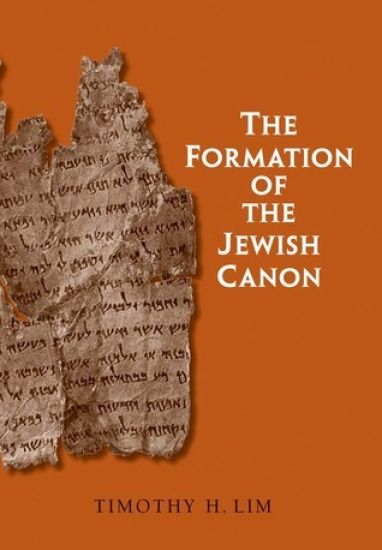
The Formation of the Jewish Canon

The Formation of the Jewish Canon

Timothy H. Lim

Yale University Press
2013
sidottu
The discovery of the Dead Sea Scrolls provides unprecedented insight into the nature of the Hebrew Bible or Old Testament before its fixation. Timothy Lim here presents a complete account of the formation of the canon in Ancient Judaism from the emergence of the Torah in the Persian period to the final acceptance of the list of twenty-two/twenty-four books in the Rabbinic period.Using the Hebrew Bible, the Scrolls, the Apocrypha, the Letter of Aristeas, the writings of Philo, Josephus, the New Testament, and Rabbinic literature as primary evidence he argues that throughout the post-exilic period up to around 100 CE there was not one official “canon” accepted by all Jews; rather, there existed a plurality of collections of scriptures that were authoritative for different communities. Examining the literary sources and historical circumstances that led to the emergence of authoritative scriptures in ancient Judaism, Lim proposes a theory of the majority canon that posits that the Pharisaic canon became the canon of Rabbinic Judaism in the centuries after the destruction of the Jerusalem Temple.
Biology, Evolution, and Human Nature

Biology, Evolution, and Human Nature

Timothy H. Goldsmith; William F. Zimmerman

John Wiley Sons Inc
2000
sidottu
This book uses evolution as the unifying theme to trace the connections between levels of biological complexity from genes through nervous systems, animal societies, and human cultures. It examines the history of evolutionary theory from Darwin to the present, including: the impact of molecular biology and the emergence of evolutionary social theory.
Large Animal Internal Medicine

Large Animal Internal Medicine

Timothy H. Ogilvie

Lippincott Williams and Wilkins
1998
nidottu
The National Veterinary Medical Series (NVMS) is an effective, economical system for learning and review. Basic and clinical veterinary sciences are outlined in a practical format that enables you to master large amounts of information in a limited amount of time. The books in the NVMS help you prepare for the National Boards and the Clinical Competency Test and are excellent resources for problem-based learning.
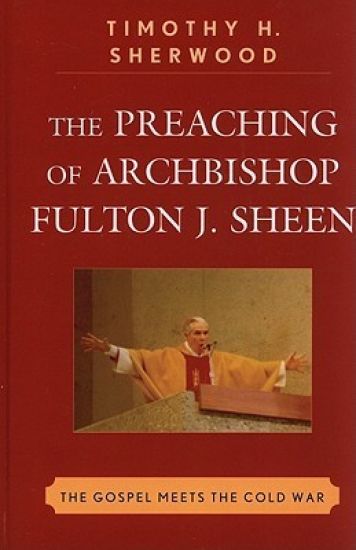
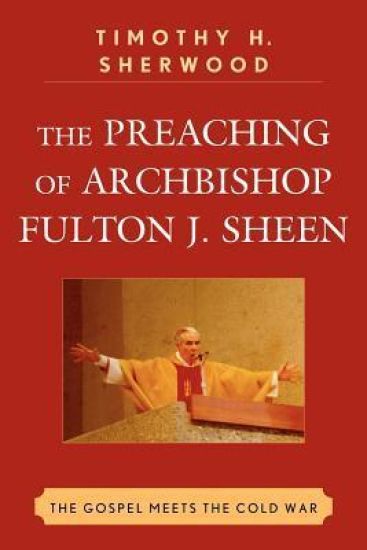
The Preaching of Archbishop Fulton J. Sheen

The Preaching of Archbishop Fulton J. Sheen

Timothy H. Sherwood

Lexington Books
2010
sidottu
The greatness of America's most influential preachers of the twentieth century came from their significant contributions to both religious and secular society. Some names, like Martin Luther King, Jr. and Billy Graham, are universally recognized and typically thought of first by people today. Assorted reviews have also listed other notable names from various Christian denominations, but little recognition has been given to the Catholic contribution to preaching in the twentieth century. Archbishop Fulton J. Sheen is at least one Catholic name whose contributions belong with the top most influential American preachers of that era. Though many associate Sheen with his five years on primetime television in the 1950s, it was the decades he spent preaching that wrought a religious tone to the Cold War and led the way in a national renewal of religion. An epic battle was set between the forces of good and evil in Sheen's preaching, particularly in his Good Friday sermons. This rhetorical study seeks to understand how and why his preaching was so persuasive to the people of his day.
The Preaching of Archbishop Fulton J. Sheen

The Preaching of Archbishop Fulton J. Sheen

Timothy H. Sherwood

Lexington Books
2011
nidottu
The greatness of America's most influential preachers of the twentieth century came from their significant contributions to both religious and secular society. Some names, like Martin Luther King, Jr. and Billy Graham, are universally recognized and typically thought of first by people today. Assorted reviews have also listed other notable names from various Christian denominations, but little recognition has been given to the Catholic contribution to preaching in the twentieth century. Archbishop Fulton J. Sheen is at least one Catholic name whose contributions belong with the top most influential American preachers of that era. Though many associate Sheen with his five years on prime time television in the 1950s, it was the decades he spent preaching that wrought a religious tone to the Cold War and led the way in a national renewal of religion. An epic battle was set between the forces of good and evil in Sheen's preaching, particularly in his Good Friday sermons. This rhetorical study seeks to understand how and why his preaching was so persuasive to the people of his day.
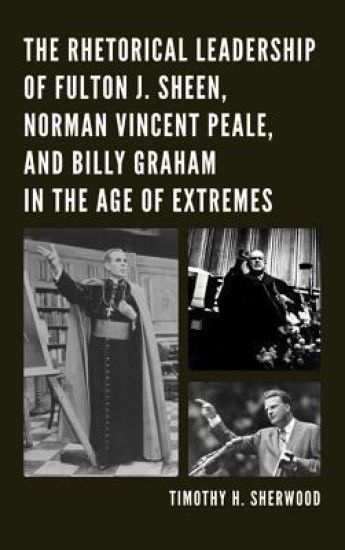
The Rhetorical Leadership of Fulton J. Sheen, Norman Vincent Peale, and Billy Graham in the Age of Extremes
Fulton J. Sheen, Norman Vincent Peale, and Billy Graham were America’s most popular religious leaders during the mid-twentieth century period known as the golden years of the Age of Extremes. It was part of an era that encompassed polemic contrasts of good and evil on the world stage in political philosophies and international relations. The 1950s and early 1960s, in particular, were years of high anxiety, competing ideologies, and hero/villain mania in America. Sheen was the voice of reason who spoke against those conflicting ideologies which were hostile to religious faith and democracy; Peale preached the gospel of reassurance, self-assurance, and success despite ominous global threats; and Graham was the heroic model of faith whose message of conversion provided Americans an identity and direction opposite to atheistic communism. This study looks at how and why their rhetorical leadership, both separately and together, contributed to the climate of an extreme era and influenced a national religious revival.
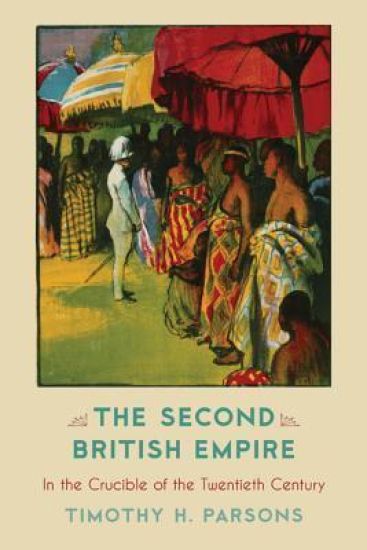
The Second British Empire

The Second British Empire

Timothy H. Parsons

Rowman Littlefield Publishers
2014
sidottu
At its peak, the British Empire spanned the world and linked diverse populations in a vast network of exchange that spread people, wealth, commodities, cultures, and ideas around the globe. By the turn of the twentieth century, this empire, which made Britain one of the premier global superpowers, appeared invincible and eternal. This compelling book reveals, however, that it was actually remarkably fragile. Reconciling the humanitarian ideals of liberal British democracy with the inherent authoritarianism of imperial rule required the men and women who ran the empire to portray their non-Western subjects as backward and in need of the civilizing benefits of British rule. However, their lack of administrative manpower and financial resources meant that they had to recruit cooperative local allies to actually govern their colonies. Noted historian Timothy H. Parsons provides vivid detail of the experiences of subject peoples to explain how this became increasingly difficult and finally impossible after World War II as Africans, Asians, Arabs, and West Indians rejected the imperial notion that they were inferior and refused to be ruled by foreigners. Yet he also shows that the transformation of the British colonies into nation-states was not just a transfer of political power. The new postcolonial societies blended British political, economic, and social institutions with local norms and values in the new nations, while mass migration to Britain from the non-Western parts of the Commonwealth created a much more diverse and plural metropolitan society. This book tells the dramatic story of how the British Empire and its demise accelerated and strengthened globalization by creating webs of commerce, migration, and cultural exchange that linked Britons and their former subjects in new ways and produced blended transnational cultures that were British in origin but no longer British in character or style.
The Second British Empire

The Second British Empire

Timothy H. Parsons

Rowman Littlefield Publishers
2018
nidottu
At its peak, the British Empire spanned the world and linked diverse populations in a vast network of exchange that spread people, wealth, commodities, cultures, and ideas around the globe. By the turn of the twentieth century, this empire, which made Britain one of the premier global superpowers, appeared invincible and eternal. This compelling book reveals, however, that it was actually remarkably fragile. Reconciling the humanitarian ideals of liberal British democracy with the inherent authoritarianism of imperial rule required the men and women who ran the empire to portray their non-Western subjects as backward and in need of the civilizing benefits of British rule. However, their lack of administrative manpower and financial resources meant that they had to recruit cooperative local allies to actually govern their colonies. Noted historian Timothy H. Parsons provides vivid detail of the experiences of subject peoples to explain how this became increasingly difficult and finally impossible after World War II as Africans, Asians, Arabs, and West Indians rejected the imperial notion that they were inferior and refused to be ruled by foreigners. Yet he also shows that the transformation of the British colonies into nation-states was not just a transfer of political power. The new postcolonial societies blended British political, economic, and social institutions with local norms and values in the new nations, while mass migration to Britain from the non-Western parts of the Commonwealth created a much more diverse and plural metropolitan society. This book tells the dramatic story of how the British Empire and its demise accelerated and strengthened globalization by creating webs of commerce, migration, and cultural exchange that linked Britons and their former subjects in new ways and produced blended transnational cultures that were British in origin but no longer British in character or style.
Gathered Guests - 2nd Edition

Gathered Guests - 2nd Edition

Timothy H Maschke

CONCORDIA PUBLISHING HOUSE LTD
2008
pokkari
God's gathered guests come together because God calls us by His Gospel. We are gathered in His name to receive His Word and Meal. We respond in praise and prayers and works of service. This gathering time provides us with the power for living and believing. The worship service ends, but our service continues throughout the week as we live out our faith in Christ in our daily lives.-from the IntroductionThis second edition of Gathered Guests explores the elements that compose the broad category of Lutheran worship, includingThe historic nature of and current structure of the Divine Service, prayer offices (including Matins and Vespers), and festival and occasional services used in the Lutheran Church.An overview of music, the arts, architecture, and their relationship to worship.The role of liturgy, rite, and ceremony in the Divine Service.Special features includeGlossary and topical and Scripture indexes.Targeted information for lectors and worship planners.Family and small-group devotional outlines.Addresses the service orders included in the Lutheran Service Book.
Federalist Tycoon

Federalist Tycoon

Timothy H. Kistner

University Press of America
2015
sidottu
Born poor in Beverly, Massachusetts, in 1755, the young Israel Thorndike was a fisherman and ship owner who made a small fortune as a Revolutionary War privateer. Later he became a wealthy merchant, a delegate to the Massachusetts Ratification Convention and a director of the National Bank in Boston. A longtime Federalist legislator, he was highly regarded within the radical circles that contemplated secession during the Jefferson administration and the War of 1812. After the war, Thorndike concluded his multifaceted career as the leading venture capitalist financing the early Industrial Revolution. Sadly, his story is little known. Federalist Tycoon pulls Thorndike's life and career from the shadows and fully examines his impact on American economic development.