The material elements of writing have long been undervalued, and have been dismissed by recent historicising trends of criticism; but analysis of these elements - sound, signature, letters - can transform our understanding of literary texts. In this book Tom Cohen shows how, in an era of representational criticism and cultural studies, the role of close reading has been overlooked. Arguing that much recent criticism has been caught in potentially regressive models of representation, Professor Cohen undertakes to counter this by rethinking the ‘materiality’ of the text itself. Through a series of revealing new readings of the work of writers including Plato, Bakhtin, Poe, Whitman and Conrad, Professor Cohen exposes the limitations of new historicism and neo-pragmatism, and demonstrates how ‘the materiality of language’ operates to undo the representational models of meaning imposed by the literary canon.
The material elements of writing have long been undervalued, and have been dismissed by recent historicising trends of criticism; but analysis of these elements - sound, signature, letters - can transform our understanding of literary texts. In this book Tom Cohen shows how, in an era of representational criticism and cultural studies, the role of close reading has been overlooked. Arguing that much recent criticism has been caught in potentially regressive models of representation, Professor Cohen undertakes to counter this by rethinking the ‘materiality’ of the text itself. Through a series of revealing new readings of the work of writers including Plato, Bakhtin, Poe, Whitman and Conrad, Professor Cohen exposes the limitations of new historicism and neo-pragmatism, and demonstrates how ‘the materiality of language’ operates to undo the representational models of meaning imposed by the literary canon.
In Ideology and Inscription Tom Cohen questions the way history, ideology and politics are invoked in contemporary cultural studies. Enlisting the work of three seminal figures in literary theory - Walter Benjamin, Paul de Man, and M. Bakhtin - Cohen argues for a new politics of memory that moves beyond what he sees as our current paralysing preoccupation with the present, and also for a new approach to the reading and analysis of cultural texts that breaks with the mimetic premises of traditional criticism. The book challenges many of the prevailing methodologies and assumptions of the contemporary critical scene and, through analyses of such topics as the rhetoric of science, ecological criticism, and the films of Hitchcock, demonstrates the subtlety and critical power of a more genuinely 'materialist' approach to a wide range of cultural texts.
In Ideology and Inscription Tom Cohen questions the way history, ideology and politics are invoked in contemporary cultural studies. Enlisting the work of three seminal figures in literary theory - Walter Benjamin, Paul de Man, and M. Bakhtin - Cohen argues for a new politics of memory that moves beyond what he sees as our current paralysing preoccupation with the present, and also for a new approach to the reading and analysis of cultural texts that breaks with the mimetic premises of traditional criticism. The book challenges many of the prevailing methodologies and assumptions of the contemporary critical scene and, through analyses of such topics as the rhetoric of science, ecological criticism, and the films of Hitchcock, demonstrates the subtlety and critical power of a more genuinely ‘materialist’ approach to a wide range of cultural texts.
In the first The Man Who Knew Too Much, Alfred Hitchcock films a clay pigeon crossing the sky, a dark disc resembling a black sun. When the same work takes viewers into a temple for sun worshippers (it turns out to be a front for spies), another black orb is introduced: a black marble used to hypnotize initiates. Tom Cohen traces this motif—and many others—seeing it as an explicit challenge both to Enlightenment-era protocols of representation and to the auteurism that has defined studies of Hitchcock. This second volume of Hitchcock's Cryptonomies presents the director's works as a radical collage of images and absences, letters and numbers, citations and sounds that together mark Hitchcock as a knowing figure who was entirely aware of his—and cinema's—place at the dawn of a global media culture, as well as of the cinema's revolutionary impact on perception and memory. Cohen's provocative interrogation culminates in an innovative close analysis of To Catch a Thief, a work disregarded by the critical establishment as being merely light entertainment. Disguised as thrillers, Hitchcock's films are as subversive as the spies around which their plots often revolve. Cohen sees them as "war machines"—hiding in plain sight at the center of the film canon—designed as much to erode traditional models of home, family, and state as to sabotage increasingly obsolete ways of seeing and knowing.Tom Cohen is professor of American literary, critical, and cinematic studies at the University at Albany. He is the author of Anti-Mimesis: From Plato to Hitchcock and Ideology and Inscription: "Cultural Studies" after Benjamin, and coeditor of Material Events (Minnesota, 2000).
Tom Cohen's radical exploration of Hitchcock's cinema departs from conventional approaches—psychoanalytic, feminist, political—to emphasize the dense web of signatures and markings inscribed on and around his films. Aligning Hitchcock's agenda with the philosophical and aesthetic writings of Nietzsche, Derrida, and Benjamin, Cohen's project dramatically recasts the history and meaning of cinema itself.This first volume of Hitchcock's Cryptonymies provides a singularly close reading of films such as The Lady Vanishes, Spellbound, and North by Northwest, exposing the often imperceptible visual and aural puns, graphic elements, and cryptograms that traverse his entire body of work. Within Hitchcock's cinema, Cohen argues, these "secret agents" have more than just decorative or symbolic significance; they also reflect, critique, and disrupt traditional cinematic practice, undermining ways of seeing inherited from the Enlightenment and prefiguring postmodern culture. From the recurrence of the eye motif and the frequency of names beginning with "Mar" to the role of memory and the director's trademark cameos, Cohen offers an unprecedented guide to the entirety of Hitchcock's labyrinthine signature system. At the same time, he liberates Hitchcock's works from film history (modernist, auteurist), revealing them as unsettled events in the archaeology of contemporary global image culture.Tom Cohen is professor of American literary, critical, and cinematic studies at the University at Albany. He is the author of Anti-Mimesis: From Plato to Hitchcock and Ideology and Inscription: "Cultural Studies" after Benjamin, and coeditor of Material Events (Minnesota, 2000).
Paul de Man is often associated with an era of ‘high theory’, an era it is argued may now be coming to a close. This book, written by three leading contemporary scholars, includes both a transcript and facsimile print of a previously unpublished text by de Man of his handwritten notes for a lecture on Walter Benjamin. Challenging and relevant, this volume presents de Man’s work as a critical resource for dealing with the most important questions of the twenty-first century and argues for the place of theory within it.The humanities are flooded with crises of globalism, capitalism and terrorism, contemporary narratives of financial collapse, viral annihilation, species extinction, environmental disaster and terrorist destruction. Cohen, Colebrook and Miller draw out the implications of these crises and their narratives and, reflecting on this work by de Man, explore the limits of political thinking, of historical retrieval and the ethics of archives and cultural memory.
Paul de Man is often associated with an era of ‘high theory’, an era it is argued may now be coming to a close. This book, written by three leading contemporary scholars, includes both a transcript and facsimile print of a previously unpublished text by de Man of his handwritten notes for a lecture on Walter Benjamin. Challenging and relevant, this volume presents de Man’s work as a critical resource for dealing with the most important questions of the twenty-first century and argues for the place of theory within it.The humanities are flooded with crises of globalism, capitalism and terrorism, contemporary narratives of financial collapse, viral annihilation, species extinction, environmental disaster and terrorist destruction. Cohen, Colebrook and Miller draw out the implications of these crises and their narratives and, reflecting on this work by de Man, explore the limits of political thinking, of historical retrieval and the ethics of archives and cultural memory.
Renowned contributors use the late work of this crucial figure to open new speculations on "materiality." A "material event," in one of Paul de Man’s definitions, is a piece of writing that enters history to make something happen. This interpretation hovers over the publication of this volume, a timely reconsideration of de Man’s late work in its complex literary, critical, cultural, philosophical, political, and historical dimensions.A distinguished group of scholars responds to the problematic of "materialism" as posed in Paul de Man’s posthumous final book, Aesthetic Ideology. These contributors, at the forefront of critical theory, productive thinking, and writing in the humanities, explore the question of "material events" to illuminate not just de Man’s work but their own. Prominent among the authors here is Jacques Derrida, whose extended essay “Typewriter Ribbon: Limited Inc (2)” returns to a celebrated episode in Rousseau’s Confessions that was discussed by de Man in Allegories of Reading. The importance of de Man’s late work is related to a broad range of subjects and categories and-in Derrida’s provocative reading of de Man’s concept of "materiality"-the politico-autobiographical texts of de Man himself. This collection is essential reading for all those interested in the present state of literary and cultural theory. Contributors: Judith Butler, UC Berkeley; T. J. Clark, UC Berkeley; Jacques Derrida, École des Hautes Études en Sciences Sociales and UC Irvine; Barbara Johnson, Harvard U; Ernesto Laclau, U of Essex; Arkady Plotnitsky, Purdue U; Laurence A. Rickels, UC Santa Barbara; and Michael Sprinker.
Do all animals have rights? Is it morally wrong to use mice or dogs in medical research, or rabbits and cows as food? How ought we resolve conflicts between the interests of humans and those of other animals? Philosophical inquiry is essential in addressing such questions; the answers given must have enormous practical importance. Here for the first time in the same volume, the animal rights debate is argued deeply and fully by the two most articulate and influential philosophers representing the opposing camps. Each makes his case in turn to the opposing case. The arguments meet head on: Are we humans morally justified in using animals as we do? A vexed and enduring controversy here receives its deepest and most eloquent exposition.
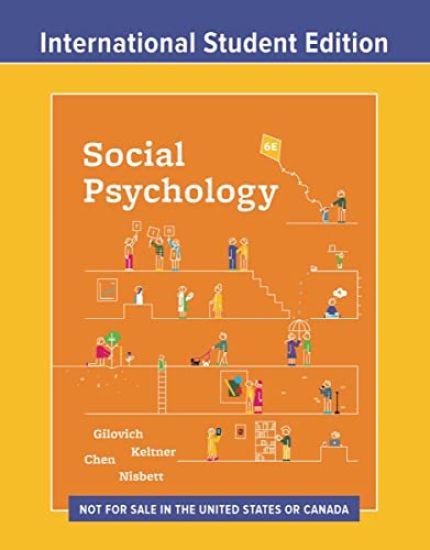
Social Psychology is now available as a Norton Illumine Ebook, using active learning to help develop students’ scientific thinking skills. Led by Tom Gilovich, the award-winning author team challenges students to think critically about the concepts, controversies, and applications of social psychology. The Sixth Edition is thoroughly updated with current research and fresh examples and includes a new chapter, “Living in a Prejudiced World,” that addresses the experience of living with stereotyping and discrimination. InQuizitive online assessment, now enhanced with new interactives, reinforces important concepts through retrieval practice, and Norton Teaching Tools, the Norton Testmaker test bank, and new Analyze the Claim writing assignments help instructors build an engaging course with minimal preparation time.
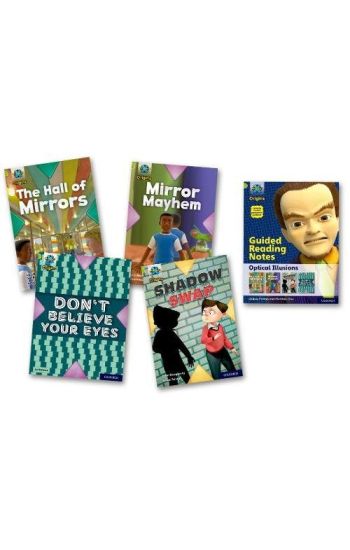
This Project X Origins Mixed Pack includes 1 set of guided reading notes and 4 reading books. The titles include two action-packed adventures with the Project X characters: The Hall of Mirrors and Mirror Mayhem; one variety fiction book: Shadow Swap; and one fascinating non-fiction book: Don't Believe Your Eyes. Each cluster is linked by a theme to help all children, especially boys, make links in their learning between text type and content. This set of books is linked by the theme 'Optical Illusions'. Each reading book contains inside cover notes that highlight challenge words, prompt questions and a range of follow-up activities to support children in their reading. Comprehensive guided reading notes offer step-by-step teaching support for each book with guidance about phonics, comprehension, vocabulary, fluency, spelling, grammar, punctuation and writing. Each set of notes has in-built assessment and is fully correlated to all UK curricula. This mixed pack is part of Project X Origins - everything you need to deliver effective guided reading sessions for Reception-Year 6 (P1-7). Developed by comprehension experts, it engages boys and helps every child reach higher standards. Online teaching resources and best practice films are available on www.oxfordowl.co.uk to ensure easy implementation.
Stuart Butler; Jade Bremner; Kate Chapman; Piera Chen; Megan Eaves; Daisy Harper; Damian Harper; Trent Holden; Tess Humphrys; Stephen Lioy; Vesna Maric; Tom Masters; Bradley Mayhew; Daniel McCrohan; Thomas O'Malley; Lorna Parkes; Christopher Pitts; Tom Spurling; Phillip Tang
Lonely Planet’s China is your passport to the most relevant, up-to-date advice on what to see and skip, and what hidden discoveries await you. Explore Beijing’s Forbidden City, climb the Great Wall, and discover sacred Lhasa; all with your trusted travel companion. Get to the heart of China and begin your journey now! Inside Lonely Planet’s China Travel Guide: Up-to-date information - all businesses were rechecked before publication to ensure they are still open after 2020’s COVID-19 outbreak NEW top experiences feature - a visually inspiring collection of China’s best experiences and where to have them What's NEW feature taps into cultural trends and helps you find fresh ideas and cool new areas NEW pull-out, passport-size 'Just Landed' card with wi-fi, ATM and transport info - all you need for a smooth journey from airport to hotel Improved planning tools for family travellers - where to go, how to save money, plus fun stuff just for kids Colour maps and images throughout Highlights and itineraries help you tailor your trip to your personal needs and interests Insider tips to save time and money and get around like a local, avoiding crowds and trouble spots Essential info at your fingertips - hours of operation, websites, transit tips, prices Honest reviews for all budgets - eating, sleeping, sightseeing, going out, shopping, hidden gems that most guidebooks miss Cultural insights give you a richer, more rewarding travel experience - history, people, music, landscapes, wildlife, cuisine, politics Over 195 maps Covers Beijing, Tianjin & Hebei,Liaoning, Jilin, Shandong, Jiangsu, Shanghai, Zhejiang, Fujian, Shanxi, Anhui, Henan, Hubei, Jiangxi, Hunan, Hong Kong, Macau, Guangdong, Hainan, Guangxi, Guizhou, Yunnan, Sichuan, Chongqing, Xinjiang, Gansu, Ningxia, Inner Mongolia, Qinghai, Tibet The Perfect Choice: Lonely Planet’s China, our most comprehensive guide to China, is perfect for both exploring top sights and taking roads less travelled. Looking for just the highlights? Check out Pocket Beijing, a handy-sized guide focused on the can't-miss sights for a quick trip. About Lonely Planet: Lonely Planet is a leading travel media company, providing both inspiring and trustworthy information for every kind of traveller since 1973. Over the past four decades, we've printed over 145 million guidebooks and phrasebooks for 120 languages, and grown a dedicated, passionate global community of travellers. You'll also find our content online, and in mobile apps, videos, 14 languages, armchair and lifestyle books, ebooks, and more, enabling you to explore every day. 'Lonely Planet guides are, quite simply, like no other.' – New York Times 'Lonely Planet. It's on everyone's bookshelves; it's in every traveller's hands. It's on mobile phones. It's on the Internet. It's everywhere, and it's telling entire generations of people how to travel the world.' – Fairfax Media (Australia)
The riveting, revelatory, and sole authorized account of the critical first decades of Tennessee Williams's life. Tennessee Williams, author of such indelible masterpieces as The Glass Menagerie and A Streetcar Named Desire, is considered by many to be the greatest literary artist of the American theater. Tom is Lyle Leverich's definitive account based on his exclusive access to letters, diaries, unpublished manuscripts, and family documents of Williams's early life and of the events that shaped this most autobiographical of dramatists. It tells the story of the marital traumas of his bullying father and overly protective mother, the mental disorders that institutionalized his beloved sister Rose, his stalled academic career, and his confused sexuality and early successes as a writer; and it leaves Thomas Lanier Williams on the brink of fame with The Glass Menagerie and his transformation into the celebrated persona of Tennessee.
Appearing no different than the average man who worked hard for a living, he nicely blends in with his neighbours and co-workers. Although socially awkward at times, nobody takes notice of his peculiarities, but beneath his somewhat normal veneer resides a pulsating black heart, bent upon cruelty and domination. Contains adult content. Composed in captivating narrative and compelling dialogue, the story flows at a brisk tempo. The plot contains more than a few strategically placed unexpected twists which should maintain the reader's interest throughout. The characters are presented in a multi-dimensional fashion revealing the intricacies of their unique personalities and individual agendas. Navigating the plot to a well conceived conclusion, the author could leave the reader with the sense of time well spent in the reading of this story
Tom is a cat in trouble. The worst possible kind of trouble: he's been turned into a human. Transformed by an irascible old magician in need of a famulus -- a servant and an assistant, Tom is as good at being a servant as a cat ever is. The assistant part is more to Tom's taste: he rather fancies impressing the girl cats and terrorizing the other toms by transforming himself into a tiger. But the world of magic, a vanished and cursed princess, and a haunted skull, and a demon in the chamber-pot, to say nothing of conspiring wizards and the wickedest witch in the west, all seem to be out to kill Tom. He is a cat coming to terms with being a boy, dealing with all this. He has a raven and a cheese as... sort of allies.And of course there is the princess.If you were looking for 'War and Peace' this is the wrong book for you. It's a light-hearted and gently satirical fantasy, full of terrible puns and... cats.