

Kirjahaku
Etsi kirjoja tekijän nimen, kirjan nimen tai ISBN:n perusteella.
1000 tulosta hakusanalla Tom George Faustman

Tom George's writing is often powerful and rhythmic, but also reflective and wistful. His poems tell tales of everyday characters, many of whom are dreamers and loners, their struggles and inner lives portrayed. Poems are set in libraries, charity shops and city streets, with a witty eye for detail. Many of the pieces are autobiographical, covering the author's journey from childhood to manhood, and his relationship with his father. Suffused throughout the book are calls to transformation through the healing power of nature and spirituality. The writing often relects the author's background as a performance poet. Many of the poems have the rhythmic catchiness of the genre, but there is also a playful whimsicality in pieces such as 'A Smile on the Bus'. Keys to the Forest features stunning illustrations and jacket design by Jennie Wishart. The artwork complements the writing perfectly, depicting characters and scenes from the writing, whilst adding extra dimensions of character and mood.


Phase Locked Loop Design as a Frequency Multiplier
George Tom Varghese
Lap Lambert Academic Publishing
2012
nidottu

Cavalry, a Popular Edition of "Cavalry in war and Peace"
Friedrich Von Bernhardi; A Hilliard Atteridge; George Tom Molesworth Bridges
Palala Press
2016
sidottu

FINALIST FOR THE HARPER LEE PRIZE FOR LEGAL FICTION 2016FINALIST FOR THE MACAVITY AWARD 2016The year is 1936.Charles ‘Lucky’ Luciano is the most powerful gangster in America, Mob overlord and bootlegger millionaire. Thomas E. Dewey is an ambitious young prosecutor determined to bring him down, and Cokey Flo Brown – grifter, heroin addict and sometime prostitute – is the witness who claims she can do it.Only a wily defence attorney named George Morton Levy stands between Lucky and a life behind bars, and between Dewey and the New York Governor’s mansion.As the Roaring Twenties give way to the austere reality of the Great Depression, four lives, each on its own incandescent trajectory, intersect in a New York courtroom. The events of this seminal Mob trial will introduce America to the violent and darkly glamorous world of organised crime, and leave its culture, laws and politics for ever changed.

The History of Tom Weston. a Novel, After the Manner of Tom Jones. by George Brewer, ... Volume 1 of 2
George Brewer
Gale Ecco, Print Editions
2010
pokkari

The History of Tom Weston. a Novel, After the Manner of Tom Jones. by George Brewer, ... Volume 2 of 2
George Brewer
Gale Ecco, Print Editions
2010
pokkari

The History of Tom Weston. A Novel, After the Manner of Tom Jones. By George Brewer, ... of 2; Volume 1
George Brewer
Gale Ecco, Print Editions
2018
sidottu
The 18th century was a wealth of knowledge, exploration and rapidly growing technology and expanding record-keeping made possible by advances in the printing press. In its determination to preserve the century of revolution, Gale initiated a revolution of its own: digitization of epic proportions to preserve these invaluable works in the largest archive of its kind. Now for the first time these high-quality digital copies of original 18th century manuscripts are available in print, making them highly accessible to libraries, undergraduate students, and independent scholars.Western literary study flows out of eighteenth-century works by Alexander Pope, Daniel Defoe, Henry Fielding, Frances Burney, Denis Diderot, Johann Gottfried Herder, Johann Wolfgang von Goethe, and others. Experience the birth of the modern novel, or compare the development of language using dictionaries and grammar discourses. ++++The below data was compiled from various identification fields in the bibliographic record of this title. This data is provided as an additional tool in helping to insure edition identification: ++++Harvard University Houghton LibraryN002714London: printed for the author; and published by T. Hookham, 1791. 2v.; 12

The History of Tom Weston. A Novel, After the Manner of Tom Jones. By George Brewer, ... of 2; Volume 2
George Brewer
Gale Ecco, Print Editions
2018
sidottu
The 18th century was a wealth of knowledge, exploration and rapidly growing technology and expanding record-keeping made possible by advances in the printing press. In its determination to preserve the century of revolution, Gale initiated a revolution of its own: digitization of epic proportions to preserve these invaluable works in the largest archive of its kind. Now for the first time these high-quality digital copies of original 18th century manuscripts are available in print, making them highly accessible to libraries, undergraduate students, and independent scholars.Western literary study flows out of eighteenth-century works by Alexander Pope, Daniel Defoe, Henry Fielding, Frances Burney, Denis Diderot, Johann Gottfried Herder, Johann Wolfgang von Goethe, and others. Experience the birth of the modern novel, or compare the development of language using dictionaries and grammar discourses. ]+++The below data was compiled from various identification fields in the bibliographic record of this title. This data is provided as an additional tool in helping to insure edition identification: ++++Harvard University Houghton LibraryN002714London: printed for the author; and published by T. Hookham, 1791. 2v.; 12

The Mill on the Floss (1860). By: George Eliot: The novel details the lives of Tom and Maggie Tulliver, a brother and sister growing up on the fiction
George Eliot
Createspace Independent Publishing Platform
2017
nidottu
The novel details the lives of Tom and Maggie Tulliver, a brother and sister growing up on the fictional river Floss near the fictional village of St. Oggs, evidently in the 1820's, after the Napoleonic Wars but prior to the first Reform Bill (1832). The novel spans a period of 10-15 years, from Tom and Maggie's childhood up until their deaths in a flood on the Floss. The book is loosely autobiographical, reflecting the disgrace that George Eliot (Mary Ann Evans) herself had while in a relationship with a married man.The novel spans a period of 10 to 15 years and details the lives of Tom and Maggie Tulliver, siblings growing up at Dorlcote Mill on the River Floss at its junction with the more minor River Ripple near the village of St. Ogg's in Lincolnshire, England. Both the river 1] and the village are fictional. The novel is most probably set in the 1820s - a number of historical references place the events in the book after the Napoleonic Wars but before the Reform Act of 1832. 2] citation needed] It includes autobiographical elements, and reflects citation needed] the disgrace that George Eliot (Mary Ann Evans) herself experienced while in a lengthy relationship with a married man, citation needed] George Henry Lewes. Maggie Tulliver is the central character of the book. The story begins when she is 9 years old, 13 years into her parents' marriage. Her relationship with her older brother Tom, and her romantic relationships with Philip Wakem (a hunchbacked, sensitive, and intellectual friend) and with Stephen Guest (a vivacious young socialite in St. Ogg's and assumed fianc of Maggie's cousin Lucy Deane) constitute the most significant narrative threads. Tom and Maggie have a close yet complex bond, which continues throughout the novel. Their relationship is coloured by Maggie's desire to recapture the unconditional love her father provides before his death. Tom's pragmatic and reserved nature clashes with Maggie's idealism and fervor for intellectual gains and experience. Various family crises, including bankruptcy, Mr. Tulliver's rancorous relationship with Philip Wakem's father, which results in the loss of the mill, and Mr. Tulliver's untimely death, serve both to intensify Tom's and Maggie's differences and to highlight their love for each other. To help his father repay his debts, Tom leaves school to enter a life of business. He eventually finds a measure of success, restoring the family's former estate. Meanwhile, Maggie languishes in the impoverished Tulliver home, her intellectual aptitude wasted in her socially isolated state. She passes through a period of intense spirituality, during which she renounces the world, spurred by Thomas Kempis's The Imitation of Christ.........Mary Anne Evans (22 November 1819 - 22 December 1880; alternatively "Mary Ann" or "Marian"), known by her pen name George Eliot, was an English novelist, poet, journalist, translator and one of the leading writers of the Victorian era. She is the author of seven novels, including Adam Bede (1859), The Mill on the Floss (1860), Silas Marner (1861), Felix Holt, the Radical (1866), Middlemarch (1871-72), and Daniel Deronda (1876), most of which are set in provincial England and known for their realism and psychological insight. She used a male pen name, she said, to ensure that her works would be taken seriously. Female authors were published under their own names during Eliot's life, but she wanted to escape the stereotype of women writing only lighthearted romances. She also wished to have her fiction judged separately from her already extensive and widely known work as an editor and critic. An additional factor in her use of a pen name may have been a desire to shield her private life from public scrutiny and to prevent scandals attending her relationship with the married George Henry Lewes, with whom she lived for over 20 years.

George Cruikshank's Illustrations Of Humphrey Clinker, Roderick Random, Peregrine Pickle, Tom Jones, Joseph Andrews, Amelia, Vicar Of Wakefield (1836)
George Cruikshank
KESSINGER PUBLISHING, LLC
2009
pokkari

Tom and Some Other Girls
Mrs George De Horne Vaizey
Createspace Independent Publishing Platform
2015
nidottu
Tom and some other Girls
Mrs George De Horne Vaizey
Createspace Independent Publishing Platform
2015
nidottu

Tom and Some Other Girls: A Public School Story
Mrs George De Horne Vaizey
Createspace Independent Publishing Platform
2016
nidottu
George Lewis, one of the great traditional jazz clarinetists, was born in 1900 at about the same time that jazz itself first appeared in New Orleans. And by the time he died, on the last day of 1968, New Orleans jazz had pretty much run its course, too. By then a jazz museum stood on Bourbon Street, and a cultural center was under construction where Globe Hall had Stood. Lewis's life thus paralleled that of New Orleans jazz, and in his later years hew as the best known standard bearer of his city's music. He came to the attention of the jazz world at the time of the so-called "New Orleans Revival" of the 1940's, when veteran trumpeter Bunk Johnson was recorded by a number of jazz enthusiasts, notably William Russell. In this new biography, Tom Bethell challenges a favorite myth of the history of jazz: that the music became moribund in New Orleans after the legal red light district, Storyville, was closed in 1917, resulting in most jazz musicians going "up the river." In fact, Bethell shows, many more jazzmen stayed in the city than left, and the musical style continued to develop and grow. Thus the jazz fans who arrived in the city in the early 1940's did not encounter a "revival" of an old style so much as an ongoing tradition, with clarinetists like Lewis having been influenced by Benny Goodman and the Swing Era in addition to Lorenzo Tio and the Creole School. After Bunk Johnson's death in 1949, at a time when many other social changes were beginning to be felt in the city, the New Orleans jazz tradition began to go into a decline. It became increasingly rigid and repetitive, and was often designed to please what one observer called "Dixieland fans yelling for their favorite members." The book is based on lengthy research in New Orleans, including interviews with George Lewis shortly before his death, and unpublished material from the diaries kept by William Russell on his visits to New Orleans between 1942 and 1949. It also includes a statement by Lewis on jazz and the best way to play it and a complete Lewis discography. This title is part of UC Press's Voices Revived program, which commemorates University of California Press's mission to seek out and cultivate the brightest minds and give them voice, reach, and impact. Drawing on a backlist dating to 1893, Voices Revived makes high-quality, peer-reviewed scholarship accessible once again using print-on-demand technology. This title was originally published in 1977.

George Lewis, one of the great traditional jazz clarinetists, was born in 1900 at about the same time that jazz itself first appeared in New Orleans. And by the time he died, on the last day of 1968, New Orleans jazz had pretty much run its course, too. By then a jazz museum stood on Bourbon Street, and a cultural center was under construction where Globe Hall had Stood. Lewis's life thus paralleled that of New Orleans jazz, and in his later years hew as the best known standard bearer of his city's music. He came to the attention of the jazz world at the time of the so-called "New Orleans Revival" of the 1940's, when veteran trumpeter Bunk Johnson was recorded by a number of jazz enthusiasts, notably William Russell. In this new biography, Tom Bethell challenges a favorite myth of the history of jazz: that the music became moribund in New Orleans after the legal red light district, Storyville, was closed in 1917, resulting in most jazz musicians going "up the river." In fact, Bethell shows, many more jazzmen stayed in the city than left, and the musical style continued to develop and grow. Thus the jazz fans who arrived in the city in the early 1940's did not encounter a "revival" of an old style so much as an ongoing tradition, with clarinetists like Lewis having been influenced by Benny Goodman and the Swing Era in addition to Lorenzo Tio and the Creole School. After Bunk Johnson's death in 1949, at a time when many other social changes were beginning to be felt in the city, the New Orleans jazz tradition began to go into a decline. It became increasingly rigid and repetitive, and was often designed to please what one observer called "Dixieland fans yelling for their favorite members." The book is based on lengthy research in New Orleans, including interviews with George Lewis shortly before his death, and unpublished material from the diaries kept by William Russell on his visits to New Orleans between 1942 and 1949. It also includes a statement by Lewis on jazz and the best way to play it and a complete Lewis discography. This title is part of UC Press's Voices Revived program, which commemorates University of California Press's mission to seek out and cultivate the brightest minds and give them voice, reach, and impact. Drawing on a backlist dating to 1893, Voices Revived makes high-quality, peer-reviewed scholarship accessible once again using print-on-demand technology. This title was originally published in 1977.


The people of Silene are desperate for a dragon threatens the survival of their village. Who will rescue them and especially the fair maiden Alexandra? Fourth in the Dragon Tales series, George is a young soldier in the Roman army who risks all to save the day and win the heart of a maiden.This exciting story for children of all ages, retells the legend of Saint George and the dragon of Silene, Lybia.
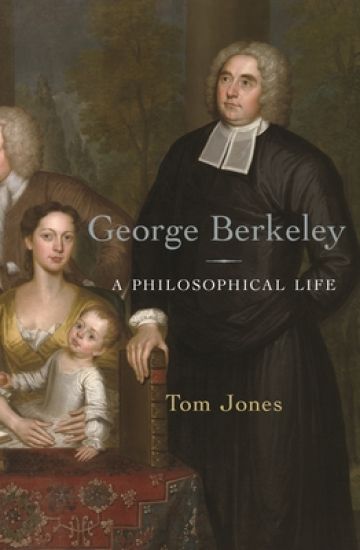
A comprehensive intellectual biography of the Enlightenment philosopherIn George Berkeley: A Philosophical Life, Tom Jones provides a comprehensive account of the life and work of the preeminent Irish philosopher of the Enlightenment. From his early brilliance as a student and fellow at Trinity College Dublin to his later years as Bishop of Cloyne, Berkeley brought his searching and powerful intellect to bear on the full range of eighteenth-century thought and experience.Jones brings vividly to life the complexities and contradictions of Berkeley’s life and ideas. He advanced a radical immaterialism, holding that the only reality was minds, their thoughts, and their perceptions, without any physical substance underlying them. But he put forward this counterintuitive philosophy in support of the existence and ultimate sovereignty of God. Berkeley was an energetic social reformer, deeply interested in educational and economic improvement, including for the indigenous peoples of North America, yet he believed strongly in obedience to hierarchy and defended slavery. And although he spent much of his life in Ireland, he followed his time at Trinity with years of travel that took him to London, Italy, and New England, where he spent two years trying to establish a university for Bermuda, before returning to Ireland to take up an Anglican bishopric in a predominantly Catholic country.Jones draws on the full range of Berkeley’s writings, from philosophical treatises to personal letters and journals, to probe the deep connections between his life and work. The result is a richly detailed and rounded portrait of a major Enlightenment thinker and the world in which he lived.