

Kirjahaku
Etsi kirjoja tekijän nimen, kirjan nimen tai ISBN:n perusteella.
1000 tulosta hakusanalla Tom Mallinson



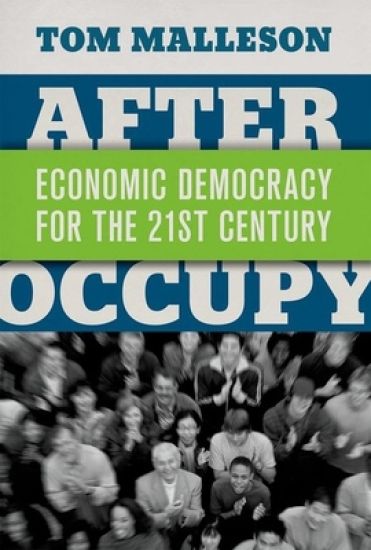
These days, it is easy to be cynical about democracy. Even though there are more democratic societies now (119 and counting) than ever before, skeptics can point to low turnouts in national elections, the degree to which money corrupts the process, and the difficulties of mass participation in complex systems as just a few reasons why the system is flawed. The Occupy movement in 2011 proved that there is an emphatic dissatisfaction with the current state of affairs, particularly with the economy, but, ultimately, it failed to produce any coherent vision for social change. So what should progressives be working toward? What should the economic vision be for the 21st century? After Occupy boldly argues that democracy should not just be a feature of political institutions, but of economic institutions as well. In fact, despite the importance of the economy in democratic societies, there is very little about it that is democratic. Questioning whether the lack of democracy in the economy might be unjust, Tom Malleson scrutinizes workplaces, the market, and financial and investment institutions to consider the pros and cons of democratizing each. He considers examples of successful efforts toward economic democracy enacted across the globe, from worker cooperatives in Spain to credit unions and participatory budgeting measures in Brazil and questions the feasibility of expanding each. The book offers the first comprehensive and radical vision for democracy in the economy, but it is far from utopian. Ultimately, After Occupy offers possibility, demonstrating in a remarkably tangible way that when political democracy evolves to include economic democracy, our societies will have a chance of meaningful equality for all.
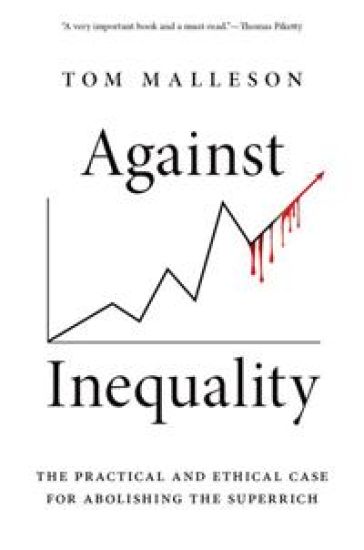
In an era of remarkable wealth idolatry, Tom Malleson investigates the ethical justifications of wealth inequality, taking the radical position that we should abolish the billionaires. Stark inequality is a problem the world over, but it has been worsening over the past thirty years, particularly in rich, economically developed countries. To acquire the same amount of wealth as Elon Musk, the average American worker would have to work for more than four and a half million years. Is this inequality morally acceptable and is it feasible to actually reduce inequality in the real world? In Against Inequality, Tom Malleson makes the case for rejecting meritocracy, presenting a strong defense against the claim that individuals "deserve" their wealth. Malleson argues that people, especially rich people, do not morally deserve the bulk of their income because it does not, by and large, come from anything the specific individual does, but is largely due to the vast understructure of other people's labor, in addition to their lucky possession of bodily talents and efforts. Furthermore, the book brings to light extensive historical and comparative evidence to show that raising taxes on both income and wealth is practically feasible and that the costs of doing so are far outweighed by the truly enormous benefits that such taxes could bring in terms of environmental sustainability, democratic equality, equal opportunity, and reduced racism and xenophobia. Unlike previous books on inequality, Against Inequality focuses on the superrich, arguing that they have far too much: a world with billionaires alonside severe deprivation is a world without justice. Malleson's argument is not that billionaires are individually evil, but that a society that allows the existence of the superrich is structurally immoral. In an era of remarkable wealth idolatry, Against Inequality takes the radical position that we should abolish the billionaires.
These days, it is easy to be cynical about democracy. Even though there are more democratic societies now (119 and counting) than ever before, skeptics can point to low turnouts in national elections, the degree to which money corrupts the process, and the difficulties of mass participation in complex systems as just a few reasons the system is flawed. The Occupy movement in 2011 proved that there is an emphatic dissatisfaction with the current state of affairs, particularly with the economy, but, ultimately, it failed to produce any coherent vision for social change. So what should progressives be working toward? What should the economic vision be for the 21st century? After Occupy boldly argues that democracy should not just be a feature of political institutions, but of economic institutions as well. In fact, despite the importance of the economy in democratic societies, there is very little about it that is democratic. Questioning whether the lack of democracy in the economy might be unjust, Tom Malleson scrutinizes workplaces, the market, and financial and investment institutions to consider the pros and cons of democratizing each. He considers examples of successful efforts toward economic democracy enacted across the globe, from worker cooperatives in Spain to credit unions and participatory budgeting measures in Brazil and questions the feasibility of expanding each. The book offers the first comprehensive and radical vision for democracy in the economy, but it is far from utopian. Ultimately, After Occupy offers possibility, demonstrating in a remarkably tangible way that when political democracy evolves to include economic democracy, our societies will have a chance of meaningful equality for all.

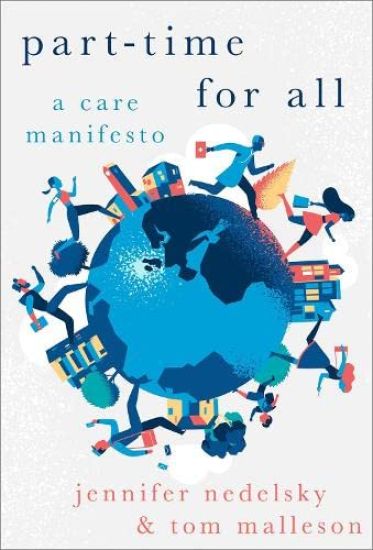
An innovative view of how everyone doing part-time work and part-time caregiving would promote flourishing families, free time, equality, and the true value of care. The way that Western countries approach work and care for others is fundamentally dysfunctional. The amount of time spent at work places unsustainable stress on families, particularly in the face of rising inequality, while those who perform care are underpaid and their labor undervalued. In Part-Time for All, Jennifer Nedelsky and Tom Malleson propose a plan to radically restructure both work and care. As such, they offer a solution to four pressing problems: the inequality of caregivers; family stress from competing demands of work and care; chronic time scarcity; and policymakers who are ignorant about the care that life requires--the care/policy divide. Nedelsky and Malleson argue that no capable adult should do paid work for more than 30 hours per week, so that they can contribute substantial amounts of time to unpaid care for family, friends, or other "communities of care." While the authors focus primarily on human-to-human care, they also include care for the earth as a vital part of this shift. All of the elements of Nedelsky and Malleson's proposal already exist piecemeal in various countries. What is needed is to integrate the key reforms and scale them up. The result is an actionable plan to motivate widespread take-up of part-time work and part-time care. Highlighting how these new norms can create synergies of institutional transformation while fostering a cultural shift in the value of care and work, this "care manifesto" identifies the deep changes that are needed and lays out a feasible path forward.

V knige soderzhitsja srazu chetyre istorii pro samye aktualnye zhiznennye situatsii, s kotorymi stalkivaetsja kazhdyj podrostok. Vse istorii svjazany s tipichnymi dlja etogo vozrasta problemami, zatragivajut sferu obschenija so sverstnikami i voprosy stanovlenija samodostatochnoj, uverennoj v sebe lichnosti. Posle znakomstva s kazhdoj istoriej junye chitateli smogut po-novomu otsenit izlozhennye v nej sobytija blagodarja razjasnenijam psikhologa, a takzhe provesti samostojatelnuju rabotu nad soboj i sdelat vazhnye vyvody na buduschee.

The riveting, revelatory, and sole authorized account of the critical first decades of Tennessee Williams's life. Tennessee Williams, author of such indelible masterpieces as The Glass Menagerie and A Streetcar Named Desire, is considered by many to be the greatest literary artist of the American theater. Tom is Lyle Leverich's definitive account based on his exclusive access to letters, diaries, unpublished manuscripts, and family documents of Williams's early life and of the events that shaped this most autobiographical of dramatists. It tells the story of the marital traumas of his bullying father and overly protective mother, the mental disorders that institutionalized his beloved sister Rose, his stalled academic career, and his confused sexuality and early successes as a writer; and it leaves Thomas Lanier Williams on the brink of fame with The Glass Menagerie and his transformation into the celebrated persona of Tennessee.

Appearing no different than the average man who worked hard for a living, he nicely blends in with his neighbours and co-workers. Although socially awkward at times, nobody takes notice of his peculiarities, but beneath his somewhat normal veneer resides a pulsating black heart, bent upon cruelty and domination. Contains adult content. Composed in captivating narrative and compelling dialogue, the story flows at a brisk tempo. The plot contains more than a few strategically placed unexpected twists which should maintain the reader's interest throughout. The characters are presented in a multi-dimensional fashion revealing the intricacies of their unique personalities and individual agendas. Navigating the plot to a well conceived conclusion, the author could leave the reader with the sense of time well spent in the reading of this story

Tom is a cat in trouble. The worst possible kind of trouble: he's been turned into a human. Transformed by an irascible old magician in need of a famulus -- a servant and an assistant, Tom is as good at being a servant as a cat ever is. The assistant part is more to Tom's taste: he rather fancies impressing the girl cats and terrorizing the other toms by transforming himself into a tiger. But the world of magic, a vanished and cursed princess, and a haunted skull, and a demon in the chamber-pot, to say nothing of conspiring wizards and the wickedest witch in the west, all seem to be out to kill Tom. He is a cat coming to terms with being a boy, dealing with all this. He has a raven and a cheese as... sort of allies.And of course there is the princess.If you were looking for 'War and Peace' this is the wrong book for you. It's a light-hearted and gently satirical fantasy, full of terrible puns and... cats.


TOM
MACMILLAN EDUCATION
muu


Tom non come gli altri miei racconti. Non un racconto di fantascienza. Non saprei definire il suo genere. Ma forse non nemmeno un racconto. Forse qualcosa di pi o di diverso, forse esso stesso un'avvertenza. Se non volete farvi domande alla fine della lettura, allora vi consiglio di non leggerlo. Tutto il tempo che ho dedicato alla sua scrittura e alla preparazione di questa edizione stato pervaso da un'atmosfera che non saprei spiegare. Cos come non ho saputo spiegare come abbia fatto a perdere il treno che mi avrebbe condotto a Milano assieme con decine di miei colleghi, costringendomi cos a prendere da solo il successivo. Devo dire, per , che in questo modo e solo in questo modo ho avuto finalmente l'opportunit di poter stare un po' con i miei pensieri e buttare gi quanto state per... affrontare.
